Which of the following is true comparing globular clusters and open clusters?
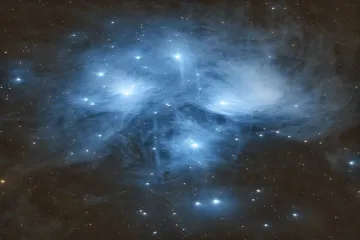
When you look up at the night sky, it is easy to assume that all groups of stars are essentially the same. However, the universe organizes stars into two distinct cosmic structures known as open clusters and globular clusters. These two types of groups tell very different stories about the history of our galaxy, acting as distinct population centers that reveal how stars are born, evolve, and move through space [1.7].
# Structure and Shape
The most immediate difference you might notice between these two types of clusters is their physical appearance and organization. Open clusters are often described as loose, irregular groupings of stars. They typically contain a few hundred to a few thousand stars, and these stars are scattered somewhat randomly, often lacking a strong, centralized density [1.7]. Because of this sparse arrangement, they often appear more "open" or spread out, allowing you to easily distinguish individual stars even with modest viewing equipment [1.5].
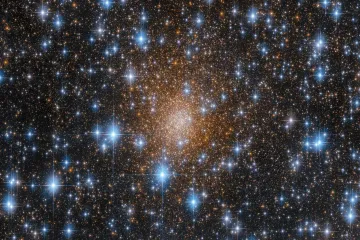
Globular clusters, by contrast, are massive, tightly packed spherical systems. They are effectively the skyscrapers of the stellar world, often containing hundreds of thousands or even millions of stars held together by gravity in a dense, compact ball [1.5, 1.7]. When you observe a globular cluster, the stars are so packed together—especially toward the center—that it can be difficult to resolve individual points of light without professional-grade instrumentation [1.5]. This density creates the characteristic "hazy" or fuzzy appearance that makes them stand out from the surrounding field of stars [1.7].
# Age and Evolution
The fundamental reason for the stark differences in these clusters lies in their age. Open clusters are the "youngsters" of the galaxy. Because they are gravitationally loose, they do not hold onto their members forever; they tend to dissipate over time as stars drift away or are pulled apart by the gravitational influence of other objects [1.6]. Consequently, open clusters are typically found in regions where active star formation occurs, populated by younger, often bluer and hotter stars that are still on the main sequence [1.7].
Globular clusters are significantly older, often hosting some of the most ancient stars in the galaxy, with ages reaching back over 10 billion years [1.6]. Because they have been around for so long, their stellar populations have evolved differently. Many of their original massive, short-lived stars have long since burned out, leaving behind a population dominated by older, cooler, and redder stars [1.5].
# Galactic Location
Where you find these clusters in the sky is rarely a coincidence; it is a direct consequence of their age and orbit. Open clusters are almost exclusively found within the Galactic disk—the flat, rotating plane of the Milky Way where gas and dust are plentiful [1.6]. Their orbits around the galactic center are generally quasi-circular, keeping them within this busy, active region of space [1.6].
Globular clusters occupy a completely different niche. They are primarily found in the Galactic halo, a vast, spherical region that encompasses the entire galaxy [1.6, 1.7]. Unlike the neat, circular orbits of disk-based open clusters, globular clusters travel on highly varied, often eccentric paths that take them far above and below the plane of the disk [1.6]. This halo distribution suggests that they formed early in the history of the galaxy, essentially settling into these wide-reaching orbits long before the disk fully flattened and organized.
# Comparative Data
To better understand these distinctions, it helps to view their primary characteristics side-by-side.
| Characteristic | Open Cluster | Globular Cluster |
|---|---|---|
| Typical Age | Relatively Young | Very Old (>10 billion years) |
| Star Count | Hundreds to Thousands | Hundreds of Thousands to Millions |
| Location | Galactic Disk | Galactic Halo |
| Shape | Loose and Irregular | Dense and Spherical |
| Orbit | Quasi-circular | Varied and Eccentric |
# Observational Analysis
If you are an amateur astronomer looking to test these differences, the HR (Hertzsprung-Russell) diagram is the best tool for the job. By plotting the luminosity of stars against their temperature (or color), you can see the "turn-off point" where stars have evolved off the main sequence. In an open cluster, this turn-off point is usually higher up on the diagram, reflecting a population with many young, hot stars [1.5].
In a globular cluster, the HR diagram looks quite different. The turn-off point is shifted toward the lower, cooler, and redder side of the main sequence because the hottest, brightest stars have already ended their lives [1.5, 1.6]. You will also notice a prominent "horizontal branch," a feature that is often absent in younger open clusters because the cluster isn't old enough for its stars to have reached that stage of evolution [1.6].
# Practical Tips
When planning an observation session, keep in mind that these physical traits dictate how you should hunt for them. Open clusters, like the famous Pleiades or the Butterfly Cluster (M6), are often best enjoyed with binoculars or wide-field telescopes at low magnification [1.5]. Because they are scattered, a wide view captures the collection better than high power.
Globular clusters, such as the Hercules Globular Cluster (M13), reward the opposite approach. While they are visible as small, fuzzy smudges in binoculars, you generally need a telescope with at least moderate aperture to begin resolving the individual stars on the periphery [1.5, 1.7]. If you are struggling to see stars in a globular cluster, it is often not just atmospheric conditions—it is the sheer density of the cluster making individual separation difficult. When viewing them, patience is key; wait for moments of steady air to let the magnification reveal the graininess of the cluster's core.
Related Questions
#Citations
[PDF] Globular vs. Open Cluster HR Diagrams
Difference in HR diagram clusters - Astronomy Stack Exchange
Which of the following statements comparing open and globular star ...