What causes open clusters?
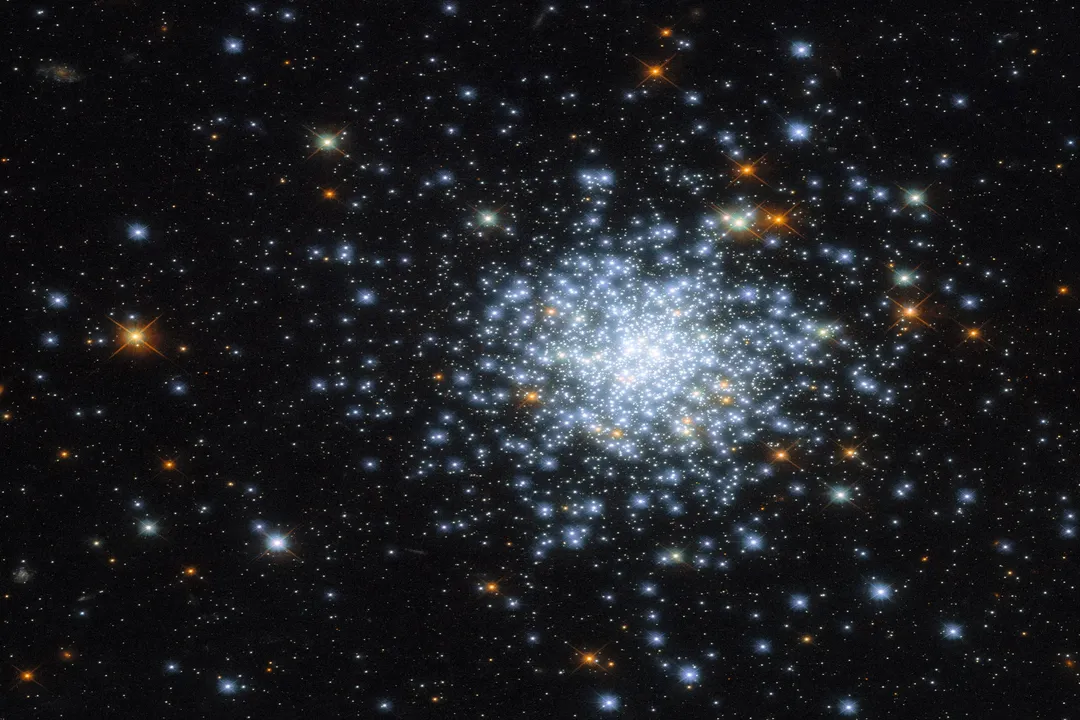
The origin of open clusters—those scattered, relatively youthful congregations of stars—is fundamentally tied to the massive, cold reservoirs found throughout our galaxy. These groupings are not random assemblies; they are stellar siblings, all having begun their existence at the same moment, under the same conditions, from a single, enormous birthplace. [1][7][8] To understand what causes them, one must look to the dense interstellar medium where gravity first wins the battle against the internal pressure of gas and dust.
# Cloud Collapse
The essential precursor to any open cluster is a giant molecular cloud. [1][8] These are vast, cold regions primarily composed of molecular hydrogen, dust, and trace amounts of other elements. [5] Within these colossal clouds, instabilities—perhaps triggered by a passing density wave or the shockwave from a nearby supernova—cause pockets of material to collapse under their own self-gravity. [6] As a pocket contracts, its density increases, heating up until nuclear fusion ignites in the center of numerous accumulating knots, resulting in the birth of a new generation of stars. [4]
What distinguishes the formation of an open cluster is the nature of this initial collapse. An open cluster is formed when many stars are born within the same localized cloud structure. [1][7][8] Unlike the formation of isolated single stars or binary pairs, this process concentrates hundreds to a few thousand stars into a relatively small volume of space. [8] These newborn stars, sharing the same age and chemical signature, begin their lives gravitationally interacting as a cohesive unit. [1]
It is fascinating to consider the scale difference between the progenitor clouds. While the exact sizes vary, the process that births a few hundred stars in an open cluster is inherently less massive and more localized than the formation mechanism that results in the tightly bound, million-star populations of globular clusters. This initial disparity in total mass and mutual gravitational binding energy sets the stage for the dramatically different lifespans of the two cluster types. [8] A cluster is "caused" by the localized, simultaneous collapse of a cloud segment, but its fate—and thus its observable existence—is determined by how tightly the resulting stars cling to each other. [1][9]
# Galactic Settings
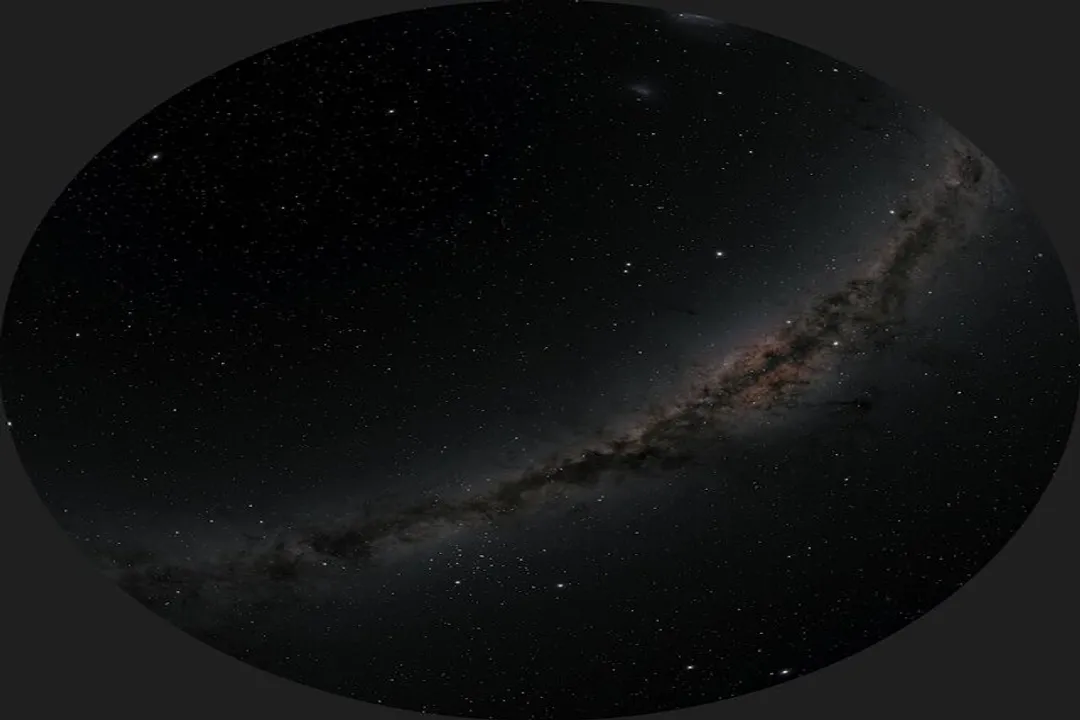
The location where open clusters are found is not accidental; it directly reflects where the necessary raw materials for star formation reside. Open clusters are almost exclusively situated within the galactic disk of spiral galaxies like the Milky Way. [2][5][8] This disk is rich in the gas and dust required for star creation, unlike the galactic halo, which is mostly composed of older stars and diffuse gas. [2][3][5]
Specifically, observations place these young groupings predominantly within the spiral arms. [3][7] Spiral arms are not solid structures but rather regions of enhanced density—like cosmic traffic jams—where interstellar gas clouds are compressed as they pass through. This compression acts as a trigger, efficiently initiating the gravitational collapse needed to form new stars and, consequently, open clusters. [6] You are essentially looking at a snapshot of current galactic activity when you observe an open cluster. [7]
If we imagine the Milky Way as a massive, spinning pinwheel, the open clusters are tracing out the bright, active lanes that define the spiral pattern. [3] This contrasts sharply with globular clusters, which orbit high above and below the disk in the sparse galactic halo, marking them as relics from the galaxy's earliest days. [2][3] The cause of the open cluster's location is thus the enduring presence of cold, star-forming material distributed along the galaxy's prominent spiral density waves. [6]
# Dispersion and Lifetime
While the formation process is the "cause," the cluster's subsequent lack of permanence is an inherent consequence of its nature, making their existence a relatively brief chapter in cosmic time. Open clusters are characterized by being loosely bound by gravity. [1][9] They do not possess the immense internal gravity that holds a globular cluster together for billions of years. [6]
Because they are young, their constituent stars have not drifted far from their common birthplace, but they are already moving along their individual orbits within the galaxy. [1] This motion, combined with their loose binding, means that external forces quickly pull them apart. [4] The main culprits in their dissolution are:
- Galactic Tides: The differential gravitational pull exerted by the mass of the entire galaxy acts as a persistent, gentle stretching force on the cluster members. [9]
- Interactions: Encounters with other massive objects, such as other molecular clouds or passing stars, can gravitationally eject individual members, weakening the remaining structure. [4][9]
Given these disruptive forces, an open cluster typically survives for only a few hundred million years. [3] For context, the Sun is nearly $4.6$ billion years old. Therefore, an open cluster's "cause" is not just its birth in a molecular cloud, but the timing of that birth relative to the timeline of galactic disruption. It is a transient phenomenon, existing only long enough for us to recognize them as distinct groupings before their stars disperse into the general galactic field population. [4]
To put this dispersal into perspective, imagine a group of friends who all met at a specific event and stayed close for a while. If they then all set off driving in the same general direction but at slightly different speeds and with no shared destination, eventually, the distance between the first and last car will become so great that the original group is functionally gone. [1] In the case of star clusters, the "speed" differences are slight orbital variations, and the "road" is the Milky Way's gravitational field. [9] This ephemeral nature means that while globular clusters show us the ancient stellar fossil record of the halo, open clusters provide a living, current catalog of stellar nurseries in the arms. [3][6]
# Comparative Dynamics
Examining the differing environments highlights the unique causal pathway for open clusters. Globular clusters orbit the galactic center in a more random, quasi-spherical distribution within the halo, an environment relatively free of the dense gas clouds that cause tidal stress and disruption. [2] They formed very early, before the galaxy settled into its current disk structure. [3] Their extreme density and age ensure their gravitational integrity lasts for the age of the universe. [1]
Open clusters, conversely, are born into the thick of galactic action—the dusty, turbulent disk. [5] Their comparatively low initial stellar count and looser binding—often containing fewer than a thousand members [8]—means they have an intrinsic weakness. They are not dynamically "cold" systems like their globular cousins; they are born hot and quickly cool down through evaporative loss. [9] This is the core difference in their cause and effect: one mechanism creates an enduring, ancient island (globular), while the other creates a temporary, youthful stellar family (open) tied to the galaxy’s ongoing process of spiral structure and gas density cycling. [6] The very structures that allow for their creation—the dense spiral arms—also guarantee their eventual unbinding through constant gravitational interaction. [5][9]
This dynamic difference suggests a cyclical pattern: gas clouds collapse to form open clusters; those clusters disperse over a few hundred million years, adding their stars to the general stellar population of the disk; and eventually, new gas clouds collapse in the next spiral arm passage to start the process anew. [3][7] Thus, the cause of open clusters is intrinsically linked to the ongoing, dynamic life of a spiral galaxy, whereas the cause of globular clusters is tied to its ancient formation history. [2][6]
Related Questions
#Citations
Open cluster - ESA/Hubble
Why are open clusters and globular clusters found in different places?
Star Clusters: Inside the Universe's Stellar Collections - NASA Science
Open Clusters - by Parnika Singh - Medium
Young nearby open clusters and their luminosity functions
Why are open clusters spread in the disk, and globular in the halo?
Astronomy & Astrophysics 101: Open Cluster - SciTechDaily
Lecture 13: Star Clusters
Rubin Planetarium Video - Open Clusters | NOIRLab