What is true about open clusters?
Stellar Groups
Open clusters represent one of the primary ways we observe groups of stars that share a common origin in our galaxy and beyond. [1][6] Unlike their ancient, densely packed relatives, these groupings are characterized by stars that are relatively loosely bound together by gravity. [1] On a fundamental level, an open cluster is a collection of stars, often numbering from a few dozen to a few thousand, that all formed from the collapse of the same giant molecular cloud or nebula. [1][2][5][6] Because they share this common birth cloud, the stars within an open cluster tend to share similar ages and chemical compositions. [5] They are sometimes referred to simply as galactic clusters. [7]
These stellar nurseries are visibly distinct because the stars remain in close proximity for a significant, though cosmologically brief, period. [5] In terms of appearance, they lack the highly symmetrical, spherical shape typical of globular clusters; instead, open clusters are often described as being somewhat irregular in their arrangement. [1] When observing them, especially with modest equipment, the individual stars are often resolved quite easily, a feature that speaks to their lower stellar density compared to their more compact cousins. [5] This relative ease of resolution, combined with their generally brighter, younger stars, often makes them appealing targets for amateur astronomers focusing on star-gazing within the Milky Way. [5]
Birth Age
The defining feature of an open cluster, besides its loose association, is its youth. [2] These systems are actively forming or have only recently finished forming; their ages are typically measured in millions of years, sometimes extending up to a few hundred million years old. [2] This timescale is incredibly short when viewed against the multi-billion-year lifespan of the universe or even the age of our galaxy. [2] Because they are so young, open clusters contain stars that are still relatively close to their main sequence phase, often featuring hot, blue, and luminous members. [5]
When we consider the environment in which they are born—a vast, cold cloud of gas and dust—the mechanism of dispersal becomes clear. [2] The initial density of the cluster is often not strong enough to permanently counteract the gravitational disruptions caused by the larger structure of the galaxy itself. [2] If we consider the Milky Way, an open cluster residing deep within the galactic disk experiences frequent gravitational nudges from passing stars, giant molecular clouds, and the overall non-spherical gravity of the disk structure. [4]
Here is an illustrative comparison of lifespan expectations based on stellar formation timescales. A cluster born only 10 million years ago in the busy inner spiral arms of the galaxy is experiencing much higher external gravitational shear than one born slightly older and farther out in a sparser region. [1][2] While a globular cluster, containing stars billions of years old, has a gravitational binding energy so immense that it effectively ignores the galaxy's tidal forces, an open cluster's binding energy is comparatively weak. [1][4] This means that for many open clusters, their existence is temporary; they are destined to slowly bleed stars until, after perhaps a few hundred million years, the original grouping becomes gravitationally unbound and its member stars drift away to become part of the general population of field stars in the galactic disk. [1][2] They are, in essence, transient stellar structures within the galaxy’s ongoing process of star creation and distribution. [6]
Galactic Placement
The location of open clusters is intrinsically linked to the ongoing process of star formation within spiral galaxies like the Milky Way. [4] Open clusters are almost exclusively found within the galactic disk. [4] More specifically, they are concentrated within the galaxy’s spiral arms. [3][4] This correlation is not accidental; the spiral arms are the regions where the necessary interstellar gas and dust—the raw materials for new stars—are most abundant and densest. [4]
This preference for the disk stands in stark contrast to the distribution of globular clusters. [4] Globular clusters, which are ancient collections of stars formed early in the galaxy's history, are generally found orbiting in the galactic halo or concentrated near the central bulge. [4] They are relics from a time before the spiral arms or the current thin disk structure had fully settled into place. [4] Therefore, finding an open cluster is a strong indicator that you are looking into a region of relatively recent or ongoing stellar birth. [3][4]
When mapping the Milky Way, astronomers find that open clusters tend to trace out the structure of those spiral arms, acting almost like bright, temporary markers showing where active star formation has recently occurred. [6] To visualize this difference, imagine the galaxy as a spinning vinyl record: the open clusters are like tiny, temporary glitter sprinkled only on the grooves (the spiral arms), whereas the globular clusters are like ancient, heavy decorations scattered high above and below the plane of the record. [4]
Stellar Content
The stars within an open cluster form a relatively homogenous group in terms of origin and initial characteristics. [5] A key finding is that they possess similar ages and chemical makeup, reflecting the properties of the parent molecular cloud from which they condensed. [5] Depending on the size of that initial cloud, the resulting cluster can range from a small, sparse association of a few dozen stars to a more substantial grouping of several thousand. [1][2]
While they are gravitationally bound, the forces holding them together are gentle compared to globular clusters. [1] This looser binding means that the distances between member stars are greater. [1] If a globular cluster might contain a million stars crammed into a volume less than a hundred light-years across, an open cluster might contain a few hundred stars spread over tens of light-years. [1] This lower density contributes to their easier visibility as distinct objects. [5]
An interesting point of differentiation arises when looking at the stellar population itself. Because open clusters are young, they predominantly contain stars similar in mass or lower in mass than our Sun, though some massive, short-lived, bright blue stars may still be present if the cluster is very young. [2][5] In contrast, globular clusters are so old that all their massive stars have long since died, leaving behind only lower-mass, long-lived stars. [4] The observational study of open clusters therefore provides a direct look at stellar evolution in its early stages, offering a clean laboratory to test models of how stars change over their first few hundred million years. [5]
Bright Examples
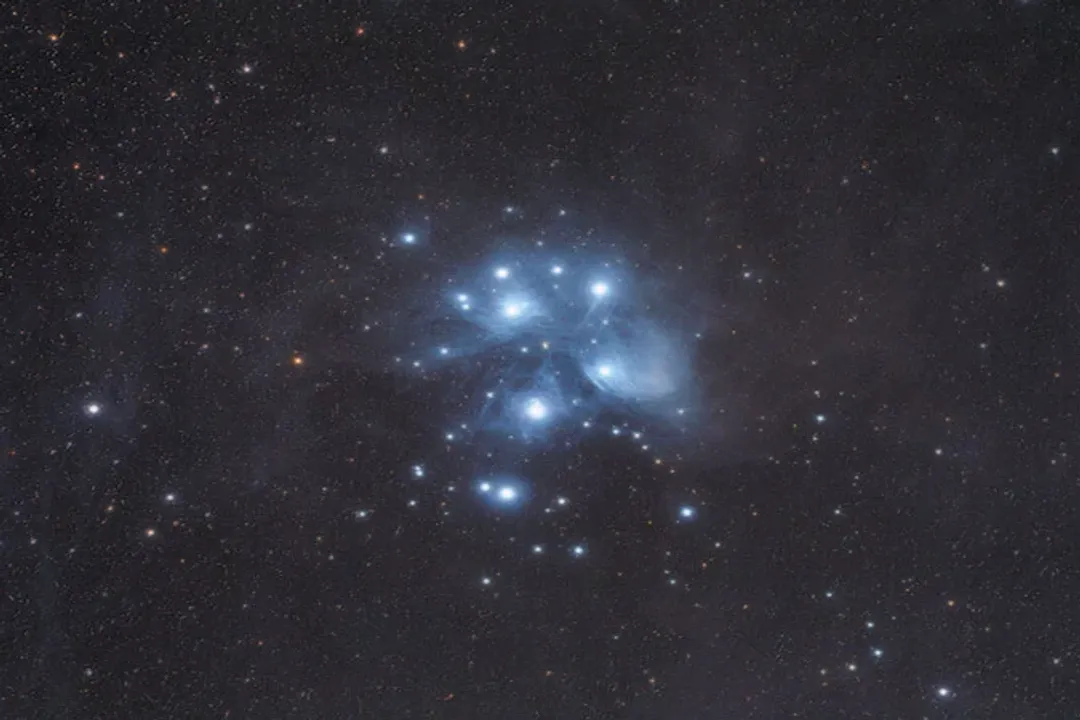
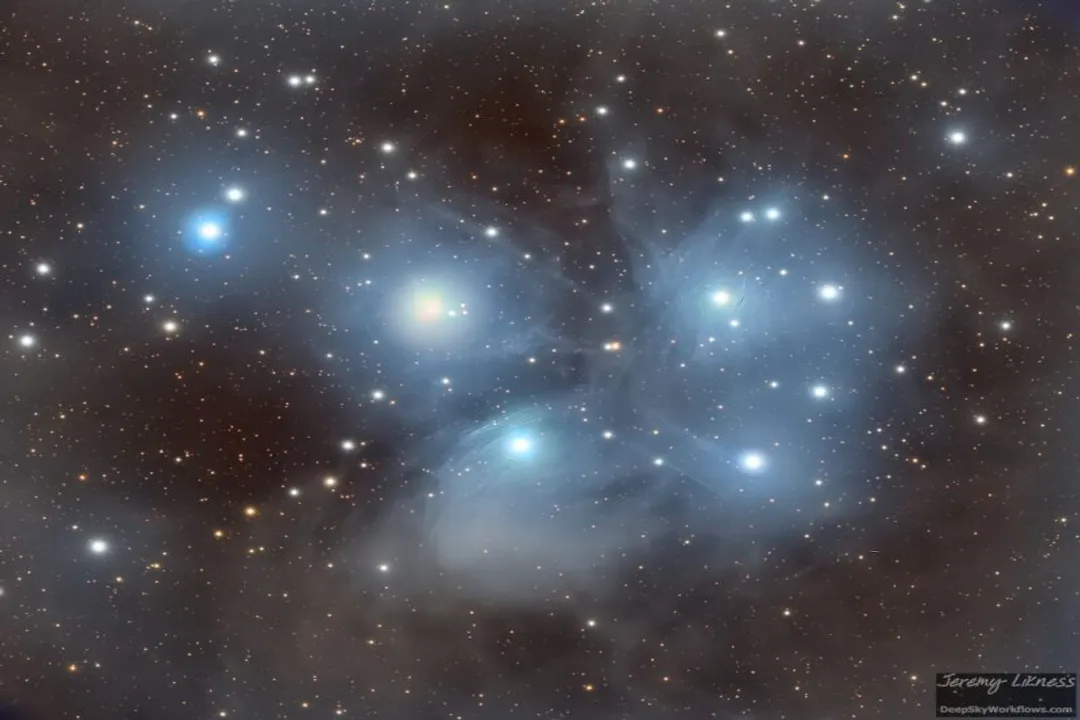
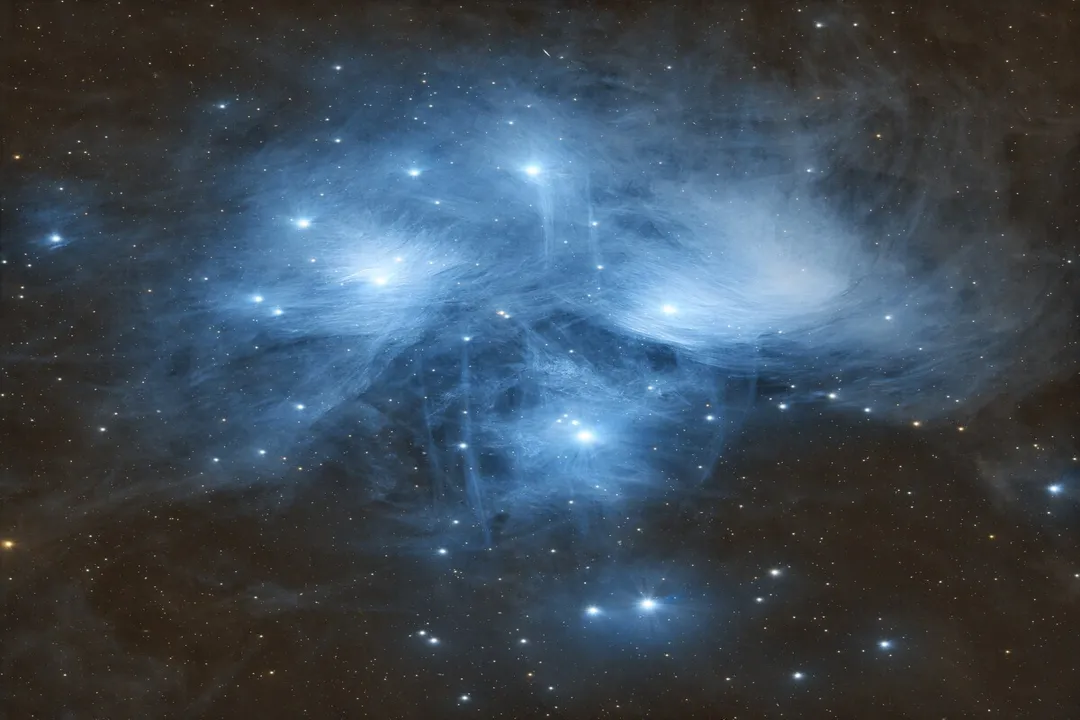
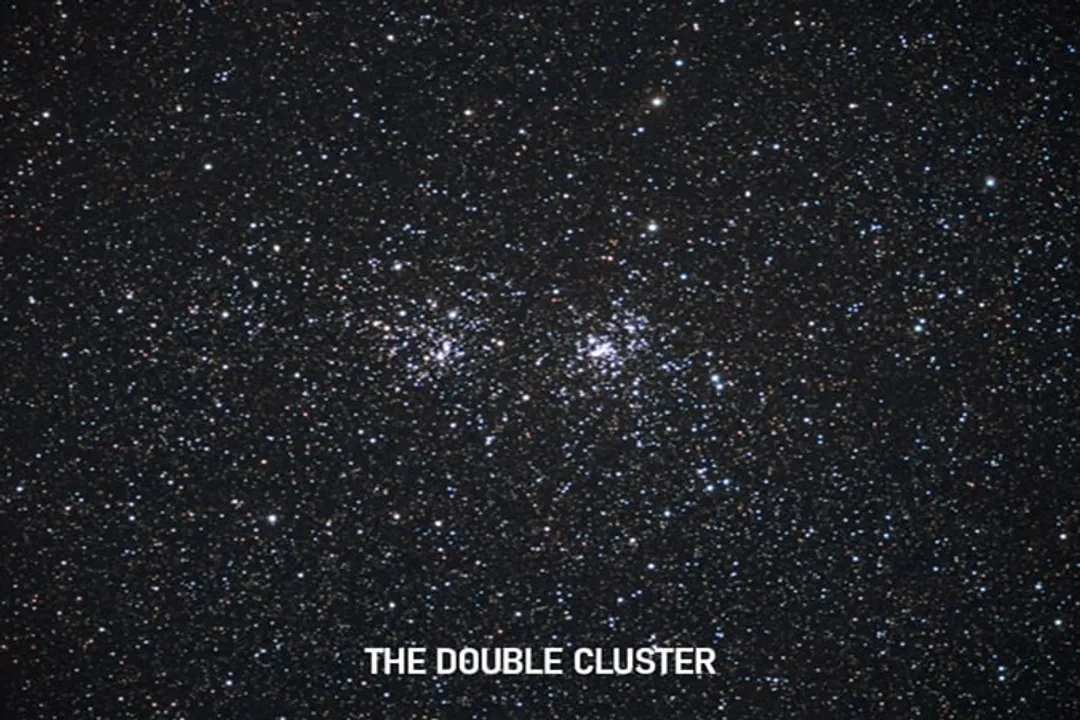
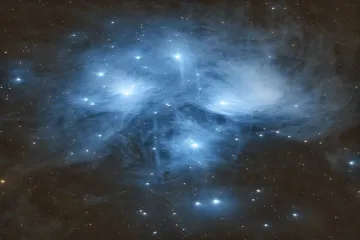
Several open clusters are easily visible to the naked eye or through small telescopes, serving as prime examples of this class of object. [3] The most famous, perhaps, is the Pleiades, also cataloged as M45. [3][5] This cluster, often called the Seven Sisters, is relatively young and features bright, hot stars, making it a prominent feature in the winter sky for Northern Hemisphere observers. [3]
Another well-known neighbor is the Hyades, which is visible in the constellation Taurus. [3] Unlike the Pleiades, which are relatively tightly grouped, the Hyades appear more spread out across the sky, though they are still gravitationally linked. [3]
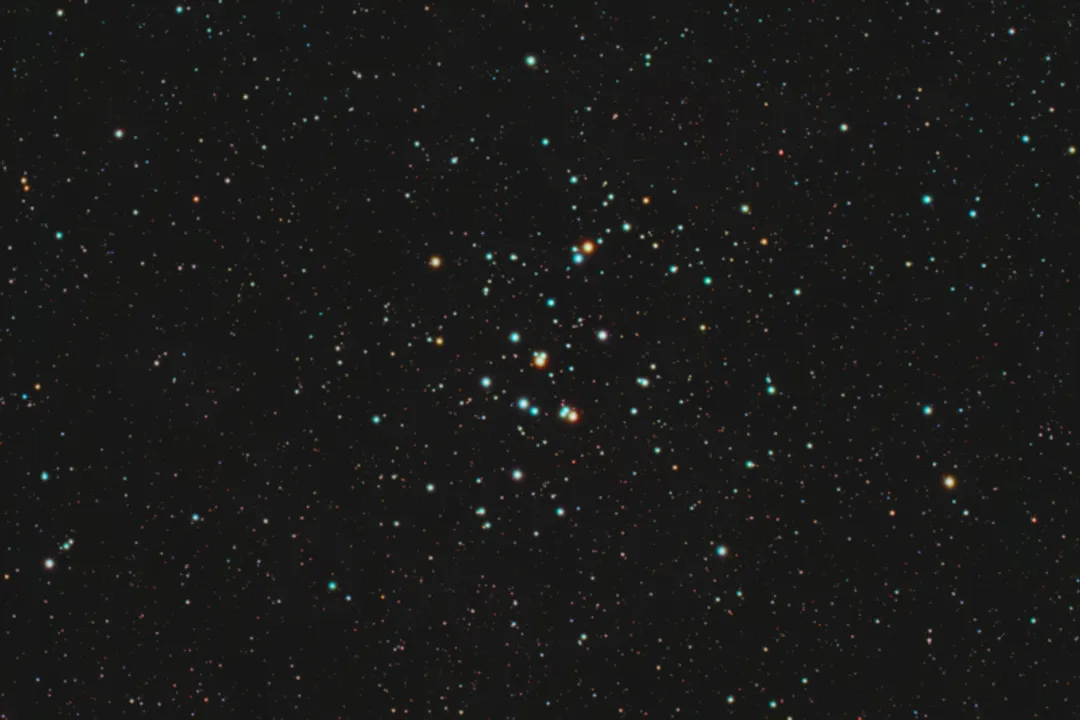
Moving toward the constellation Cancer, one finds M44, famously known as the Praesepe or the Beehive Cluster. [3][5] This grouping is larger and older than M45, showcasing a cluster further along the path toward eventual dispersal. [5] These recognizable groupings serve as accessible entry points for those beginning to study star clusters, offering immediate, tangible examples of the principles governing these stellar associations. [3][5] The sheer number of these structures is also staggering; the Milky Way is believed to contain thousands of these groups, even though only a fraction are bright enough or close enough to be easily cataloged or observed. [6]
The Nature of Association
Understanding what constitutes a true open cluster involves looking at the underlying dynamics that keep the stars together, however loosely. [1] The gravitational attraction between members must be strong enough to keep them moving together as a single entity while traversing the galaxy. [1] This binding energy is what differentiates a cluster from a mere chance alignment of stars that simply appear close together from our perspective on Earth. [1]
The process of discovery often begins with mapping stars that share a similar proper motion—meaning they are all moving across the sky in the same general direction at the same speed. [2] When astronomers confirm that these stars also share similar distances from Earth and similar ages, the evidence strongly suggests they belong to a gravitationally associated open cluster. [2] This combination of shared movement, distance, and origin paints the full picture of a physically real star cluster, rather than a purely optical grouping. [1] The measurement of radial velocity, alongside proper motion, provides the necessary three-dimensional confirmation that a collection of stars truly constitutes a bound system, even if that bond is destined to break eventually. [2]
#Videos
What Are Open Star Clusters? - YouTube
Related Questions
#Citations
Open cluster - Wikipedia
Open cluster - ESA/Hubble
Open star clusters are loose groups of stars - EarthSky
Why are open clusters and globular clusters found in different places?
What is an Open Star Cluster? Facts, Pictures, and Examples
Star Clusters | Center for Astrophysics | Harvard & Smithsonian
What Are Open Star Clusters? - YouTube
AST EXAM 2 (MASTERING AST) Flashcards - Quizlet
Open clusters - Stellar Groups, Galaxies, Nebulae - Britannica