Why are star clusters important?
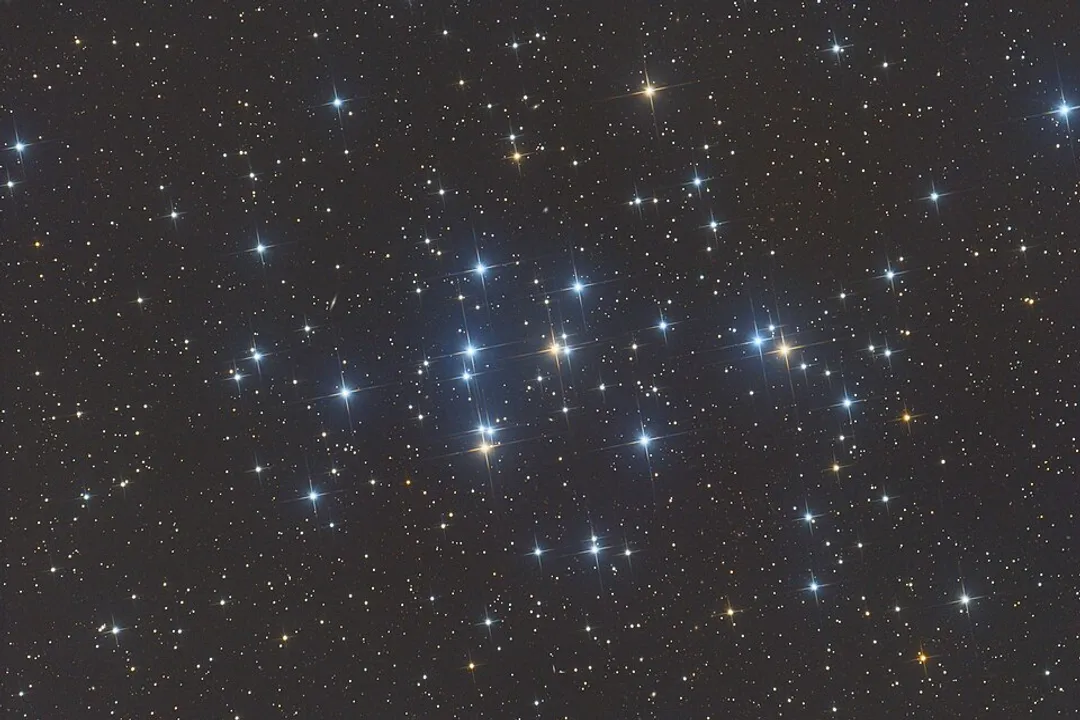
Star clusters are not merely pretty collections of pinpricks scattered across the void; they represent fundamental laboratories for understanding the life cycle of stars and the structure of the cosmos. These are groups of stars, generally found within a galaxy, that share a common birthright—they formed at roughly the same time from the same enormous cloud of gas and dust. Because they originate simultaneously, observing them is the closest approximation astronomers have to a controlled experiment in a field where manipulating objects is impossible. The stars within any given cluster share an age and an initial chemical composition, meaning the vast differences observed in their current state—their brightness, temperature, and evolutionary phase—can almost entirely be attributed to a single variable: mass.
# Cluster Types
Astronomers generally categorize these stellar gatherings into two primary types, with a few rarer varieties recognized in specific contexts.
Open Clusters are the younger, smaller, and less densely packed assemblies. These groups typically reside in the galactic plane, often within or near the spiral arms of galaxies like the Milky Way. They might contain only a few hundred stars, extending perhaps a few dozen light-years across. Because their gravitational bonds are weak, open clusters are highly susceptible to disruption. Over time, encounters with giant molecular clouds or even other cluster members can cause the group to disperse, a process sometimes called "evaporation". Consequently, the clusters we observe are generally young, often only tens of millions of years old, though rare exceptions like Messier 67 can persist for billions of years. Open clusters are frequently dominated by hot, massive, short-lived blue stars, as the cluster often disbands before these bright stars exhaust their fuel. In fact, the vast majority of free-floating stars, including our own Sun, began their existence within an embedded cluster—a very young, still-enshrouded subset of an open cluster—that later disintegrated.
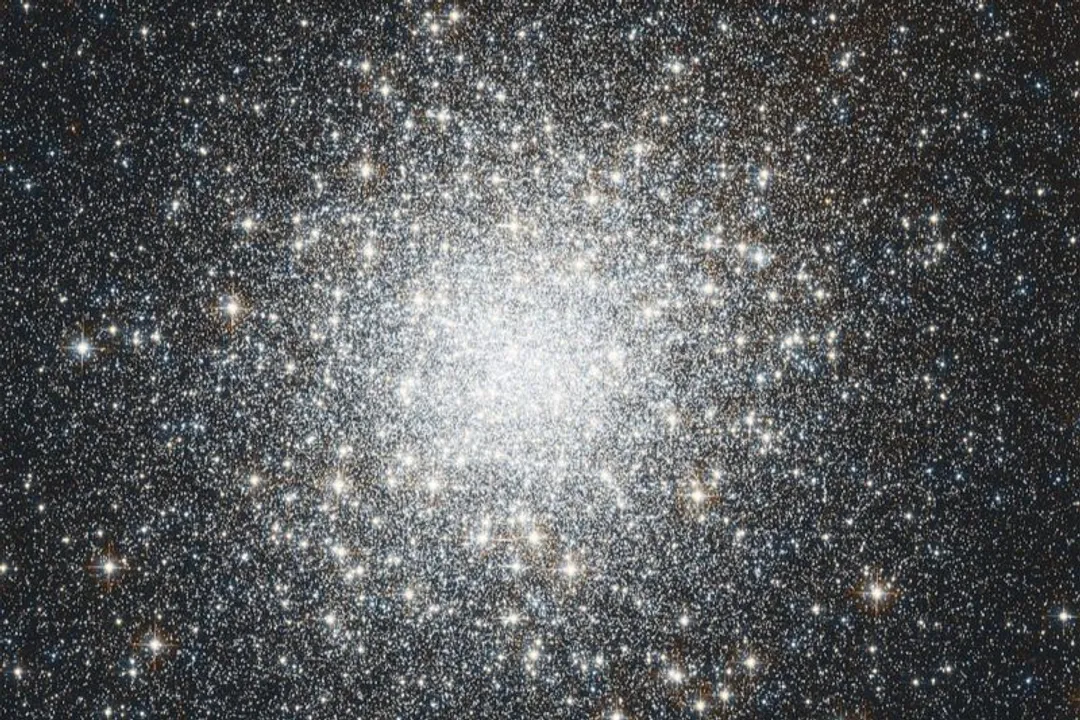
In stark contrast stand the Globular Clusters. These are ancient, massive, and densely packed spherical collections, often containing tens of thousands up to several million stars packed into a region spanning 50 to 450 light-years. Globular clusters orbit in the galactic halo, surrounding the main disk, and their stars are among the oldest known, often dating back 8 to 13 billion years, making them nearly as old as the Universe itself. Due to their age, the most massive and hottest stars have long since died as supernovae or evolved into white dwarfs, leaving the cluster predominantly populated by smaller, cooler, and longer-lived stars, such as red giants. Our Milky Way harbors about 150 of these ancient relics, many of which appear to be captured cores from smaller galaxies that merged with ours long ago. A few of the brightest, like Omega Centauri, are visible to the unaided eye.
A third, more diffuse grouping is the Stellar Association, which is gravitationally unbound, though the stars share a common origin and trajectory through space. These can include OB associations made up of extremely massive, young O and B-type stars.
# Evolution Laboratories
The fundamental importance of star clusters boils down to their ability to serve as laboratories for stellar evolution. Since stellar lifetimes can span billions of years, astronomers cannot simply observe one star from birth to death; they must instead compare stars at different stages simultaneously.
Clusters provide this comparison across a controlled spectrum of mass. For any single cluster, you can plot the temperature against the luminosity of its stars on a Hertzsprung-Russell (HR) diagram. Because all stars share the same age, the resulting pattern observed on the diagram is called an isochrone—a line representing the expected position of stars of that specific age.
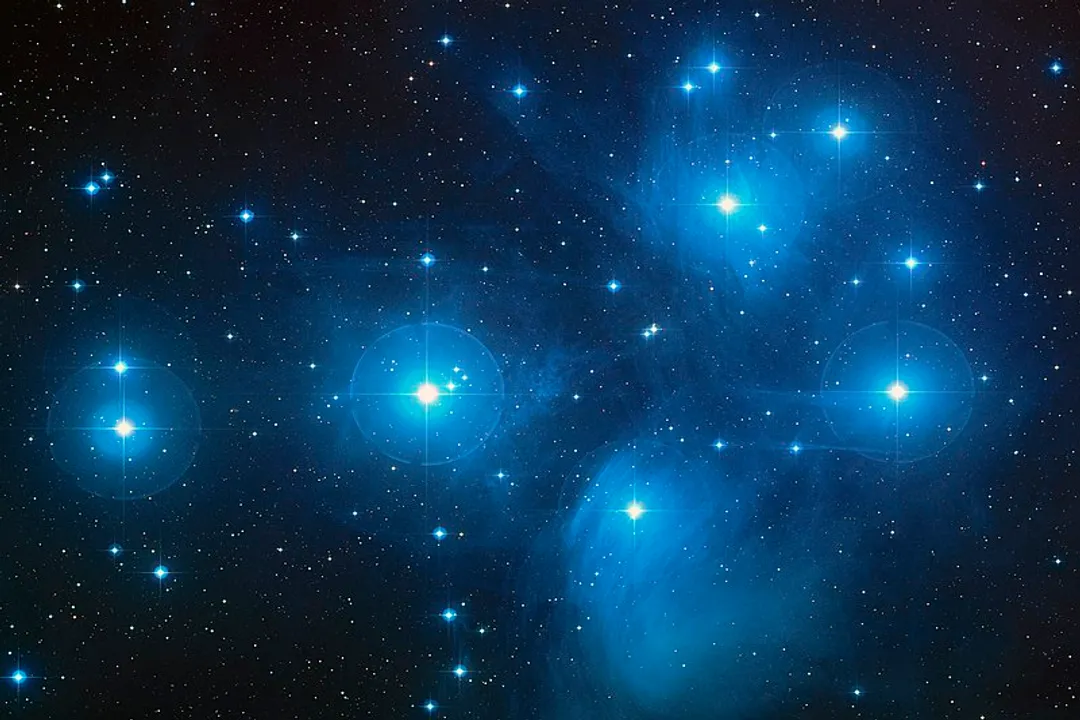
The key lies in the comparison between clusters of varying ages. For instance, in a young open cluster like the Pleiades, the most massive stars are still burning hydrogen on the main sequence. In an older cluster like the Hyades, the most massive stars have already evolved off the main sequence, having exhausted their core fuel. By mapping these "turn-off points" across clusters spanning a wide age range, astronomers can precisely map the entire evolutionary track for different stellar masses.
# Model Constraints
Theoretical astrophysics seeks to model how stars change over time, which requires an evolutionary model. When testing these models, a single star presents an ambiguity: if a model doesn't match its temperature and luminosity, one could adjust both its presumed mass and its age to force a fit. This leaves too many free variables.
A star cluster eliminates this problem. By assuming a single age and a single initial chemical composition for the entire group, the modeler is constrained to match the entire observed distribution of stars—from the brightest, high-mass stars to the dimmest, low-mass ones—with only one set of mass-dependent evolutionary tracks. If the model predicts that a star of a certain mass should evolve differently than a star with half that mass, the cluster data must confirm that pattern across the whole HR diagram simultaneously. If the model fails to predict the cluster's shape, the model assumptions regarding internal physics—like energy transport or opacity—must be wrong. Furthermore, by comparing clusters with different known metallicities (composition), astronomers can test how the abundance of heavier elements affects the rate at which stars burn their fuel.
If we consider the data provided by space missions like Gaia, which offers highly precise distances, motions, and membership confirmation, the resulting observed isochrones become incredibly sharp. This precision allows researchers to distinguish subtle differences between competing theoretical models, something impossible when observational uncertainties are large.
# Galactic Probes
Beyond internal stellar physics, star clusters act as critical tools for mapping and measuring the Universe on larger scales.
The distribution of globular clusters was instrumental in reshaping our understanding of the Milky Way's architecture. Until the 1930s, it was often assumed our Sun sat near the center of the Galaxy. However, in the early 20th century, astronomer Harlow Shapley mapped the locations of globular clusters and noted a profound asymmetry: nearly all of them were concentrated toward one region of the sky, pointing toward the constellation Sagittarius. Since globular clusters orbit the Galactic Center, this lopsided distribution provided the first solid evidence that the Sun resides far from the Milky Way’s core, in the outer regions.
Globular clusters also helped resolve a major paradox involving the age of the Universe itself. Early calculations of the Hubble Constant suggested the Universe was about 10 billion years old. Yet, the oldest stars in globular clusters appeared, based on initial estimates, to be older than that—between 12 to 15 billion years. While this paradox was ultimately resolved by refining the Hubble Constant measurements (leading to an accepted age of about 13 billion years), the globular clusters set a crucial lower limit: the Universe cannot be younger than its oldest stars.
Open clusters are vital for establishing the local cosmic yardstick. Because some are relatively close, their distances can be determined with high accuracy using parallax measurements. When plotting these clusters on an HR diagram, the known distance allows astronomers to convert observed brightness into absolute luminosity. This calibrated HR diagram for nearby clusters is then used for main-sequence fitting. Astronomers take a cluster whose distance is unknown, plot its stars on the HR diagram, and then slide the entire pattern vertically until its main sequence aligns with the main sequence of a well-calibrated, nearby cluster. This vertical shift directly yields the unknown distance to the second cluster, allowing the distance scale to be extended outward to more distant systems, including those where Cepheid variables are used as standard candles to measure extragalactic distances and the Universe's expansion rate.
# Shared Origins
The study of clusters also provides essential historical context for galactic formation and the environment of planetary systems.
By comparing the chemical makeup of globular clusters to open clusters, we track the chemical enrichment history of our Galaxy. Globular clusters, being ancient, are generally metal-poor (containing fewer elements heavier than hydrogen and helium) because they formed before many cycles of stellar birth and death enriched the interstellar medium. Conversely, younger open clusters are generally metal-rich because they formed later, incorporating heavy elements forged by supernovae from earlier generations of massive stars. This chemical progression across clusters of known ages paints a picture of how galaxies evolve chemically over cosmic time.
Furthermore, the environment of a star's birth matters. Since almost all stars, including the Sun, formed within transient embedded clusters, the dynamics and immediate surroundings of that cluster could influence the formation and early evolution of any resulting planetary system. Chemical evidence in our own Solar System, such as the presence of certain short-lived radioactive isotopes in meteorites, suggests our Sun's environment was affected by a supernova from a nearby massive star early in its history—an event that could only happen in a crowded, clustered birth environment.
# Enduring Records
The stability and age of a cluster fundamentally dictate the type of science it supports. Open clusters are transient, offering immediate, dynamic data about current star formation, but they lose their identity quickly. They are excellent for studying the present fate of young stellar populations. Globular clusters, however, are survivors. Their sheer mass has allowed them to endure for nearly the age of the Universe. This longevity makes them records of the extreme past, telling us about the initial conditions of galaxy formation when the chemical feedstock was nearly pristine. A globular cluster's structure, particularly the population of rare blue stragglers (stars formed by mergers in the dense core), offers clues about high-density gravitational interactions that occurred billions of years ago—interactions that would be impossible to reproduce in younger, sparser systems.
Observing a typical globular cluster like M13 reveals a population that is nearly uniform in age, but the stars exhibit a wide spread in mass, which is why they cover a large tract on the HR diagram, tracing out an evolutionary path that took billions of years to complete. Contrast this with the Pleiades, where the stars are only millions of years old, and their entire observable life span is compressed into a much shorter segment on the diagram, primarily showing the initial main-sequence phase.
# Precision Measurement
Modern astronomical instrumentation continues to amplify the importance of studying clusters by reducing observational errors, particularly concerning distance. For a cluster to be a good test case for evolution models, the distances to its constituent stars must be known precisely, as this allows for accurate luminosity calculation from measured brightness.
The European Space Agency’s Gaia mission has been transformative in this area. Gaia has accurately measured the distances, motions, and confirmed memberships for thousands of stars within hundreds of Galactic clusters. By combining this precise distance and positional information with high-accuracy photometry (color and brightness measurements), astronomers can generate extraordinarily clean observed isochrones. This data allows for the definitive mapping of how stellar properties change over time, providing the necessary anchors for stellar structure and atmosphere theories. For example, Gaia data has been used to produce combined HR diagrams for dozens of open clusters, where the age differences between the blue (younger) and red (older) end of the sequence are clearly visible, and similarly for globular clusters, where differences in chemical composition are subtly mapped through color.
The continued observation of these stellar families, from the ephemeral open clusters forming today to the ancient globular clusters orbiting our galaxy's distant halo, provides the entire scaffolding upon which our knowledge of stellar physics, galactic history, and the scale of the Universe is built. They are the fixed points that allow us to extrapolate the physics governing the billions of solitary stars we see everywhere else.
Related Questions
#Citations
Star Clusters: Inside the Universe's Stellar Collections - NASA Science
Star cluster - Wikipedia
Why Are Star Clusters Ideal Laboratories for Stellar Evolution?
Star clusters: observing the effects of stellar evolution - Gaia in the UK
Why are stellar clusters useful for developing stellar evolution models?
Star clusters: Star families come in all ages, shapes and sizes – ScIU
What's so important about studying the clusters of stars in Carina ...
Star Clusters Hold Secrets to Stellar Evolution | Space