What is the importance of hydrogen to a star?
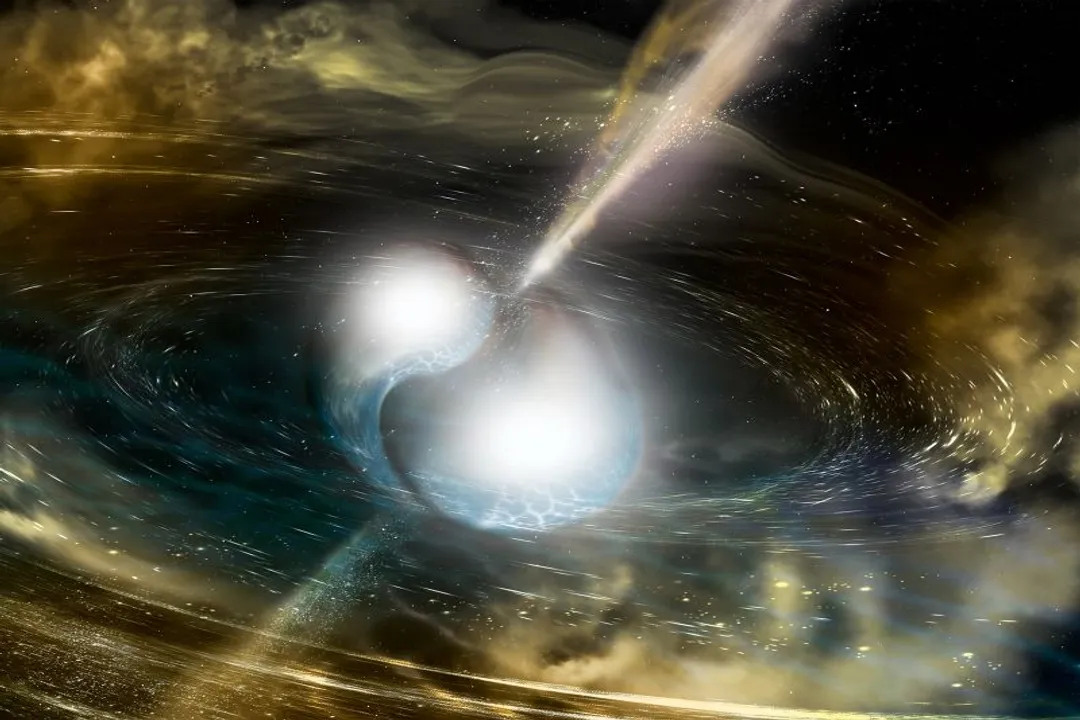
The element that begins all things, hydrogen, is the singular, most defining feature of a star. From the vast clouds of gas that condense into stellar nurseries to the immense energy output that keeps a main-sequence star shining for billions of years, this simple atom—consisting of just one proton and one electron in its neutral state—is the fundamental building block of the cosmos as we observe it. Without the overwhelming abundance and specific nuclear properties of hydrogen, the stellar lifecycle as we understand it simply would not exist.
# Cosmic Foundation
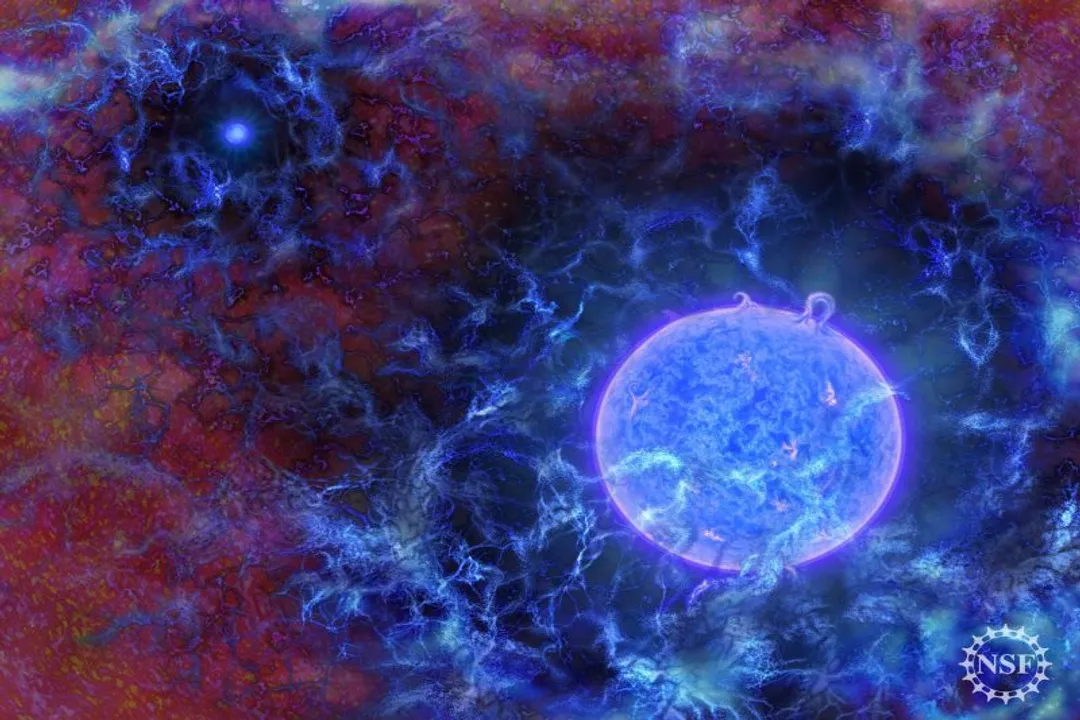
To grasp the importance of hydrogen to a star, one must first understand its importance to the universe itself. Hydrogen accounts for the vast majority of the ordinary matter in existence. Estimates consistently place it at about seventy-five percent of the universe's elemental mass. When stars form, they are essentially condensing enormous pockets of this primordial gas. Therefore, the composition of a newly born star closely mirrors the composition of the ambient interstellar medium from which it accrued its mass. Helium, the second most abundant element, follows distantly behind, making up most of the remaining mass, while everything else—the carbon, oxygen, iron, and silicon that comprise rocky planets or even life—is present only in trace amounts.
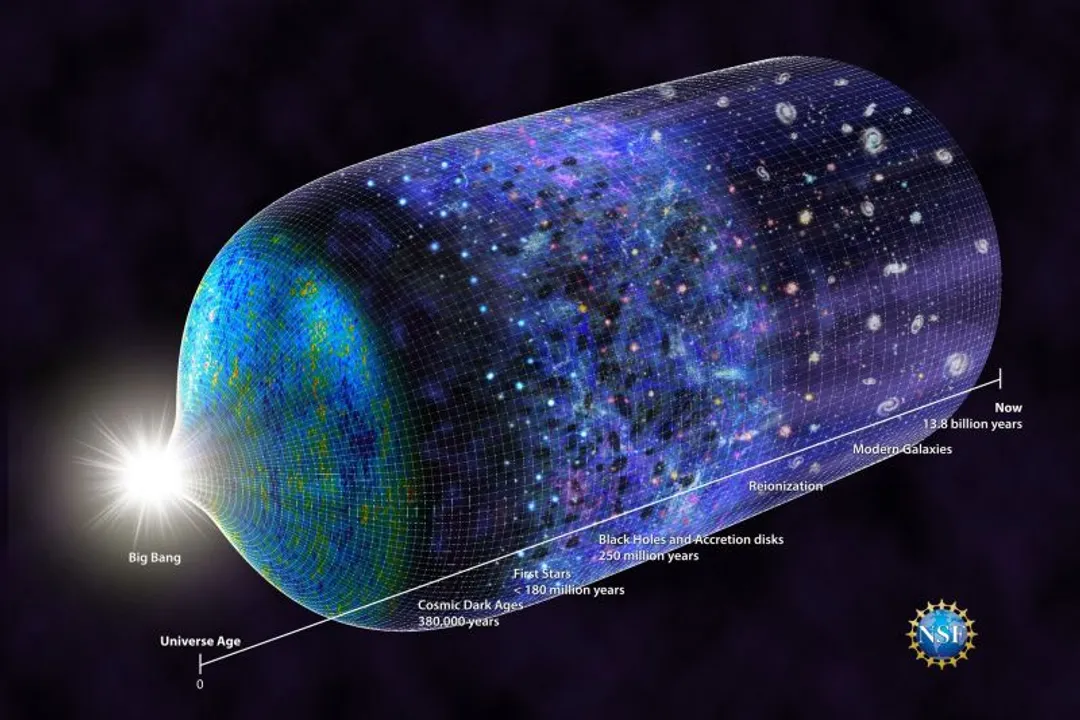
This extreme dominance is a direct consequence of the universe’s earliest moments. In the immediate aftermath of the Big Bang, the conditions were only right for the lightest elements to form through Big Bang nucleosynthesis: primarily hydrogen, with a smaller but significant fraction of helium, and trace amounts of lithium. Heavier elements require the extreme temperatures and pressures found inside stars or during cataclysmic stellar explosions, meaning subsequent generations of stars inherited a system already rich in hydrogen fuel.
# Stellar Furnace
The primary importance of hydrogen within a star is its role as the primary fuel source through nuclear fusion. A star spends the longest and most stable phase of its life—the main sequence—fusing hydrogen nuclei in its core into heavier elements.
The process usually begins when a collapsing cloud of gas becomes dense and hot enough, reaching temperatures exceeding ten million Kelvin. At this critical threshold, the repulsive electrical forces between the positively charged hydrogen nuclei (protons) are overcome by the immense gravitational pressure, allowing the strong nuclear force to take over. The dominant fusion chain in stars like our Sun is the Proton-Proton Chain. In essence, four hydrogen nuclei are ultimately transformed into one helium nucleus, and the mass difference between the initial hydrogen and the resulting helium is converted directly into energy, following Einstein's famous equation, . This energy creates the outward thermal pressure that balances the inward crush of gravity, maintaining the star's stability.
If we consider a main-sequence star, its entire existence is predicated on this single reaction. For a star like the Sun, this process will continue until the core is mostly depleted of hydrogen and converted into a helium ash. This depletion marks the end of its stable life and the beginning of its transition into a giant phase.
# Early Formation
Before fusion ignites, hydrogen plays the material role of the star itself. Star formation begins when dense regions within vast molecular clouds collapse under their own gravity. These clouds are overwhelmingly composed of molecular hydrogen gas, along with dust grains and trace amounts of other elements. The collapse pulls this massive reservoir of hydrogen inward, increasing density and temperature until the core becomes hot enough to initiate fusion and halt the gravitational collapse, thus giving birth to a star. Therefore, hydrogen is not just the fuel; it is the structural mass required to build the engine in the first place.
If we look at the composition of stars across different eras, we can see how this initial material dictated stellar evolution. For instance, observations have sometimes revealed that even certain quiescent, or "passive," galaxies—which are systems that have ceased forming new stars—can retain surprisingly high amounts of hydrogen gas, though perhaps not actively fusing it. One study noted a distant, massive, star-forming galaxy that later became "quiescent" but was found to still contain a significant reservoir of hydrogen, suggesting that the cessation of star formation is a complex process that doesn't always immediately strip the galaxy of all its raw material. This indicates that while hydrogen is needed for star formation, its simple presence doesn't guarantee it is currently being consumed.
# Observing the Invisible
Because hydrogen is so foundational, its detection and study are central to astrophysics. While we cannot look directly into a star’s core, we infer its presence and behavior through spectral analysis. Hydrogen is observable because its electron can move between different energy levels, emitting or absorbing light at specific wavelengths, primarily in the ultraviolet and visible spectrum. This spectral fingerprint allows astronomers to determine the temperature, density, and chemical makeup of stellar atmospheres. For example, the Balmer series lines in visible light are generated when electrons in hydrogen atoms transition to or from the second energy level, providing a vital diagnostic tool for many types of stars.
Consider the comparison between the stuff that makes stars and the stuff that makes planets. While the universe, and by extension, the star, is dominated by hydrogen and helium (which collectively make up over 98% of the cosmic mass), the rocky planets orbiting those stars are composed overwhelmingly of heavier, "metal" elements like silicon, oxygen, iron, and magnesium. This elemental sorting happens during the protoplanetary disk phase: the star consumes the light, volatile hydrogen in its immediate vicinity for fusion, leaving the heavier, less volatile elements to condense into the terrestrial worlds. This stark contrast—hydrogen fueling the powerhouse while heavier elements build the orbiting bodies—highlights hydrogen’s specialized function.
To illustrate the material input required for stellar life versus the byproducts seen in later generations, we can look at the elemental fractions that matter most to a star's immediate energy production versus its long-term evolution.
| Composition Component | Approximate Mass Fraction (Early Universe/Star) | Primary Role |
|---|---|---|
| Hydrogen (H) | ~75% | Primary fusion fuel (H He) |
| Helium (He) | ~24% | Inert ash in core; significant merger fuel in massive stars |
| All "Metals" (Z>2) | ~1% | Trace components; critical for cooling and planet formation |
It is interesting to observe how the initial conditions dictate the life path. Stars formed very early in the universe, often called Population III stars, were theoretically almost pure hydrogen and helium, having formed before any supernova enriched the interstellar medium with heavier elements. A star formed from this material would have a much simpler, faster fusion path, relying solely on the proton-proton chain or CNO cycle (which uses carbon, nitrogen, and oxygen as catalysts) only once it achieved sufficient temperature, without the complications of heavier element mixing that plague later-generation stars. This suggests that the abundance of hydrogen alone dictates not only the star's lifespan but also the very mechanism by which it burns its fuel, as heavier elements can influence core temperature and reaction rates.
For stars that have already lived, the importance shifts from fuel to product. When a star exhausts its core hydrogen, the remaining helium begins to contract and heat up. In massive stars, this leads to helium fusion, where three helium nuclei fuse into one carbon nucleus. This process, called the triple-alpha process, requires even higher core temperatures than hydrogen fusion and marks the next major phase of stellar existence, entirely dependent on the accumulation of the hydrogen-fused product.
The scale of hydrogen consumption is staggering. While the Sun has been burning hydrogen for about $4.6$ billion years, it still has enough fuel for another $5$ billion years, consuming approximately 600 million tons of hydrogen every second. This rate of consumption, driven by the immense gravitational pressure, demonstrates the sheer quantity of this element required to maintain the energy output of even a relatively average star over cosmic timescales.

# Simplicity in Function
The very simplicity of the hydrogen atom is key to its cosmic importance. Its nucleus, a single proton, means it has the lowest possible electrostatic repulsion barrier among all elements. This low barrier is what allows hydrogen fusion to commence at the lowest temperature threshold compared to fusing heavier nuclei, which require overcoming the repulsion of multiple positive charges.
In essence, hydrogen provides the lowest activation energy for the stellar engine. If the universe were composed of heavier elements, stars would either require vastly greater initial masses to achieve ignition temperatures or they would simply never ignite at all, remaining instead as cold, dark clouds of gas. The cosmos requires the "easiest" possible fuel to kickstart the fusion process on a grand scale, and hydrogen perfectly fills that role. This fundamental property ensures that wherever enough mass collects under gravity, a light source will eventually be kindled, illuminating the universe across vast stretches of space and time.
Related Questions
#Citations
A Hydrogen Rich, Passive Galaxy | Center for Astrophysics
Why are stars made from hydrogen and helium and not other ...
The stars within us | NSF - U.S. National Science Foundation
Why is the majority of the universe still hydrogen? Why hasn't it all ...
Ep. 255: Observing Hydrogen | Astronomy Cast
Stars consume hydrogen through nuclear fusion - Facebook
Why are stars mostly hydrogen and helium but orbiting planets metal ...
Radiation from atomic hydrogen helps understand star formation
Hydrogen's Role in Star Formation | NOVA Universe Revealed