Why is hydrogen important in the universe?
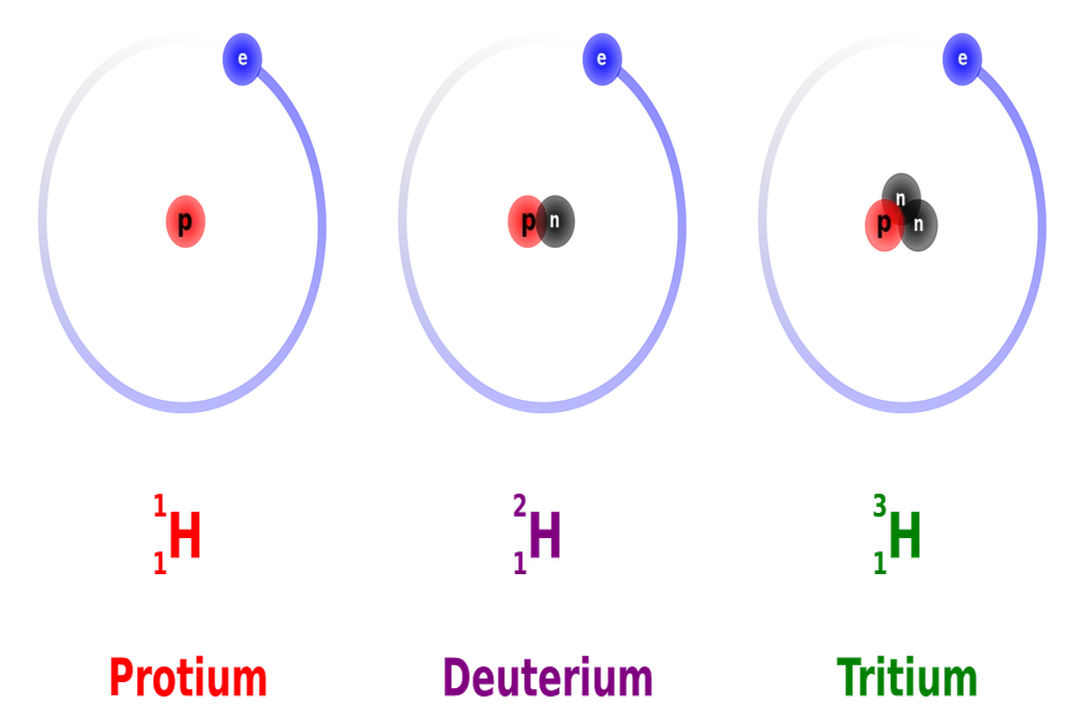
The most elemental substance across the cosmos is hydrogen, the foundational building block from which almost everything else arises. It is, by a substantial margin, the most prevalent element in the universe. This simple atom, composed of just one proton and one electron, holds the key to understanding cosmic origins, stellar mechanics, and the composition of the observable universe. Its overwhelming dominance is not a cosmic accident but a direct consequence of the very first moments following the Big Bang.
# Primordial Birth
The story of hydrogen’s abundance begins in the extreme heat and density of the universe's earliest moments. In the seconds after the Big Bang, the universe was so energetic that only the most fundamental particles could exist stably. As the universe expanded and cooled, conditions allowed for the creation of the first atomic nuclei through a process known as Big Bang Nucleosynthesis.
This initial period, lasting only a few minutes, was crucial for setting the elemental recipe for the cosmos. During this phase, protons and neutrons fused to form the lightest nuclei. Because the expansion and cooling happened so rapidly, there wasn't enough time or the right conditions for these initial nuclei to fuse into heavier elements in large quantities. The vast majority of protons remained as standalone hydrogen nuclei—single protons—which later captured electrons to form neutral hydrogen atoms. Helium was the next element formed, but it was created in far lesser amounts.
Hydrogen is characterized by its atomic number one, meaning it possesses a single proton in its nucleus. It is the lightest element on the periodic table. When considering the baryonic mass of the universe—that is, all the normal matter made of protons, neutrons, and electrons—hydrogen constitutes approximately 75% of that mass. If we look at the sheer number of atoms, the proportion is even higher, with about nine out of every ten atoms in the universe being a hydrogen atom.
# Cosmic Proportions
To truly grasp hydrogen's supremacy, comparing it to the next most common element is illuminating. Helium, the second most abundant element, accounts for roughly 24% of the universe's baryonic mass. This means that while helium is plentiful, the remaining elements—everything from oxygen to uranium—collectively make up a meager 1% of the universe’s normal matter. This stark imbalance highlights a fundamental truth: the universe is overwhelmingly hydrogen, with everything else being a relatively minor addition built upon that original foundation. This distribution pattern is a key piece of evidence supporting the Big Bang model itself.
The simplest form of hydrogen, Protium (), is the isotope composed of one proton and one electron. While heavier isotopes like Deuterium () and Tritium () exist, Protium is overwhelmingly the most common variety, further solidifying hydrogen’s status as the universal backdrop.

# Stellar Furnaces
If hydrogen was created in the Big Bang, how did the heavier elements—the stuff of planets, rocks, and life—come to exist? The answer lies in the engine of the universe: stars. Hydrogen is the primary fuel for stars.
Stars are essentially giant, long-lasting thermonuclear reactors where gravity compresses massive clouds of hydrogen gas until the core reaches temperatures and pressures high enough to initiate nuclear fusion. In this process, hydrogen nuclei overcome their mutual electrostatic repulsion and fuse together. The primary reaction sequence transforms hydrogen into helium.
When a star exhausts the hydrogen fuel in its core, it begins fusing helium into heavier elements like carbon and oxygen, and in the most massive stars, fusion continues up to iron. This stellar lifecycle—born from hydrogen, shining by fusing hydrogen, and eventually dying to create heavier elements—is the cosmic mechanism for element creation. In essence, every atom of carbon, oxygen, gold, or silicon you can name originated inside a star that was burning the primordial hydrogen left over from the Big Bang.
# Tracing History
Hydrogen’s presence is not just about construction; it is also a superb historical marker. Because it is so ubiquitous and its spectral signature is so well-understood, astronomers frequently use it as a probe to study the structure and motion of the cosmos.
The neutral hydrogen atom emits radio waves at a specific frequency, approximately $1420$ megahertz (or a wavelength of $21$ centimeters), which is often referred to as the line. This emission is a spin-flip transition within the hydrogen atom's ground state, meaning it's a very subtle quantum event that requires a huge reservoir of hydrogen to be easily detectable across interstellar distances.
This specific wavelength is incredibly important because these radio waves can pass relatively unimpeded through the vast, dusty clouds that block visible light. By measuring the Doppler shift—the change in frequency caused by motion—of this signal coming from different parts of galaxies, astronomers can map the velocity and distribution of neutral gas clouds. This allows for the creation of detailed maps of spiral arms and the measurement of galactic rotation curves, providing insights into the distribution of mass, including the unseen dark matter. This characteristic radio signature makes hydrogen a foundational tool for radio astronomy, telling the story of how matter has been distributed since the universe's infancy.
# Why the Overstock?
A natural follow-up question is why, if stars have been burning hydrogen for billions of years, such a large percentage remains unburnt? The persistence of so much hydrogen is tied to the scale and inefficiency of cosmic processes.
Firstly, the sheer volume of the universe is immense, and the total amount of primordial hydrogen created in the Big Bang was staggering. While many stars have lived and died, converting hydrogen to helium, the total reservoir is simply too large to have been exhausted, especially since helium itself is only half as abundant by mass.
Secondly, the conversion process is confined. Fusion only occurs in the dense, hot cores of stars. Vast interstellar and intergalactic clouds of hydrogen gas exist far from stellar nurseries and remain untouched. Furthermore, not all hydrogen has been incorporated into long-lived structures like planets or stellar remnants. A significant fraction resides in cold, dark molecular clouds or diffuse gas, awaiting future star formation events.
When we consider the lifecycle, it’s interesting to note that while hydrogen is the fuel, the energy released by its fusion is what drives stellar evolution. The mass difference between the starting hydrogen nuclei and the resulting helium nucleus is converted into the immense energy output of the star. Yet, this energy creation is a slow burn over billions of years in sun-like stars, meaning that even over the age of the universe, the depletion rate is slow relative to the initial supply.
The universe's composition—75% hydrogen, 24% helium, and 1% everything else—is a persistent echo of those first few minutes after the Big Bang. The heavier elements we observe today are essentially the "ash" or byproducts collected over eons of stellar activity, gradually enriching the initial hydrogen medium.
If we were to look at the elemental inventory of the entire observable universe, we would see that over 98% of its mass is accounted for by just two elements: hydrogen and helium. Thinking about the fusion chain, one might consider how inefficient the initial steps are. Turning the first two hydrogen nuclei into deuterium requires overcoming significant quantum barriers, which demands the immense energy only found in stellar cores, effectively locking hydrogen away until conditions are extreme enough to force the creation of the next element.
This fundamental dominance means that any speculation about the universe’s past or future must begin with hydrogen as the baseline material. It is the cosmological constant of matter, the universal solvent from which all complexity emerges. The fact that even after nearly 14 billion years, the cosmos remains overwhelmingly hydrogen suggests an almost infinite supply for the creation of future generations of stars and, perhaps, future cosmic structures.
#Videos
The Baseline #8 - Why Hydrogen Tells Us the Story of the Universe
Related Questions
#Citations
Why Is Hydrogen the Most Common Element in the Universe?
Why is the majority of the universe still hydrogen? Why hasn't it all ...
Hydrogen - Element information, properties and uses | Periodic Table
Featured Video: Why Hydrogen Tells Us the Story of the Universe
Why is hydrogen the most abundant element in the Universe?
Hydrogen, The First and Most Abundant Element in the Universe
The Baseline #8 - Why Hydrogen Tells Us the Story of the Universe
Why is there so much hydrogen left in the universe? - Quora
Hydrogen is an essential for life, the universe and just about ...