What two fundamental particles compose the simple hydrogen atom?
Answer
One proton and one electron
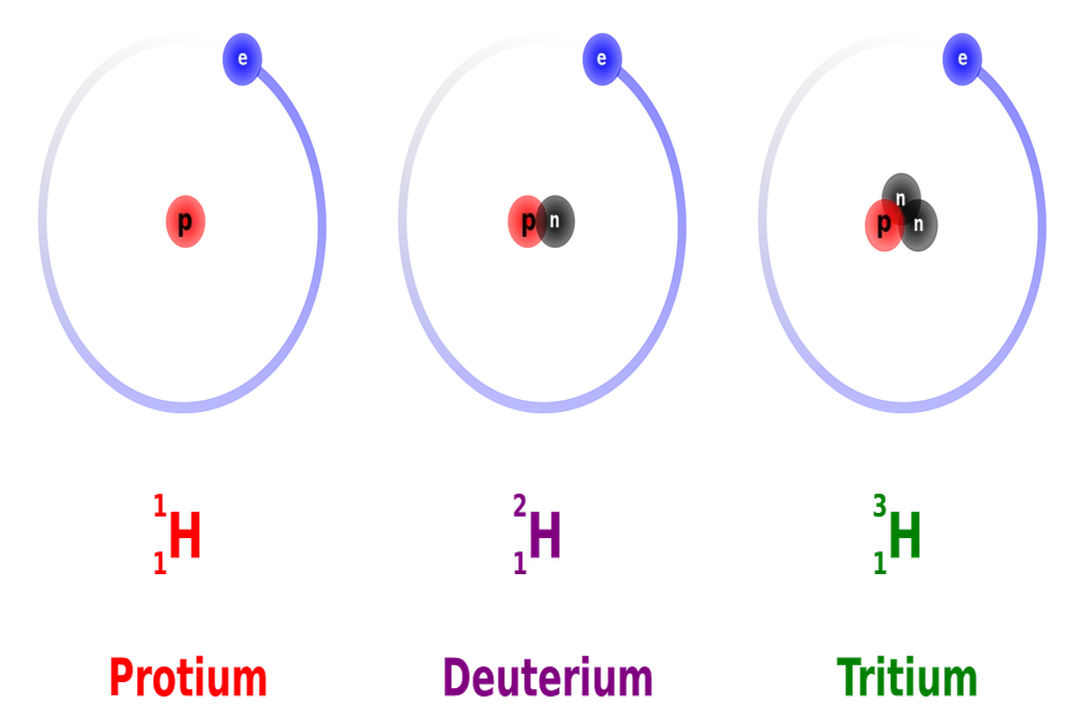
The description of the most elemental substance confirms its structural simplicity. A standard, non-ionized hydrogen atom possesses the smallest possible configuration found in nature. This structure consists solely of a nucleus containing a single proton, which carries the positive charge, orbited by a single electron, which carries the negative charge. This configuration grants hydrogen its atomic number of one, making it the lightest element listed on the periodic table. This fundamental building block is critical because it forms the starting material for all subsequent nucleosynthesis processes occurring later within stars.
#Videos
The Baseline #8 - Why Hydrogen Tells Us the Story of the Universe
Related Questions
What percentage of the universe's baryonic mass is constituted by hydrogen?What two fundamental particles compose the simple hydrogen atom?When did the creation of the first atomic nuclei, including hydrogen, occur?How much of the universe's baryonic mass does Helium account for compared to Hydrogen?What specific wavelength emission is associated with neutral hydrogen's spin-flip transition?Which isotope is overwhelmingly the most common variety of hydrogen observed?What is the primary fuel that stars utilize in their long-lasting thermonuclear reactors?What is the atomic number characterizing hydrogen on the periodic table?Why does more than three-quarters of the universe's hydrogen remain unburnt after eons?What results from the mass difference between starting hydrogen nuclei and resulting helium nucleus?If hydrogen comprises 75% of baryonic mass, what is its proportion by the *number* of atoms?