Why is hydrogen so important to the universe?
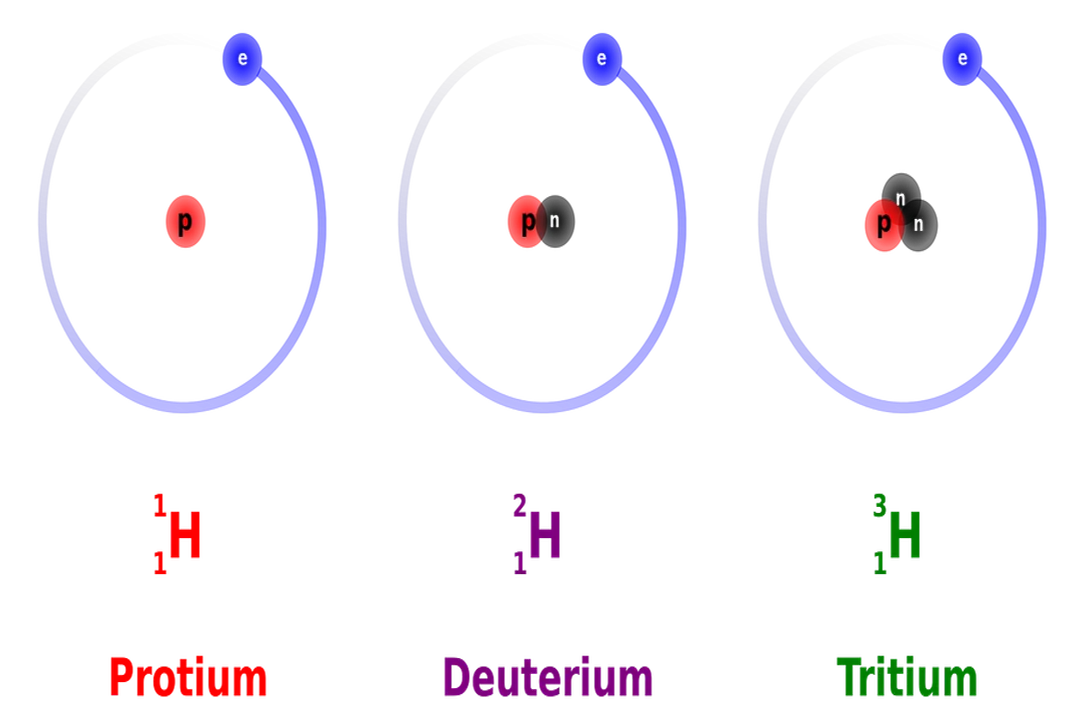
The initial appearance of hydrogen, the simplest of all elements, sets the stage for everything that has ever been observed in the vastness of space. As the first element to form after the universe cooled sufficiently following the Big Bang, it constitutes the overwhelming majority of the elemental mass in existence today. [3][5] In fact, estimates consistently place its universal abundance around 75% of the normal matter mass across the cosmos. [5] This foundational status isn't just a historical footnote; it dictates the structure, evolution, and energetic processes of the entire observable universe. [3]
# Primordial Element
Hydrogen’s initial dominance stems directly from the conditions immediately after the Big Bang. In the first few minutes of the universe, temperatures and densities were high enough to allow nuclear fusion, but only for the lightest nuclei. [5] This process, known as Big Bang Nucleosynthesis, rapidly produced protons (which are the nuclei of hydrogen) and neutrons. [5] As the universe expanded and cooled, most of the available neutrons quickly combined with protons to form the nuclei of deuterium, helium, and trace amounts of lithium. [5] However, the process stopped abruptly because the rapid cooling meant that the window for further fusion—to create elements like carbon or oxygen—closed before it could truly begin. [5]
Consequently, the universe was left as a massive primordial soup composed almost entirely of hydrogen nuclei (protons) and helium nuclei, with hydrogen being vastly more prevalent. [3][4] Even now, billions of years later, the vast majority of interstellar gas clouds and the mass of stars are composed of this single proton. [4] The stability of the hydrogen nucleus—a single proton—means it resists further breaking down under normal interstellar conditions, unlike some heavier, less stable isotopes or elements that might be formed later. [5]
When we look at the composition of the universe, the numbers truly illustrate this initial imprint. Consider a simple breakdown of the elemental mass in the cosmos: hydrogen accounts for approximately three-quarters, while helium makes up nearly all the rest, leaving all heavier elements—the stuff that makes up planets, water, and life—to comprise only a small fraction. [5]
# Stellar Furnaces
If hydrogen is so abundant, why is it important now? Because it serves as the primary fuel source for the universe’s engines: the stars. [5] Stars are colossal balls of plasma where gravity compresses the hydrogen fuel until the core temperature and pressure are sufficient to ignite nuclear fusion. [5] This fusion process converts hydrogen nuclei into helium nuclei, releasing enormous amounts of energy in the form of light and heat—the very energy that makes the universe visible and allows for chemistry as we know it. [5]
A star spends the vast majority of its active life, known as the main sequence phase, engaged in this hydrogen-to-helium conversion. [5] Without a massive supply of hydrogen, there would be no sustained light from the vast majority of galaxies. The heavier elements that make up our solar system, and indeed ourselves, were not present in significant quantities during the early universe; they had to be synthesized within stars through subsequent stages of fusion, which only begins once the initial hydrogen fuel is depleted. [5]
This stellar process is fundamental:
- Ignition: Gravitational collapse heats the core until the threshold for sustained fusion is met.
- Burning: Hydrogen fuses into helium, generating outward pressure that balances the inward crush of gravity.
- Element Creation: For massive stars, once hydrogen is gone, the core contracts again, heating up enough to begin fusing helium into heavier elements like carbon, oxygen, and so on, up to iron. [5]
It is a fascinating consequence of cosmic engineering that the universe’s most common substance is also the source material for the next generation of complexity. One might think that billions of years of stellar burning would have drastically reduced the cosmic hydrogen percentage, but the sheer scale of the universe means that massive reserves still exist in cold, unlit molecular clouds, waiting for the next generation of stars to form. [4]
| Cosmic Role | Element Form | Key Process | Scale of Importance |
|---|---|---|---|
| Fuel | Atomic/Molecular H | Nuclear Fusion (H He) | Stars, Energy Generation |
| Mass Dominance | Atomic H | Remnant of Big Bang | Universal Composition |
| Life Chemistry | Ion () and Covalent Bond | Water, Acids/Bases, Biomolecules | Planetary Habitability |
The efficiency of this conversion is staggering, yet it highlights a necessary cosmic cycle. Stars act as giant recyclers, taking the most common element, burning it, and scattering the resulting heavier elements (like carbon, nitrogen, and oxygen) across the galaxy when they die, enriching the next generation of stellar nurseries. [5]

# Earthly Biochemistry
Moving from the grand scale of cosmology to the intimate scale of biology reveals that hydrogen’s importance is not diminished; it merely changes form. On Earth, while it is not the most abundant element by mass in the Earth’s crust or even the entire planet (where iron and oxygen dominate), it is absolutely essential for life as we know it. [2]
In biological systems, hydrogen atoms are crucial components of virtually all organic molecules. They form the backbone of hydrocarbons, which are central to fats, proteins, and carbohydrates. [2] Life is fundamentally based on carbon chemistry, but hydrogen atoms are required to satisfy the bonding requirements of carbon, turning an otherwise inert skeleton into the complex, functional molecules required for living processes. [2]
Beyond its structural role in forming the building blocks of life, the hydrogen ion (), essentially a bare proton, is perhaps even more active in fundamental life processes. [6]
# Proton Dynamics
The management of protons is central to energy transfer within cells:
- pH Balance: The concentration of ions in solution dictates the acidity or alkalinity (pH). [6] Maintaining a precise, narrow pH range is absolutely vital for enzymes to function correctly, as the three-dimensional folding and activity of proteins are extremely sensitive to small shifts in proton concentration. [6] A slight deviation can cause proteins to denature, rendering them useless.
- Energy Currency: The most critical energy-yielding process in aerobic life—cellular respiration—relies heavily on proton gradients. [6] Specifically, the electron transport chain in mitochondria pumps protons across an internal membrane, creating an electrochemical gradient. The controlled flow of these protons back across the membrane through an enzyme called synthase is what drives the production of adenosine triphosphate (), the universal energy currency of the cell. [6]
The sheer number of hydrogen atoms in a single water molecule (), which covers the majority of our planet and makes up the bulk of our bodies, underscores its constant, quiet presence in every reaction. [2] Life is, in many ways, an elaborate choreography involving the movement and sharing of these single protons.
# Terrestrial Energy
While hydrogen exists in trace amounts in the Earth's atmosphere, its importance here shifts again, moving toward future energy considerations. [9] In the context of Earth’s energy infrastructure, hydrogen is not prized for its abundance in the atmosphere, but for its energy density when burned (or used in a fuel cell) and the fact that its main byproduct is pure water. [9]
Hydrogen is incredibly light; this low mass gives it the highest specific energy content by mass of any fuel source—roughly three times that of gasoline. [9] However, it is often not abundant in a readily usable, pure form on Earth, requiring energy-intensive processes to separate it from compounds like water or natural gas. [9]
The methods for obtaining hydrogen are often categorized by their environmental impact, which is a necessary consideration when discussing its role as an energy carrier:
- Grey Hydrogen: Produced from natural gas, releasing carbon dioxide () into the atmosphere. [9]
- Blue Hydrogen: Similar to grey, but with the captured and stored. [9]
- Green Hydrogen: Produced by splitting water using renewable electricity (electrolysis), resulting in zero operational carbon emissions. [9]
This contrast between the natural abundance of hydrogen in space and its relative scarcity in pure, accessible form on Earth creates an interesting dynamic. In the cosmos, it is cheap energy; on Earth, accessing it requires an investment of energy, making the source of that investment (renewables vs. fossil fuels) the deciding factor in its "greenness". [9]
# Universal Chemistry Summary
To truly appreciate hydrogen's scope, it helps to synthesize its roles across the primary domains we observe. Its presence dominates the universe, fuels the stars that build everything else, and forms the essential machinery of terrestrial life.
Consider the transition from the intergalactic medium to the inner workings of a cell. In the cosmos, hydrogen exists as neutral atoms or plasma, easily energized by ultraviolet radiation or gravitational forces. [4] On a planet like Earth, it binds intimately with oxygen to form water, the universal solvent, or with carbon to form the long chains that define organic structures. [2] The energetic requirements are also scaled differently: one needs the gravitational force of a star to fuse hydrogen into helium, but one only needs an enzyme like synthase to use the potential energy stored in a proton gradient. [6]
This scale difference suggests an underlying physical principle: the universe seems fundamentally tuned to utilize the simplest available configuration. Hydrogen is the simplest. When conditions allow for complexity (like in a star's core or a cell's membrane), hydrogen's readiness to release energy, either as a proton or through fusion, is exploited first and foremost. [5][6] It is the baseline against which all other chemistry is measured.
Related Questions
#Citations
Why Is Hydrogen the Most Common Element in the Universe?
Lightweight of Periodic Table Plays Big Role in Life on Earth
Hydrogen, The First and Most Abundant Element in the Universe
Why is the majority of the universe still hydrogen? Why hasn't it all ...
Why is hydrogen the most abundant element in the Universe?
Roles of hydrogen in Biology of Life as a hydrogen and as a proton ...
Hydrogen is an essential for life, the universe and just about ...
Why is hydrogen still so abundant in the universe? - Quora
Hydrogen explained - U.S. Energy Information Administration (EIA)