Why is it highly unlikely that any of the stars in a globular cluster would have planets?
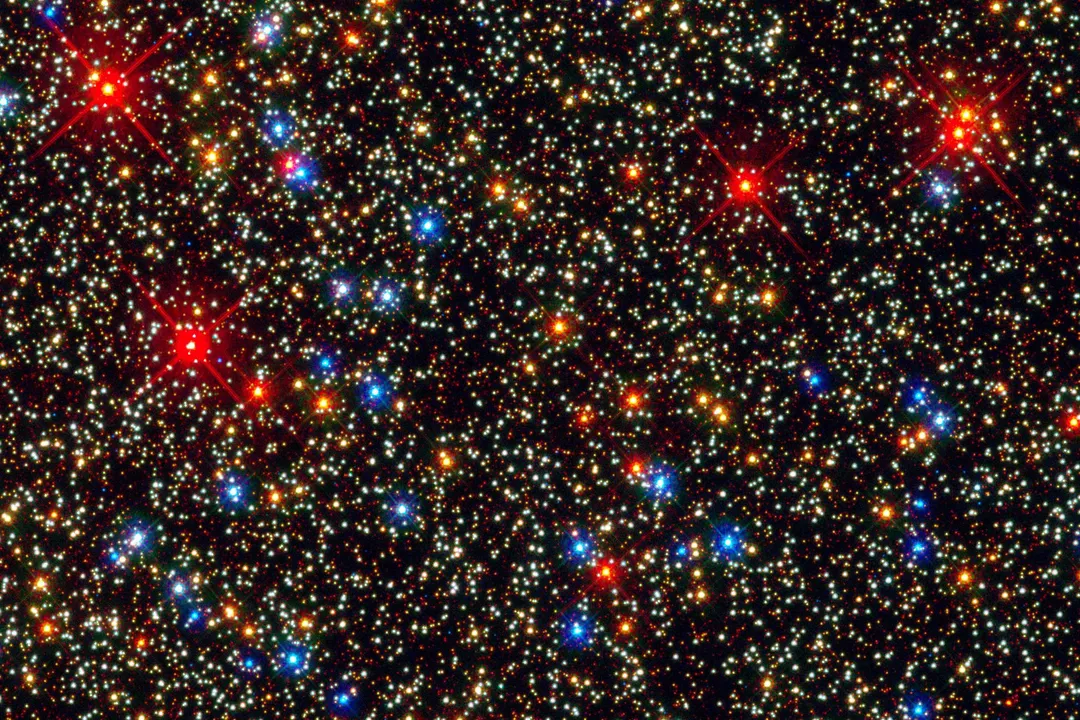
The very idea of a star system existing within a dense globular cluster often feels counterintuitive, given our familiarity with the relative spaciousness of our own corner of the Milky Way. These ancient congregations, comprising hundreds of thousands to millions of stars, are packed into a relatively small volume, creating an environment far more volatile than the galactic plane. While planets are now known to be common around stars in the solar neighborhood, the consensus among astronomers studying these clusters suggests that finding stable, long-lived planetary systems within them is highly improbable. The core issue boils down to two primary, interconnected factors: the extreme stellar density that leads to gravitational chaos, and the vast timescale over which these systems would need to survive.
# Stellar Proximity Chaos
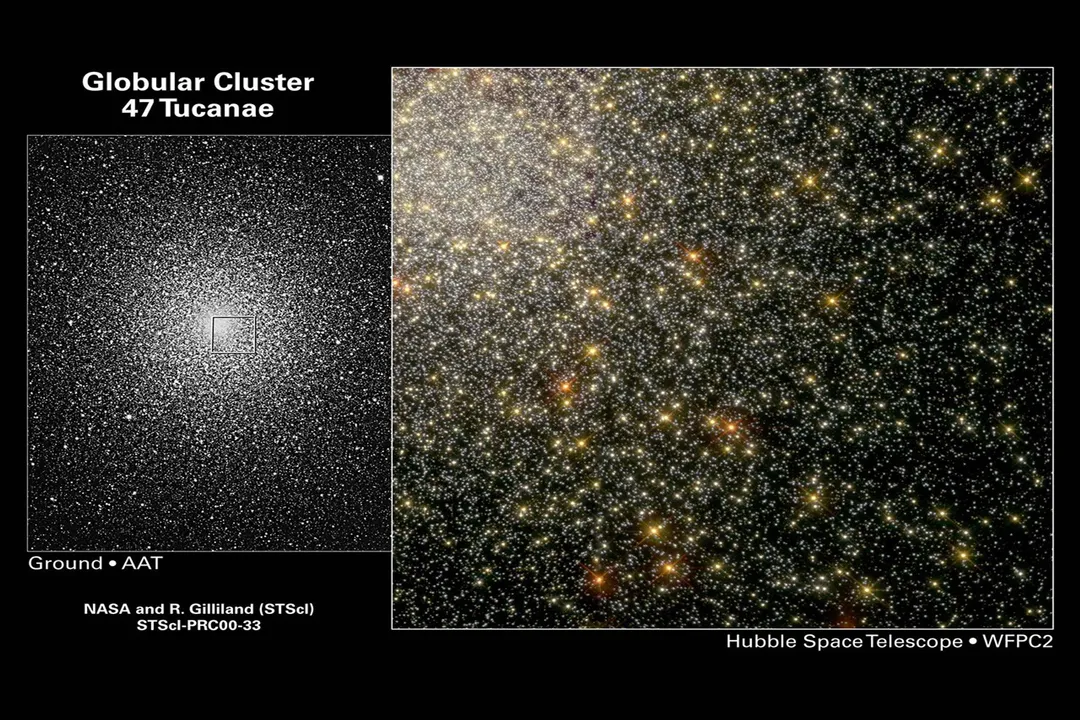
The physical arrangement of stars in a globular cluster is radically different from our local environment. In the quiet suburbs of the Milky Way, the average distance between stars is quite large, allowing planetary systems to evolve without frequent external interference. However, in the dense core of a globular cluster, stars can be packed together at separations that are much smaller—sometimes only a fraction of the distance between the Sun and Neptune. To put this into perspective, if our Sun were an average star in the disk of the galaxy, its nearest neighbor might be several light-years away. In a cluster core, that distance could shrink to less than a light-year, or even approach the separation between the Sun and Pluto or further inward.
This close stellar neighborhood sets the stage for gravitational disturbances that can severely impact any nascent planetary system. When stars pass close to one another, the gravitational field of the interloper can tug on the outer bodies of the host star’s system—the asteroids, comets, and, critically, the planets themselves. These interactions do not need to be catastrophic collisions; subtle tidal forces over millions of years are enough to change the orbits of worlds, especially those further from their parent star.
One of the major theoretical outcomes of these close shuffles is the complete ejection of planets from their host stars. A close stellar flyby can inject enough energy into a planet’s orbit to fling it entirely out of the system, sending it hurtling into the void between the stars. The debris and smaller bodies are often stripped away first, but with enough close passes, even Jupiter-sized worlds could be sent packing. The dynamic interactions in these stellar suburbs mean that an orbital configuration stable for billions of years in isolation might be completely demolished in a relatively short cosmic timeframe. This process suggests that even if planets do form in globular clusters, the environment is actively hostile to their long-term existence bound to a single star.
An interesting conceptual addition to this is considering the rate of these encounters. In our solar neighborhood, a star might only experience a close gravitational interaction with another star once every few million years, if at all. In contrast, simulations suggest that in the core of a cluster like M13, the frequency of such disruptive events is orders of magnitude higher, perhaps occurring on timescales comparable to the age of the entire solar system itself. Therefore, any system that managed to form in that core would be subjected to repeated, high-energy gravitational perturbations from its stellar neighbors right from its earliest stages.
# The Imprint of Time
Globular clusters are relics of the early universe, often clocking in at ages nearing 10 to 13 billion years. This extreme antiquity presents a second significant hurdle for planetary survival: longevity. For a planet to be found today, it must have formed early in the cluster’s history and then somehow managed to survive the gravitational maelstrom described above for nearly the entire age of the universe.
The conditions during the formation of these very early systems may also have been less conducive to planet formation compared to the more metal-rich stars that formed later, like our Sun. Stars in these older clusters are generally metal-poor, meaning they contain lower abundances of elements heavier than helium and hydrogen—the very elements necessary to build rocky planets or gas giants. While recent findings show that planets can form around metal-poor stars, the overall chemical environment of these primordial stellar nurseries might have limited the raw materials available.
Furthermore, the environment itself is harsh. While the stellar density is the main issue, the radiation environment from a large population of old stars over eons could also play a role in stripping away lighter atmospheric components, though the gravitational stripping is generally cited as the more immediate threat. The question becomes less about if a planet could form, and more about if it could retain its stable, recognizable structure for the span of time required.
# Observing the Emptiness
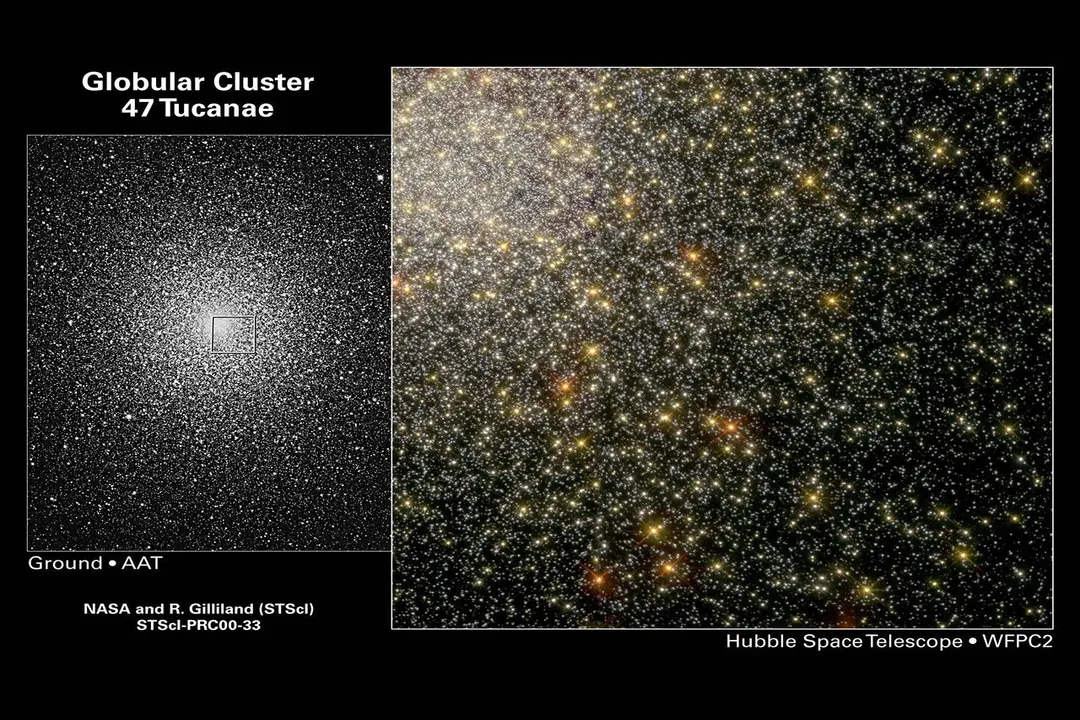
The theoretical arguments against globular cluster planets are strongly supported by observational efforts, primarily utilizing the Hubble Space Telescope. Astronomers have turned Hubble’s sharp eye toward dense clusters, specifically looking for the characteristic dimming caused by a planet passing in front of its star—a transit.
A key target for these studies has been the cluster 47 Tucanae. Based on the number of stars observed and the known frequency of planets in the Milky Way disk, scientists predicted that Hubble should have detected a certain number of transiting planets. However, the results have shown a surprising deficit. The number of detected planets was significantly lower than expected, leading to the conclusion that planetary systems are far less common, or perhaps even rare, in the crowded environment of 47 Tucanae compared to our local stellar population. This observational gap reinforces the models predicting significant gravitational disruption.
This difficulty in finding planets translates directly to the search for extraterrestrial life. In the cluster Omega Centauri, another massive globular cluster, the low rate of planetary systems, combined with other factors, makes the prospect of finding life highly unlikely. The environment appears to actively work against the stability required for complex biological evolution to take hold and persist over cosmic timescales.
# Habitable Zones Versus Stellar Neighborhoods
When discussing exoplanets, much attention is paid to the "habitable zone"—the orbital band where liquid water could theoretically exist on a planet's surface. While the habitable zones of old, metal-poor stars in a cluster might exist, the planet in question would have to orbit inside the zone of gravitational influence where the aforementioned tidal stripping occurs most effectively.
Consider a hypothetical metal-poor star, Star X, in a cluster core, only a few hundred times farther from its neighbors than the Earth is from the Sun. If Star X managed to form a planet, say, at the distance of Mars, it would be orbiting well within the Goldilocks zone for that star type. However, the gravitational influence of a passing star at even a modest distance—perhaps a few thousand Astronomical Units (AU) away, which is close in cluster terms—could easily destabilize the inner orbits.
This leads to an interesting comparative thought experiment. If we were to plot the expected orbital radii for Earth-like planets in a typical Milky Way solar system versus the average stellar separation in a cluster core, the disparity is striking. In our solar system, Earth orbits at , while the nearest star, Proxima Centauri, is about away. In a cluster core, that nearest neighbor might be only away. This means that for every of potentially habitable space around Star X, there is a vastly increased probability of a gravitational encounter destabilizing that orbit, essentially shrinking the effective zone of stability down to a very tight inner region, if one exists at all.
The search for life in these clusters often centers on whether planets could "hop" between stars, as some speculate about stellar encounters. The general consensus derived from orbital dynamics, however, suggests that while a planet could theoretically be tossed from one star to another, the energy required for it to settle into a stable, long-term orbit around a new host star is extremely low, making such captures far less likely than outright ejection into interstellar space.
# Cluster Dynamics Versus Galactic Evolution
Globular clusters represent a distinct evolutionary path compared to the galactic disk. They are collections of ancient stars that often share a common origin, forming before the disk settled into its current state. Their gravitational binding and internal dynamics are far more pronounced. While individual stars might have magnetic fields that affect their immediate surroundings, the overwhelming factor determining planetary habitability or even mere existence seems to be the sheer number of neighbors.
The fact that we observe so few planets in clusters like 47 Tucanae suggests that either the initial planet formation rate was extremely low, or that the destruction rate is very high. Given the known ubiquity of planet formation elsewhere, the high destruction rate due to stellar close approaches remains the leading explanation. These ancient systems simply have not had the billions of years of quiet isolation that our own Solar System has enjoyed to permit their planetary architectures to settle and persist undisturbed. The very structure that defines a globular cluster—its high density—is the mechanism that appears to preclude the formation and persistence of stable planetary roommates for its constituent stars.
Related Questions
#Citations
Astronomers Ponder Lack of Planets in Globular Cluster
Is Life possible in a Globular Cluster? : r/Astronomy - Reddit
Possibilities of life in globular clusters - jatan.space
Do planets in globular clusters hop between stars or stick to one ...
Astronomers ponder lack of planets in globular cluster
Could globular clusters be home to intelligent life? - Astronomy Now
Star clusters can disrupt planetary systems, tossing planets into ...
Why are globular clusters not considered galaxies? How far apart ...
Omega centauri unlikely to harbor life - UCR News - UC Riverside