What observational pattern plotted on the Hertzsprung-Russell (HR) diagram is called an isochrone?
The resulting pattern observed when plotting temperature against luminosity for stars of a single cluster's specific age
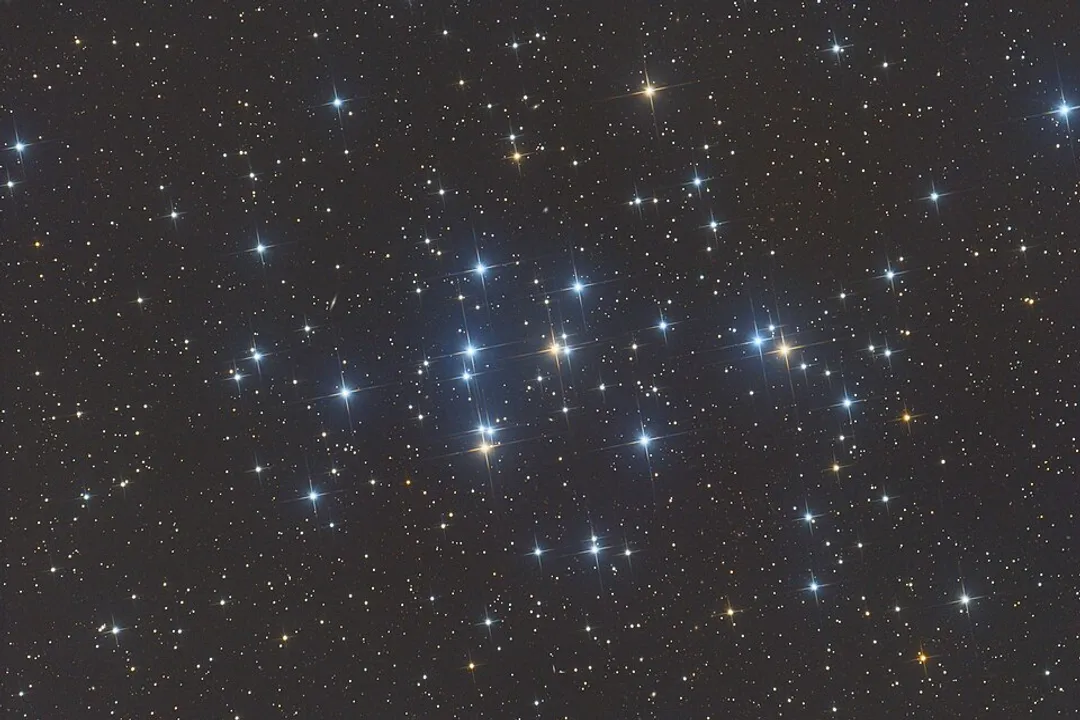
An isochrone is a fundamental concept used when studying stellar evolution via the Hertzsprung-Russell (HR) diagram. When astronomers take all the stars within a single cluster—which share the exact same age and initial composition—and plot their measured temperature against their luminosity, the resulting collection of points forms a specific line or pattern. This line is defined as the isochrone, which represents the theoretical position that stars of that precise age are expected to occupy on the HR diagram. By comparing isochrones from clusters of different ages, astronomers can track how stellar properties change over cosmic time.