What defines a star's time on the main sequence phase?
Answer
Fusing hydrogen atoms into helium atoms in its core
The main sequence phase constitutes the vast majority of a star's existence, marked by a stable equilibrium where the outward pressure generated by thermonuclear fusion in the core precisely counteracts the inward force of gravity. During this prolonged period, the dominant fusion process involves converting hydrogen nuclei into helium nuclei within the stellar core. This specific nuclear reaction dictates the star's long, stable lifespan until the core hydrogen fuel is exhausted, at which point the star begins its transition into later evolutionary stages.
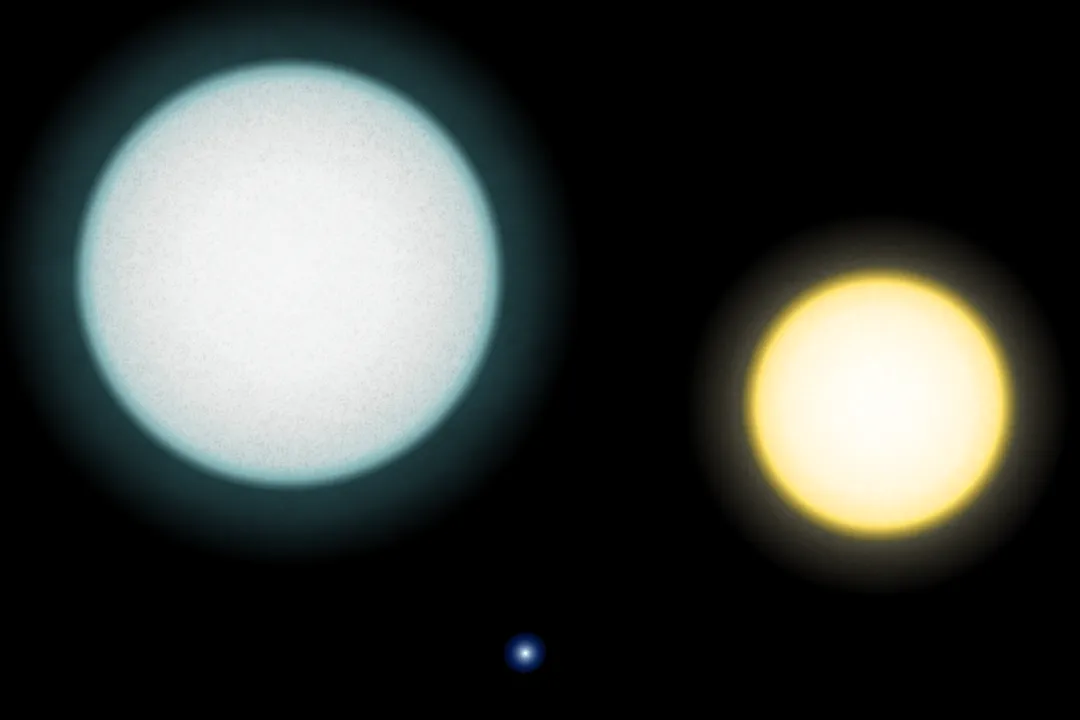
#Videos
How Do White Dwarfs Form From Stars? - Physics Frontier - YouTube
Related Questions
What defines a star's time on the main sequence phase?What process immediately follows hydrogen depletion in the inert helium core?What structural change transforms a star like the Sun due to intense shell burning?What primary elements are fused when the helium core ignition occurs?What is the sudden, violent ignition of helium fusion called in lower-mass stars?What beautiful structure forms from the expelled outer layers of a low-mass star?What quantum mechanical phenomenon supports a white dwarf against gravity?What is the critical mass limit for maintaining white dwarf stability?What catastrophic explosion results if a white dwarf exceeds the 1.4 M☉ limit?What is the cold, dark ultimate end state for a white dwarf lacking internal fusion?