Why are white dwarfs not considered to be true stars?

The question of whether a white dwarf qualifies as a "true star" hinges entirely on the definition one chooses to uphold, as these fascinating objects represent the final chapter for the majority of stars in the cosmos, including our own Sun. While the word "star" is frequently used by professional astronomers when discussing these remnants—often as "white dwarf star"—the most physically precise classification separates them from active, fusing stars.
# The Fusion Divide
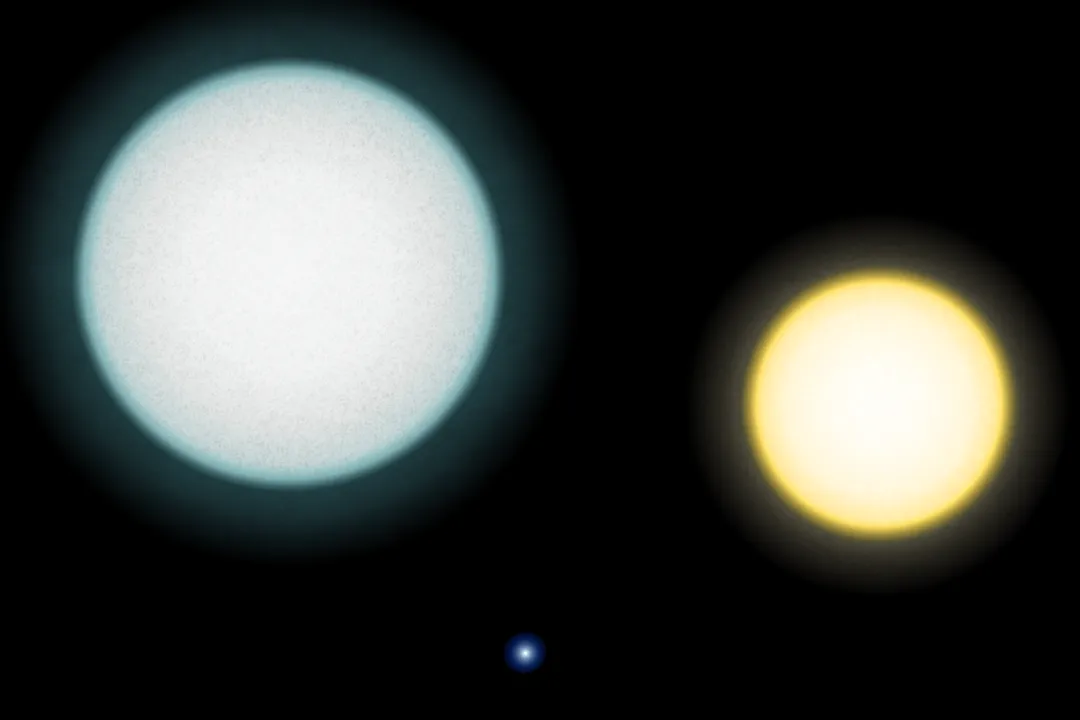
The fundamental differentiator in modern astrophysics is the presence of sustained nuclear fusion in the object's core. A "true star," by this stringent standard, is defined by its ability to generate energy by fusing lighter elements into heavier ones, typically starting with hydrogen into helium. Our Sun, while currently fusing hydrogen, is a star because of this active process.
White dwarfs, conversely, are stellar remnants. They have exhausted their primary nuclear fuel source, causing the thermal pressure that previously held them up against their own immense gravity to cease. In the life of a Sun-like star, this cessation leads to the star puffing up into a red giant, fusing helium into carbon and oxygen, before finally shedding its outer layers as a planetary nebula. What remains is the stellar core—the white dwarf—which is no longer a furnace but a cooling ember. The light we observe from a white dwarf is simply its residual heat radiating away, not energy generated by ongoing core reactions.
# Support Mechanism Physics

The reason a white dwarf doesn't immediately collapse into an even smaller object is not heat, but quantum mechanics. In a normal star, the outward push comes from the thermal pressure generated by fusion. When the temperature of a white dwarf’s core stabilizes after formation, it is supported by electron degeneracy pressure.
This pressure is a direct consequence of the Pauli Exclusion Principle, which dictates that no two electrons can occupy the exact same quantum state simultaneously. When the star's core is squeezed to incredible densities—packing the mass of the Sun into a volume comparable to the Earth—the electrons are packed so tightly that they are forced into higher and higher momentum states, creating a resistance to further compression. This pressure depends on density, not temperature, offering a final, stable state of support against gravity, provided the mass remains below a critical threshold.
This unique structural support leads to a crucial physical boundary: the Chandrasekhar limit, approximately $1.44$ times the mass of the Sun () for a non-rotating star. If a white dwarf accumulates mass beyond this point, even the electron degeneracy pressure fails, leading to catastrophic collapse, likely triggering a Type Ia supernova explosion.
Here is a comparison summarizing the core difference between an active star and a white dwarf remnant:
| Feature | Active Star (e.g., Main Sequence) | White Dwarf Remnant |
|---|---|---|
| Energy Source | Sustained core nuclear fusion (H He, etc.) | Residual thermal energy from past fusion |
| Pressure Support | Thermal pressure (proportional to temperature) | Electron degeneracy pressure (proportional to density) |
| Core State | Plasma, supported by heat | Electron-degenerate matter (ionized nuclei and electrons) |
| Mass Limit | Upper limit exists, but not defined by degeneracy | Upper limit: Chandrasekhar Limit () |
| Ultimate Fate | Continues fusion, expands, or becomes a remnant | Cools down indefinitely |
A point worth noting in the physics community is the inherent contrast between the energy source and the support mechanism. An active star is stable because heat generation causes pressure increase; if it compresses, it heats up, pushing back against gravity. A white dwarf has decoupled this relationship: compression increases pressure without increasing internal heat from fusion, causing the radius to shrink as mass increases, which is counterintuitive to how normal stars behave. This physical behavior—being supported by degeneracy rather than by the products of fusion—is why many argue it forfeits the title of "true star".
# The Stellar Remnant Continuum
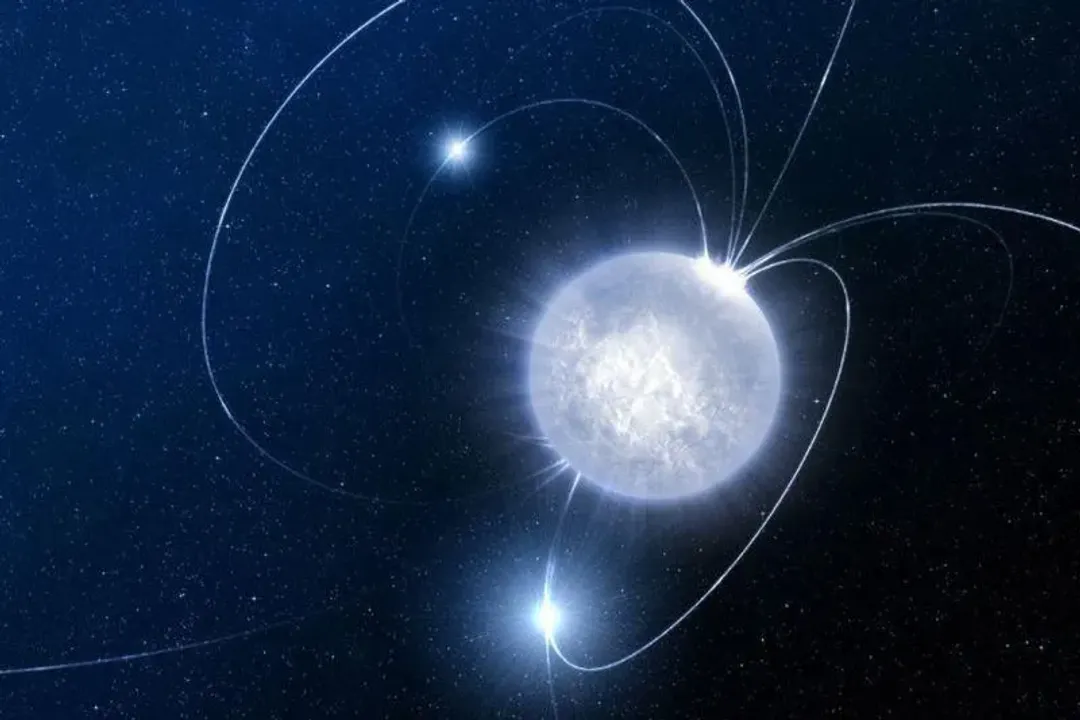
White dwarfs are not isolated in their "dead" status; they exist on a continuum of stellar corpses alongside neutron stars and black holes.
- Brown Dwarfs are often considered "failed stars" because they never achieve the core temperature ($> 4$ million K) required for sustained hydrogen fusion, though they may briefly fuse deuterium.
- Neutron Stars are the remnants of much more massive stars (), where gravity crushes electrons into protons, forming a core supported by neutron degeneracy pressure—a state far denser than electron-degenerate matter.
The progression is one of increasing density driven by gravitational collapse due to the exhaustion of fusion:
White dwarfs form from the lower-mass end of the original stellar population, meaning they are vastly more numerous than neutron stars and black holes. Because the progenitor stars for white dwarfs are far more common, about $97%$ of stars in the Milky Way are expected to end as white dwarfs.
While a white dwarf receiving mass in a binary system can briefly reignite surface fusion (a nova), this is not core fusion and does not restore the object to stellar status. However, the merger of two white dwarfs can restart the furnace, potentially triggering runaway carbon fusion and a Type Ia supernova, or—if the combined mass is less than the Chandrasekhar limit—possibly forming a stable, helium-fusing subdwarf, which would be a star in the strict sense for a limited time. This potential for revival, albeit temporary and cataclysmic, complicates a clean-cut exclusion from the stellar category.
# The Long Twilight and Cosmic Age Limit
The fate of an isolated white dwarf is a slow, inexorable cooling process. Since they generate no new energy, they spend trillions of years radiating away their initial stored heat. This cooling is delayed by the release of latent heat as the core material crystallizes into a solid, potentially diamond-like structure, a process confirmed by observing a "pile-up" in their cooling sequence.
This cooling trajectory provides a unique astrophysical clock. Since the universe is only about $13.8$ billion years old, no white dwarf has had time to cool sufficiently to become a theoretical, non-radiating black dwarf. The coolest observed white dwarfs still glow faintly, often in the red or infrared part of the spectrum, indicating a temperature near $3000$ K. The existence of these oldest, coolest observable remnants allows astronomers to place a lower limit on the age of the galaxy—a direct result of their lack of fusion. This means that, unlike active stars whose lifespan is measured in millions or billions of years based on their fuel consumption rate, the current existence of all known white dwarfs is defined by the finite age of the universe itself.
# The Semantics of Classification
The ultimate reason white dwarfs are not considered "true stars" rests on the consensus that sustained core fusion is the defining characteristic of a living star. However, in practice, the term "star" is a classification designed for utility. Stellar astronomers study white dwarfs because their physics—degeneracy, composition of heavy elements like Carbon and Oxygen, high surface gravity, and cooling rates—connects directly to the end-of-life physics of main-sequence stars. Classifying them as remnants allows for comparisons with neutron stars and black holes, grouping objects by their support mechanism and evolutionary pathway.
To avoid semantic arguments, the precise classification D (for degenerate) is used in spectral typing, distinguishing them from main-sequence V stars. Thus, while a white dwarf is not a star in the energetic sense, it is considered a stellar object—the corpse of a star—by the community dedicated to studying stellar evolution. The distinction matters less than appreciating that the physics governing a cold, dense remnant are fundamentally different from those governing a hot, fusing main-sequence object.
#Videos
Are white dwarfs stars -- a debate! - YouTube
Related Questions
#Citations
Are all white dwarfs the result of dead stars not big enough to go ...
White dwarf - Wikipedia
If two white dwarfs collided, would they become a star?
Why aren't neutron stars as common as white dwarf stars? - Quora
Neutron Stars, White Dwarfs, Brown Dwarfs And More Aren't Actually ...
Are White Dwarfs Stars? Understanding the Classification and ...
Are white dwarfs stars -- a debate! - YouTube