What do all stars in a globular cluster have in common?
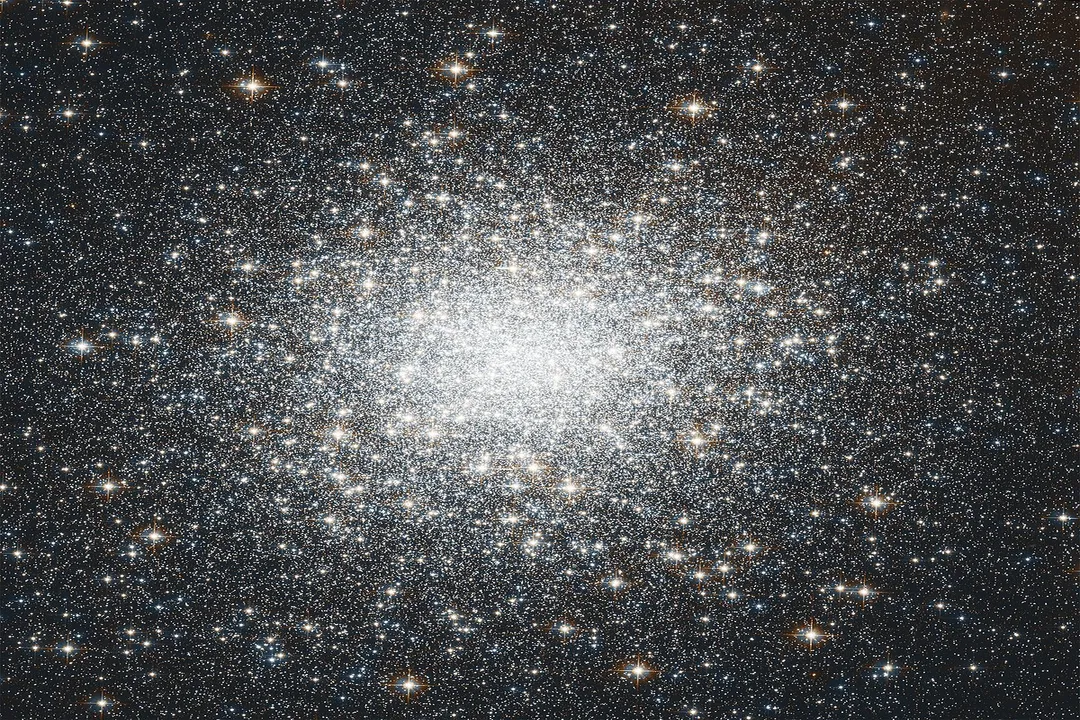
The stars that populate a globular cluster share an ancestry unlike almost any other stellar grouping in the cosmos. If you were to peer into one of these ancient, spherical cities of stars, the most striking commonality you would observe is their collective age and shared birthplace. By definition, every star within a globular cluster was born at roughly the same epoch, condensing from a single, massive cloud of gas and dust. This co-formation is the bedrock of why astronomers study them: they act as cosmic chronometers, allowing us to track stellar evolution across vast timescales.
# Ancient Population
Globular clusters are renowned for being home to some of the oldest known objects in the entire universe. The age estimates for these systems often approach 12 billion years. When comparing them to their younger cousins, the open clusters, which rarely survive past a few hundred million years, the difference is staggering. This immense longevity is directly related to the common characteristics of their stars.
These stars are predominantly classified as Population II stars. In the context of stellar history, Population II stars are the elderly citizens. They formed much earlier in the history of the galaxy, before subsequent generations of stars had time to enrich the interstellar medium with heavy elements.
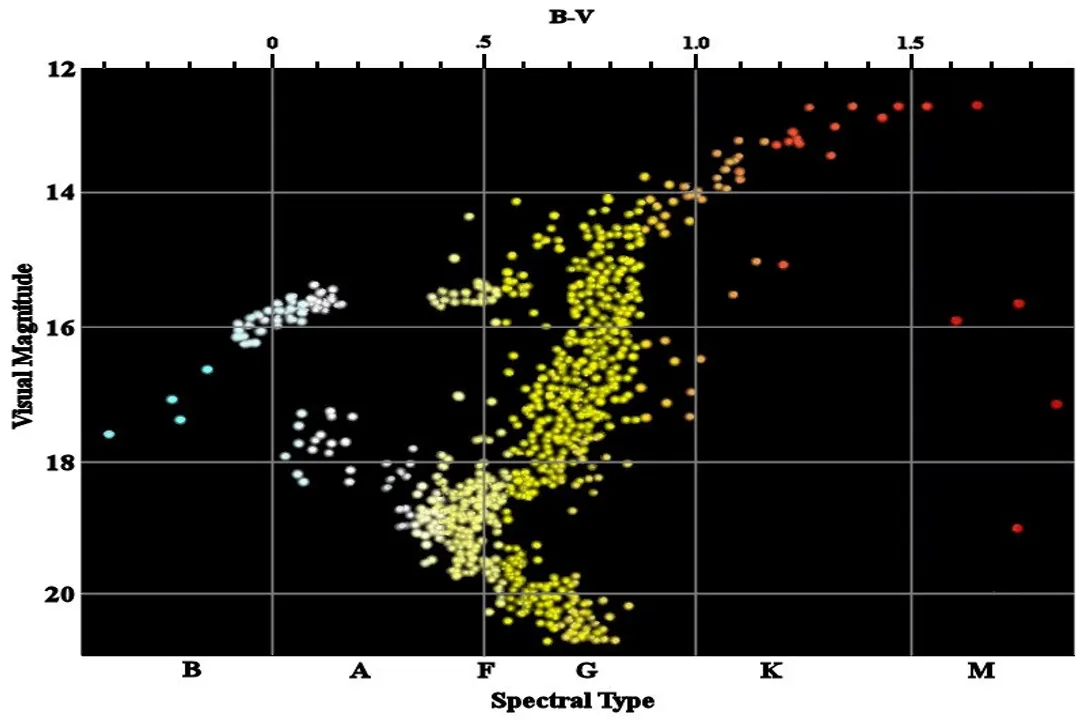
The process of a star’s life—how long it burns its fuel, what path it takes off the main sequence, and what it eventually becomes—is fundamentally dictated by its initial mass. Because all the stars in a cluster started life together, their current evolutionary stage, when plotted on a Hertzsprung-Russell (H-R) diagram, reveals a clear age signature. The most massive stars, which burn through their fuel fastest, have already evolved into giants or ended their lives, leaving behind a characteristic feature on the diagram known as the main-sequence turnoff. This "knee" in the data bends toward the upper right, and its exact position provides a direct, quantifiable measure of the cluster's age. For a truly single-population cluster, this feature would be exceptionally sharp, a perfect snapshot of a single moment in time.
# Shared Chemistry
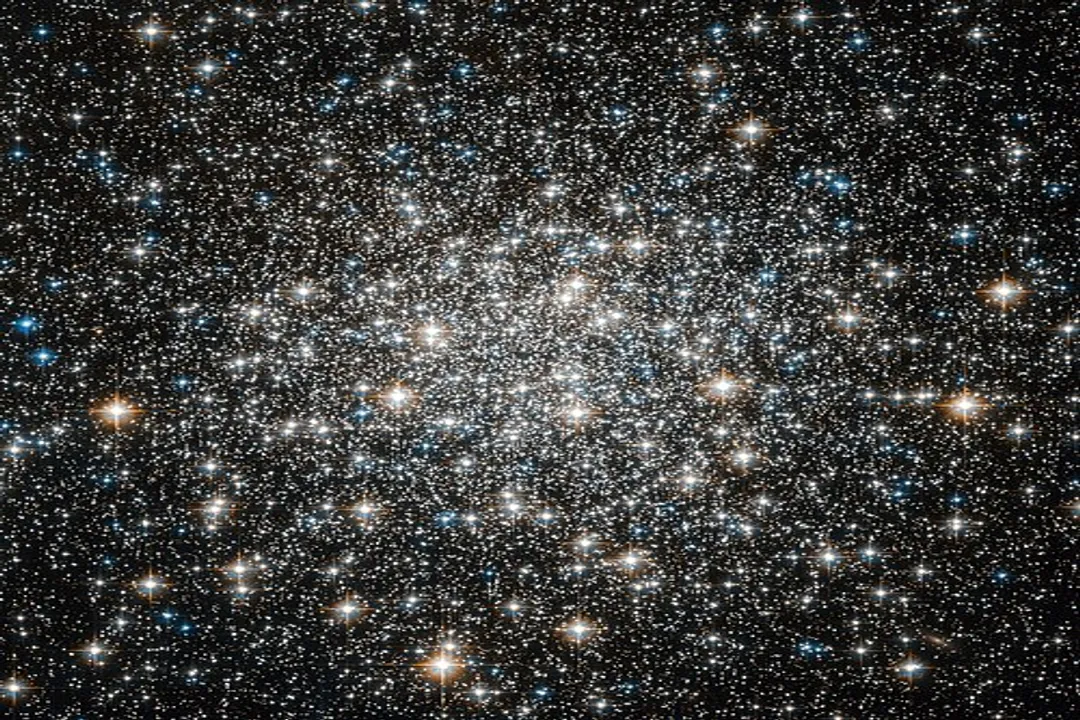
Another profound commonality among the stars in these ancient systems is their chemical makeup, or more specifically, their low metallicity. In astronomical parlance, "metals" are any elements heavier than hydrogen and helium, which were the only materials present in the earliest clouds of the universe. Since the stars in a globular cluster formed before repeated cycles of stellar death and rebirth had time to seed the cosmos with heavier atoms, they are chemically primitive compared to younger stars like our Sun.
The general rule is that globular cluster stars are metal-poor. This low abundance of heavy elements means their internal physics and evolutionary tracks are slightly different from metal-rich stars. Studying these tracks, particularly on the H-R diagram, provides astronomers with a clean laboratory to understand how composition influences stellar evolution across the board.
However, the idea that all stars share exactly the same composition is an outdated picture. Modern, high-resolution imaging from telescopes like Hubble has revealed that nearly all globular clusters actually harbor multiple stellar populations. This means that while the cluster as a whole is old and metal-poor, there might be distinct groups of stars within it that formed at slightly different times or with slightly different initial chemical abundances. One famous example, NGC 2808, shows evidence of three distinct main sequences, each representing a population with a slightly different composition or age, all existing within the same gravitationally bound structure. This complexity suggests that the initial single "birth" event often included subsequent, smaller bursts of star formation early in the cluster's life.
Considering this, it’s fascinating to note that this low metallicity has a strong implication for the potential for planets, especially Earth-like ones. The materials necessary to build rocky, terrestrial planets—elements like silicon, iron, and magnesium—are precisely those "metals" that are scarce in these old stars. Therefore, stars in these dense, ancient neighborhoods are far less likely to host Earth-mass planets than stars in the Sun's more chemically evolved neighborhood. The common chemical signature inherently limits the types of planetary systems that could have formed around them.
# Dynamical Family
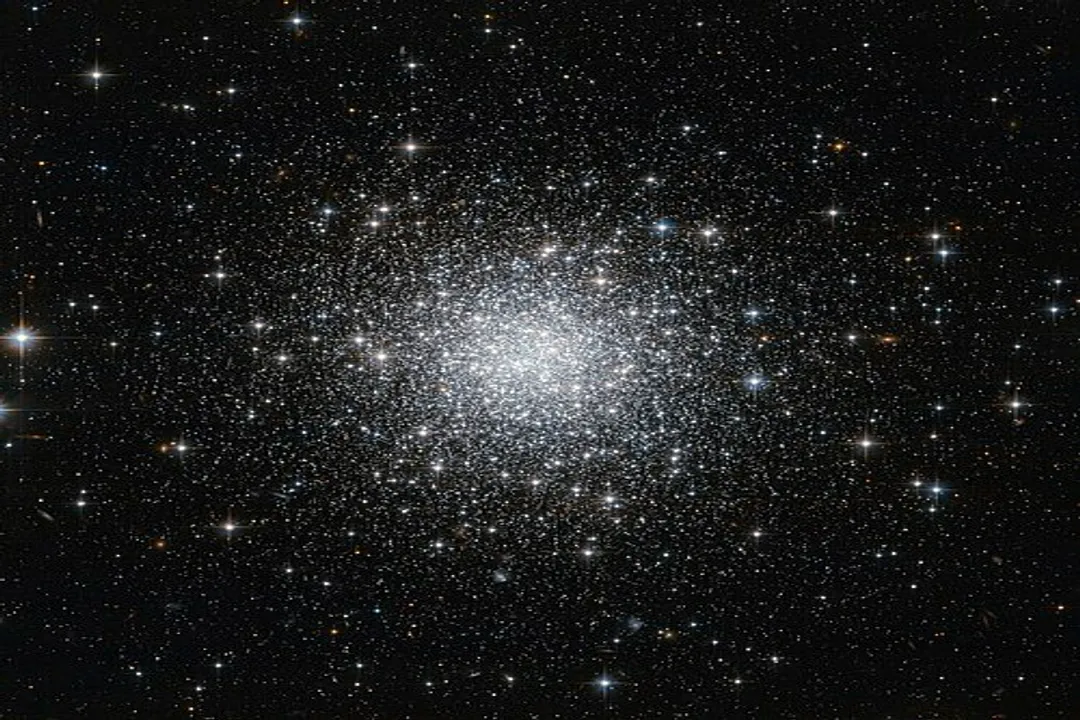
The stars in a globular cluster are not just neighbors; they are gravitationally bound into an extremely dense, nearly spherical shape. This intense, mutual gravitational attraction ensures they stick together for timescales comparable to the lifespan of the stars themselves. The sheer number of stars—ranging from tens of thousands to millions—creates a radically different dynamic environment compared to the sparse stellar field, even when accounting for composition.
The internal motions of the stars are governed by the cumulative gravity of all other members. Over long periods, the stars interact so frequently that the system approaches what physicists call a relaxed state. This relaxation means that the individual orbital histories of the stars are largely erased, and the distribution of their velocities becomes isotropic—meaning there is no preferred direction for the stars to be moving within the cluster; they move randomly in all directions around the center of mass. This is a direct consequence of the relaxation time being shorter than the age of the cluster, allowing enough stellar encounters to randomize their motions.
This high-density environment means that the average distance between stars is incredibly small. While the density around our Sun is roughly $0.1$ stars per cubic parsec, the core of a globular cluster can easily reach $100$ to $1000$ stars per cubic parsec. The typical stellar separation in the core can be as little as one-third of a light-year, which is about thirteen times closer than the distance between the Sun and Proxima Centauri.
# Crowding Effects
The constant, close gravitational encounters, which define the cluster’s dynamic evolution, lead directly to a set of stellar commonalities that wouldn't exist otherwise: the prevalence of exotic components. When stars are packed this tightly, near-collisions or close passes are frequent occurrences, fundamentally altering the makeup of the cluster.
A prime example is the formation of blue stragglers. These stars appear to have "regressed" to a hotter, brighter, younger state, looking out of place on the H-R diagram compared to their true age cohort. They achieve this new lease on life by stealing fuel from a neighbor, merging entirely with another star, or through complex interactions involving binary systems. Thus, the presence of blue stragglers is a common signature, advertising a history of violent dynamical activity within the cluster's core.
Another common result of this dense, long-lived environment is the frequent existence of millisecond pulsars and low-mass X-ray binaries. Furthermore, the very mechanism that randomizes stellar orbits—gravitational encounters—also causes mass segregation. Heavier stars systematically sink toward the cluster's center over time, while lighter stars gain energy and migrate outward. This process means that stars in the core, regardless of their individual history, share the common characteristic of being dynamically heavier than the average member star, creating a steep rise in the mass-to-light ratio toward the center.
It is worthwhile to compare this to open clusters. In an open cluster, stars are spread out and the relaxation time is often longer than the cluster's age. This means open cluster stars retain more of their initial orbital orientation. In a globular cluster, the stars have forgotten their initial path, making the whole group look dynamically "thermalized". The sheer proximity means that for the stars in a globular cluster, the gravitational influence of their neighbors almost always overrides the influence of the distant galactic tidal field on the scale of the cluster's core.
# Stable Environment
One final, overarching commonality is the cluster's stability and longevity. Globular clusters are associated with nearly all types of galaxies, often residing in the galactic halo of spirals like the Milky Way. Their massive, dense structure means they are gravitationally bound for ages.
Crucially, they are typically devoid of the gas and dust needed for new stars to form. Whatever material was present has either been converted into stars or violently expelled by the powerful winds and supernovae of the first-generation stars. This means that every star currently visible in the cluster belongs to the original population—or a close successor born very early on—and there will be no new, young additions to dilute the aged population.
This environment dictates an interesting relationship with the host galaxy. Because they are massive, some globular clusters, like the Milky Way's Omega Centauri, have retrograde orbits, meaning they circle the galactic center in the opposite direction of the disk's rotation. This strongly suggests that many of these clusters were not born within our galaxy but are remnants of smaller dwarf galaxies that were tidally stripped and captured by the Milky Way long ago. In this sense, the stars within them share a common origin that predates their current galactic home. Their survival is a testament to their extreme internal binding energy, allowing them to weather the tidal forces that disperse less tightly bound groups.
In summary, the stars in a globular cluster are united by their nearly identical age, their shared history of low-metallicity formation, their dense, interactive environment that promotes exotic stellar evolution pathways, and their collective, long-term gravitationally bound survival within the galactic halo. They are a preserved sample of the early universe, constantly interacting but eternally linked by gravity. If we consider the chance of two stars interacting within the core, a star in a typical globular cluster core experiences an interaction event roughly once every few million years, whereas the Sun, situated in the relatively sparse galactic disk, may go many hundreds of millions of years without a close stellar encounter. This difference in interaction frequency is perhaps the most crucial factor setting the evolutionary path for every star in that compact celestial city.
# Further Evolution
While individual stars within the cluster have well-defined life cycles, the cluster itself is subject to slow, galactic-scale evolution. Stars in the outer regions can be pulled away by the galaxy's gravity, a process called tidal stripping, leaving behind "tidal tails" of escaping stars. Furthermore, the dense core undergoes dynamic evolution. Over billions of years, the concentration of mass at the center, driven by mass segregation, can lead to a core collapse, where the central region shrinks dramatically before potentially re-expanding due to energy released by tight binary systems. The common thread here is that every star's path is influenced by the cluster's overall dynamical state—whether it's on the verge of collapse, re-expanding, or slowly evaporating into space due to stellar ejections.
Related Questions
#Citations
Globular cluster - Wikipedia
Globular cluster - ESA/Hubble
What are the motions of stars relative to each other in a globular or ...
Star Clusters: Inside the Universe's Stellar Collections - NASA Science