What are the characteristics of open clusters?
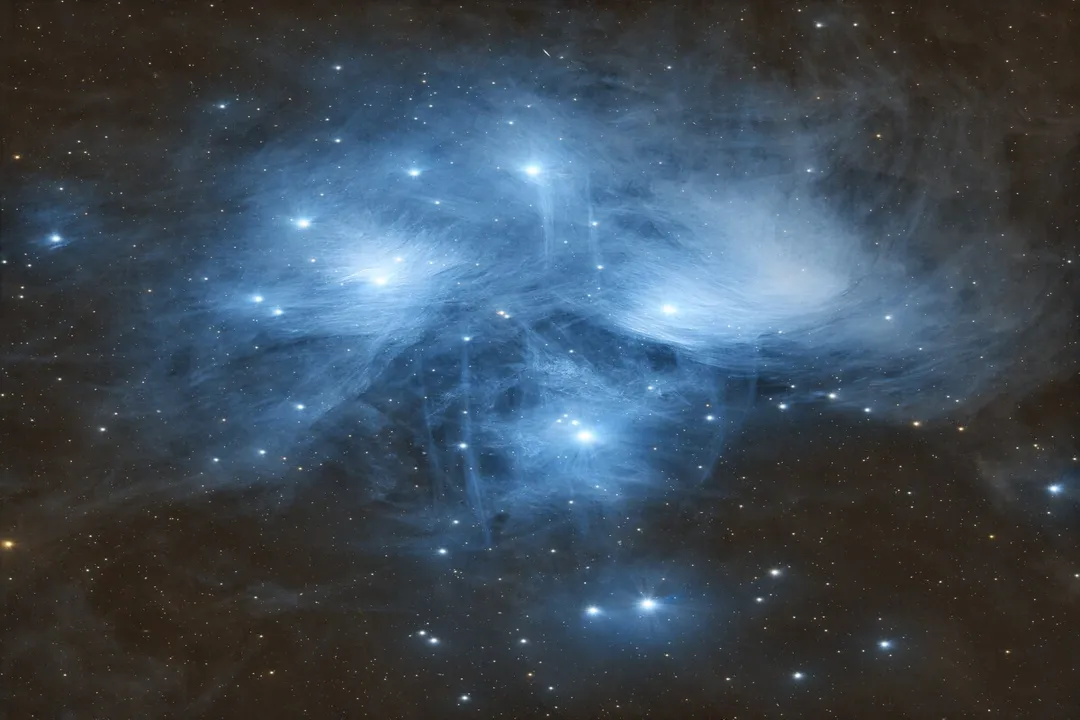
The term open cluster refers to a loose, gravitationally bound grouping of stars, generally found within the disk of a galaxy like our own Milky Way. [1][2][9] Unlike their more ancient and tightly packed cousins, globular clusters, open clusters are relatively transient structures in the cosmic timescale. [1][2] They are not as dense or as old as globular clusters, often containing only a few hundred to a few thousand members. [3][7][9] Astronomers often use the designation for these groupings. [1]
# Stellar Age
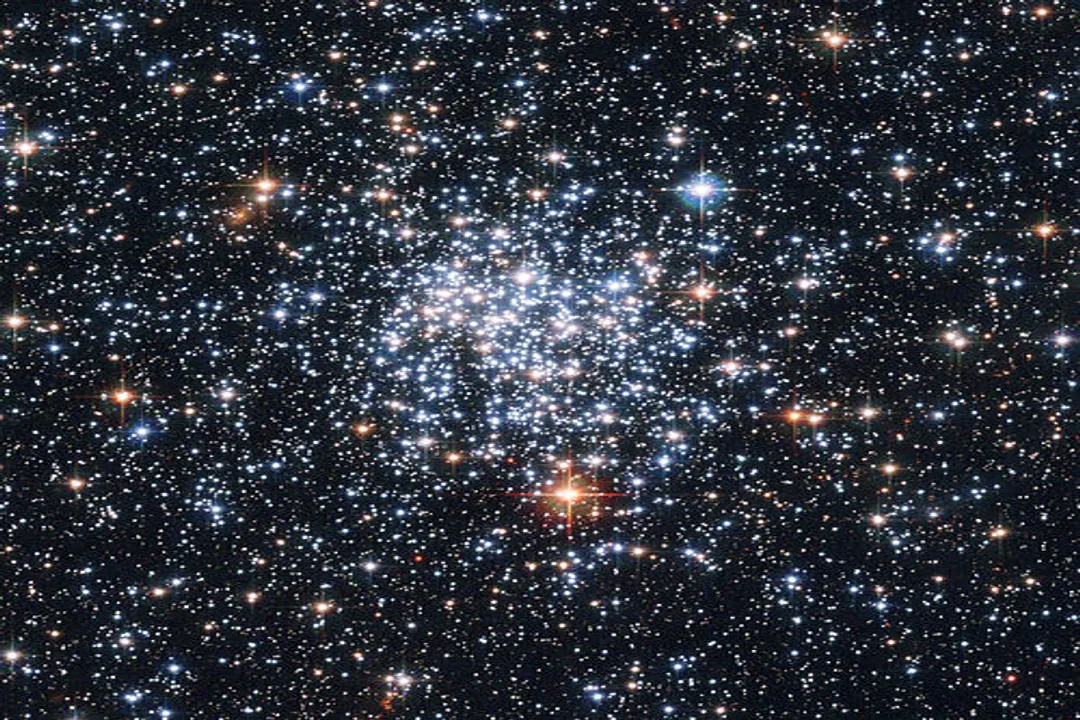
A defining characteristic of open clusters is their relative youth. [1][6] These collections of stars are generally quite young, which is often reflected in their composition. [9] Open clusters form together from the same giant molecular cloud, meaning all the stars within a single cluster share a very similar age. [3][9] Because they are young, many of the most massive stars within them are still burning brightly, often appearing blue and hot. [8] Studies focusing on nearby young open clusters often examine their rotation and kinematics to better understand stellar evolution shortly after formation. [4]
# Membership Count
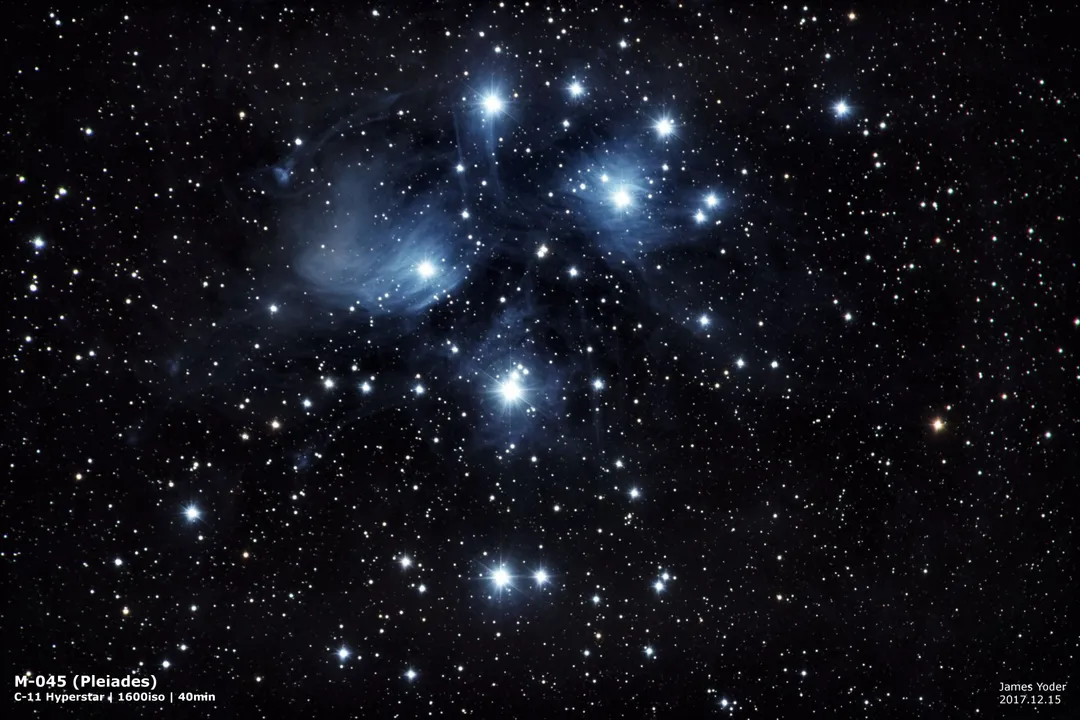
The sheer number of stars in an open cluster offers a good metric for classification. While definitions vary slightly, they are consistently described as containing fewer stars than globular clusters. [2] A typical open cluster might hold anywhere from tens of stars up to several thousand. [1][3][7] For example, the famous Pleiades cluster is a well-known example of this type of grouping. [1] This relatively small population, combined with their expansive physical separation, leads to their low stellar density. [2] If you were to take a typical open cluster—say, one with 500 stars spread across a volume equivalent to a 100 light-year diameter region—the average space between stars is immense compared to what we see in the dense stellar nurseries where they were born. This vast separation is a key reason why their mutual gravitational attraction is often too weak to hold them together permanently. [1][5]
# Galactic Location
The birthplace and current residence of open clusters tell us a great deal about their lifecycle. They are intrinsically linked to the ongoing process of star formation. [5][6] Open clusters are found predominantly in the Galactic disk of spiral galaxies, specifically within the spiral arms where large clouds of gas and dust—the raw materials for new stars—are abundant. [1][5][8][9] They are born out of these star-forming regions, often still being associated with the residual gas and nebulae from which they emerged. [5][6]
Their placement within the disk means they participate in the galaxy's rotation, but their loose structure makes them vulnerable to the galaxy's gravitational environment. [1] They are not found in the halo, which is the domain of the much older, more stable globular clusters. [2]
# Binding Forces
The primary difference between an open cluster and a simple, random collection of stars passing near each other in space is the presence of some degree of mutual gravitational binding. [9] However, this binding is inherently weak. [2] They are described as loosely bound groups. [9]
This weakness is directly tied to their age and density. As these young stars orbit the galactic center, they are subjected to tidal forces exerted by the galaxy itself, as well as gravitational perturbations from passing molecular clouds. [1] Over cosmic time, these external forces effectively pull the cluster apart, scattering its constituent stars back into the general stellar population of the disk. [1] The estimated lifespan for many open clusters before they completely dissolve, or evaporate, into the galactic field is on the order of just a few million years. [5] Considering the Milky Way is billions of years old, these clusters are truly fleeting structures, offering astronomers a snapshot of a very specific, short-lived phase in stellar system evolution. [4]
# Observational Ease
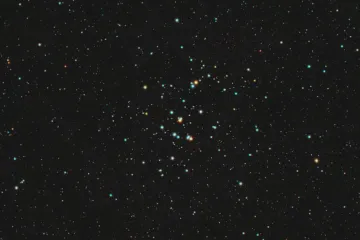
For amateur and professional astronomers alike, open clusters offer several advantages for observation compared to other deep-sky objects. [7] Because they are generally younger, they often contain numerous bright, blue, hot stars, making them relatively easy targets to locate and image, even with modest equipment. [8] While globular clusters can be faint and distant, requiring larger apertures, open clusters are frequently found within the plane of the Milky Way, often visible against the darker background of the spiral arms. [7] Their apparent size, being spread out over a larger apparent angle on the sky than a compact globular cluster, also contributes to their appeal for astrophotography. [2]
# Cluster Distribution
While the characteristics define what an open cluster is, examining their distribution highlights a pattern in galactic structure. Since they trace the spiral arms, studying the distribution and motion of these young clusters across the sky provides astronomers with excellent tracers for mapping the structure and rotation of the spiral arms themselves. [5][8] By measuring the distances and velocities of many different open clusters, researchers can construct a kinematic map of the Milky Way's younger stellar populations. [4]
It is interesting to consider that while the sources state they contain tens to thousands of stars, [1][3] the sheer contrast between their dense formation phase and their rapid dissolution phase highlights a bottleneck in stellar aggregation. A massive molecular cloud can host the birth of hundreds of thousands of stars, but only a tiny fraction of those infant stars manage to remain gravitationally bound long enough to even be cataloged as an open cluster before being dispersed by galactic tides. [1][5] This suggests that the initial conditions—the specific density fluctuations within the parent cloud—must be very precise for a cluster to persist for even a few million years.
# Distinguishing Features Summary
To keep the key differences clear when looking up at the night sky, a quick comparison between the two main cluster types is useful.
| Feature | Open Cluster | Globular Cluster (For Contrast) |
|---|---|---|
| Age | Young (Millions of years) [1][9] | Old (Billions of years) [2] |
| Shape | Irregular, loose [2] | Spherically symmetrical, dense [2] |
| Location | Galactic Disk/Spiral Arms [5][9] | Galactic Halo/Bulge [2] |
| Star Count | Tens to a few thousand [1][3] | Hundreds of thousands [2] |
| Binding | Weak, transient [1][5] | Strong, stable [2] |
The stars in open clusters are gravitationally bound for only a short time relative to the cluster's galactic motion, meaning their appearance is inherently temporary. If we were to observe the Milky Way billions of years from now, most of the open clusters visible today would have long since dispersed, leaving behind only the ancient, stable globular systems in the halo. [2][5] This transient nature is perhaps the most fundamental characteristic setting them apart in the study of stellar populations.
Related Questions
#Citations
Open cluster - Wikipedia
Open clusters - Stellar Groups, Galaxies, Nebulae - Britannica
Astronomy 19, Star Formation Flashcards | Quizlet
Detection, characterisation and use of open clusters in a Galactic ...
Open Clusters — OpenSpace documentation (latest)
Young nearby open clusters and their luminosity functions
Observing Guide for Open Clusters - Minute of Space
Open Clusters - ArtCentrics
Stars - Open Clusters - Astronomy Online