What is the galactic rotation problem?
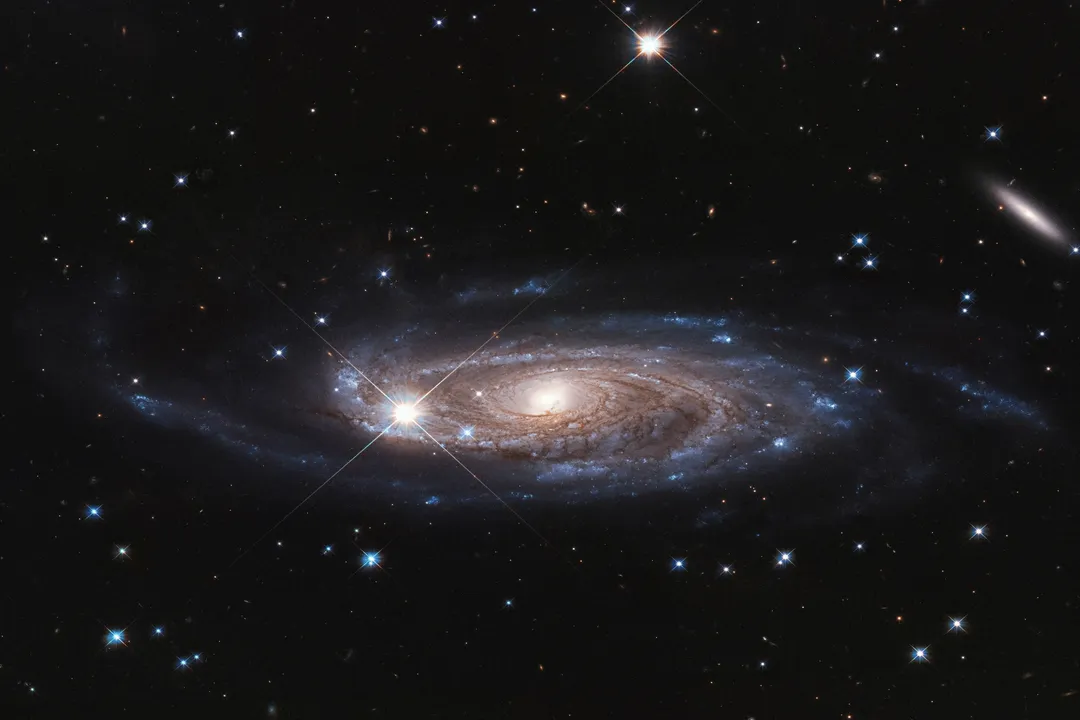
The observed way stars and gas orbit the centers of spiral galaxies presents a profound puzzle for modern physics and astronomy. If we only consider the luminous matter—the stars, dust, and gas that we can see and measure across the electromagnetic spectrum—the expected speeds of objects far from the galactic core should follow familiar rules, specifically those described by Newtonian gravity. Based on the visible mass distribution, the orbital velocities should decrease as the distance from the center increases, similar to how planets orbit the Sun further out, following Keplerian dynamics. [1] This expected drop-off is the standard prediction when mass is centrally concentrated, as visible matter in a galaxy appears to be. [8] However, detailed observations consistently show something vastly different: the rotation speeds of stars and gas clouds remain surprisingly constant, or even increase slightly, even at the galaxy's outermost edges. [1][4] This stark contradiction between prediction and observation is what astronomers term the galactic rotation problem. [7]
# Early Indications
While the systematic confirmation of this anomaly is often credited to later work, the seeds of this confusion were sown decades earlier in studies of much larger structures. As early as the 1930s, astronomer Fritz Zwicky noticed that galaxies within clusters were moving too fast to remain bound by the gravity of the visible galaxies alone. [7] He inferred the presence of unseen mass, which he termed dunkle Materie or dark matter, to keep the clusters from flying apart. [7] This initial insight into mass discrepancy was focused on clusters, but the fundamental puzzle—that the gravitational influence in the universe seems significantly stronger than what the visible components suggest—was established. [2]
# Rubin's Precision
The problem shifted focus and gained undeniable weight when applied to individual spiral galaxies in the 1970s, thanks largely to the meticulous work of Vera Rubin and her colleagues. [1][2] They measured the rotational velocities of gas and stars at increasing distances from the centers of numerous spiral galaxies. [1] These measurements, using the Doppler shift of light emitted by these components, provided velocity data spanning far beyond where most of the visible light originates. [2]
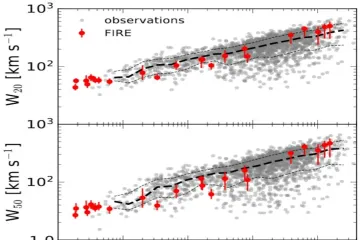
Their findings were unambiguous across the sample: the rotation curves—plots of orbital velocity versus distance from the center—did not fall off as predicted. [1] Instead of showing a sharp decline once the bulk of the visible stellar disk was passed, the velocity measurements either plateaued, creating a flat rotation curve, or in some cases, continued to rise slightly into the periphery of the galaxy. [1][4][8]
Consider a typical spiral galaxy. Most of the visible light, and thus most of the baryonic (normal) matter, is concentrated in the bright central bulge and the inner disk. [8] If gravity were determined solely by this material, the velocity () at a large radius () should scale according to , meaning the speed must decrease. [1][8] The actual observation defies this relationship, implying that there must be a vast, diffuse component of invisible mass extending far beyond the luminous edge of the galaxy, providing the necessary gravitational pull to keep the outer material moving so quickly. [1][2]
# The Mass Discrepancy
The sheer scale of the missing mass required to explain these flat curves is staggering. When astronomers calculate the mass enclosed within a given radius using the observed rotational velocity and applying Kepler's laws, the result consistently shows that the calculated mass far exceeds the mass inferred from measuring the galaxy's light output. [7][8]
To put this into perspective, if we take a representative spiral galaxy, the required mass contribution from this unseen component often outweighs the mass of all the stars, gas, and dust by a factor of five or even ten to one, depending on how far out the curve is measured. [2] This missing gravitational source dominates the dynamics of the galaxy’s outer regions. [1] This leads to a fundamental accounting issue in astrophysics: the majority of the matter holding galaxies together is dark. [7]
If we were to model a galaxy purely on its visible matter, a star orbiting at, say, 50,000 light-years from the center of the Milky Way should be moving significantly slower than one only 10,000 light-years out. Instead, observations suggest they are moving at nearly the same high speed, which only happens if the enclosed mass continues to increase steadily with radius, well past where the stars end. [1][8] A striking way to visualize this is to compare the calculated mass density: the density contributed by the dark component must remain relatively constant in the outer regions, contrasting sharply with the light density which plummets near the edge. [8] It is quite revealing that the "dark halo" required by this model would extend perhaps ten times further out than the visible stellar disk, meaning we are primarily observing the gravitational effects of something we cannot see, far removed from the light we associate with the galaxy.
# Dark Matter Hypothesis
The most widely accepted explanation for the galactic rotation problem posits the existence of Dark Matter. [7] This hypothesis suggests that galaxies are embedded within massive, roughly spherical halos composed of a non-baryonic substance that interacts with normal matter only through gravity (and perhaps the weak nuclear force). [2] Since this matter does not emit, absorb, or reflect light, it is electromagnetically invisible—hence, "dark". [2][7]
The characteristics required of this dark matter are quite specific: it must be slow-moving (cold), non-collisional, and chemically distinct from the particles that make up stars and planets. [2] The favored candidates, such as Weakly Interacting Massive Particles (WIMPs), fit this profile conceptually, though definitive detection remains elusive. [2] The successful prediction of the observed flatness of rotation curves across thousands of galaxies, and the consistency of these required mass profiles with observations of gravitational lensing and the cosmic microwave background, lends substantial support to the dark matter model. [1][7]
# Modifying Gravity
However, a minority of researchers propose that the issue is not one of missing mass but of incomplete or incorrect gravitational theory on galactic scales. [6] This line of reasoning suggests that perhaps our understanding of gravity, specifically Newtonian mechanics and General Relativity, breaks down or requires modification when applied to the extremely low acceleration regimes found in the outer reaches of galaxies. [6]
One prominent set of alternative theories falls under the umbrella of Modified Newtonian Dynamics, or MOND. [7] MOND suggests altering the relationship between acceleration and force at very low values, which can mimic the effect of extra mass without requiring dark matter particles. [7] Other theoretical avenues involve adjusting cosmological parameters; for instance, some researchers have considered replacing the cosmological constant () with a cosmological variable in Einstein's field equations as a potential mechanism to account for the observed gravitational effects on large scales. [6] While these alternatives can sometimes match the rotation curves of individual galaxies remarkably well, they often struggle to explain observations simultaneously across all cosmological scales—such as phenomena in galaxy clusters or the physics of the early universe—as effectively as the standard dark matter model does. [1][7]
# Scientific Rigor
The very nature of the galactic rotation problem underscores the high standards of evidence required in modern astrophysics. When a discrepancy arises between theory (Keplerian dynamics based on visible matter) and observation (flat rotation curves), scientists must rigorously test all potential sources of error before proposing new physics or new matter. [8]
Astronomers have painstakingly checked for observational biases. Is the gas being measured actually moving in perfect circles? Are we missing dim, low-mass stars (like brown dwarfs or faint M-dwarfs) that are baryonic but hard to see? Systematic studies have shown that even when accounting for every possible form of normal matter—including faint stars, gas, and dust—the discrepancy remains. [1][7] This forces a kind of inverse problem-solving: instead of using a known mass distribution to predict motion, we use the known motion to constrain the mass distribution, revealing a dominant mass component we cannot directly sense. The precision demanded here is immense; the theory of gravity is so well-tested in the solar system that any deviation on galactic scales necessitates either a radical revision of physics or the acceptance of a new constituent of the universe.
# Current Status
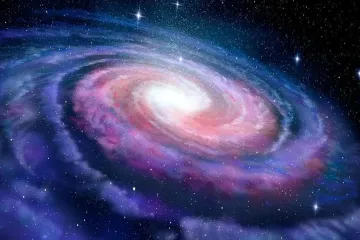
The galactic rotation problem remains a central driver in astrophysics and cosmology today. [7] Whether it is solved by the direct detection of the elusive dark matter particle, the development of a new, universally applicable theory of gravity, or some combination thereof, its resolution will fundamentally change our model of the cosmos. [2][6] For now, the evidence from galactic dynamics strongly points toward a universe dominated by unseen mass, forming a vast scaffold upon which luminous galaxies are built. [1][7] The flat rotation curve is not just an anomaly; it is the clearest, most persistent signature of the dark matter halo surrounding virtually every spiral galaxy we study. [4]
#Videos
Dark Matter: The Math Behind Galaxy Rotation Curves - YouTube
Related Questions
#Citations
Galaxy rotation curve - Wikipedia
Dark Matter in Galaxies and Clusters
Dark Matter: The Math Behind Galaxy Rotation Curves - YouTube
Rotation curves of galaxies stay flat indefinitely : r/science - Reddit
Galactic rotation curves explained by revolution and rotation
Can the galactic rotation problem be solved by replacing the ... - Quora
The Galactic Rotation Problem and the Quest for Dark Matter
Galaxy Rotation Curves - an overview | ScienceDirect Topics
[PDF] Understanding Galaxy Rotation Curves in terms of Interference of ...