What is the problem with exoplanets?
The universe is thick with worlds beyond our solar system, a fact confirmed by thousands of confirmed exoplanets. Yet, the excitement surrounding these distant orbs is frequently tempered by the significant hurdles scientists face in actually knowing anything definitive about them. Finding a blip of light dimming as a planet passes a star, or catching the faintest spectral signature of an atmosphere, represents a monumental technical achievement, but it also immediately opens up a host of new, often frustrating, problems related to sheer distance, instrumental limits, and the unpredictable nature of planetary evolution itself. [2][7]
# Detection Biases
One fundamental issue facing planetary science stems not from the planets themselves, but from the methods we use to find them. Our initial census of exoplanets is inherently skewed, reflecting what our current technology is best at seeing, rather than a true snapshot of galactic demographics. [6]
# Mass Skew
For a long time, the most easily detectable planets were the behemoths, particularly the Hot Jupiters—gas giants orbiting incredibly close to their parent stars. [2] This is partly due to the transit method, where a larger planet causes a deeper, more easily measured dip in starlight, or the radial velocity method, which is more sensitive to the strong gravitational tug of a massive planet. [2] A specific historical bias involved favoring searches for planets with more than six times the mass of Earth. Some argue that focusing too heavily on these massive worlds—the so-called "super-Jupiters" or "super-Earths"—is a mistake because it leads to an incomplete understanding of how planetary systems form across the galaxy. [6] If we miss the smaller, rockier worlds because they cause smaller signals or exert weaker gravitational wobbles, we are effectively studying only the outliers of the planetary population. [6]
# Faint Signals
Even when we know a planet exists, studying its environment is exceptionally difficult. Exoplanets are, by definition, small and faint light sources orbiting incredibly bright, nearby stars. [7] To characterize an atmosphere, scientists must analyze the tiny fraction of light that passes through that atmosphere as the planet transits its star. [7] Distinguishing this minute atmospheric signal from the overwhelming glare of the host star is a technological tightrope walk. [7] We often need next-generation telescopes, like the James Webb Space Telescope, to even begin gathering reliable atmospheric data, and even then, the signals are weak. [2][7] This limitation means our understanding of composition, temperature, and weather for most known worlds remains superficial. [4]
We can compare the early data collection to taking a photograph of a distant firefly while a nearby lighthouse is shining directly into the lens; the firefly's light is technically present, but capturing its color requires incredibly sophisticated optical equipment designed specifically to block out the lighthouse. [7] This technological barrier dictates what questions we can ask about habitability; we are currently limited to analyzing atmospheres, not directly imaging surface features or mapping magnetic fields for the vast majority of detected worlds. [2]
# Planetary Evolution
Beyond the challenges of observation, exoplanets themselves present dynamic problems, often undergoing extreme evolutionary processes that we rarely see in our own solar system, leading to unexpected sizes and structures.
# Atmospheric Escape
A significant physical problem observed in some exoplanets is shrinking. [1] Data analysis suggests that some planets, particularly those larger than Earth but smaller than Neptune, are losing their atmospheres at an accelerated rate. [1] This process is largely driven by the intense radiation emitted by their parent stars, specifically high levels of X-ray and extreme ultraviolet (EUV) radiation. [1] This energetic radiation heats the upper atmosphere, causing it to expand and escape the planet's gravitational pull—a phenomenon known as atmospheric evaporation. [1]
This leads to a class of objects sometimes called "Chthonian planets," which are essentially the scorched cores left behind after a planet's entire gaseous envelope has been boiled away by its star. [1] The rate and extent of this mass loss fundamentally reshape the demographics of what we find, creating a "mass gap" between the largest rocky planets and the smallest gas giants. [1] If a planet formed with a thick atmosphere, but its star is particularly active, that atmosphere can vanish over billions of years, leaving behind a much smaller, denser remnant. [1]
# Mass Contraction Logic
Considering the atmospheric escape mechanism, one can view the apparent size of a mature exoplanet as a complex function of its initial formation mass and the lifetime radiation history of its host star. [1] A planet orbiting a quiet, long-lived star might retain a substantial envelope, appearing large. Conversely, a planet of the exact same initial mass orbiting a highly active, young star could lose a significant fraction of its bulk, appearing smaller or even transitioning into a smaller rocky world class. [1] This variance introduces an element of uncertainty when trying to build universal models of planetary evolution based on current size and mass measurements alone.

# Categorization Hurdles
The sheer diversity of worlds also creates problems in how we categorize them, which in turn affects how we prioritize the search for Earth-like planets.
# Planet Confusion
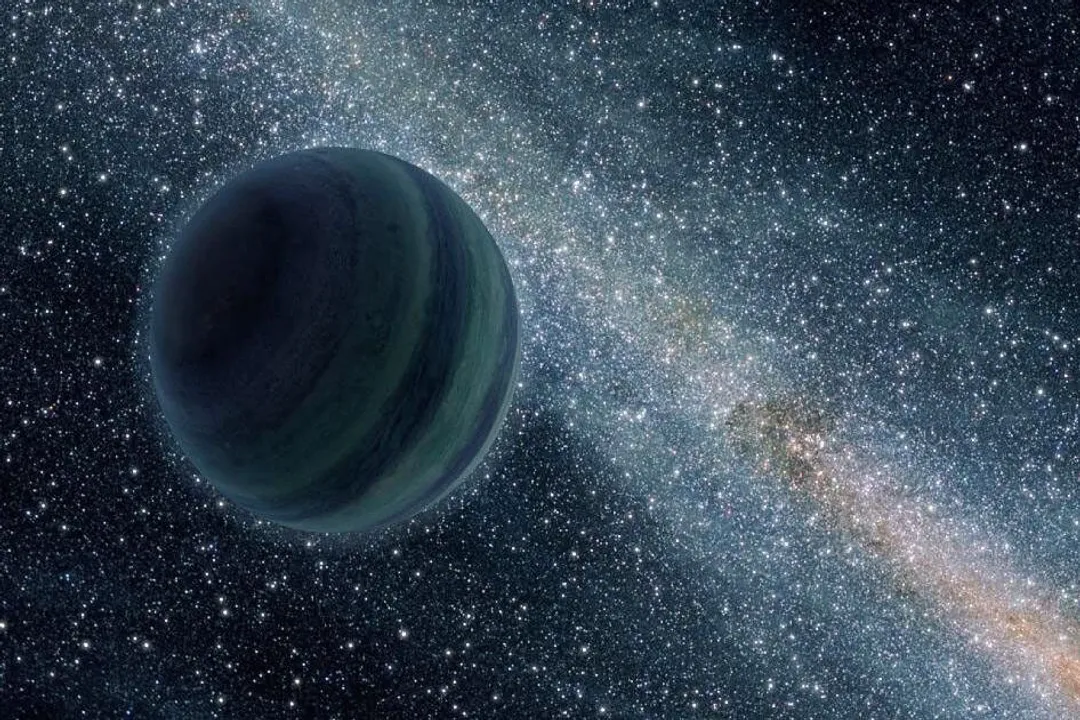
One area causing scientific confusion is the classification of "rogue planets"—worlds that have been ejected from their stellar systems and wander interstellar space unbound by any star. [5] Identifying these is incredibly challenging because they don't transit and don't have the reflected light signature of a star to study. [5] The potential for misinterpreting data, or confusing an ejected planet with a true, orbiting one, can lead to confusion in planetary population counts and potentially slow down the focused exploration efforts aimed at finding true Earth analogues in habitable zones. [5] When data sets are mixed with objects that have fundamentally different origins (e.g., ejected vs. orbiting worlds), the derived statistics about system formation become muddied. [5]
# Scientific Disputes
The field is also subject to genuine scientific controversy, where interpretations of the same data can lead to vastly different conclusions about a planet's nature. [4] These disagreements about formation mechanisms, atmospheric composition, or even whether a signal truly represents a planet can slow the consensus-building process necessary to move major exploration initiatives forward. [4] The nature of exoplanet science, relying on indirect observations from vast distances, means that definitive proof can be elusive for years, forcing scientists to operate under multiple competing hypotheses simultaneously. [4]
# Extreme Scenarios
While the challenges above relate to observation and evolution, some theoretical problems suggest dramatic, albeit low-probability, endpoints for certain worlds.
# Dark Matter Collapse
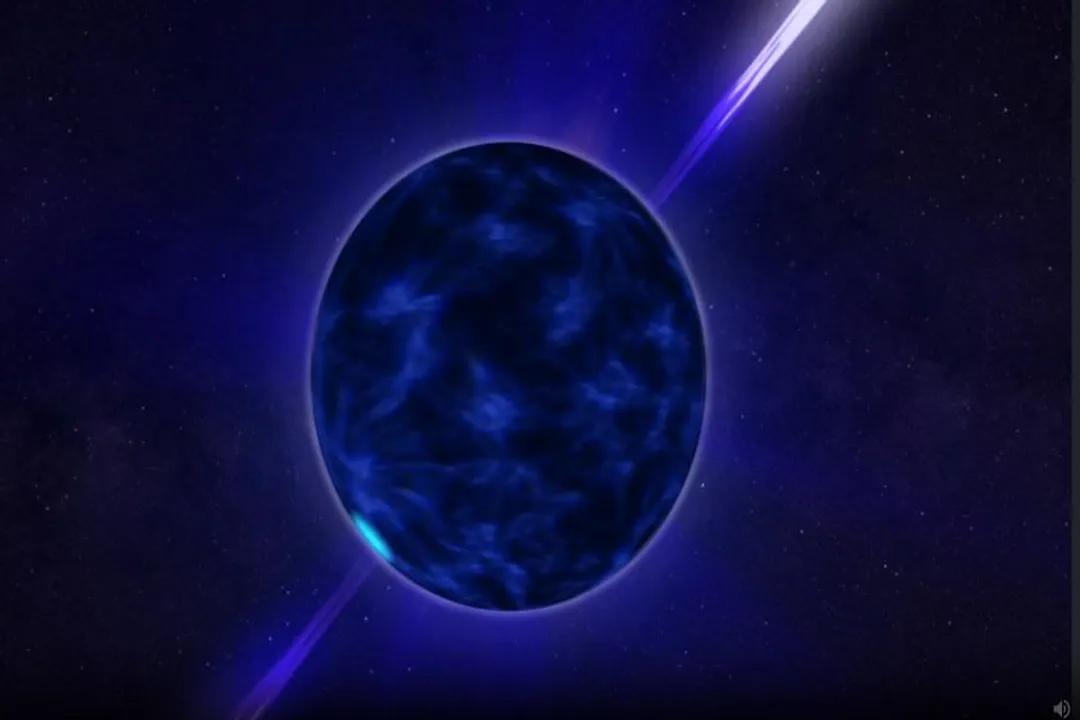
A more exotic, though fascinating, potential problem involves dark matter. [8] Dark matter, while invisible to light, possesses mass and gravitationally interacts with normal matter. [8] If a sufficiently large exoplanet orbits within a region of space where the dark matter density is extremely high, the planet could continuously accrete this dark matter over cosmic timescales. [8] As the planet gathers more and more mass from this non-baryonic source, its density and internal pressure would skyrocket. [8] The ultimate, extreme consequence of this process, if enough dark matter is absorbed, could be the planet collapsing under its own enhanced gravity to form a miniature black hole. [8] While this scenario requires specific, high-density environments, it illustrates that the physical limits of a planet's existence may be dictated by environmental factors far removed from the host star's light. [8]
# Future Limitations
Looking ahead, the challenges shift from what we can observe now to what we might never be able to observe effectively, prompting a degree of realism about future exploration. [3]
# Distance and Definitiveness
The vast distances separating us from these worlds mean that direct, in-situ exploration—sending a probe, for instance—is currently science fiction. [3] Even confirming the existence of life, which requires incredibly detailed atmospheric biosignatures, will likely remain an interpretation based on remote sensing for the foreseeable future. [3] Skepticism exists that we will ever reach the level of certainty we have about the planets in our own solar system, simply because the scale of the problem—the light-years involved—is so immense. [3] While powerful new instruments will refine our atmospheric models and detection limits, the sheer challenge of definitively characterizing a small, temperate world orbiting a distant star remains the primary obstacle to confirming habitability. [2][3] The problem isn't just finding them; it's moving from a statistical certainty of their existence to a detailed, physical certainty of their composition and environment. [7]
#Videos
The Best Earth-like Exoplanet Has 4 Major Problems - YouTube
Related Questions
#Citations
NASA Data Reveals Possible Reason Some Exoplanets Are Shrinking
The Grand Challenges of Exoplanets - Frontiers
Is it actually likely that we will be able to live on exoplanets? - Reddit
Scientific Controversies No. 22: Exoplanets - Pioneer Works
'Planet confusion' could slow Earth-like exoplanet exploration
Why do some people think it would be a mistake to search ... - Quora
The challenges of studying exoplanets - Gonville & Caius
Exoplanets suffering from a plague of dark matter could turn into ...
The Best Earth-like Exoplanet Has 4 Major Problems - YouTube