How are exoplanets measured?
Determining the properties of worlds orbiting stars light-years away is one of astronomy’s most impressive achievements. Since we cannot physically visit these distant celestial bodies, scientists rely on incredibly precise observational techniques to infer their characteristics, primarily focusing on their size, mass, and orbital path. [1][5] These methods often depend on subtle changes in the light emitted by the host star or the star's movement itself. [7]
# Light Dips
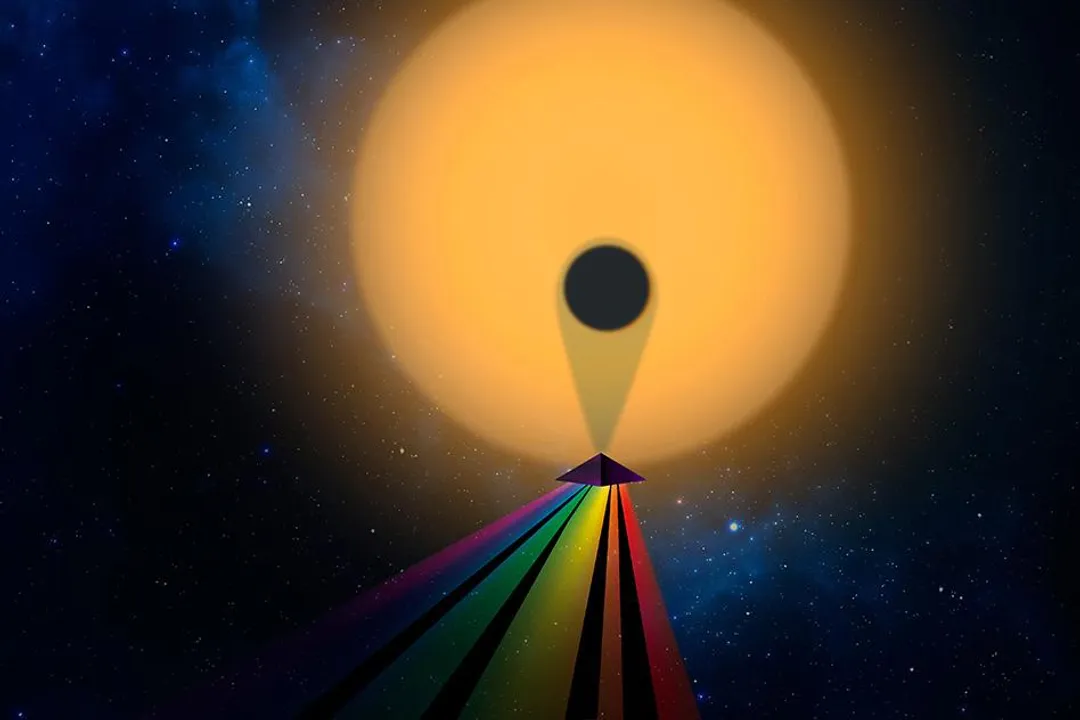
The most prolific method for finding exoplanets is the transit method. [1][5] This technique requires a precise alignment: the exoplanet must pass directly in front of its host star from our perspective here on Earth. [5] When this transit occurs, a tiny fraction of the star's light is blocked by the planetary body, causing a measurable, temporary dip in the observed brightness. [1][7]
The depth of this light decrease directly correlates with the size of the planet relative to the size of its star. [7] For instance, if a planet the size of Jupiter passes in front of a Sun-like star, the dip in brightness is roughly 1%. [1] If the planet is Earth-sized, the dimming is far less noticeable, often less than 0.01% of the star's light. [7] Missions like NASA’s Kepler and TESS are specifically designed to monitor the brightness of tens of thousands of stars continuously, looking for these periodic dips. [1] Once a recurring dip is identified, astronomers can measure the time between events—the orbital period—which helps establish the planet's distance from its star. [5]
# Stellar Motion
While the transit method gives us radius, we need a different approach to pin down the planet's mass. This is typically achieved by watching how the planet tugs on its host star, causing it to "wobble". [1][4]
# Doppler Shift
The radial velocity method, also known as the Doppler spectroscopy technique, tracks the star’s motion along our line of sight. [2][5] Just as a planet orbits the common center of mass of the star-planet system, it exerts a gravitational pull on the star. [9] As the star moves slightly toward Earth, its light spectrum is compressed (a blueshift), and as it moves away, the spectrum is stretched (a redshift). [2][9] This measurable shift in the star’s spectral lines reveals the star's speed and the magnitude of the stellar movement. [1] Since the pull exerted by the planet is proportional to its mass, this technique allows astronomers to calculate the minimum mass of the orbiting body. [6][9] It is important to recognize that the radial velocity method is highly sensitive to the inclination of the orbit; if the system is viewed perfectly face-on, the star's motion along our line of sight is zero, and the planet remains undetectable by this specific measurement. [2]
# Positional Shifts
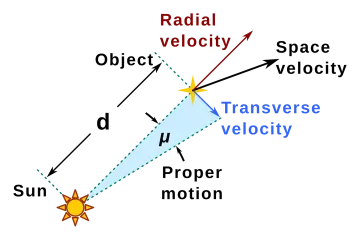
A related technique that looks at the star’s movement across the sky rather than toward and away from us is astrometry. [4] This method monitors the star's absolute position over time. [4] If a planet is tugging on the star, the star will trace a tiny path or wobble in the sky as it orbits the system’s center of gravity. [4] Like radial velocity, this movement reveals the mass and orbital characteristics. [4] However, this effect is incredibly subtle. For even the nearest stars, the positional shift caused by a Jupiter-sized planet might be less than the angular size of a dime viewed from two miles away. [4] This demands instruments with exceptional stability and precision, often pushing the limits of current space-based observatories. [1]
# Direct Imaging
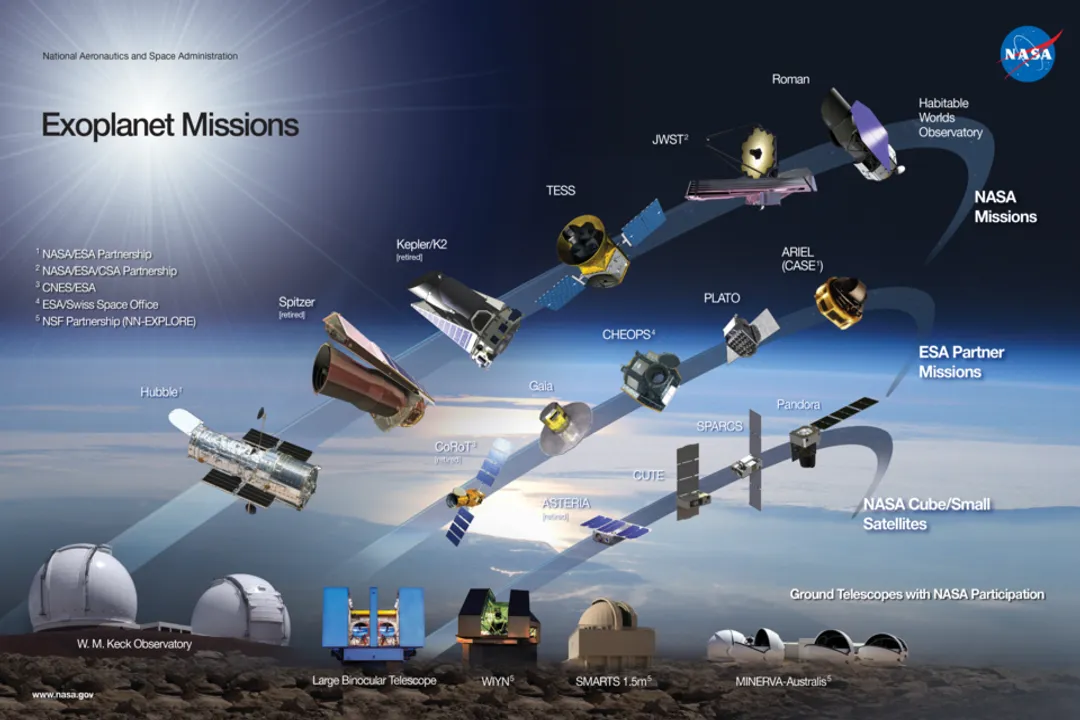
The most intuitive way to observe an exoplanet is to see it directly, a technique called direct imaging. [1][5] While this yields visual confirmation and allows for direct atmospheric study, it remains the most challenging method for detection. [1] The primary obstacle is the overwhelming glare of the host star; a star is typically billions of times brighter than its orbiting planet. [5] To overcome this, specialized instruments called coronagraphs are employed to physically block the central starlight, much like using your hand to block the sun so you can see a nearby bright object. [1] This technique is generally only successful for very large planets orbiting far from their stars, as these configurations offer the greatest angular separation from the stellar glare. [5]
# Gravitational Effects
When dealing with planets that are extremely far from their stars, or even those that are rogue and wander through interstellar space without a host star, astronomers turn to gravitational microlensing. [1][2] This phenomenon is based on Einstein’s theory of relativity, which posits that mass warps the fabric of spacetime. [1] If a foreground star (and any orbiting planets) passes directly between Earth and a much more distant background star, the gravity of the foreground star bends and magnifies the background star's light. [1][2] If the foreground star has a planet, the planet's gravity causes a secondary, brief "blip" in the magnification curve. [2] Microlensing is unique because it does not require the planet to transit or the star to wobble toward or away from us; it relies entirely on a specific, rare alignment that happens only once. [5]
# Combining Measurements
The true characterization of an exoplanet—understanding what it is actually made of—requires obtaining both its radius and its mass. [9] This is where the power of combining data from different methods becomes evident. If a planet is detected via transit, giving us its radius, and subsequently confirmed via radial velocity, giving us its mass, we can calculate its density. [9]
Density acts as a crucial fingerprint for composition. For example, an object with a low density, perhaps close to that of styrofoam, is almost certainly a gas giant composed mostly of hydrogen and helium, similar to Jupiter or Saturn. [9] Conversely, a planet with a high density, comparable to or greater than Earth's, indicates a predominantly rocky or metallic composition. [9] This contrast is significant; an object only slightly larger than Earth but significantly less dense might indicate a "mini-Neptune" dominated by a thick, gaseous envelope, rather than a true terrestrial world. [1]
It is fascinating to consider the data gathering bias inherent in these techniques. The transit method, being highly successful, preferentially finds planets whose orbits are perfectly aligned to pass in front of their stars relative to us. [7] This means that our census of known planets is heavily weighted toward worlds that orbit very close to their suns, often called "hot Jupiters" or "hot super-Earths," simply because their short periods make their transits easy to spot and confirm. [1][7] We are inherently missing the majority of systems where the orbital plane is inclined too far away from our line of sight to produce a measurable transit signal. A planet orbiting at the distance of Mars or Earth in a system like our own might produce a transit signal too faint or too infrequent to be easily captured by current large-scale surveys, even if the star itself is bright. This observational bias means that while we have cataloged thousands of worlds, our sample is not yet a perfectly representative slice of the galaxy's planetary population.
# Precision Limitations
While all these methods rely on measuring incredibly small effects—whether a fraction of a percent dimming, a few meters-per-second stellar wobble, or an arcsecond positional shift—the inherent limitations in our instruments dictate what we can measure. [7] For instance, the radial velocity technique is excellent at determining the minimum mass, but unless the orbital inclination is independently known (like from a transit observation), the true mass can be much higher than the measured minimum. [9] This uncertainty is a major hurdle in characterizing smaller, less massive worlds where the stellar tug is weakest. [6] Further advancements in telescope technology, such as next-generation instruments designed for extremely high-precision photometry and spectroscopy, will continue to push the detection limits toward smaller, more Earth-like worlds farther from their parent stars, refining our understanding of where and how planets form in the cosmos.
Related Questions
#Citations
How We Find and Classify Exoplanets - NASA Science
Methods of detecting exoplanets - Wikipedia
How can astronomers work out the size and mass of exoplanets ...
Wobbly Stars: The Astrometry Method | The Planetary Society
ESA - How to find an exoplanet - European Space Agency
New technique measures mass of exoplanets | MIT News
COSMOS for the Detection and Characterization of Exoplanets
Detecting exoplanets - Exeter Science Centre
Measuring exoplanet mass the hard way - Astrobites