What problems did the Hubble telescope encounter?
The launch of the Hubble Space Telescope in April 1990 was heralded as the dawn of a new era in astronomy, a giant eye placed above the blurring effects of Earth's atmosphere to deliver clarity never before seen. The promise was breathtaking images of the distant universe, capable of looking back almost to the Big Bang. Yet, what the world soon received was not breathtaking clarity, but frustratingly blurry pictures. The problems encountered by Hubble were not minor glitches or standard operational hiccups; they involved a fundamental, catastrophic flaw in its very core component, an error of a scale that threatened to derail one of humanity's most expensive and ambitious scientific endeavors.
# Mirror Flaw
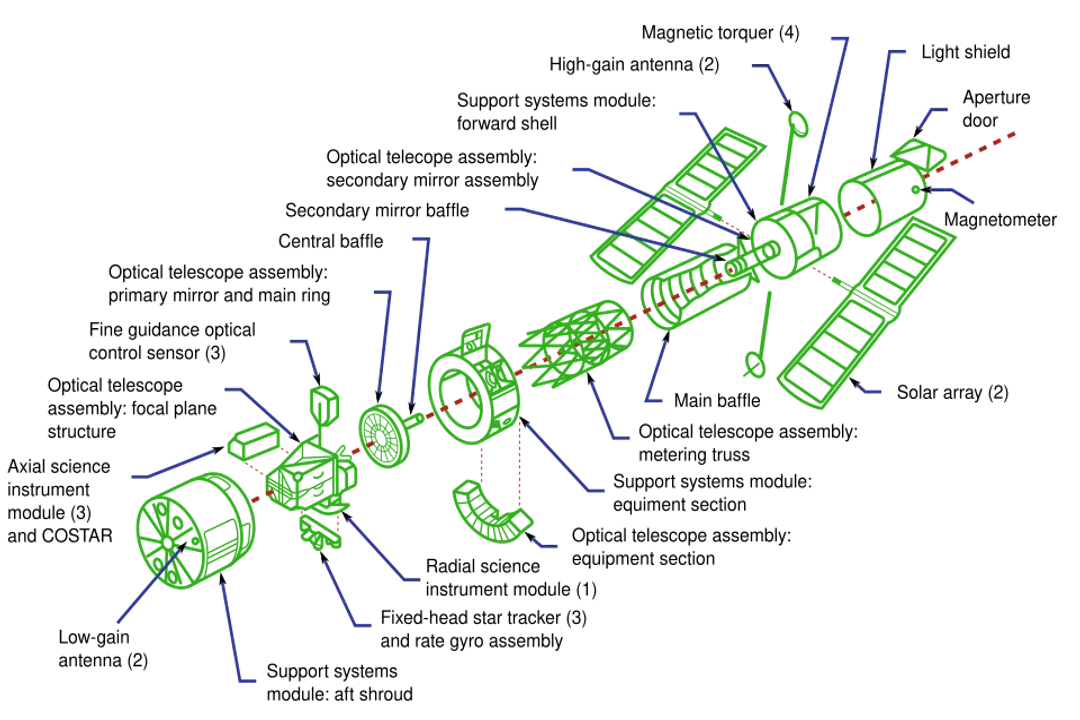
The root of the crisis lay in the primary mirror, the heart of the telescope responsible for collecting and focusing light. This enormous, nearly 2.4-meter (7.9-foot) mirror, polished to extraordinary specifications, had been ground incorrectly. Specifically, the edges of the mirror were ground too flat, deviating from the precise curvature required to focus light correctly. The margin of error was minuscule, yet devastating. Technicians discovered that the edge segments were off by only about 2.2 micrometers—less than one-fiftieth the thickness of a standard sheet of paper.
This error manifested as spherical aberration. In a perfectly shaped mirror, all incoming parallel light rays reflected from the surface would converge at a single, sharp point—the focal point. Because Hubble’s mirror was too flat at the edges, the light rays hitting the outer sections focused slightly behind where the light rays hitting the center focused. Instead of a pinpoint image, the telescope produced a hazy, smeared blob. Every photograph taken, regardless of the target, suffered from this fundamental optical defect. The issue meant that the telescope’s resolution was severely compromised, effectively reducing its potential clarity by a factor of fourteen compared to what it was designed to achieve.
# Precision Failure
The depth of this technical failure speaks volumes about the required tolerances for space-based optics. When constructing a mirror this large for use in the vacuum of space, where materials behave differently than on Earth, the required precision is measured in nanometers or micrometers. For context, while the mirror itself was massive, the deviation was so small that specialized, non-destructive measuring equipment would have been necessary to catch it reliably on Earth. The fact that the error was only about off the required radius of curvature at the edge meant that the initial ground support equipment checks, designed to ensure quality before launch, somehow missed this critical deviation. This was an extraordinary testament to how small a defect can cripple a massive, multi-billion dollar instrument.
# Initial Science Status
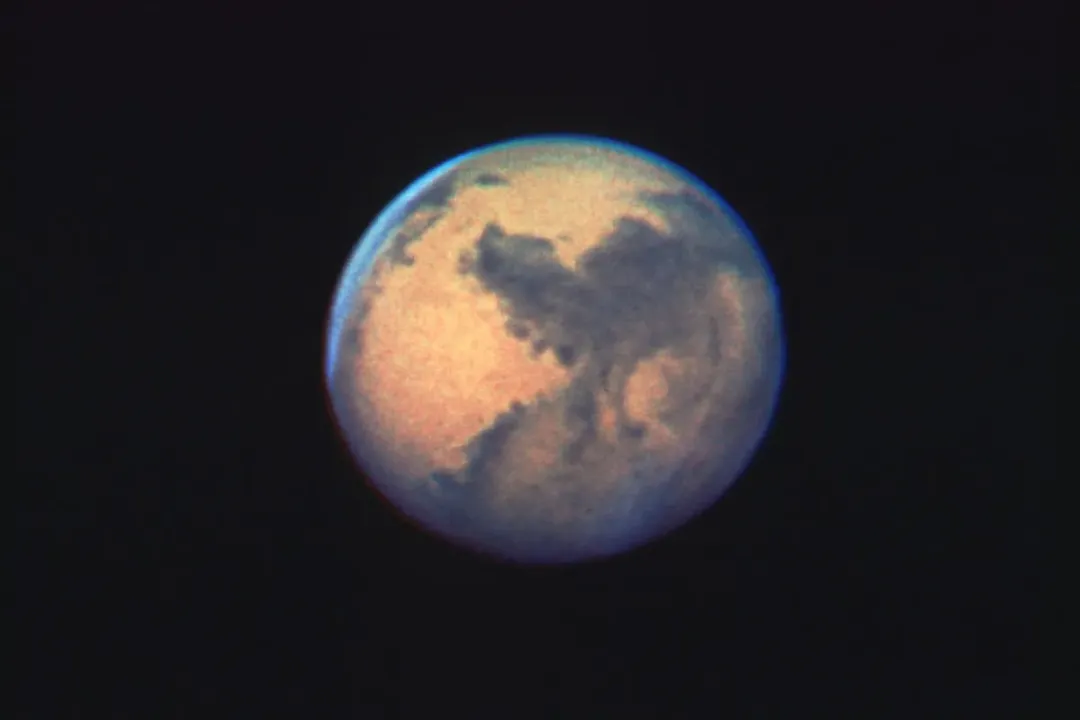
While the failure to achieve "diffraction-limited" performance—the theoretical best images possible—was a major public relations disaster, it is important to note that the Hubble Space Telescope was not entirely blind upon deployment. The instruments still gathered light, just poorly focused light. Early scientific observations were still possible, particularly for objects within our own solar system, such as nearby planets and moons, where the targets are large enough that the image blur does not completely obscure surface details.
However, the primary scientific goals—observing distant galaxies, the formation of stars, and probing the expansion rate of the universe—relied entirely on that razor-sharp focus. Without it, the data quality was severely degraded, frustrating the international astronomical community waiting for the unprecedented views Hubble promised. The telescope became an expensive, high-altitude camera that could see, but not see clearly.
# Assigning Blame
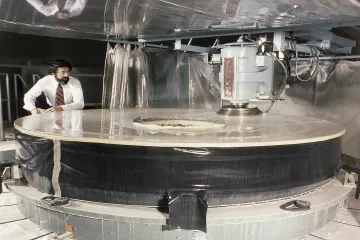
When a failure of this magnitude occurs on a flagship international project, the search for accountability is inevitable. The manufacturing and testing procedures were immediately scrutinized. The primary responsibility for grinding the flawed mirror fell to the contractor, Perkin-Elmer, which held the contract for the primary mirror assembly. They were the entity tasked with achieving the ultra-precise figure required for the optical element.
Furthermore, the systems meant to verify this work also came under scrutiny. The process relied on various instruments, including a specialized measuring device called a null corrector, used during the grinding and polishing phase to check the mirror's shape as it was being made. It appears that the null corrector itself was assembled incorrectly, or the data it produced was misinterpreted. The error was essentially one of design specification coupled with a failure in verification equipment or process control—a cascade of human and instrumental error that allowed an optical defect measuring less than a human hair's width to slip through.
# The Fix Implementation
The scientific community faced a difficult choice: abandon the mission or attempt a high-risk repair in space. Given the investment and the potential for discovery, NASA opted for the latter. The solution was as ingenious as the problem was catastrophic: instead of attempting the incredibly complex and risky process of replacing the multi-ton primary mirror in orbit, engineers designed corrective optics.
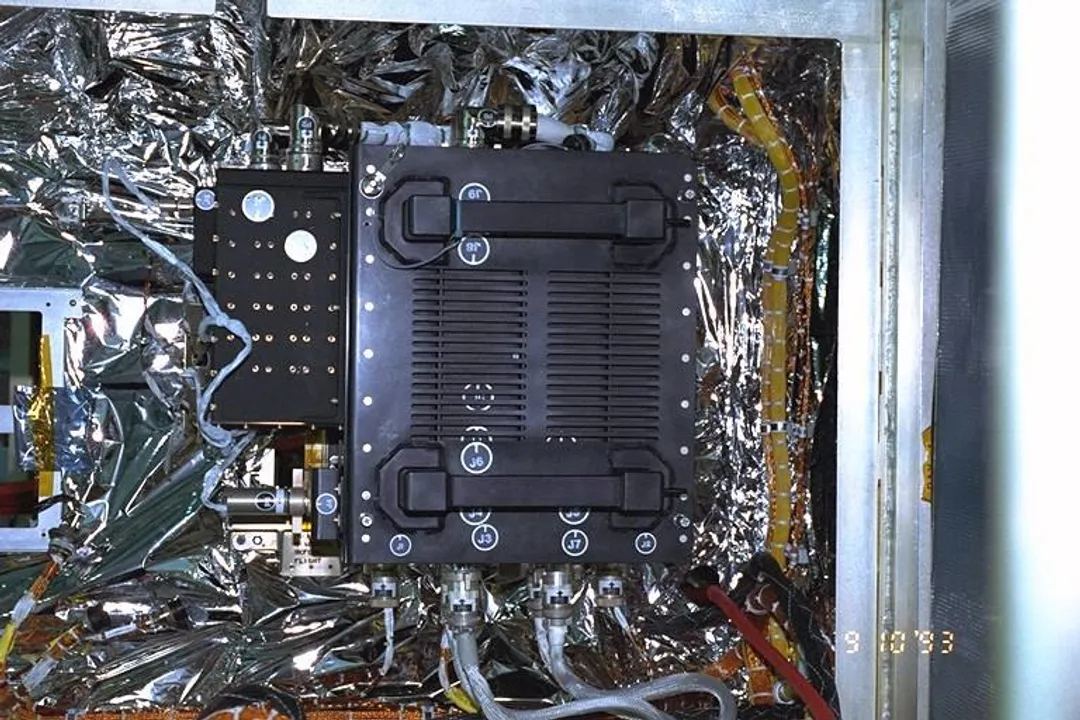
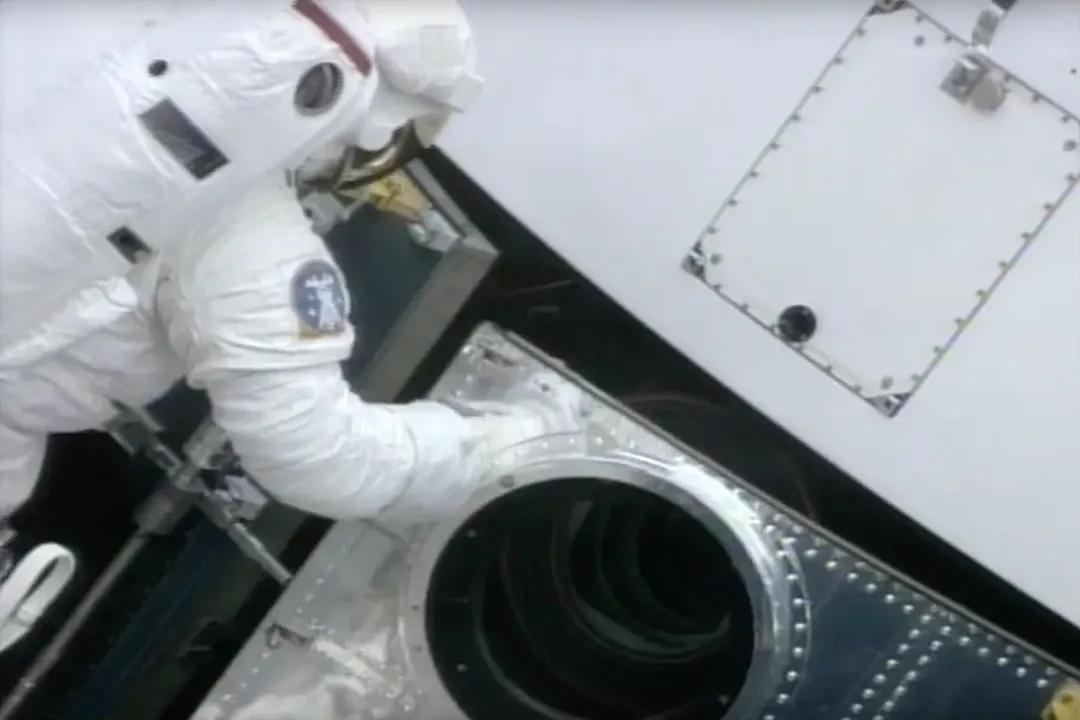
The first servicing mission (SM1), carried out in December 1993, was the moment of truth for Hubble and the astronauts involved. The key piece of hardware installed was the Corrective Optics Space Telescope Axial Telephoto (COSTAR). COSTAR was essentially a set of eyeglasses for Hubble. It consisted of five small, precisely shaped mirrors housed in a box that intercepted the focused light coming from the primary mirror and redirected it, adjusting the focal point to compensate exactly for the spherical aberration.
# Dual Optical Paths
This approach to correction introduced an interesting operational complexity that impacted early science. When COSTAR was installed, it became a required component for most observations. Any instrument designed to receive the focused light—like the Wide Field and Planetary Camera 2 (WFPC2) that was also installed during SM1—now had to sit behind COSTAR to receive the corrected light path. This meant that for many years, the telescope was operating with a doubled optical train: the flawed primary mirror, then the COSTAR corrector, and then the instrument's own optics.
This leads to an interesting analytical point: by installing COSTAR, NASA essentially guaranteed Hubble's viability, but at a cost to efficiency. While the initial repair fixed the main issue, COSTAR itself was a bulky piece of hardware that blocked light from instruments not specifically designed to work with it. Therefore, when COSTAR was finally decommissioned and removed during Servicing Mission 3B in 2002—because newer instruments like the Advanced Camera for Surveys (ACS) had built-in spherical aberration correction—it marked the end of an era where half the light path was dedicated solely to fixing a manufacturing mistake from decades prior. The early operational complexity was significant, requiring astronomers to always account for the extra optical element in their observation planning.
# Servicing Missions
The mirror issue was the most dramatic early problem, but it set a precedent: Hubble was designed to be serviced in space by astronauts. This foresight, while not anticipating the optical flaw, allowed for the repair and subsequent upgrades that kept the telescope state-of-the-art for decades. The success of SM1 proved the viability of complex on-orbit repairs.
However, the challenges did not end with COSTAR. Subsequent servicing missions addressed a host of other issues that arose over the telescope's lifespan:
- Power Degradation: The original solar arrays degraded over time, requiring replacement.
- Gyroscopic Failures: Hubble relies on gyroscopes to maintain its precise pointing direction. Failure of these delicate spinning wheels meant the telescope could lose lock on its targets. Astronauts replaced these multiple times, sometimes having to operate the telescope in a less stable mode when not all gyros were functioning.
- Battery Issues: The onboard batteries, crucial for providing power when the telescope was in Earth's shadow during its orbit, also needed replacement due to age and performance degradation.
One particularly notable hurdle after the initial triumph was the political fight to fund the later servicing missions, especially after the Space Shuttle Columbia disaster in 2003 grounded the fleet. Hubble was initially slated for retirement, but a strong case was made that the scientific return from a repaired and upgraded Hubble far outweighed the risk, leading to the final, successful servicing missions.
# Operational Nuances
Even with the mirror corrected, operating a machine with such extreme precision presented ongoing, smaller-scale problems rooted in the environment of low Earth orbit. For instance, the telescope’s temperature control systems had to manage extreme thermal swings as it cycled between direct sunlight and Earth's shadow every 96 minutes. If these systems failed, the mirror and its support structure could expand or contract slightly, throwing the alignment out of tolerance even if the shape of the mirror remained perfect. This constant battle against thermal distortion is a persistent engineering challenge for any large space-based instrument.
The data handling itself also presented logistical hurdles. Transmitting the massive amounts of highly sensitive data back to Earth required reliable communication links and massive archival systems, a process that was constantly being refined as instruments became more capable post-repair. The sheer volume of data from the newly sharp Hubble meant that data processing and calibration became as much a specialized field as the initial observation planning.
The story of the Hubble Space Telescope is therefore not just a tale of a single, dramatic failure, but a narrative about meticulous design, catastrophic oversight, radical in-orbit repair, and sustained operational resilience. It serves as a powerful example in engineering history: no matter how rigorous the pre-flight testing seems, the true test of any complex system often only begins once it is operating millions of miles from the nearest repair shop. The fact that its greatest initial flaw—a microscopic physical error—was corrected by adding new optics highlights a profound truth: sometimes the best way to fix an imperfect foundation is not to rebuild it, but to build something perfectly corrective on top of it.
Related Questions
#Citations
History: The Spherical Aberration Problem - ESA/Hubble
What was wrong with Hubble's mirror, and how was it fixed?
Hubble Space Telescope - Wikipedia
Who screwed up the Hubble telescope? - Quora
Repairing Hubble | National Air and Space Museum
[PDF] How Hubble Space Telescope failed
TIL that after almost 20 years of battling for a Hubble budget ... - Reddit
Mega-Projects & -Problems; The Hubble in Trouble
[PDF] The Hubble Telescope Failure Rewrt