What did Hubble's Finding show?
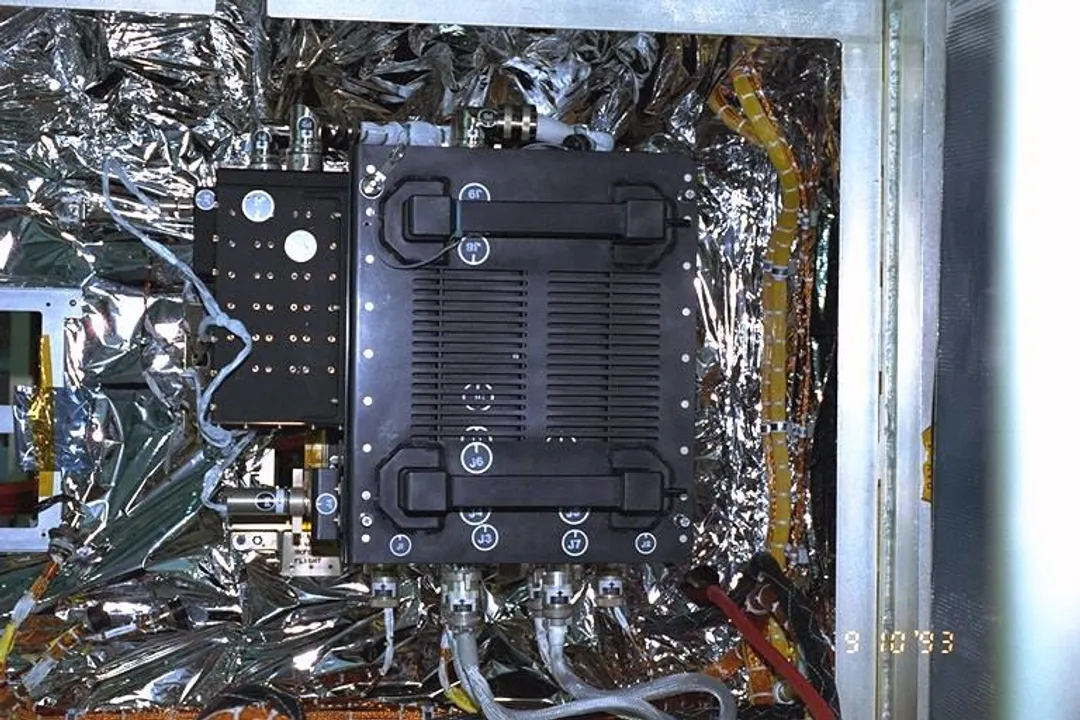
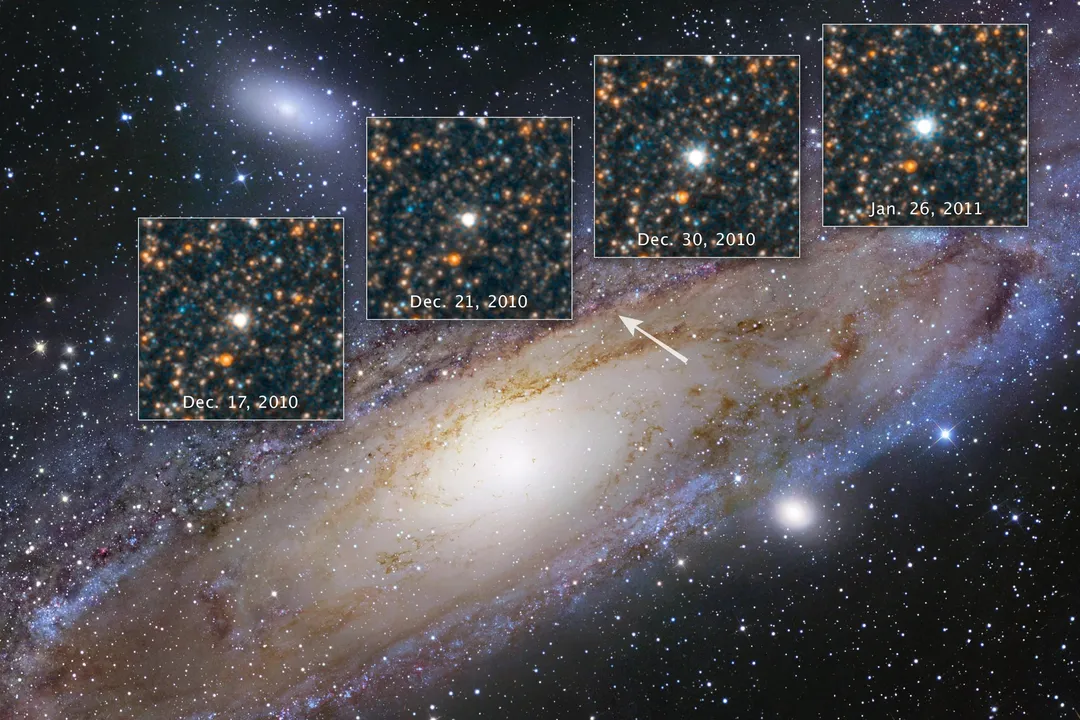
The story of what the Hubble findings have shown is really two interwoven narratives: one concerning the groundbreaking work of an astronomer in the early 20th century, and the other concerning the incredible eye placed above Earth’s distorting atmosphere. Both contributed to a radical reshaping of humanity's place in the cosmos. Before Edwin Hubble’s measurements, the prevailing scientific view often held that our Milky Way galaxy was essentially the entirety of existence, a vast but singular island in an otherwise empty void. [3][9] His initial findings shattered that assumption, proving definitively that the faint, fuzzy spiral nebulae he studied were, in fact, entirely separate island universes, or galaxies, lying far beyond our own. [3] This revelation alone increased the known scale of the universe by an unimaginable factor, moving our perspective from one contained within a few thousand light-years to one spanning hundreds of thousands or millions of light-years almost overnight. [3][5]
# Cosmic Scale
Edwin Hubble’s meticulous observations, often involving Cepheid variable stars within those distant spiral systems, allowed him to calculate actual distances to them. [3] This move from guesswork to measured reality was monumental. He wasn't just mapping stars; he was mapping entirely new domains of existence. [3][5] This established a new understanding of what the universe was—not a confined structure, but an immense collection of galaxies. [3] The Carnegie Institution for Science was central to this work, providing the environment where Edwin Hubble conducted some of his most revolutionary astronomical measurement. [3]
# Expanding Cosmos
Perhaps even more profound than determining the sheer size of the universe was Hubble’s subsequent realization about its behavior. By comparing the distances to these external galaxies with their redshifts—the stretching of their light toward the red end of the spectrum, indicating they were moving away from us—he observed a clear pattern. [9] The farther away a galaxy was, the faster it appeared to be receding. [3][9] This relationship, now known as Hubble’s Law, strongly suggested that space itself was stretching, causing all distant galaxies to move away from all others, analogous to dots painted on the surface of an inflating balloon. [3][9] This observation provided the first observational evidence supporting a dynamic, evolving universe, fundamentally underpinning the developing Big Bang theory. [3] It suggested the universe had a beginning, rather than having always existed in a static state. [3]
# Telescope Launch
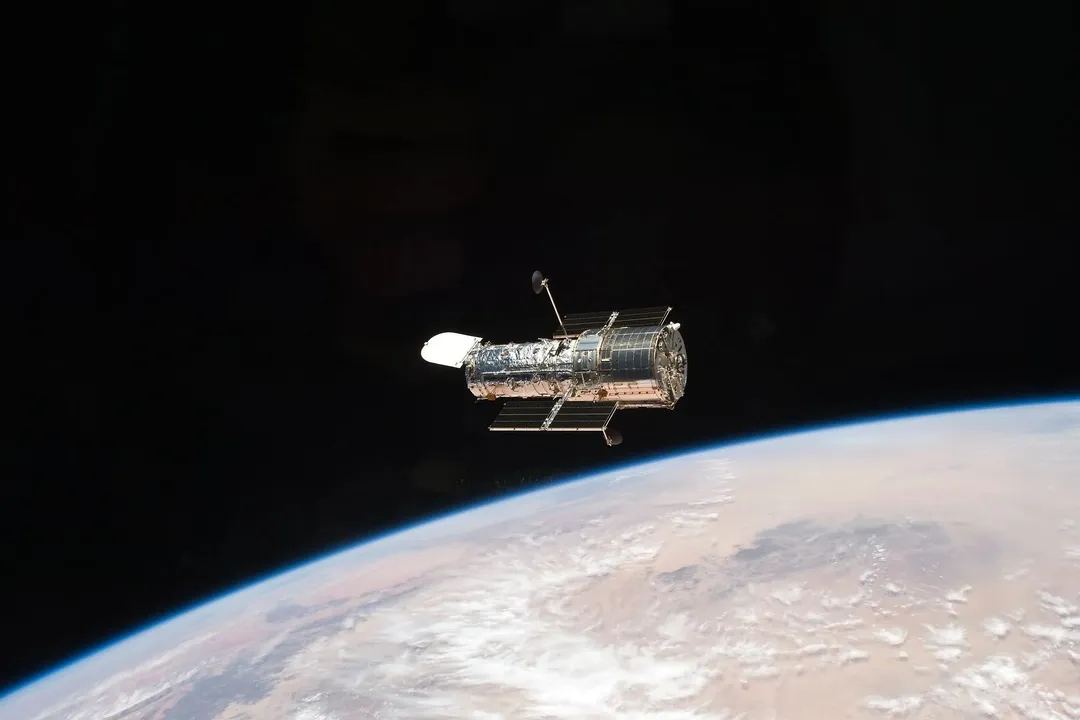
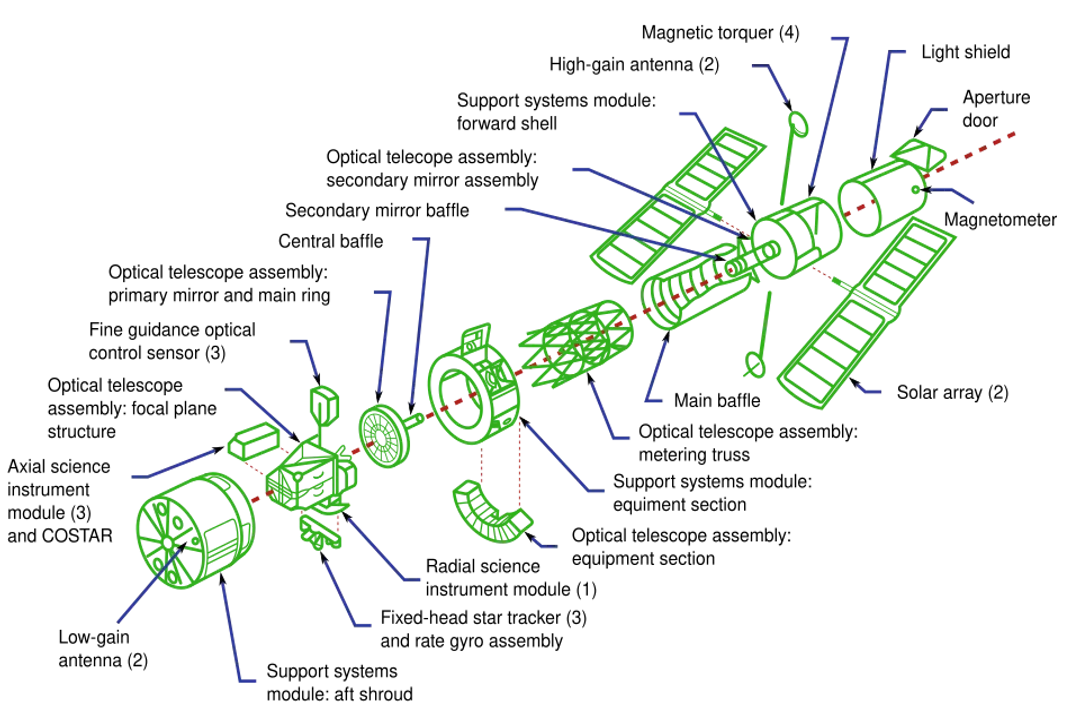
Decades later, the Hubble Space Telescope (HST) was deployed in 1990, carrying forward the legacy suggested by the name it bore. [4] Its positioning above the atmosphere—where 95% of the distorting effects of Earth’s air are absent—allowed it to capture images with unprecedented clarity and sensitivity across visible, ultraviolet, and near-infrared light. [2][4] This orbital vantage point meant that the faint, ancient light that Edwin Hubble had labored to see through ground-based telescopes could now be gathered in staggering detail. [2]
# Deep Views
One of the most astonishing demonstrations of the HST's power came with the Hubble Deep Field images and their successors, such as the Ultra Deep Field. [6] To capture these, astronomers pointed the telescope at a tiny, seemingly empty patch of sky, often no bigger than a grain of sand held at arm's length, and exposed the camera for hundreds of hours. [6] The resulting images revealed thousands upon thousands of galaxies, stretching back billions of years in time. [6] If Edwin Hubble’s initial finding was the realization that there was one other galaxy in our local neighborhood, the Deep Field images showed that even the darkest, most unremarkable-looking patch of sky was densely populated by countless galaxies, each containing billions of stars. [6] Looking at these images provides a direct, visual confirmation of the vastness Edwin Hubble first inferred, now quantified by countless luminous objects. [4]
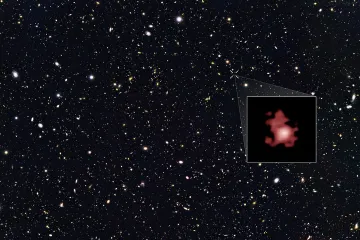
It’s interesting to consider the difference in observational focus. Edwin Hubble was trying to resolve individual 'nebulae' into distinct galaxies using the technology of his time. [3] The HST, however, acts as a time machine, with its deepest views showing galaxies not as they are now, but as they were when the universe was only a fraction of its current age. [6] A striking difference is visible in the structure; while modern galaxies appear well-defined, the ancient galaxies captured by the HST often appear irregular, clumpy, and smaller, suggesting they were still actively forming or merging. [2][7]
# Galactic Evolution
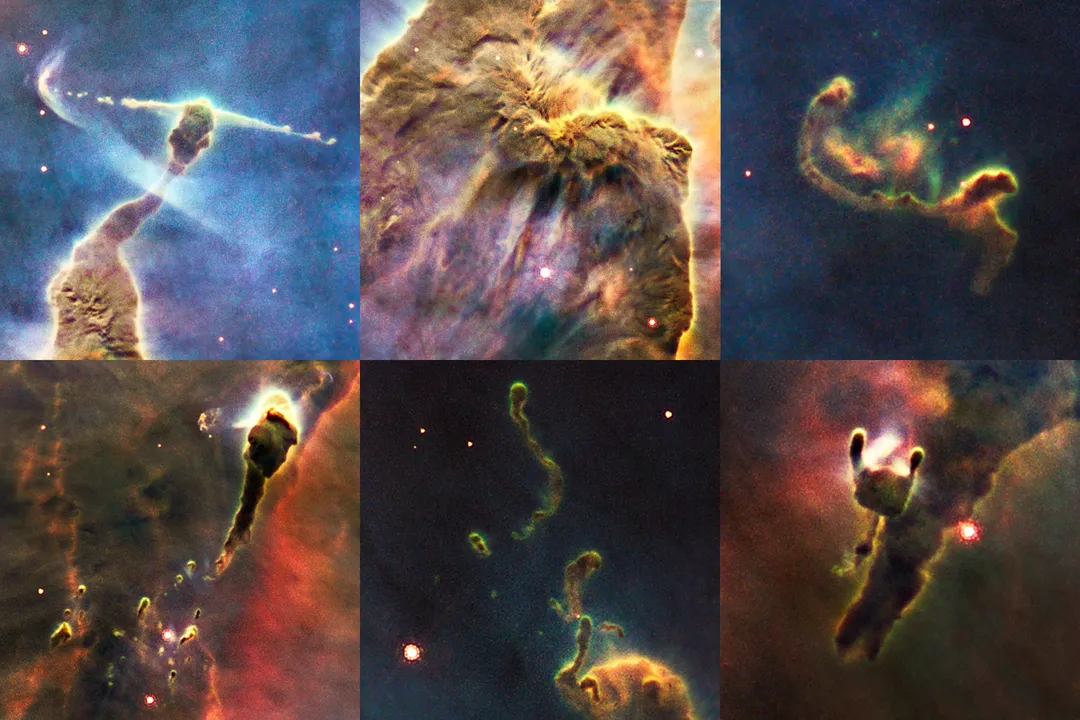
The telescope’s findings provided continuous footage of cosmic history, allowing astronomers to study how galaxies change over eons. By observing galaxies at different distances, scientists could track their evolution. [2] For instance, the HST captured iconic views like the Pillars of Creation within the Eagle Nebula, spectacular clouds of interstellar gas and dust where new stars are actively being born. [7] These observations confirmed theories about star formation and the life cycle of massive stars, showing the beautiful, violent processes that seed the universe with heavy elements. [2] Furthermore, the HST has tracked collisions and mergers between galaxies, documenting the large-scale restructuring of the universe that dictates where and how stars form today. [7] The visual evidence it provides helps us understand that galactic forms are not fixed; they are the result of a long, chaotic history of gravitational interaction. [2]
# Acceleration Mystery
The HST’s work also directly impacted the refinement of Edwin Hubble’s initial expansion measurements. By precisely measuring distances and expansion rates using improved techniques and better calibration, the telescope’s data played a key role in a shocking discovery made in the late 1990s: the expansion of the universe is not slowing down due to gravity, as expected, but is actually accelerating. [2] This counterintuitive finding implied the existence of a mysterious repulsive force permeating all of space, now termed dark energy. [2] The HST provided the critical, high-precision data from distant supernovae necessary to make this determination, suggesting that roughly 70% of the universe’s total energy density is composed of this unknown substance. [2] The initial observation by Edwin Hubble described the rate of expansion; the HST observations showed that the rate itself is changing over time, leading to one of modern physics' greatest puzzles. [2][4]
# Local Views
While cosmology often captures the headlines, the HST has also delivered astonishing results closer to home and in the realm of exoplanets. Within our own solar system, it has provided sharp, long-term monitoring of planets like Jupiter and Neptune, capturing atmospheric dynamics, weather patterns, and the impact of objects like the fragments of Comet Shoemaker-Levy 9 colliding with Jupiter. [2] Beyond our solar system, the telescope was instrumental in characterizing the atmospheres of planets orbiting other stars (exoplanets). [2] While it cannot resolve individual stars outside the immediate stellar neighborhood, its spectroscopic analysis of light passing through an exoplanet’s atmosphere during a transit has revealed the chemical signatures of elements and molecules there. [2] This capability provides the first steps toward understanding the composition of worlds light-years away. [2]
The longevity and upgradeability of the HST have been key to its success. Since its deployment, astronauts have visited it multiple times to install new instruments and perform repairs, ensuring its scientific output remained cutting-edge for decades. [4] This sustained program of maintenance and technological refreshment meant that the foundational measurements made by Edwin Hubble were not just confirmed but refined by successive generations of data, providing consistency across the decades of astronomical inquiry. [3][4] The scientific community has compiled an immense catalog of data derived from the telescope, representing an authority in astrophysics that is hard to overstate. [4] The initial linear relationship observed by Edwin Hubble, , where is velocity, is distance, and is the Hubble Constant, has been transformed into a sophisticated cosmological model that includes mass, energy density, and acceleration, all built upon that original spatial understanding. [3][9] The Hubble Space Telescope, in essence, filled in the vast, dark gaps between Edwin Hubble's initial points on the cosmic map, revealing the architecture of the entire structure. [6]
#Videos
Hubble Catches Intermediate-Sized Black Hole - YouTube
Related Questions
#Citations
Hubble Science Highlights
10 of the Hubble Space Telescope's greatest discoveries
The universe: Historical discoveries from Edwin Hubble and others
Hubble Space Telescope - Wikipedia
The Hubble Deep Fields
Hubble's greatest discoveries - RocketSTEM
Hubble Catches Intermediate-Sized Black Hole - YouTube
How Astronomers Discovered the Universe Is Expanding - History.com