What degree can you find the ecliptic on?
The ecliptic plane describes a fundamental line in our sky, representing the path traced by the Sun as viewed from Earth over the course of one year. [1][3][4] It is not a fixed star or a constellation itself, but rather an apparent track that dictates the position of the Sun, Moon, and the known planets in our solar system against the background stars. [1] To find the ecliptic in terms of angular measurement, one must first decide the reference point: is it relative to Earth’s equator, or relative to the structure of our galaxy? The answer depends entirely on which degree of separation you are asking about.
# Apparent Path
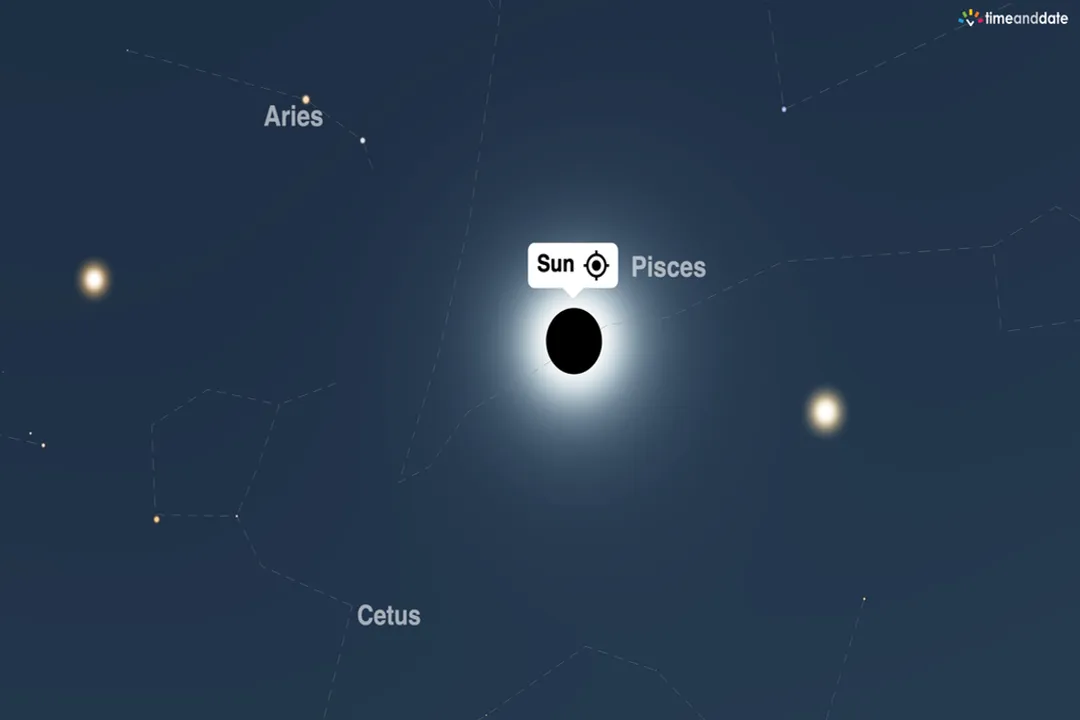
The concept of the ecliptic originates from the realization that Earth orbits the Sun, and our view of that orbital plane projected onto the celestial sphere forms this circle. [1] If you watch the Sun day by day, its position shifts slightly eastward relative to the distant stars, completing a full circuit over approximately 365.25 days. [4] This path is divided into the twelve constellations that make up the zodiac. [1] Because the Moon and planets orbit roughly within the same plane as Earth (the plane of the solar system), they are almost always observed near this same great circle in the sky. [1]
# Earth Tilt

The most commonly referenced degree associated with the ecliptic is its angular separation from the celestial equator. This angle is known as the obliquity of the ecliptic. [1] This crucial measurement defines the tilt of the Earth's axis relative to the plane of its orbit around the Sun. [3] Currently, this angle measures approximately , [1] though it is often rounded for general discussion to [3] or . [4][6]
This specific degree of tilt is the direct cause of the seasons on Earth. [3] When the Northern Hemisphere is tilted toward the Sun, that region receives more direct sunlight, resulting in summer; when tilted away, it experiences winter. [3] The measurement defines how far north (at the summer solstice) and how far south (at the winter solstice) the Sun reaches in the sky relative to the celestial equator. [4]
It is fascinating to consider the accuracy implied by ancient astronomical records when dealing with this specific degree. Even with rudimentary observational tools centuries ago, observers were able to map this angle closely enough that modern calculations, factoring in the slow wobble of the Earth known as precession, refine the value to . [4] This suggests that the knowledge of the Sun's maximum elevation above the spring equinox point was a cornerstone of early calendrical science, perhaps accurate to within a degree or two even in pre-telescopic eras.
The celestial equator itself is an imaginary line circling the sky directly above Earth's equator. [1] Because the ecliptic is tilted relative to this equator, the Sun crosses the equator twice a year—at the vernal (spring) and autumnal equinoxes—which is why the term "equinox" translates to "equal night". [4]

# Galactic Link
While the angle relates the ecliptic to Earth's immediate environment (the solar system's orbital plane relative to the Earth's equator), there is another significant degree measure when shifting the reference frame entirely: the angle between the ecliptic plane and the galactic plane. [2] The galactic plane is the plane in which the vast majority of the stars in our Milky Way galaxy reside. [2]
When we look from the perspective of our solar system's orbital plane (the ecliptic), we find that it intersects the plane of the Milky Way at a considerably larger angle, roughly . [2] This difference is significant; it demonstrates that our solar system is not perfectly aligned with the structure of our galaxy. If the ecliptic were aligned with the galactic plane, the Sun would always appear to travel through the densest, brightest parts of the Milky Way band visible in the night sky, but this is not the case. [2] Instead, the ecliptic cuts across the Milky Way at a rather steep angle, meaning that the solar system's neighborhood appears somewhat "tilted" relative to the galaxy's main disk.
# Finding the Line
Knowing these degrees allows us to precisely model where celestial objects should appear, but how does a general reader find the ecliptic on a given night? Since the Moon and planets follow this path, the easiest way to trace the ecliptic is to locate one of the brighter planets currently visible.
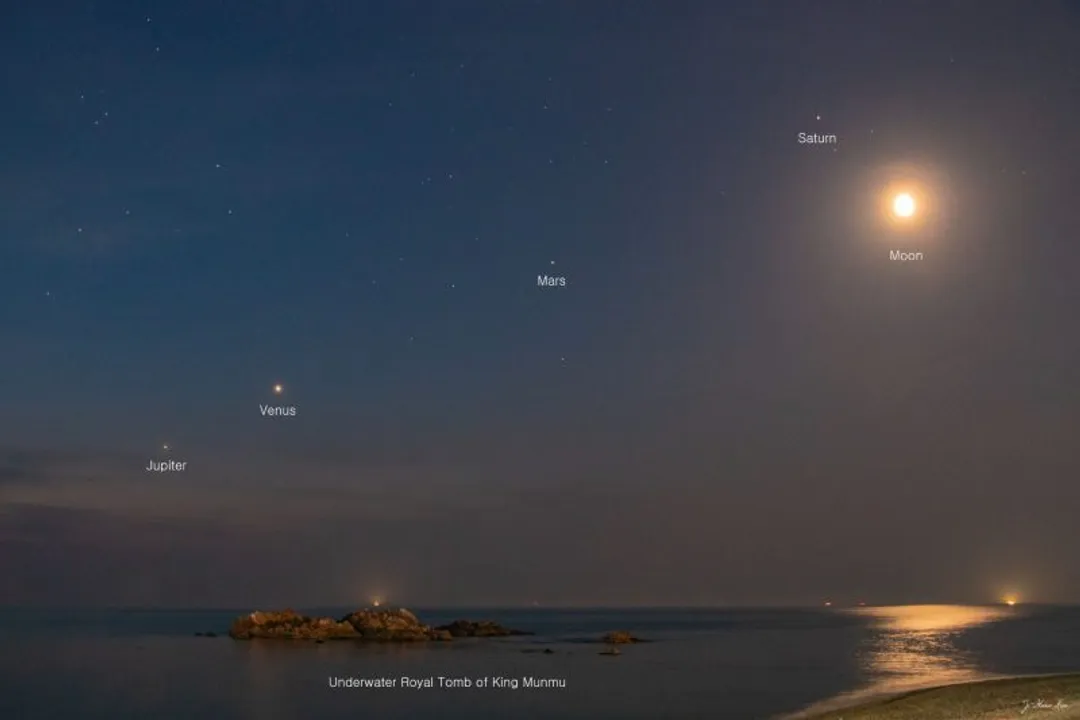
Planets are always found on or extremely close to the ecliptic. For instance, if Jupiter is visible low in the west after sunset, the line extending from Jupiter across the sky toward the east—and continuing through the Moon if it is also visible—is a close approximation of the ecliptic for that time of year. [1][8]
Consider the zodiac constellations. If you can identify Taurus, Leo, or Sagittarius, the path the Sun or a planet takes through those constellations defines the ecliptic's location for that part of the year. However, because the Earth's tilt is , the Sun is not always directly on the line defining the zodiac constellations as we sometimes picture them. The true zodiac constellations, due to precession and historical shifting of boundaries, are not perfectly centered on the mathematical ecliptic line defined by Earth's orbital plane. [1]
To practice identifying the path, one simple exercise is to choose a clear, dark night when the Moon is near a quarter phase. Note the Moon's position, and then look for any bright planets nearby. Imagine a string stretched between them—that string traces the ecliptic. On any given evening, this line will be inclined relative to the horizon, rising in the east and setting in the west, but the amount of that incline changes constantly throughout the year as the Earth moves around the Sun, tracing that arc north and south relative to the celestial equator. [4]
#Videos
What is the Ecliptic in Astronomy? Discover Its Celestial Significance
Related Questions
#Citations
Ecliptic - Wikipedia
In which direction does the ecliptic plane make an angle of 60 ...
The ecliptic is the sun's path in our sky - EarthSky
What Is the Ecliptic? - Time and Date
Ecliptic Facts For Kids | AstroSafe Search - DIY.ORG
Orbits and the Ecliptic Plane - HyperPhysics Concepts
What is the Ecliptic in Astronomy? Discover Its Celestial Significance
Understanding the Ecliptic: The Sun's Yearly Journey Across the Sky
What is the ecliptic's position in the evening sky? - Facebook