What exactly is the ecliptic?
This is the conceptual line where the celestial sphere seems to meet the plane of Earth's path around the Sun. That imaginary plane, when projected onto the sky, creates a great circle known as the ecliptic. [3][5] In simpler terms, it is the apparent yearly track the Sun takes across the background stars as viewed from our Earth. [3][5] This path repeats itself over a cycle just slightly longer than 365 days. [3]
# Orbital Basis
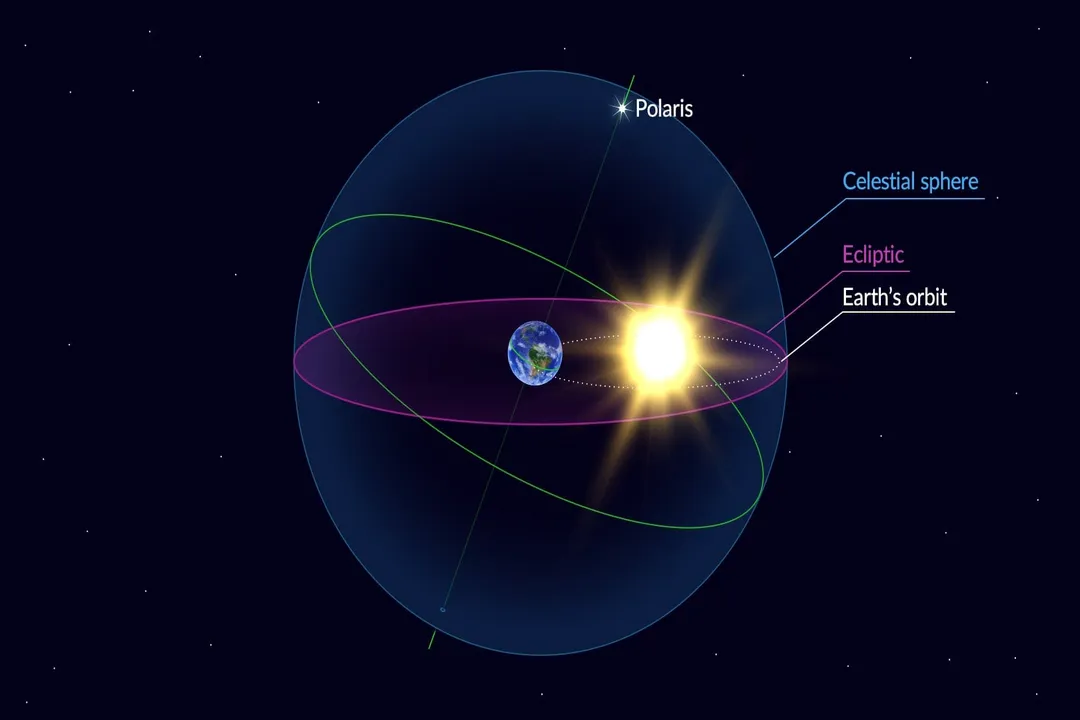
The ecliptic plane is fundamentally defined by the Earth's own voyage around the Sun—it is the plane that contains the Earth's orbit. [1][3] Because the solar system formed from a flattened, spinning protoplanetary disk of gas and dust, most major bodies—the Sun, the major planets, and even many smaller objects—tend to reside very close to this same foundational plane. [1][2] This characteristic makes the ecliptic plane a crucial, convenient, and fundamental reference for mapping out the solar system. [1][3]
While the Earth defines the ecliptic plane, it's important to note that it doesn't travel exactly on the plane defined by the angular momentum of the entire system, which is called the invariable plane. [3] Earth’s orbit, and thus the ecliptic, is tilted by just over from this invariable plane. [3]
It is interesting to consider that while the ecliptic is defined by our orbit, it is often used as the primary reference plane for the entire solar system due to its consistent definition based on the Sun's apparent motion, whereas the invariable plane requires knowing the precise angular momentum of every single object, a value that remains somewhat uncertain. [3] In practical astronomy, convenience and a clearly observable reference point often outweigh the theoretical absolute plane. [3]
# Apparent Solar Movement
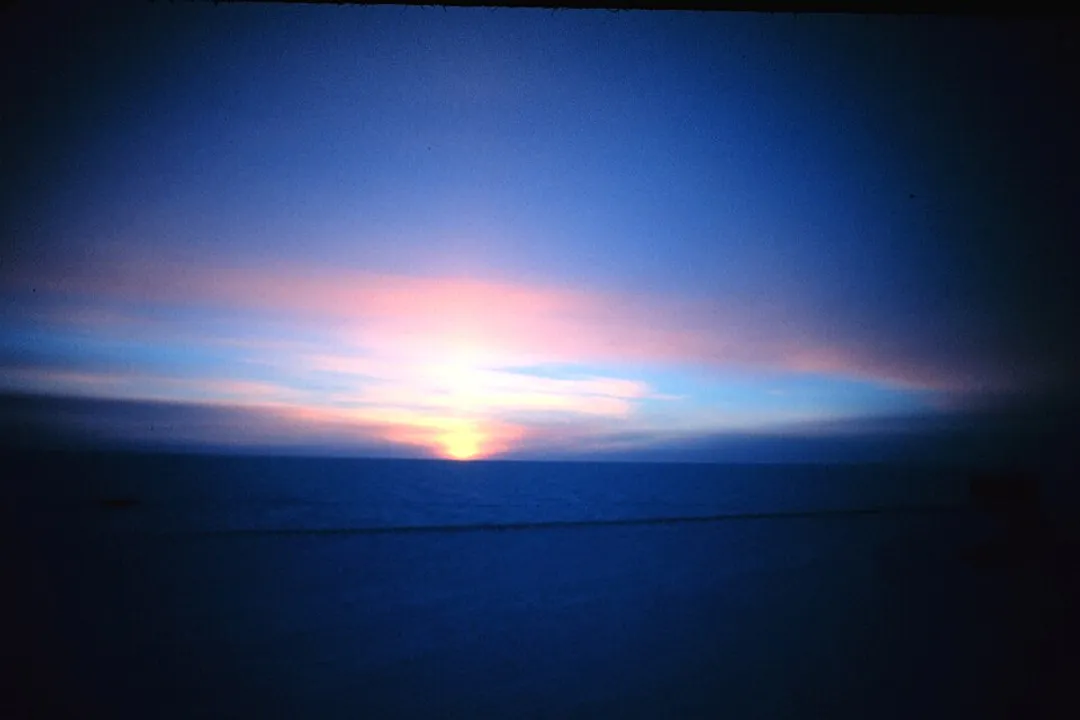
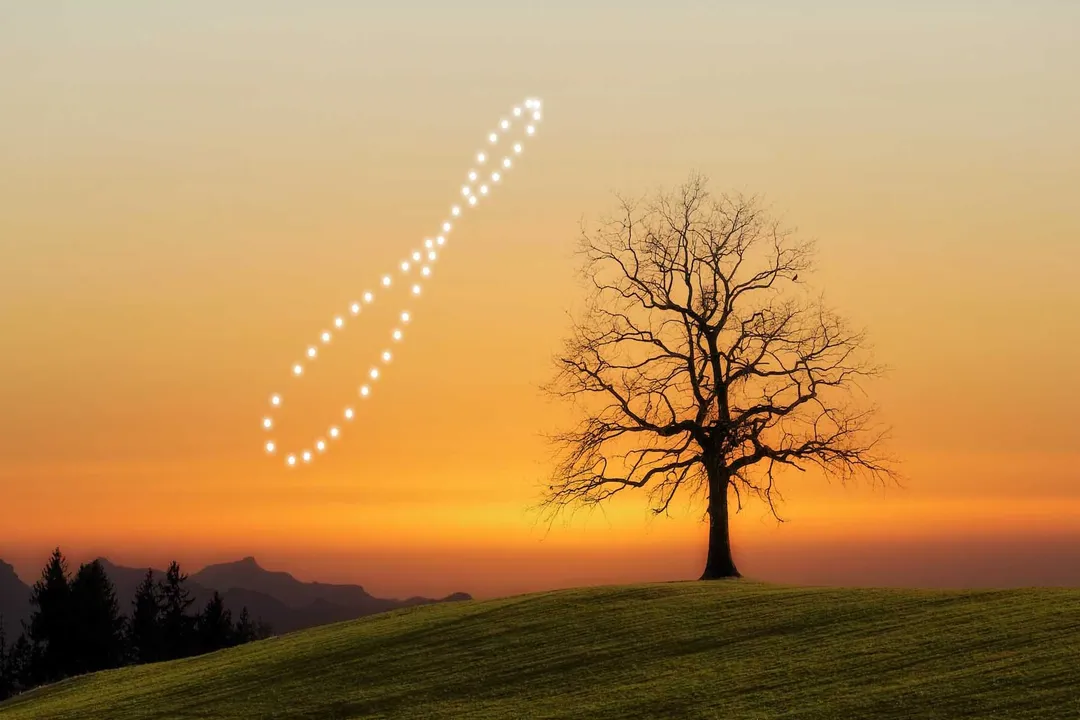
From our vantage point on Earth, the Sun appears to wander along this great circle over the course of a year. [3] As the Earth moves along its orbit, the Sun’s apparent position shifts slightly to the east against the backdrop of fixed stars—moving about eastward every day. [3] This slow, steady eastward progression means that any specific spot on Earth catches up with the Sun about four minutes later each day than it would if the Earth only rotated without orbiting. [3] This difference helps account for why our common 24-hour day is slightly longer than the sidereal day (the time it takes for the Earth to rotate relative to distant stars), which is closer to 23 hours and 56 minutes. [2][3]
The Sun’s speed along the ecliptic is not perfectly constant because Earth’s orbital speed varies slightly throughout the year due to the elliptical shape of its orbit. [3] This variation in orbital speed contributes to what astronomers call the equation of time, which describes the difference between apparent solar time (based on the actual Sun’s position) and mean solar time (based on a clock running at a constant average speed). [3] For instance, the Sun spends slightly more time (about 185 days) north of the celestial equator than it does south of it (about 180 days). [3]
# Relationship to the Celestial Equator
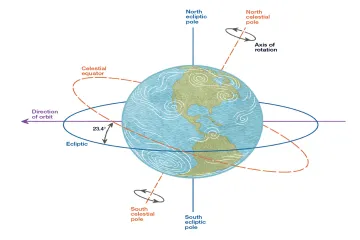
The ecliptic is one of two primary reference circles in the sky, the other being the celestial equator. [3] The celestial equator is the projection of the Earth’s geographic equator out onto the celestial sphere. Since the Earth’s rotational axis is tilted relative to the plane of its orbit, the celestial equator and the ecliptic are not the same plane. [2]
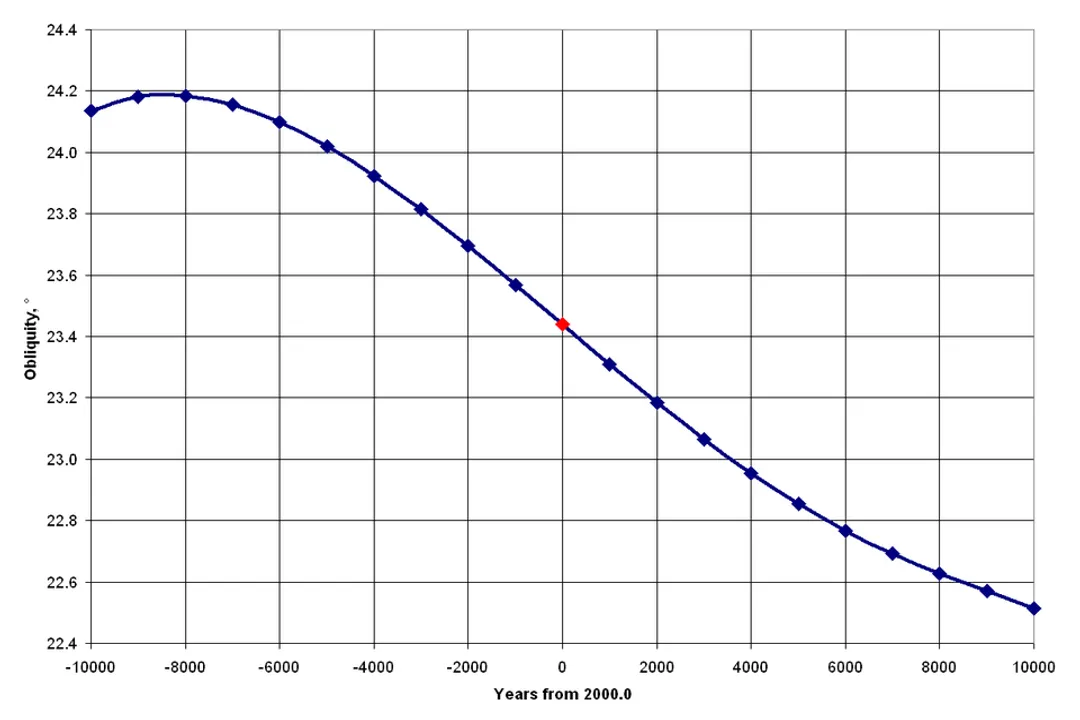
The angle between the plane of the ecliptic and the plane of the celestial equator is known as the obliquity of the ecliptic. [3] This angle is approximately and is a direct consequence of the tilt of the Earth's rotational axis relative to the perpendicular of its orbital plane. [2][3] This tilt is what gives us our seasons. [2]
# Key Intersections
The points where the ecliptic and the celestial equator cross paths on the celestial sphere are hugely significant—they are the equinoxes. [2][3]
- March Equinox (Vernal Equinox): This is the point where the Sun crosses the celestial equator moving from south to north. [3] Classically, this was the First Point of Aries, where the Sun’s longitude in the ecliptic system is . [3] On this day, and the September equinox, there are nearly 12 hours of daylight and 12 hours of dark across the globe. [2]
- September Equinox (Autumnal Equinox): This is the point where the Sun crosses the celestial equator moving from north to south. [3]
The points on the ecliptic that are farthest from the celestial equator are the solstices. These mark the extreme north and south excursions of the Sun during its yearly path. [2]
- Summer Solstice: The Sun reaches its most northerly point, resulting in the longest period of daylight for the Northern Hemisphere. [2]
- Winter Solstice: The opposite point, where the Sun is at its most southerly excursion, bringing the shortest period of daylight to the Northern Hemisphere. [2]
This interplay between the ecliptic and the celestial equator is fundamental for defining ancient and modern timekeeping and seasonal marking. [3]
# Reference System

The ecliptic serves as the foundation for the ecliptic coordinate system, which uses ecliptic longitude ( or ) and ecliptic latitude ( or ) to precisely locate objects in the sky. [3]
- Longitude: Measured along the ecliptic circle, starting from the March equinox () and increasing eastward (the same direction the Sun appears to move) up to . [3]
- Latitude: Measured perpendicular to the ecliptic plane, reaching at the north ecliptic pole and at the south ecliptic pole. [3] The ecliptic itself corresponds to latitude. [3]
This system is particularly convenient for describing the positions of objects within the solar system because, as mentioned, most planets orbit very near this plane, meaning they almost always have low ecliptic latitudes. [3] Unlike the celestial equator, which shifts due to axial precession, the ecliptic plane is relatively stable against the background stars, changing its orientation much more slowly due to planetary perturbations (planetary precession). [3]
# Time and Stability
The Earth’s axis wobbles slowly over a period of about 26,000 years—a motion called axial precession. [3] This wobble causes the intersection points (the equinoxes) to slowly drift along the ecliptic, an effect known as the precession of the equinoxes. [3] This precession is why the March equinox, historically located in the constellation Aries (giving rise to the term "First Point of Aries"), has moved into the constellation Pisces over the last two millennia. [3]
While the precession of the equinoxes is significant over centuries, the ecliptic plane itself also moves slightly due to the gravitational tugs of other planets—a motion called planetary precession. [3] However, the motion of the ecliptic is about ten times smaller than the shift in the equinoxes along it. [3] This relative stability is a major reason astronomers prefer the ecliptic plane over the celestial equator for long-term celestial measurements. [3]
To maintain accuracy, when astronomers use ecliptic coordinates, they must specify the epoch, which is the exact date and time used as the reference point for defining where the equinoxes were at that moment. [3]
# The Celestial Neighborhood
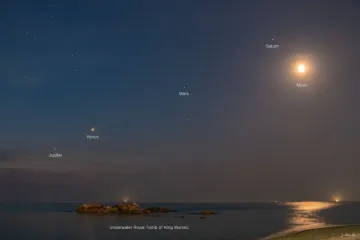
Because the solar system flattened out into a disk during formation, following the ecliptic provides a direct route to observing the main members of our planetary family.
# Planets and Moon
The eight major planets orbit very close to the ecliptic plane. [3] Mercury has the largest inclination, about , while others range from about to . [2] Jupiter’s massive influence means its orbit contributes over $60%$ of the entire solar system’s angular momentum, heavily influencing the orientation of the invariable plane, which the ecliptic tracks closely. [3]
The Moon's orbit is also similar to Earth's, but it is inclined by about to the ecliptic. [3] This small inclination is responsible for the famous eclipse seasons that occur approximately every six months. [3] Eclipses—either solar or lunar—can only happen when the Moon crosses the ecliptic (at its nodes) at the same time it is in the New Moon or Full Moon phase, respectively. [3] The name ecliptic itself is derived from the Greek word ekleipsis, meaning "disappearance," because ancient observers noted that eclipses only happened when the Sun was near this specific path. [3]
# Constellations and the Zodiac
The apparent path of the Sun along the ecliptic defines a specific band of constellations in the sky. [3] These are known as the ecliptic constellations. Traditionally, this band is associated with the Zodiac, which comprises twelve constellations that the Sun appears to pass through during the year: Aries, Taurus, Gemini, Cancer, Leo, Virgo, Libra, Scorpius, Sagittarius, Capricornus, Aquarius, and Pisces. [3]
However, as the ecliptic is the actual path of the Sun, and the constellations are just background markers, modern sky surveys confirm that the ecliptic passes through thirteen officially recognized constellations. [3] The thirteenth constellation that the Sun's path currently crosses, but which is excluded from traditional Western astrology’s twelve signs, is Ophiuchus (the Serpent Bearer). [3]
An interesting consequence of the precession of the equinoxes is the divergence between the zodiac constellations and the astrological zodiac signs. The signs are fixed divisions of the ecliptic circle, named after the constellations that occupied that space 2,000 years ago. [3] Because the equinoxes have moved westward along the ecliptic, the Sun currently enters the sign of Aries while being physically located in the constellation of Pisces. [3]
# Practical Viewing Tip
When planning backyard observation sessions, especially if you are using a modern astronomy app that displays the ecliptic as a line, remember that the planets will always be found very close to this line. If you are trying to spot a specific planet like Mars or Jupiter, orienting your binoculars or telescope to scan along the ecliptic—perhaps checking which zodiac constellation the Sun is currently in—dramatically narrows your search field. For instance, if you know the Sun is currently in Capricornus (mid-January), you have a very high probability of finding Mercury or Venus nearby, as their orbital inclinations are small. Furthermore, checking the path of the ecliptic against the Moon’s position is the best way to predict when the next eclipse season will arrive, which happens when the Moon’s orbital nodes align near the Sun on the ecliptic. [3] This knowledge turns looking up at the sky from a random sweep into a focused hunt along a known celestial thoroughfare.
# Small Bodies and Deviations
While the major planets hug the ecliptic closely, smaller objects show greater variation in their orbital planes. Most asteroids in the main belt and many dwarf planets follow orbits close to this plane. However, objects like Pluto are significant outliers, with its orbit tilted at about relative to the Earth's orbit. [2] Similarly, some long-period comets, which are thought to originate from the distant Oort cloud, have orbits that are randomly oriented and can cross the ecliptic plane at any angle. In contrast, short-period comets generally orbit much closer to the ecliptic, suggesting they are remnants of the same disk material that formed the planets.
The ecliptic, therefore, is much more than just a line on a map; it is a record of our solar system’s birth, a fixed reference system for calculating planetary positions, and the mechanism that dictates when we see the dramatic events of eclipses and the predictable annual cycle of the seasons. [1][2][3]
Related Questions
#Citations
Ecliptic - Wikipedia
Orbits and the Ecliptic Plane - HyperPhysics Concepts
What Is the Plane of the Ecliptic? - NASA
Glossary term: Ecliptic - IAU Office of Astronomy for Education
What Is the Ecliptic: The Sun's Path In the Sky - Star Walk