What exactly is stellar energy?
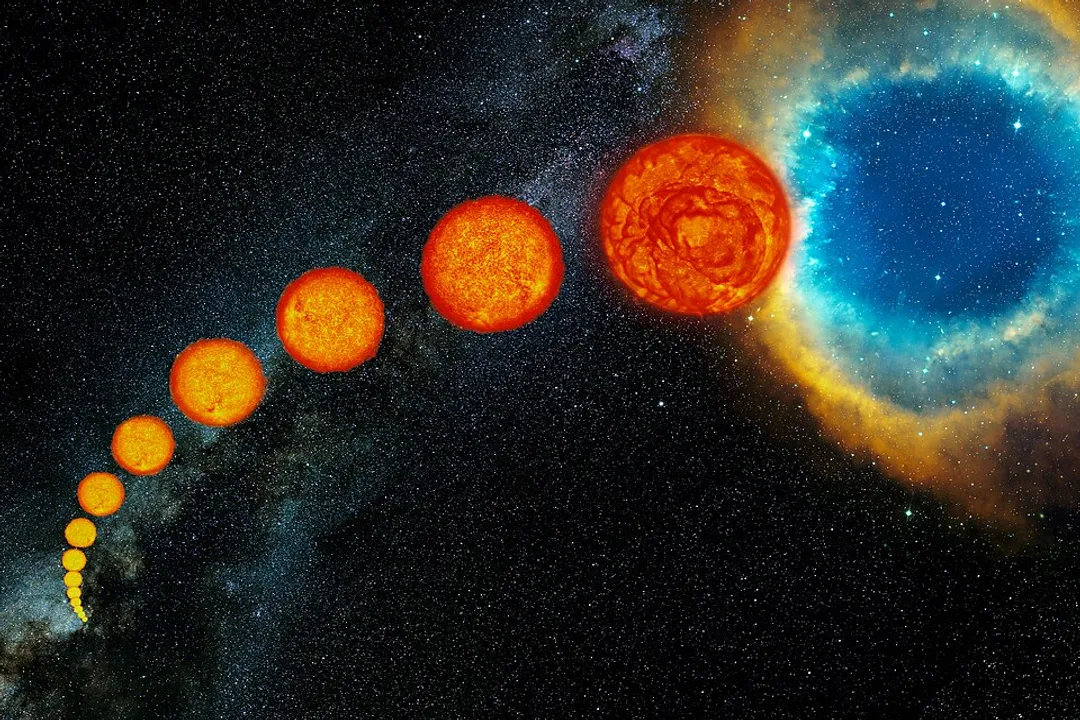
The light reaching us across unimaginable distances originates from a process so profound it defines the lifespan of stars and dictates the elemental composition of our planet. What exactly is this stellar energy? At its most fundamental, it is the radiant power generated from within a star, a continuous, titanic outflow of energy sustained not by chemical burning, but by nuclear transformation.
For a body as vast and enduring as a star, simpler energy sources quickly prove inadequate. Chemical reactions, like burning coal or wood, release far too little energy over the timescale of even a short stellar life. Similarly, gravitational contraction—the energy released as a star collapses under its own weight—can only power a star for a brief period, perhaps a few million years at most for massive stars, but not the billions of years observed for objects like our Sun. The sheer longevity of stars demands a power source operating under Einstein’s famous relationship, , where a measurable amount of mass is converted directly into energy.
# The Engine Nuclear
The secret to sustaining a star lies in the extreme conditions found in its core: immense pressure and temperatures reaching many millions of Kelvin. These conditions force atomic nuclei close enough to overcome their natural electrical repulsion and merge in a process called nuclear fusion. Fusion is the subject of nuclear chemistry, specifically the merging of light nuclei to form a heavier nucleus, a byproduct of which is the liberation of vast energy.
The specific fusion pathway utilized depends critically on the star's mass and, consequently, its core temperature.
# Proton-Proton Cycle
For stars comparable in mass to our Sun, the dominant energy production mechanism is the proton-proton chain reaction (- cycle). This process effectively consumes ordinary hydrogen nuclei (protons) and converts them into helium nuclei ().
The process is a multi-step affair:
- Two protons collide to form a deuteron (), releasing a positron () and a nearly massless particle called a neutrino ().
- The deuteron then captures another proton to create a helium-3 nucleus (), emitting a gamma-ray photon ().
- Finally, two nuclei combine to form a stable nucleus, releasing two excess protons back into the cycle.
The overall balance sheet shows that four hydrogen nuclei are used to create one helium nucleus. Crucially, the resulting helium nucleus is slightly less massive than the four original hydrogen nuclei that started the reaction. This difference in mass, approximately $0.7$ percent of the initial mass, is what vanishes into energy. For the Sun, this means converting a staggering 674 million tons of hydrogen into 670 million tons of helium every second, resulting in about four million tons of mass being instantly converted into radiant energy each second.
# The CNO Alternative
In hotter, more massive main-sequence stars, the core temperatures exceed the threshold needed for an alternate, faster mechanism: the carbon-nitrogen-oxygen (CNO) cycle. This process still converts hydrogen into helium, but it utilizes heavier elements (, , ) as catalysts. The carbon nucleus captures a proton, initiating a sequence of transformations that eventually ejects a helium nucleus and returns the original carbon nucleus to repeat the cycle. Because the CNO cycle is far more sensitive to temperature, it dominates energy generation in stars significantly hotter than the Sun, while stars like the Sun derive most of their power from the - chain, with some contribution from the CNO cycle.
This dependence on core temperature and available fuel dictates the pace of a star's life. Low-mass red dwarfs fuse hydrogen very slowly and are predicted to remain on the main sequence for trillions of years, whereas massive, hot -type stars exhaust their fuel and leave stability in just a few million years. The energy source, therefore, is not a static property but a function of stellar mass, which sets the core conditions and determines the resulting evolutionary timeline.
# Output and Equilibrium
The energy generated in the core must find its way outward. This outpouring of energy is known as stellar radiation, which takes several forms, though electromagnetic radiation dominates the observed output. The total energy radiated by a star per unit of time is its luminosity (). To put the Sun’s output into perspective, its luminosity is approximately Watts. For comparison, all the commercial nuclear reactors operating globally in a given year produce an output the Sun generates in a single second.
This relentless energy generation creates an outward pressure that perfectly counteracts the inward crushing force of the star's own gravity. When these two forces—outward radiation pressure and inward gravitational collapse—are precisely balanced, the star achieves hydrostatic equilibrium. This equilibrium is the hallmark of a stable, main-sequence star, like our Sun today.
Energy transport mechanisms within the star vary based on location. In Sun-like stars, the deep interior relies on radiation to carry energy, where photons gradually make their way outward. In the outer layers, however, convection takes over; currents of hot gas rise and cooler gas sinks, efficiently mixing material and transporting energy toward the surface.
# Element Genesis
Stellar energy production does more than just illuminate the cosmos and maintain stellar structure; it is the universe’s primary forge for elements heavier than hydrogen and helium. This process is known as stellar nucleosynthesis.
In smaller stars like the Sun, the primary result is helium ash. However, in the later, more dramatic evolutionary stages of larger stars, or when the core hydrogen is exhausted, the process escalates. When a star leaves the main sequence, its core contracts and heats up until it becomes hot enough to fuse the accumulated helium into heavier elements like carbon and oxygen. For the most massive stars—those greater than about eight solar masses—the core continues this process through successive stages of fusion: carbon fuses to neon and magnesium, which then fuse further into elements up to iron.
When these giant stars meet their end in a spectacular supernova explosion, the immense energy release drives further, rapid nucleosynthesis, creating elements heavier than iron, such as gold and uranium, which are then scattered across the galaxy. The elements that form the basis of our world—the oxygen we breathe, the carbon in our cells, the iron in our blood—were forged in the cores of long-dead stars, demonstrating a deep connection between stellar energy and the very existence of complex structures like planets and life.
# The Slow Burn and Stellar Legacy
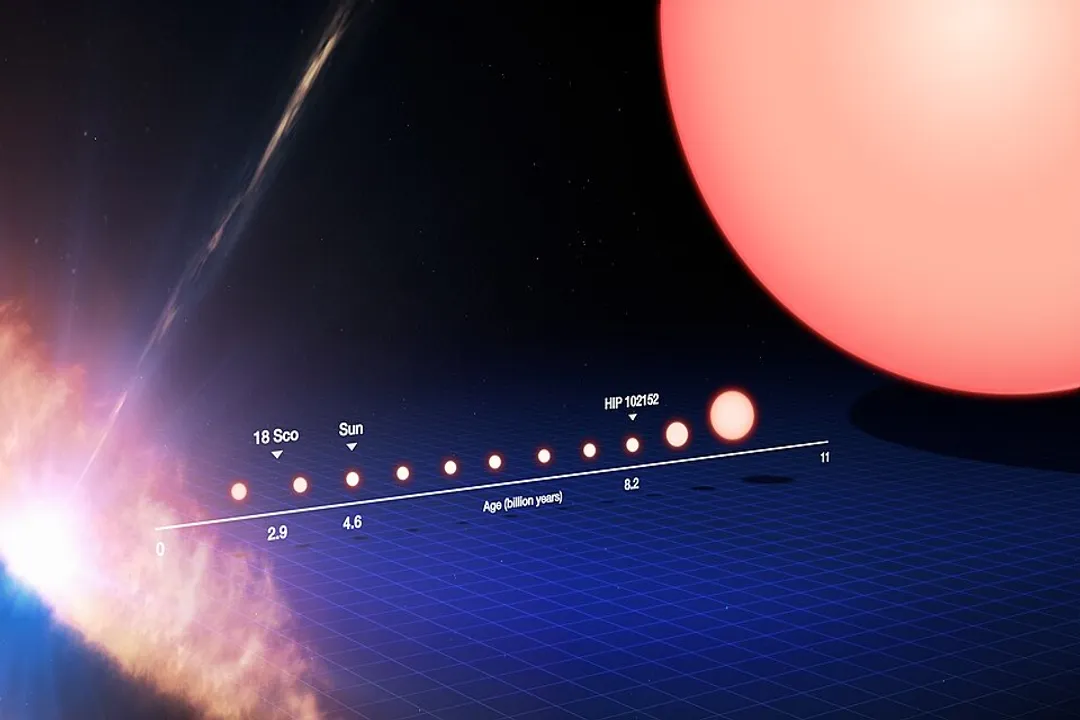
It is fascinating to consider the differing timelines of these energy sources. The Sun, having shone at its current rate for about five billion years, is roughly in the middle of its main-sequence life. During this stable period, its central temperature has steadily increased due to the slight depletion of hydrogen and the corresponding increase in the core's molecular weight. Over the Sun's lifetime thus far, its luminosity has likely brightened by about half a magnitude. This slow, stable conversion rate allows for predictable evolution lasting about 10 billion years for a star of its mass.
Consider the contrast between the star's internal stability and the immediate, explosive applications sought on Earth. While the Sun manages its incredible energy output over eons through delicate hydrostatic balance, scientists striving to replicate this power on Earth face a severe challenge in achieving that same long-term stability. Terrestrial fusion experiments aim to force nuclei together, but maintaining the confinement and temperature necessary for a controlled, self-sustaining reaction is difficult. The star has an automatic control system—gravity—which, if fusion falters, simply squeezes the core tighter, raising the temperature back to the necessary ignition point. On Earth, if the containment fails, the reaction stops, which is safer, but requires continuous, immense input of power to initiate and maintain the reaction in the first place.
# Energy Output as Light
The energy generated deep within the core must traverse the star before it is released as light we can observe. This light, when analyzed by astronomers, carries a fingerprint of the star's physical state.
Because stars exist in a state close to thermodynamic equilibrium, they can be modeled as near-perfect blackbody radiators. This theoretical concept allows scientists to infer surface temperature by measuring the peak wavelength of the emitted light—a relationship described by Wien’s Law. Hotter stars peak at shorter wavelengths, appearing blue or white, while cooler stars peak at longer wavelengths, appearing red. The Sun, classified as a star with a surface temperature around $6,000$ Kelvin, emits most intensely in the visible spectrum we perceive.
The total energy output, luminosity, is tied to both temperature and surface area through the Stefan-Boltzmann Law. This is why a red giant, though cooler on the surface than a main-sequence star, can be far more luminous: its outer layers have expanded dramatically, giving it a vast surface area from which to radiate energy.
# Naming the Phenomenon
The term itself is straightforward, reflecting its origin: stellar comes from the Latin stella meaning "star," and energy from the Greek energeia, meaning "activity". Merriam-Webster defines it specifically as both the internal energy of a star and the energy it radiates.
It is important to note a contemporary, metaphorical usage of this term that has emerged in contemporary discourse, particularly concerning clean power transitions. In some contexts, "Stellar Energy" is used to describe an Energy System based on a critical mass of solar power, wind power, and battery storage (SWB), designed to achieve energy superabundance. While this concept is inspired by the ultimate power source—the Sun—it describes an engineered terrestrial system, rather than the astrophysical process occurring within a star's core. Understanding the astrophysical definition—the physical energy generation via fusion—is the key to appreciating how stars shine and how they manufactured the elements that make up everything we observe, including ourselves.
#Videos
What Is The Stellar Energy Source Of Main Sequence Stars?
Related Questions
#Citations
Stellar evolution - Wikipedia
Understanding Stellar Energy | RethinkX
Stellar energy production Definition - Principles of Physics IV Key Term
What Is The Stellar Energy Source Of Main Sequence Stars?
STELLAR ENERGY Definition & Meaning - Merriam-Webster
Stellar Radiation & Stellar Types - ESA Science & Technology
Star - Fusion, Hydrogen, Nuclear | Britannica
Stellar Energy → Area → Sustainability
ABOUT - WHO WE ARE - Stellar Energy
Stellar Energy in Nuclear Chemistry: How Stars Power the Universe