What is stellar life?
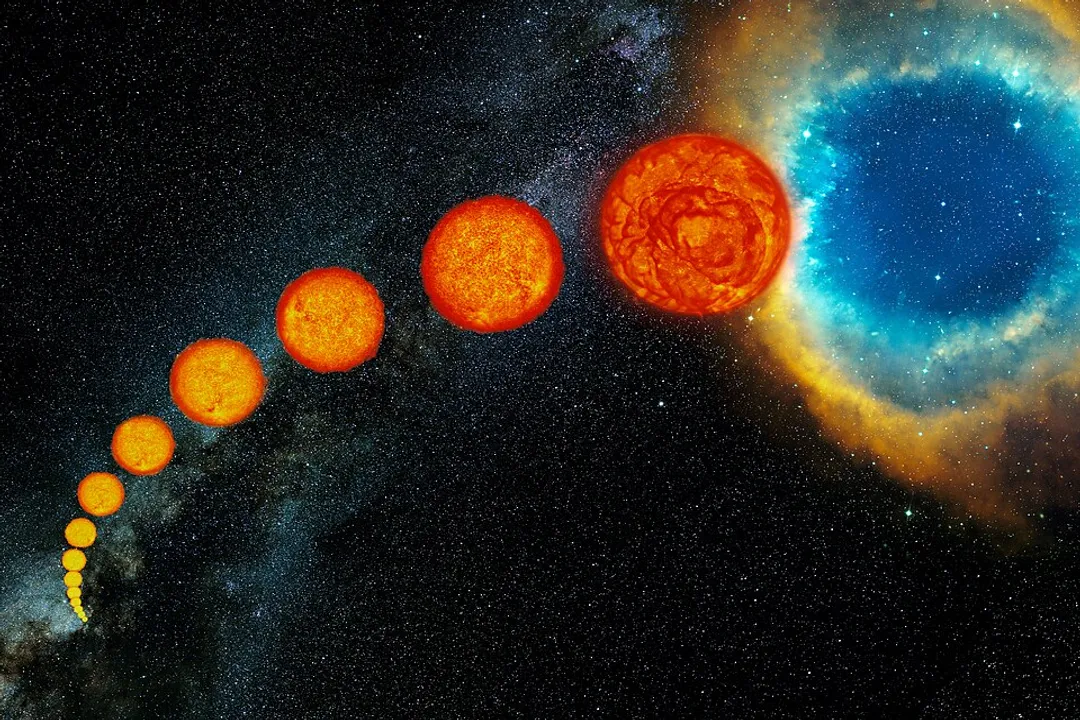
The concept of stellar life encompasses the entire existence of a star, from its initial formation within vast clouds of gas and dust to its final collapse or dissipation. It is a magnificent, multi-stage process governed almost entirely by one initial parameter: the star’s mass. [1][5] The journey of a star is not a gentle, singular path; rather, it branches into distinct evolutionary tracks, ensuring that no two stellar lives are precisely the same, though they follow universal physical laws. [1][6] Understanding stellar life means tracing this entire arc, observing how nuclear furnaces ignite, how they maintain equilibrium for eons, and how that equilibrium is eventually shattered. [7]
# Star Birth
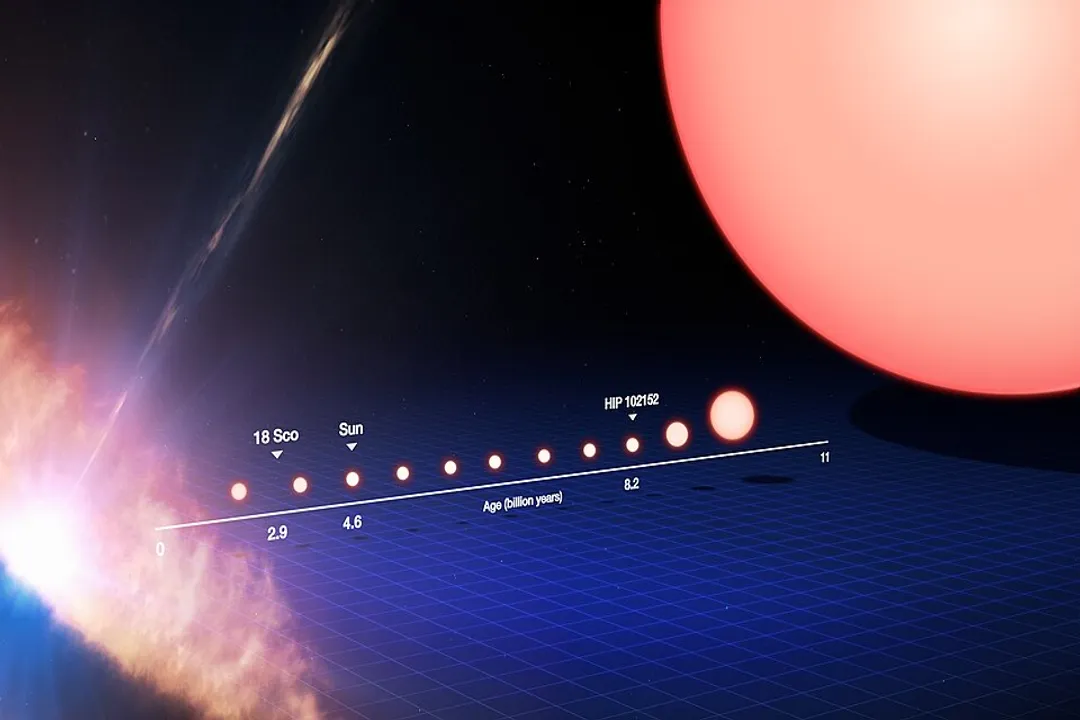
Every star begins its existence within a giant molecular cloud, which are immense reservoirs of cold gas, primarily hydrogen, and dust scattered throughout the galaxy. [1][5] These regions are the stellar nurseries of the cosmos. [6] Gravity, acting on slight density fluctuations within the cloud, causes portions of this material to begin collapsing inward. [1] As a clump of material contracts, its gravitational potential energy is converted into thermal energy, causing the core to heat up significantly. [7]
This collapsing, embryonic star is known as a protostar. [1][6] A protostar is not yet a true star because it is not generating energy through sustained nuclear fusion in its core; instead, it shines due to the heat generated by gravitational contraction. [1][7] This initial phase can last for a substantial period, depending on the eventual mass of the star. [1] During this time, the protostar gathers more mass from its surrounding cloud through an accretion disk, a spinning structure of gas and dust. [1] The system will eventually settle down, often leading to the formation of planets from the remaining disk material, while the central object becomes increasingly hot and dense. [6]
# Stable Fusion
The transition to true stardom occurs when the core temperature and pressure become sufficient—roughly 15 million Kelvin—to initiate sustained nuclear fusion. [1][7] At this point, four hydrogen nuclei combine to form one helium nucleus, releasing enormous amounts of energy in the process, following Einstein’s famous mass-energy equivalence, . [7] This moment marks the star's entry onto the Main Sequence. [1][6]
The Main Sequence is the longest and most stable phase of a star’s life, sometimes occupying up to 90% of its total lifespan. [1][5] During this adult phase, the star exists in a state of hydrostatic equilibrium. [1][7] This perfect balance pits the relentless inward force of gravity against the outward thermal pressure generated by core fusion. [1][6] For a star like our Sun, this stable period lasts for about 10 billion years. [5] The star remains largely unchanged in size and luminosity throughout this long stretch, steadily converting hydrogen into helium in its core. [1]
# Mass Determines Path
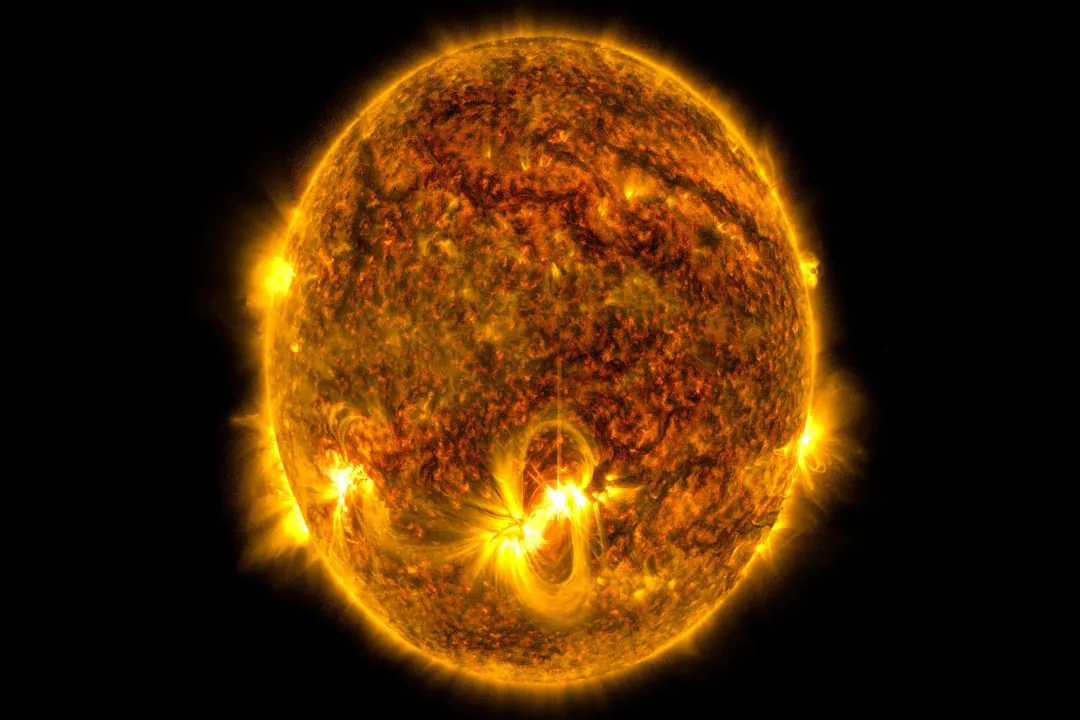
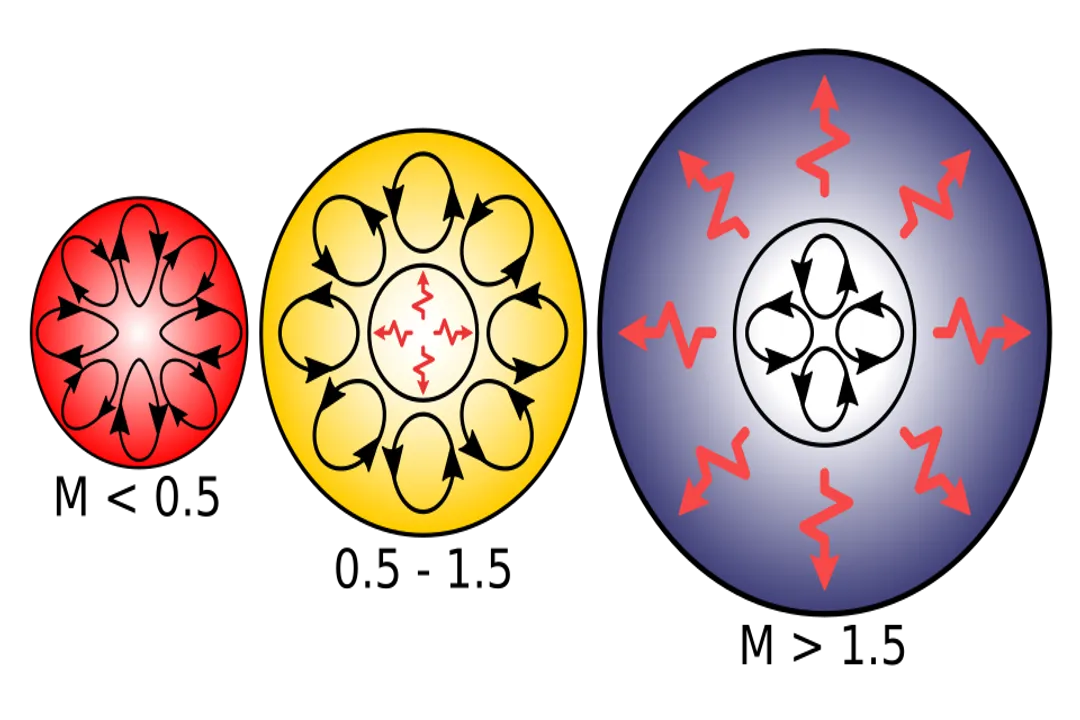
While all stars follow the path to the Main Sequence, their subsequent evolution is dramatically divergent based solely on their initial mass. [1][6] This difference in mass creates an inverse relationship between size and lifespan, which can be counterintuitive at first glance. A star with 0.5 times the mass of the Sun might live for hundreds of billions of years, whereas a star twenty times the Sun's mass might only last a few million years. [5] This happens because more massive stars have stronger gravity, requiring a much higher core temperature and fusion rate to maintain equilibrium, causing them to consume their fuel at a vastly accelerated pace. [1][7]
To illustrate this fundamental principle, consider these approximate lifespan differences:
| Star Mass (Solar Masses) | Approximate Main Sequence Lifetime | Primary Death Event |
|---|---|---|
| 0.5 | 100 Billion Years | White Dwarf [5] |
| 1.0 (Sun-like) | 10 Billion Years | White Dwarf [5] |
| 15 | 10 Million Years | Supernova Neutron Star [1][5] |
| 40 + | Few Million Years | Supernova Black Hole [1] |
When one considers the sheer duration, our Sun’s 10-billion-year tenure seems eternal, yet in the grand cosmic narrative—a scale where stars in the lowest mass category outlive the current age of the universe—it is merely middle age. The furious consumption rates of the most massive stars mean their brilliance is fleeting; they are the cosmic equivalent of supercars that burn through their entire fuel tank in a single, spectacular sprint. [5]
# Gentle Fading
The end of the Main Sequence phase begins when the star exhausts the hydrogen fuel supply in its core, leaving behind a core of inert helium ash. [1][6] For stars with masses less than about 8 times the mass of the Sun, the subsequent collapse is relatively gentle, leading to a predictable, quieter demise. [1]
Once fusion stops in the core, gravity wins temporarily, crushing the helium core until the temperature rises enough to ignite hydrogen fusion in a shell surrounding the core. [1][6] This shell burning pumps energy outward, causing the star’s outer layers to expand dramatically and cool down, transforming the star into a Red Giant. [1][7] The Sun, in about five billion years, will swell to engulf Mercury and Venus, possibly reaching Earth's orbit. [5]
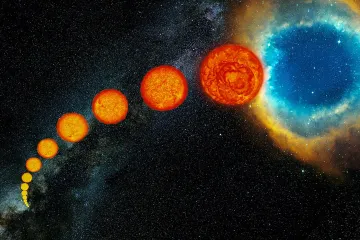
For these lower-mass stars, the helium core continues to contract until it reaches temperatures high enough (around 100 million Kelvin) to begin fusing helium into carbon and oxygen. [1] This phase is briefer than the hydrogen-burning stage. [6] When the helium is depleted, the star lacks the mass required to create the necessary pressure to start fusing carbon. [1] At this point, the outer layers drift away from the inert carbon/oxygen core, forming an expanding shell of gas known as a Planetary Nebula. [1][6] This nebula illuminates the gas with beautiful, intricate shapes before dissipating into space. [6]
The remaining core, extremely hot but no longer undergoing fusion, settles down as a White Dwarf. [1][7] A white dwarf is incredibly dense, possessing the mass of the Sun compressed into a volume about the size of Earth. [1] It is supported against further gravitational collapse by electron degeneracy pressure. [1] Over trillions of years, this stellar remnant will simply cool down until it becomes a cold, dark Black Dwarf. [1][6]
# Violent Endings
Stars significantly more massive than the Sun—generally starting around 8 solar masses—experience a far more dramatic and destructive end. [1][5] Following the Main Sequence, these behemoths become Red Supergiants. [1] Their immense mass allows them to achieve the necessary core temperatures to fuse increasingly heavy elements sequentially: helium into carbon, carbon into neon, and so on, creating layers of fusion shells within the star. [1][6] This process continues until the core is converted to iron. [1][7]
Iron marks the absolute end of the road for stellar fusion because fusing iron consumes energy rather than releasing it. [1][7] Once the iron core forms, fusion ceases abruptly, and gravity seizes control instantaneously. [1] The core collapses with unimaginable speed, reaching speeds up to 70,000 kilometers per second. [7] When the core collapses to nuclear densities, it rebounds violently, creating a catastrophic explosion known as a Type II Supernova. [1][6] For a brief period, a supernova can outshine an entire galaxy. [5]
The supernova explosion is responsible for synthesizing and scattering nearly all elements heavier than iron—including the gold in jewelry and the calcium in our bones—throughout the cosmos. [1][7] This material seeding is vital, as it forms the building blocks for the next generation of stars, planets, and life. The ultimate remnant left behind depends on the mass of the collapsing core. [1][6] If the remnant core is between about 1.4 and 3 solar masses, it forms an incredibly dense Neutron Star. [1] If the core mass exceeds this upper limit, nothing can halt the collapse, and it shrinks into a region of spacetime where gravity is so strong that not even light can escape: a Black Hole. [1][7]
The transition between these two endpoints, the neutron star and the black hole, is governed by the Tolman-Oppenheimer-Volkoff (TOV) limit. [1] This physical boundary determines the maximum stable mass a neutron star can possess before it must inevitably collapse further into a singularity. [1] This mechanism illustrates the universe’s capacity for both creation and absolute finality within the life cycle of a single object.
# Timescales
The duration of a star’s life offers a profound context for understanding cosmic history. [8] While the formation process, lasting millions of years for massive stars, seems protracted by human standards, the Main Sequence phase can stretch for epochs. [5] Stars like our Sun are thought to remain on the Main Sequence for about ten billion years. [5] In contrast, a low-mass red dwarf star, burning its fuel with extreme frugality, could theoretically sustain fusion for trillions of years, far exceeding the current age of the universe, estimated at approximately 13.8 billion years. [5][8]
The relationship between mass and lifetime is quantified by the initial mass function, but the core takeaway remains: the more massive the star, the shorter its borrowed time. [7] If we use the Sun’s lifetime as a baseline, even a massive star living for only 10 million years is still an immense duration—ten million summers and winters—yet in the astronomical sense, it is over almost before it has begun.
The end products—white dwarfs, neutron stars, and black holes—represent the final stages where matter exists under conditions dictated by quantum mechanics or extreme gravity. [1] These remnants are not simply 'dead'; they are condensed forms of stellar material that will eventually contribute to the interstellar medium, perhaps becoming the seeds for future stellar lives as material mixes and coalesces across galactic ages. [7] This cosmic recycling loop, where the violent death of one generation enriches the material available for the birth of the next, is the fundamental engine driving the chemical evolution of the universe. [1][7]
Related Questions
#Citations
Stellar evolution - Wikipedia
Stellar National Life - Financial Solutions
The Stellar Life
Stellar Lifetimes - HyperPhysics
Star Basics - NASA Science
Stellar Evolution - | The Schools' Observatory
Stellar evolution | Research Starters - EBSCO
Stellar Lifetime Definition - Intro to Astronomy Key Term | Fiveable