What elements are in a stellar nebula?
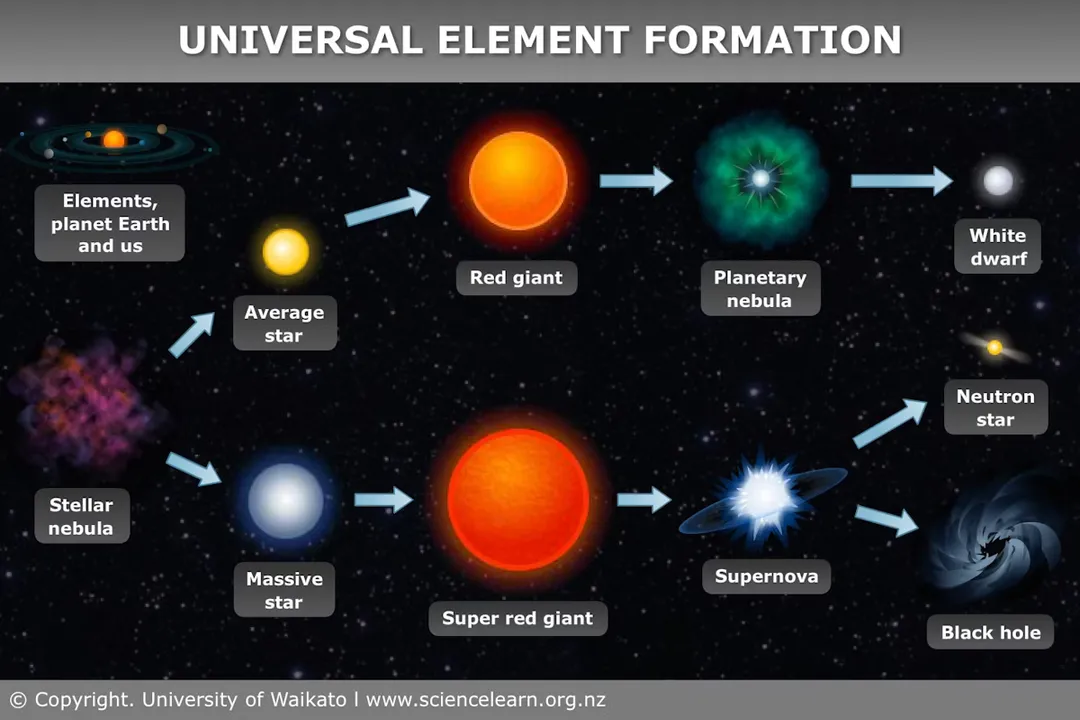
The clouds of gas and dust scattered across the cosmos, often called nebulae, represent both the nurseries where new stars ignite and the ethereal remnants left behind by stars that have reached the end of their lives. [9] When we investigate the elemental makeup of these vast structures, we are essentially reading the chemical history of our galaxy. While the raw, initial material for new star birth—the true stellar nebula—is primarily the primordial hydrogen and helium synthesized in the Big Bang, the most visually striking nebulae—the planetary nebulae—offer a concentrated view of elements processed within the stars themselves. [7]
# Bulk Gases
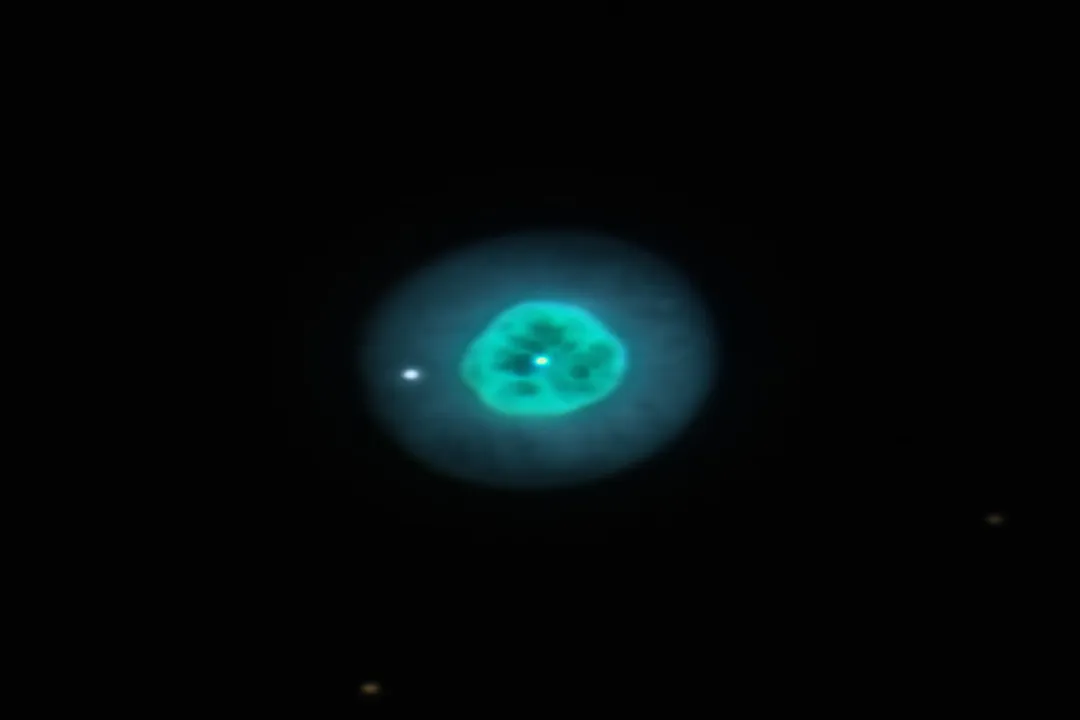
At the fundamental level, any stellar nebula, whether forming or dispersing, is overwhelmingly dominated by the two lightest elements: hydrogen () and helium (). [1][2] These two components make up the vast majority of the mass found in both the initial interstellar medium and the expanding shells expelled by dying stars, such as planetary nebulae. [2] In the context of a planetary nebula, the ejected material is essentially the star's outer envelope, which has been gently blown away following the star's red giant phase. [6] This gas is often energized by the hot, exposed stellar core—a white dwarf—causing it to glow brightly. [8]
Even in this ejected material, the relative abundance strongly favors these initial building blocks. Imagine the raw gas cloud as nearly ninety-percent hydrogen by mass, with helium accounting for most of the remaining ten percent. [2] This high concentration reflects the universe's initial composition, established moments after the Big Bang. [7] Any deviation from this ratio in a specific region of space is direct evidence of nuclear activity that took place inside a star over millions or billions of years. [4][7]
# Heavier Traces
While hydrogen and helium define the bulk of the material, the scientific interest—and the source of heavier elements necessary for planets and life—lies in the traces of everything else. [7] The material ejected in a planetary nebula is chemically enriched because the material passed through the star's core, where temperatures and pressures were sufficient to initiate fusion reactions beyond the hydrogen-burning phase. [2][4]
Specific elements frequently detected in these expanding shells, alongside the dominant hydrogen and helium, include:
- Carbon ()
- Nitrogen ()
- Oxygen ()
- Neon () [2]
These elements are often present in detectable, though small, quantities. Depending on the specific mass and evolutionary history of the star that formed the nebula, other elements might also appear. For instance, traces of sulfur () and argon () can sometimes be identified in the spectral signatures of these cosmic structures. [2]
It is worth noting that the proportion of these heavier elements relative to hydrogen and helium is small, yet incredibly significant for cosmic chemistry. If we consider a hypothetical scenario where a forming nebula consists of only pure primordial material, any detection of neon or oxygen confirms that star formation and stellar death have already occurred in that locale. [7] This observed ratio shift—the degree to which the , , and are elevated relative to the cosmic baseline—is one of the key diagnostic tools astronomers use to pinpoint exactly which stage of stellar life the progenitor star was in when it expelled its outer layers. [4]
# Element Creation
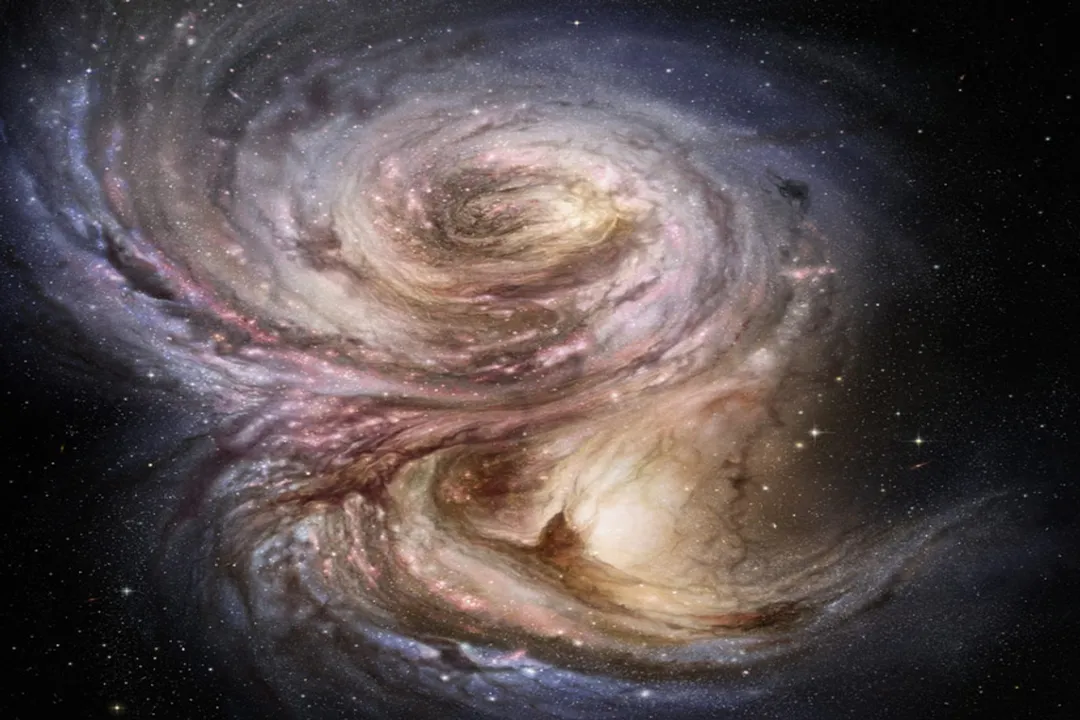
The presence of elements heavier than helium in these stellar remnants is direct proof of nucleosynthesis, the process by which stars convert lighter elements into heavier ones. [7] The material we observe in these nebulae was forged in the star’s interior during its life on the main sequence and in subsequent evolutionary phases. [2]
For intermediate-mass stars, the path often involves the triple-alpha process, which fuses helium nuclei into carbon. [7] If the star is massive enough to contract further and raise core temperatures sufficiently, carbon can then fuse, leading to the creation of neon and oxygen. [7]
When looking at the composition of an ejected shell, we are seeing a snapshot of the elements that survived the star's furnace and were subsequently mixed outward. For example, the ratio in the ejected gas often tells a complex story about how much dredging up (mixing of deep core material to the surface) occurred before the final puffing away of the outer layers. [5] If the star evolved through a phase where its interior composition was significantly altered by the cycle (which converts carbon and oxygen into nitrogen), the resulting nebula will show a strong enrichment in nitrogen compared to its initial composition. [7] This indicates a specific thermal history for the star.
# Material Recycling
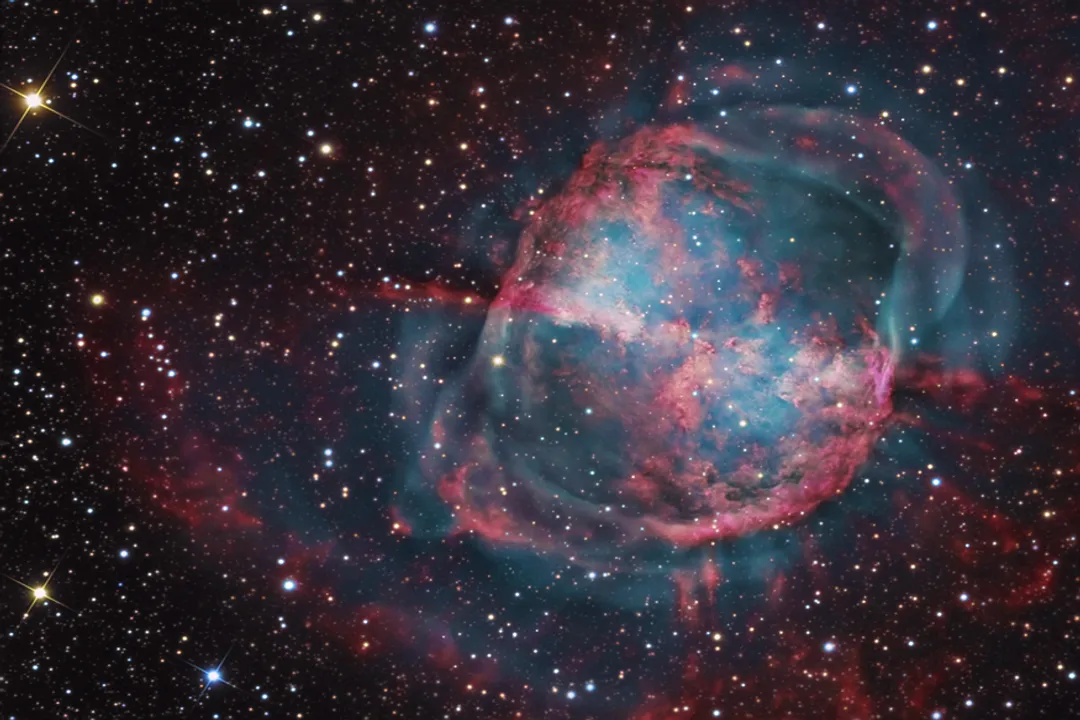
The relationship between a planetary nebula and a new stellar nebula is one of chemical succession. While the material in the planetary nebula is ejected by an aging star, that ejected material, once cooled and mixed with the general interstellar medium, becomes part of the raw ingredients for the next generation of stars and their accompanying protoplanetary disks. [9][3]
The ejected gas and dust are injected back into the galactic environment, effectively increasing the metallicity—astronomer-speak for the abundance of elements heavier than hydrogen and helium—of the clouds from which future stars will collapse. [7] Stars forming today, like our Sun, are therefore built from material that has already passed through at least one stellar lifecycle, incorporating the carbon for life and the oxygen we breathe. [3] A star that only consisted of primordial hydrogen and helium would result in a planetary system devoid of rock-forming elements, a scenario that is highly unlikely in our current galactic neighborhood. [1]
# Abundance Diversity
It is important to recognize that not all stars produce chemically identical waste products. The elemental signature left behind is highly dependent on the initial mass of the progenitor star. [4]
| Progenitor Star Mass | Dominant Ejected Elements (Beyond H/He) | Evolutionary Phase |
|---|---|---|
| Low-to-Intermediate Mass (like the Sun) | Primarily , , | Planetary Nebula |
| High Mass (Supernovae Precursors) | Elements up to Iron (), and others | Supernova Remnant |
While the general composition of planetary nebulae centers on , , and , [2] the material dispersed by much more massive stars—which end their lives in spectacular supernova explosions—is far richer. Supernovae synthesize and scatter a much wider range of elements, including iron, gold, and uranium, although this material is found in supernova remnants, which are chemically distinct from the shells left by lower-mass stars. [7]
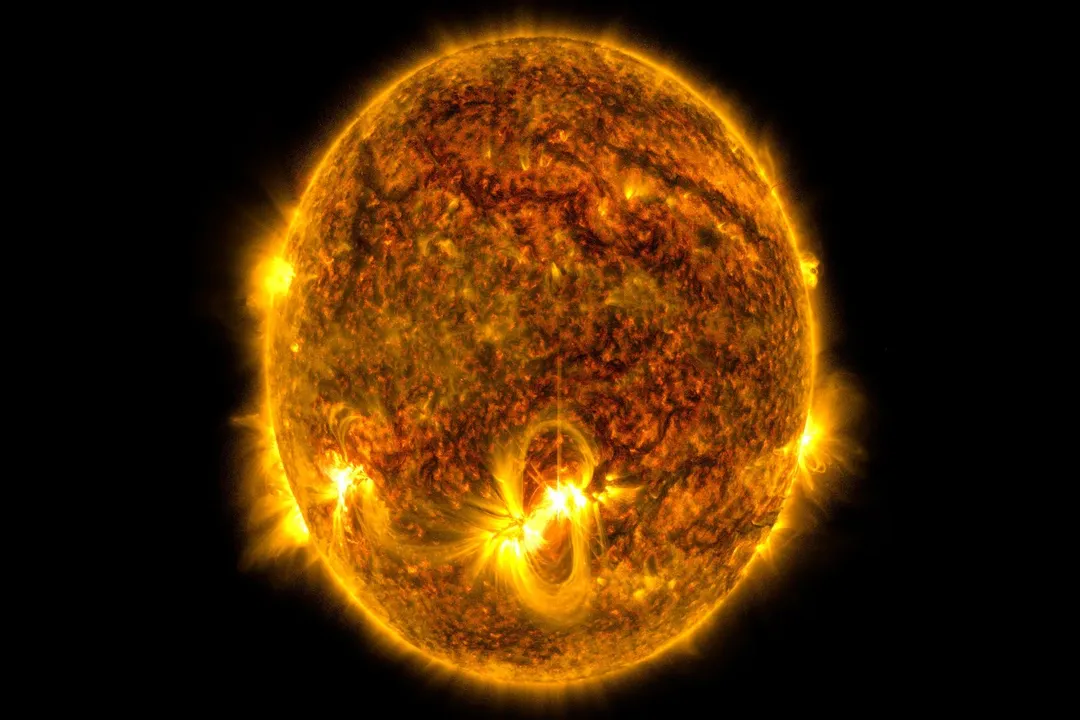
The fact that the material expelled by Sun-like stars contains elements like neon, which requires significant core temperatures to form, shows that even stars of moderate size are surprisingly effective chemical processors. [2] The material expelled by our own Sun, once it reaches the end of its life, will enrich the subsequent generations of stars in its vicinity with carbon and nitrogen, setting the stage for the formation of rocky planets orbiting those future stellar infants. [4][6] This constant, gradual enrichment is why the material available to form the next stellar nebula is always slightly more complex than the one before it.
Related Questions
#Citations
Planetary nebula - Wikipedia
Planetary nebula - Elements, Gas, Stars | Britannica
Star Basics - NASA Science
Planetary Nebulas - Center for Astrophysics | Harvard & Smithsonian
Planetary Nebulae
Formation of Planetary Nebulae - Cosmotography
Universal element formation - Science Learning Hub
Planetary Nebula | Definition, Facts & Structure - Lesson - Study.com
Nebulae - Celestial Objects on Sea and Sky - SeaSky.org