What elements were created in Stellar Interiors?
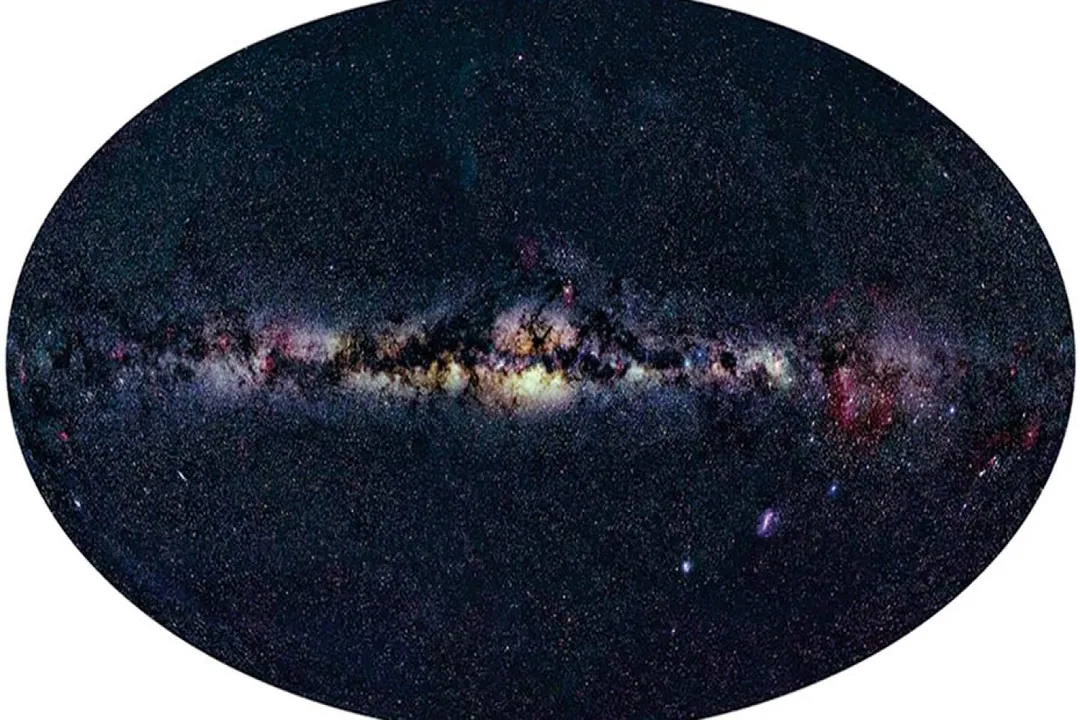
The elements that constitute the universe, from the hydrogen that fills interstellar space to the heavier metals in our own bodies, are predominantly forged within the intense environments of stars through a process known as stellar nucleosynthesis. [1] This cosmic alchemy is not a single event but a sequence of nuclear reactions occurring across the lifecycle of stars, dictated by their initial mass and current evolutionary stage. [2] The very first elements, primarily hydrogen and helium, were established in the universe's initial moments during Big Bang Nucleosynthesis (BBN), but virtually every element heavier than lithium owes its existence to the pressures and temperatures found inside stellar cores or during their explosive deaths. [9][5]
# Lightest Elements
While the Big Bang set the initial inventory, stars refined it. The BBN process was efficient at producing light nuclei, resulting in a cosmic abundance of roughly 75% hydrogen and 25% helium by mass, with trace amounts of lithium and beryllium. [9] Stars then take over where BBN left off. In the core of a main-sequence star, the primary energy-generating reaction is the fusion of hydrogen into helium. [1] This proton-proton chain reaction, or the CNO cycle in more massive stars, is the mechanism that sustains a star’s luminosity for billions of years. [5] This stage is characterized by the slow, methodical build-up of the universe’s most abundant fuel into its first ash, helium. [1]
# Post-Main Sequence
Once a star exhausts the hydrogen fuel in its core, its life enters a dramatic new phase where temperatures and pressures climb high enough to ignite heavier elements. What happens next depends critically on the star's mass. For sun-like stars, the core contracts, heats up, and eventually, helium fusion begins, producing carbon and oxygen through the triple-alpha process. [5] This process is inherently challenging because it requires the temporary existence of an unstable isotope, beryllium-8, to capture a third helium nucleus before it decays. [3]
In the cores of massive stars, however, the process escalates into what can be described as concentric shells of burning fuel, like an onion structure. [1][5] After helium is consumed, the core contracts again until the temperature is sufficient to fuse carbon. This burning continues through successive stages: neon, oxygen, and silicon fusion. [1][5] Each stage runs for a shorter duration than the last, as the energy output increases and the required temperature rises sharply. [5]
# Iron Limit
This cascading series of fusion reactions culminates when the core is predominantly composed of iron () or nickel. [1] This is a fundamental boundary in stellar nucleosynthesis. Iron is the most stable atomic nucleus; fusing elements lighter than iron releases energy (exothermic), which supports the star against gravity. [5] Conversely, fusing iron requires an input of energy (endothermic). [1][5] Once the core turns to iron, the star loses its internal energy source. Without the outward thermal pressure, gravity wins instantly, initiating a catastrophic collapse that leads to a Type II supernova. [1][5] It is a stark turning point; all the energy generating the light we see for most of a star's life is suddenly diverted to trying, and failing, to fight gravity when iron is reached. [6]
# Heavy Element Creation
The creation of elements heavier than iron cannot happen through standard core fusion because it is energetically unfavorable. [7] These heavier elements—the vast majority of the periodic table—are manufactured in the extreme conditions surrounding a supernova explosion or during the late-stage evolution of specific stars. [1][7]
# Neutron Capture
The primary mechanisms for building these heavier isotopes rely on the capture of neutrons, which are abundant in these high-energy environments. [7] There are two main modes of neutron capture: the slow process (s-process) and the rapid process (r-process). [1][7]
The s-process typically occurs in asymptotic giant branch (AGB) stars, which are evolved, moderate-mass stars. [1] In this scenario, neutrons are captured by seed nuclei slowly enough that the newly formed isotope has time to undergo beta decay before capturing another neutron. [7] This process is responsible for creating about half of the isotopes heavier than iron, up to bismuth (). [1]
In sharp contrast, the r-process requires a massive, rapid influx of neutrons, far exceeding the density of the s-process. [7] This is thought to occur during the core-collapse supernova explosion itself or potentially in merging neutron stars. [1][7] In the r-process, neutrons are captured so quickly that the resulting nucleus may be highly unstable and neutron-rich, leading it to rapidly undergo multiple beta decays to reach stability, thus forming the heaviest elements on the periodic table. [7] Elements like gold, platinum, and uranium are believed to be primarily products of this violent process. [1]
If we were to map the creation sites, we could see a clear division of labor: the main sequence handles light elements up to helium; later stages handle through ; and supernovae and neutron star mergers handle everything above through the r-process. [4]
| Element Group | Primary Creation Mechanism | Typical Stellar Location | Max Mass Achieved |
|---|---|---|---|
| to | Fusion (Proton-Proton/CNO) | Main Sequence Core | [1][5] |
| to | Successive Shell Burning | Massive Star Core | [1][5] |
| (Slow) | s-process (Slow Neutron Capture) | AGB Star Interior | [1][7] |
| (Fast) | r-process (Rapid Neutron Capture) | Supernova/Neutron Star Merger | and beyond [1][7] |
This distinction between the slow and rapid neutron capture paths is fascinating because it implies that the elements we associate with high-value earthly goods, like gold jewelry, were created in cataclysmic events far removed from the gentle, long-lived hydrogen burning of stars like our Sun. [8]
# Insights and Context
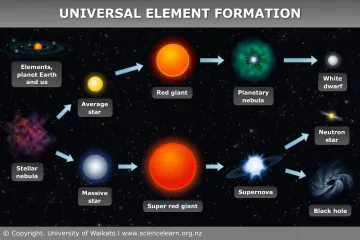
A subtle but crucial point often missed when discussing stellar origins is the required initial conditions for a star to even reach the iron-forming stage. A star must have significantly more mass than the Sun—typically exceeding about eight solar masses—to achieve the core temperatures necessary for carbon ignition after helium depletion. [5] Stars of lower mass, like our Sun, will simply shed their outer layers after the helium-burning phase, leaving behind a white dwarf, enriching the interstellar medium with elements up to carbon and oxygen, but never forging iron. [1] This means the material that formed the Earth and everything on it, including biological matter, required the death of a massive star long ago. [2]
Considering the isotopes themselves reveals another layer of complexity. The specific isotopes of an element created depend not just on the temperature but on the neutron density and electron capture rates during the synthesis. [4] For instance, one set of astrophysical calculations focuses specifically on the synthesis yields of elements near () in massive stars, showing that variations in the ratio in the pre-supernova star can slightly alter the final abundance ratios of neighboring isotopes, offering astrophysicists a way to test models of stellar evolution by observing the chemical fingerprints left in remnant material. [3] This fine-tuning suggests that the specific isotopic mix in a solar system might hint at the precise evolutionary history of the progenitor star that seeded the surrounding nebula. [4]
The final element created in a star’s lifetime, before the explosion, is determined by the exhaustion of the fuel that can still release energy through fusion. [6] Since no energy is gained by fusing iron, the heavy element inventory essentially pauses until the shockwave of the ensuing supernova provides the necessary neutron flux to restart element building via the r-process, launching these newly formed elements back into the cosmos to begin the cycle anew. [7][8]
Related Questions
#Citations
Stellar nucleosynthesis - Wikipedia
Stars, Stellar Physics and the Interstellar Medium
Origin of the Chemical Elements - T. Rauscher & A. Patkos
Synthesis of chemical elements and their isotopes in stellar cores
The Elements: Forged in Stars | PBS LearningMedia
Stellar Interiors and Nucleosynthesis | Astrophysics II Class Notes
The formation of the heaviest elements - Physics Today
How heavier elements are formed in star interiors - Phys.org
Big Bang Nucleosynthesis