Did the solar nebula create Earth?

The history of our planet is inextricably linked to a colossal, swirling cloud of gas and dust that preceded our Sun—the solar nebula. This starting material is the consensus progenitor for nearly everything orbiting our star today, from Mercury to the distant comets. However, the precise mechanism by which Earth assembled itself from this primordial soup, and whether it stayed strictly within the original boundaries of that cloud, remains a subject of intense scientific revision and debate.
# Cloud Collapse
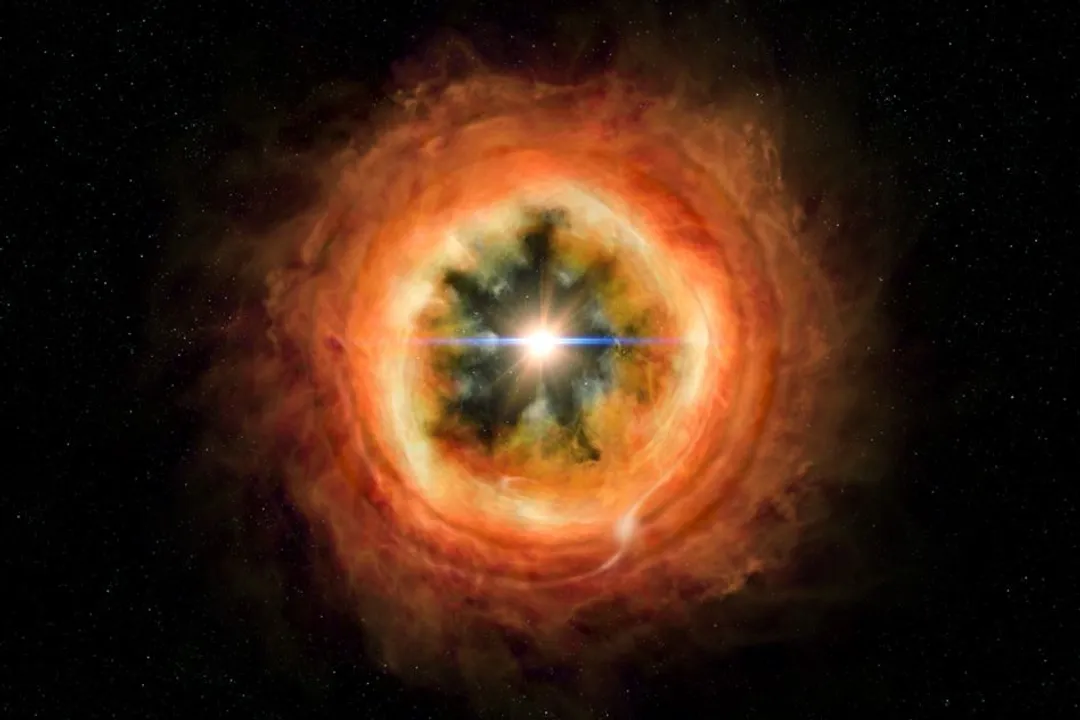
The widely accepted model for the origin of our solar system is the nebular hypothesis. This theory posits that roughly 4.6 billion years ago, a vast, rotating cloud of interstellar gas and dust began to collapse, likely triggered by the shockwave of a nearby supernova. As this massive cloud contracted under its own gravity, it spun faster, flattening into a spinning disk shape—the solar nebula—with the vast majority of the mass concentrating at the center to ignite the Sun. The remaining material orbiting the young Sun formed the planetary building blocks.
# Planetary Growth
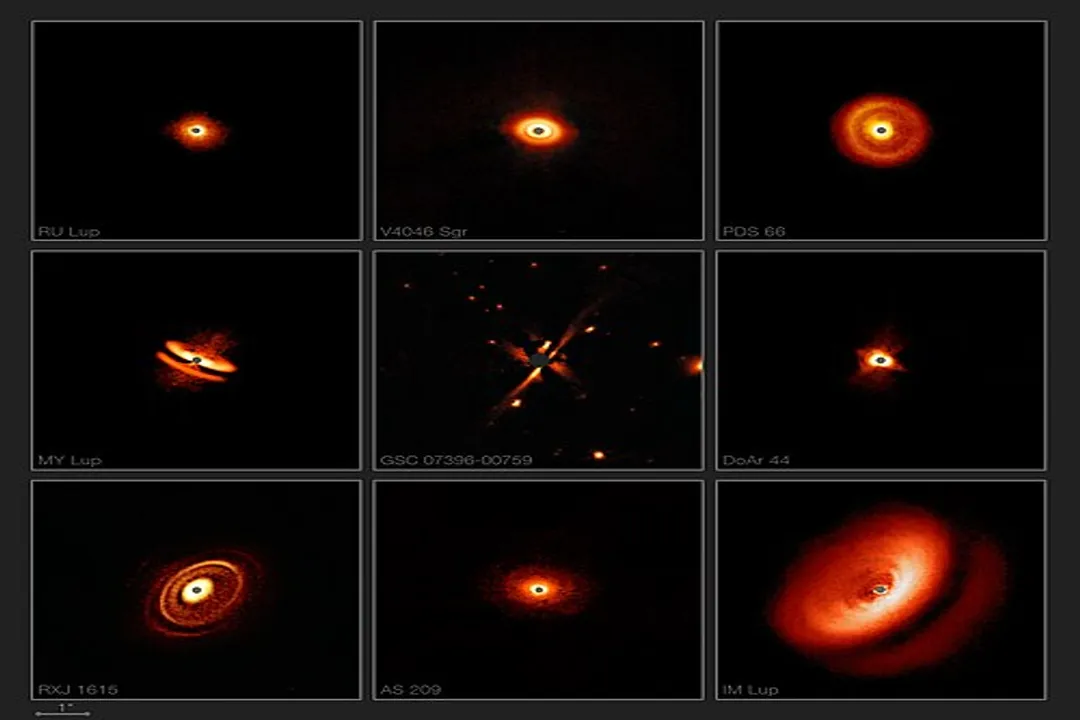
Within this flattened disk, solid material began to clump together. Tiny dust grains collided and stuck, forming pebbles, which grew into planetesimals—the first kilometer-sized bodies. These planetesimals then gravitationally attracted each other, sweeping up more debris in a process called accretion. This accumulation of material built up the rocky inner planets, including Earth. The composition of the planet that eventually formed was directly dependent on the type of material available in the specific region of the nebula where it accreted. In the hotter, inner regions, only materials with high melting points, like rock and metal, could condense into solids, explaining why Earth is fundamentally rocky.
# Nebula Life
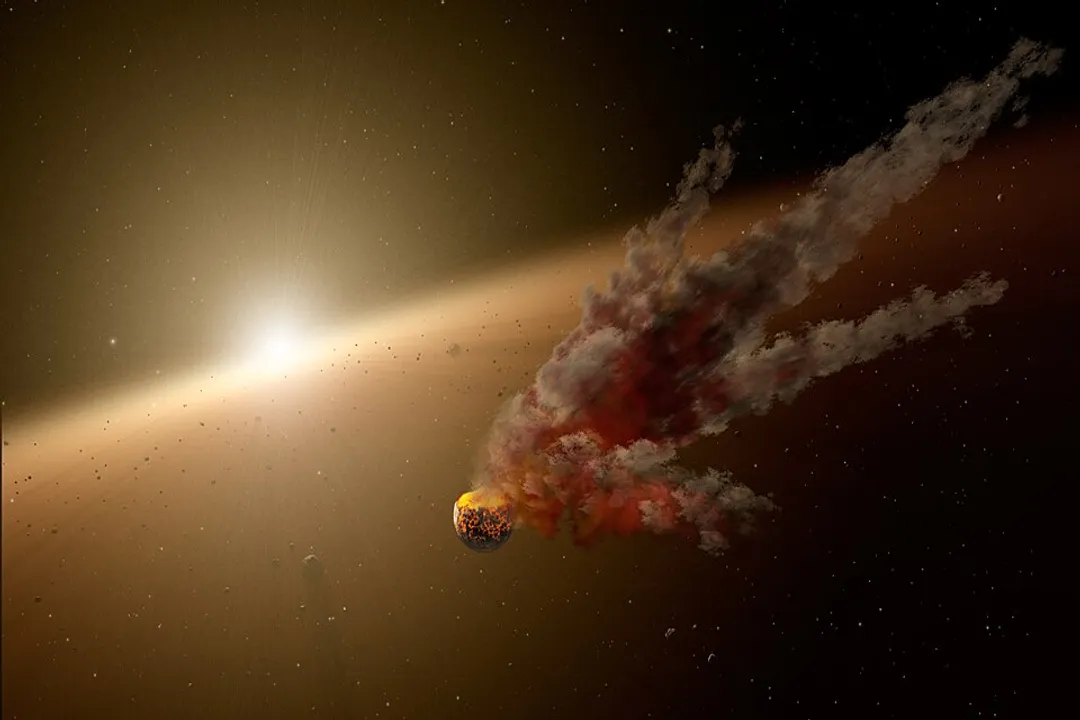
This entire construction period was remarkably brief on a cosmic scale. New research suggests that the solar nebula, the cradle for the Sun and planets, may have existed for a surprisingly short duration—perhaps only 1 to 10 million years. This timeline sets a hard constraint on how quickly Earth had to grow from dust to a fully formed planet. If the process took significantly longer than that window, the solar nebula would have dissipated, leaving the remaining material unable to contribute to planetary growth. Considering that Earth is a large, mature body today, this rapid formation process requires efficient accumulation of matter.
# Water Origins
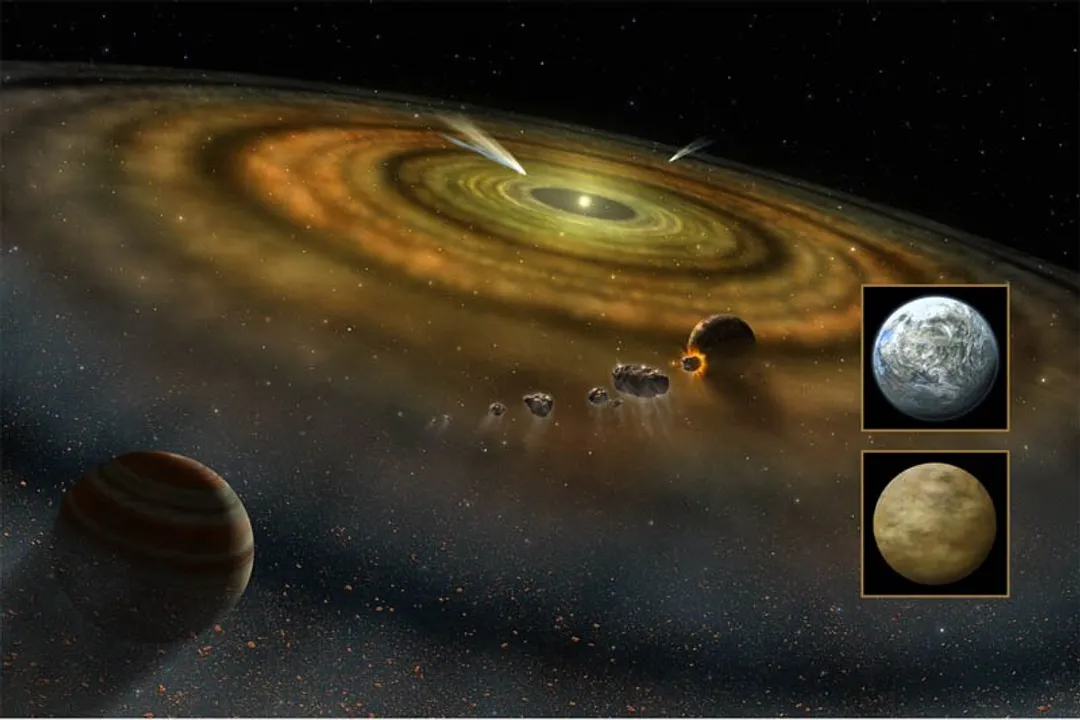
One of the longest-standing puzzles in planetary science is the source of Earth’s water. For a long time, the prevailing idea was that volatile materials like water ice were too volatile to condense so close to the hot, newly formed Sun, meaning they must have been delivered later by impacts from icy bodies originating farther out in the solar system, such as asteroids or comets. However, contemporary studies suggest a more direct heritage. Research now indicates that water-bearing materials were present in the nebula even near the Sun's location. This implies that some, if not most, of Earth’s water may have been locked into the planet's building blocks as they formed within the nebula itself, rather than arriving later as external cargo.
# Material Mixing
The classic model paints a neat picture of nested rings of material: rocky stuff close in, icy stuff farther out. However, modern analysis is showing that the boundaries were far fuzzier. New research suggests that the initial reservoir of material that built Earth might have been sourced from beyond the expected limits of the initial nebula. This means that while the nebula was the engine, Earth may have incorporated material that originated from the interstellar cloud before the nebula fully contracted around the Sun, or material that mixed in dynamically from regions far outside the main disk plane.
Here is a simple comparison of the material sourcing models for Earth's formation:
| Model | Primary Material Source | Implication for Composition |
|---|---|---|
| Traditional | Material condensed within the established solar nebula disk. | Composition is strictly determined by the temperature gradient of the protoplanetary disk. |
| Modern Revision | Material incorporated from outside the original nebula's primary plane or extent. | Suggests significant initial mixing or accretion from external reservoirs, making the boundary definition less rigid. |
This dynamic mixing highlights a core difference between theory and observation. If we consider that the entire process was confined to a neat disk, the elemental ratios we observe in Earth’s mantle should reflect that specific zone. The fact that we see isotopic signatures suggesting material from outside that neat boundary implies that how the initial solar nebula formed and interacted with its environment was more violent and chaotic than simple disk settling suggests. For those interested in studying ancient terrestrial geology, realizing that the bedrock beneath our feet might contain a signature from the environment surrounding the nebula, not just within it, offers a new analytical lens for interpreting mineral compositions.
# Nebular Persistence
The very existence of complex molecules and water on Earth after only a few million years of formation is a testament to the effectiveness of the accretion process within the nebula. The rapid dissipation time of the nebula places constraints on the timescales for forming larger bodies, requiring materials to coagulate quickly into planetesimals before the gas itself was blown away by the young Sun's intense solar winds. This short window means that the physical processes governing dust-to-rock transition had to be highly efficient. Scientists still wrestle with the exact mechanisms that allowed millimeter-sized dust to skip the stage where it would normally fragment or be destroyed by turbulence and jump straight to kilometer-sized objects.
# Building Earth
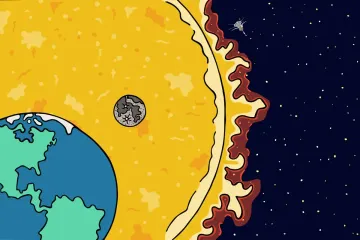
The terrestrial planets formed via steady, incremental growth within the nebula. The early solar system was a dangerous place, where embryos the size of the Moon or Mars were constantly colliding. Earth grew by absorbing these smaller protoplanets, which resulted in massive impacts, including the hypothesized collision that led to the formation of our Moon. The heat generated by these continuous impacts and the decay of radioactive isotopes was significant enough to melt the newly forming Earth completely, creating a molten magma ocean early in its history. This differentiation—where heavy elements like iron sank to the core and lighter silicates floated to form the mantle—was only possible because the accretion process was both vigorous and rapid, driven by the abundant material available in the nebular disk before it dispersed.
The ongoing study of the solar nebula continues to refine our understanding of our own origins. It’s no longer just about whether the material came from a nebula, but which part of the nebula, and how much material was exchanged with the surrounding interstellar medium before the solar system stabilized. This constant revision, driven by isotopic evidence and advanced modeling, ensures that the story of Earth's birth remains an active, evolving chapter in planetary science. Any analysis of Earth's early state—whether concerning its water content or the isotopic signature of its crust—must account for a system that was far more interconnected and chemically mixed than the initial, cleaner theoretical disk suggested.
Related Questions
#Citations
Did Earth form inside a solar nebula? New research says likely yes
The Solar Nebula Formation of the Earth Origin of the Atmosphere ...
How our solar system was born | Natural History Museum
Mysteries of the Solar Nebula | NASA Jet Propulsion Laboratory (JPL)
Nebular hypothesis - Wikipedia
Formation of Earth - National Geographic Education
Scientists estimate solar nebula's lifetime | MIT News
Which theory best explains the formation of the earth - Facebook
Where Did Earth's Water Originate? Solar Nebula, Study Suggests