What elements are found in a nebula?
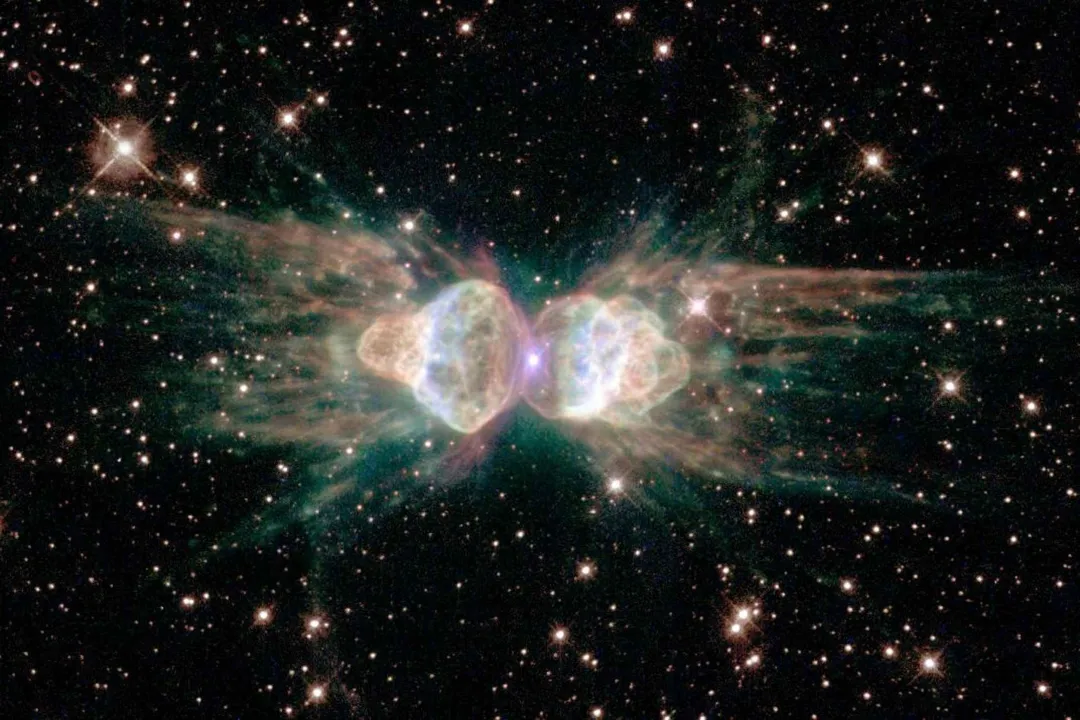
A nebula presents itself to us as a vast, luminous cloud floating in the interstellar medium—a cosmic fog, if we take its Latin origin to heart. These magnificent structures are defined as enormous regions of gas, dust, and sometimes plasma scattered throughout space. While their appearance can be wispy or well-defined, and their colors spectacular, their fundamental makeup is remarkably consistent, rooted in the universe’s earliest constituents: hydrogen and helium.
# Primary Ingredients
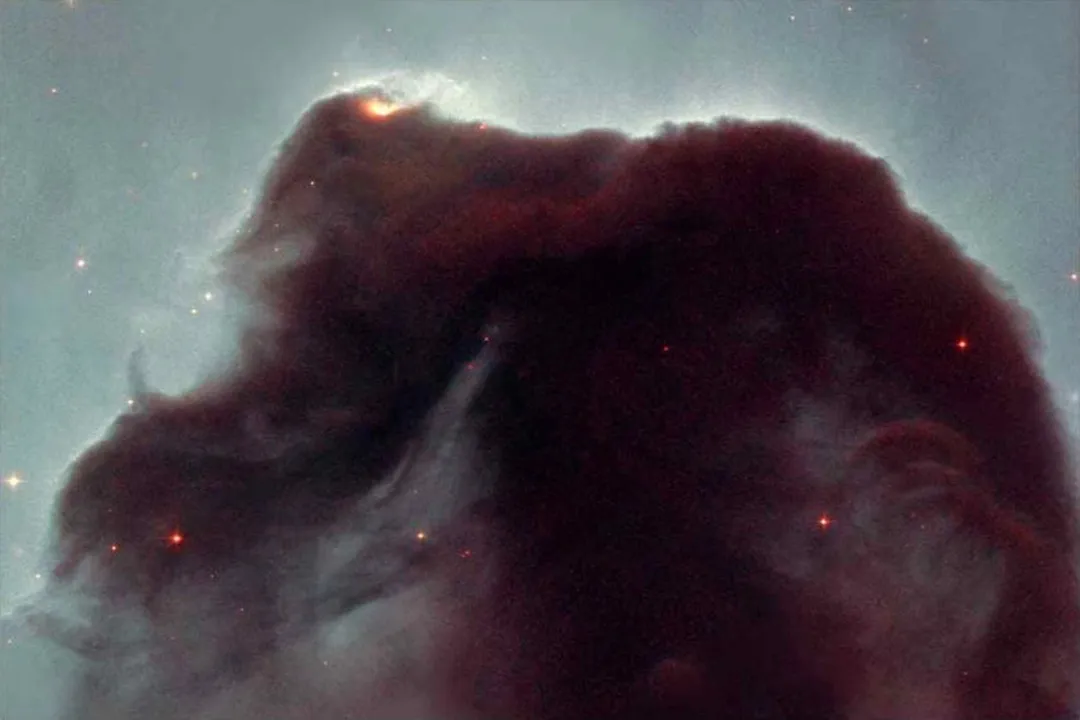
The overwhelming majority of any given nebula is composed of hydrogen gas, often accompanied by helium. This isn't a surprise; hydrogen is the single most abundant element in the cosmos, making up roughly 74% of the total elemental mass, with helium following at around 24%. In star-forming regions, these two light gases are the main fuel source, the raw material from which stars ignite through gravitational collapse. These clouds are often referred to as "star nurseries" precisely because they house this fundamental building block in massive quantities.
However, the term "nebula" covers a wide range of objects, and the exact balance shifts based on whether the cloud is forming new stars or marking the demise of an old one. Even within the largest, coldest clouds—the molecular clouds—where hydrogen exists primarily in its molecular form (), hydrogen and helium remain dominant.
# Heavier Traces
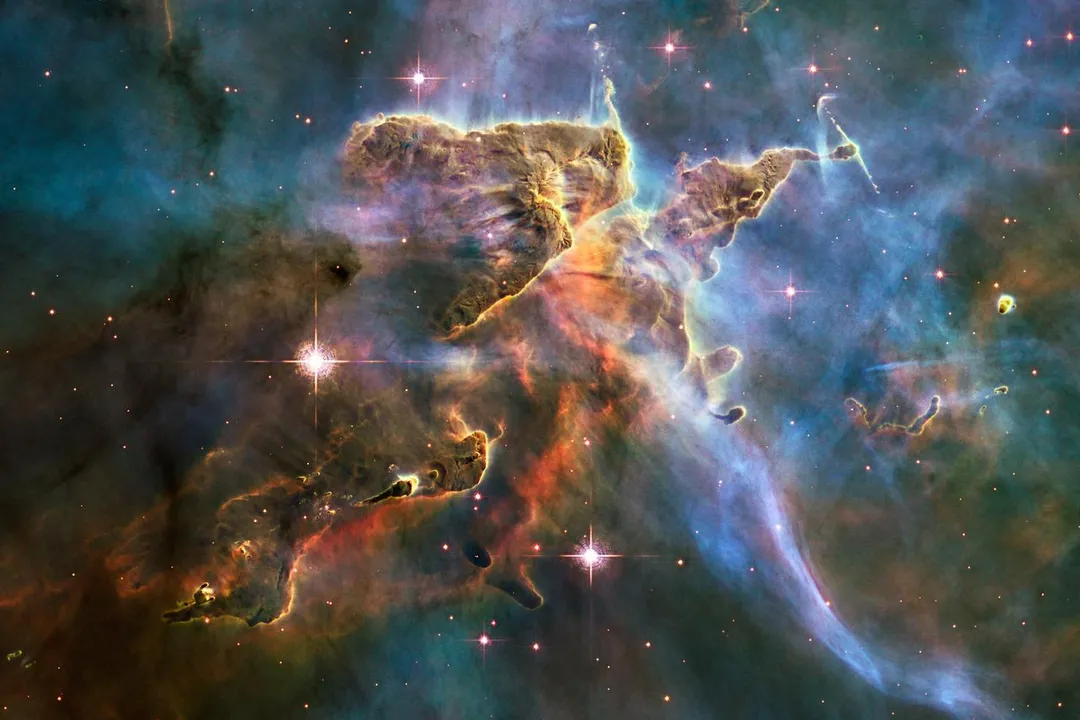
While hydrogen and helium form the bulk, nebulae are not purely primordial gas. They contain trace amounts of heavier elements, sometimes referred to as "metals" by astronomers. The nature and concentration of these heavier elements are often a direct clue to the nebula's history.
For instance, diffuse nebulae, which are often sites of active star birth, typically include smaller, though significant, amounts of elements like oxygen and sulfur mixed in with the hydrogen and helium.
Planetary nebulae, which represent the final stages of lower-to-intermediate mass stars (like our Sun, eventually), also contain hydrogen and helium, but their heavier element profile is dictated by what the progenitor star managed to fuse before death. These remnants usually contain elements like oxygen and sulfur, but generally nothing much heavier than carbon. The star simply wasn't massive enough during its lifetime to create elements beyond that threshold through fusion.
In contrast, the elemental story is vastly different in supernova remnants. These spectacular shells are the aftermath of massive star explosions, and they act as the universe’s primary factories for the heaviest materials. A supernova explosion expels material that includes all the elements created in the star’s core that are heavier than iron. This means supernova remnants are responsible for seeding the interstellar medium with the materials necessary for planets, complex chemistry, and eventually, life. Over eons, this enriched material mixes with existing gas clouds, eventually condensing to form new solar systems like our own.
# The Role of Dust
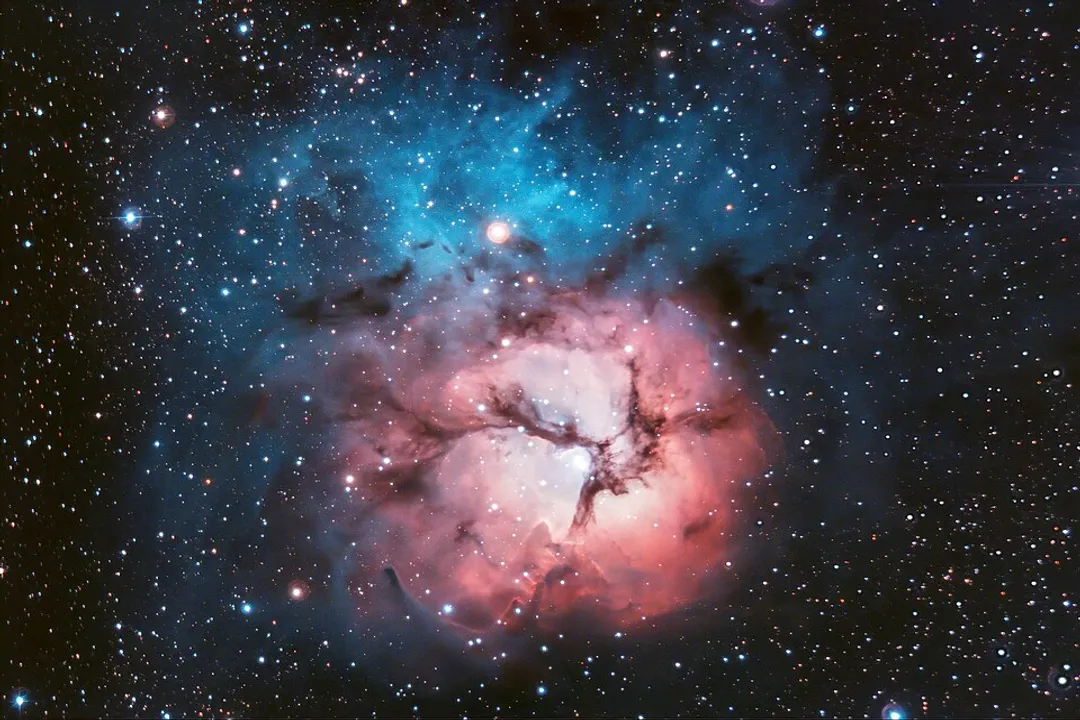
Interstellar dust, while only accounting for about $0.7%$ of the mass of the interstellar medium, profoundly affects the physical environment and appearance of a nebula. This solid component consists of complex materials, not just simple atoms floating freely.
The dust grains are partially made of silicate material, chemically similar to terrestrial rocks, although they are usually amorphous rather than crystalline. They also possess a carbonaceous component, which can manifest as larger grains or as individual, free-floating aromatic hydrocarbon molecules containing dozens to hundreds of carbon atoms. These carbonaceous structures are sometimes only slightly larger than the largest molecules detected by radio telescopes.
It’s interesting to consider the circumstances under which this solid component forms. The gas density required for a few atoms to collide, stick together long enough to radiate away energy, and condense into a solid grain is incredibly high—perhaps $10^9$ times greater than the density found even in relatively dense nebulae. This crucial physical requirement tells us something important: the silicate and carbon dust particles we observe today must have formed within the dense, outflowing atmospheres of evolved, cool supergiant stars before being expelled into the lower-density interstellar space where we now observe them as nebulae. Furthermore, dust effectively locks up certain heavy elements, causing the measured gas-phase abundance of elements like iron, magnesium, and nickel to be much lower in dense cloud environments than in the more diffuse gas surrounding them.
# Elemental States and Observation
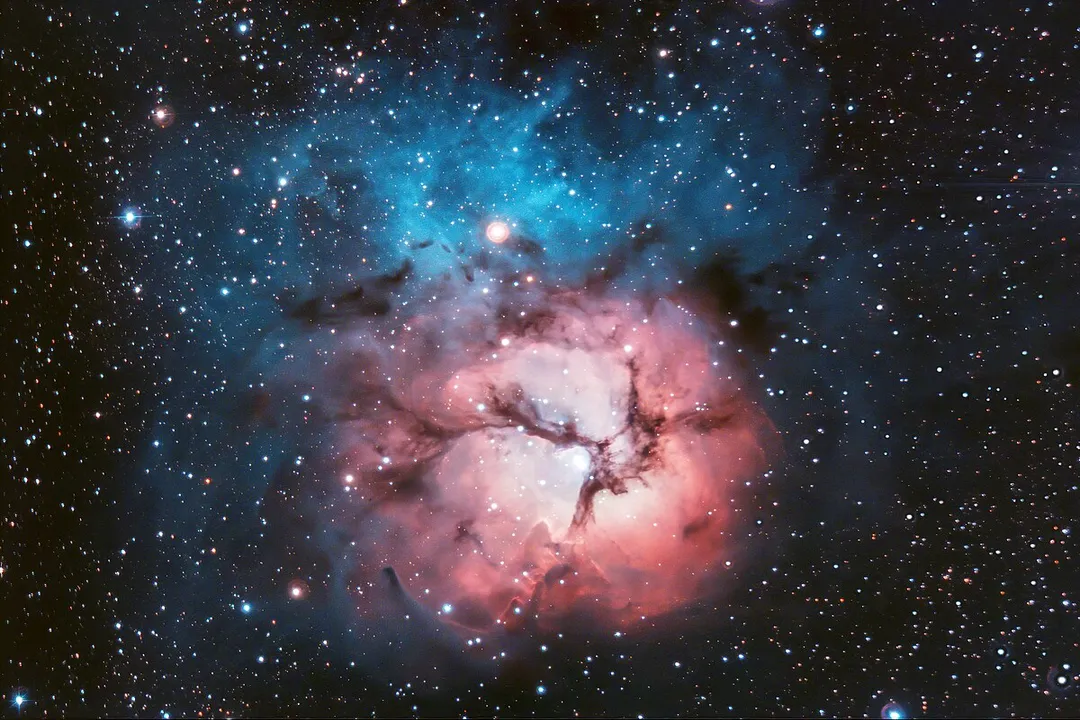
The elements within a nebula are not static; their chemical state—whether they are neutral, ionized, or molecular—is determined by the local radiation field, temperature, and density. This is why nebulae are often classified by the state of their most abundant element, hydrogen.
H II Regions (Emission Nebulae): Here, hydrogen is primarily ionized (). This ionization requires highly energetic photons, meaning these regions are typically bathed in intense ultraviolet radiation from nearby hot, young stars. Since the hydrogen atoms are ionized, they are rendered transparent to those high-energy photons, allowing radiation to propagate further and create more energetic ions, such as doubly ionized oxygen (). Emission nebulae often glow in shades of red or violet due to the specific light emitted when these ionized gases recombine or transition energy states.
H I Regions: These areas contain mainly neutral hydrogen atoms. Neutral hydrogen is very efficient at absorbing ionizing radiation, effectively blocking any photons with energy above a specific threshold, leading to vastly different chemical conditions than in regions.
Molecular Clouds: In the coldest, darkest regions, hydrogen exists in its molecular form (). The formation of is extremely difficult in the gas phase and relies almost entirely on surfaces provided by dust grains.
When observing these regions, astronomers don't just look for the general glow; they analyze the spectral lines produced by specific elements to map out their presence and physical conditions. The light we see—or the light that is captured using specialized filters—is a direct spectral signature of specific atomic transitions. For example, narrowband imaging, popular among astrophotographers, uses narrow filters to isolate light emitted by specific elements, showcasing their distribution within the cloud. This technique is powerful because it allows us to resolve elements that are minor components by mass but visually dramatic in the final image. For instance, filters are used to specifically capture emission from Hydrogen-alpha and Hydrogen-beta, but also from Oxygen-III and Sulfur-II. The visibility of the nebula's color is thus highly dependent on these trace elements, creating a fascinating contrast: while the nebula is overwhelmingly composed of simple, light gases, its iconic aesthetic comes from the excited states of its heavier constituents. This dependence of visual appearance on trace elements that are themselves products of stellar evolution—even elements like Nitrogen-II showing up in the spectra—ties the elemental composition directly back to the cosmic recycling process.
# Compositional Summary
The elements found in a nebula are a record of its purpose within the stellar lifecycle. Simple clouds, destined to become stars, are dominated by cosmic primordial material: hydrogen and helium. As stars age, they enrich their immediate surroundings by shedding outer layers containing elements up to carbon in planetary nebulae. Finally, the most violent stellar deaths, supernovae, inject elements heavier than iron back into the interstellar medium, ensuring that subsequent generations of stars and planets have the building blocks for rocky worlds and biology. Therefore, investigating the elemental inventory of any cloud reveals whether it’s a celestial cradle or a spectacular stellar tomb.
Related Questions
#Citations
Nebula - Wikipedia
What Is a Nebula? | NASA Space Place – NASA Science for Kids
Nebula - Gas, Dust, Radiation | Britannica
Nebula
What gas does a nebula contain of? : r/askastronomy - Reddit
What is a Nebula? - National Space Centre
What is a nebula? - Space Center Houston
Nebula Definition, Types & Examples - Study.com