What resources are found in Jupiter's moons?
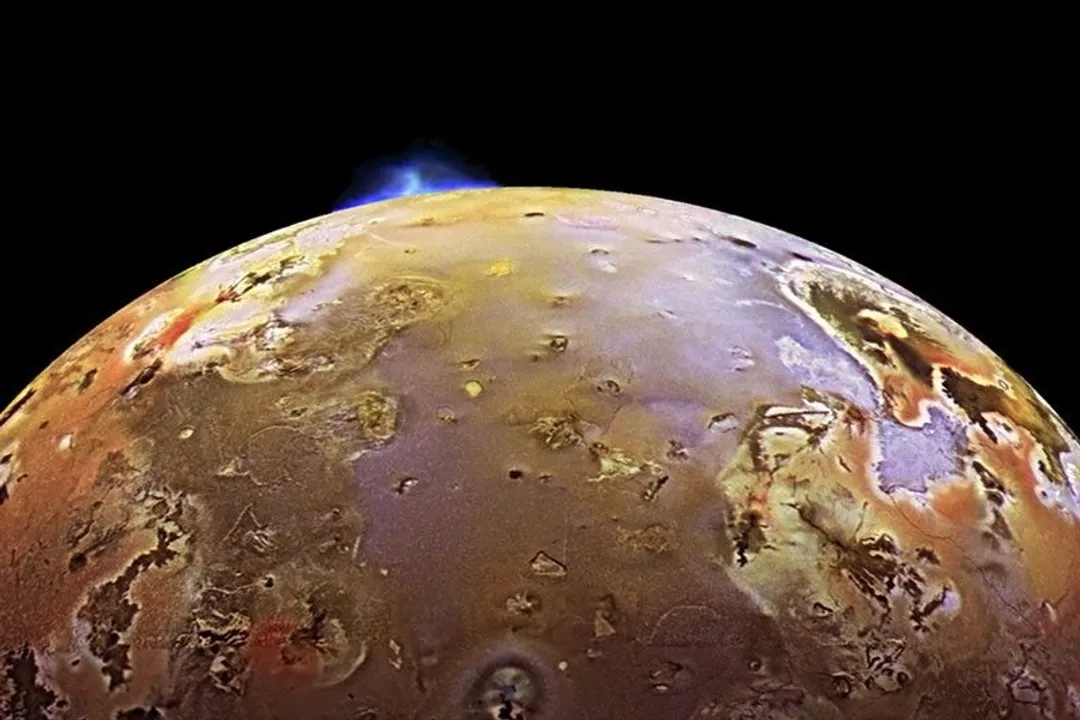
The moons orbiting Jupiter are not just frozen, distant satellites; they represent vast reservoirs of materials critical for future space exploration and even the sustenance of life, provided we can access them. The family of Galilean moons—Io, Europa, Ganymede, and Callisto—each presents a distinctly different set of resources, shaped by their proximity to the giant planet and their unique geological histories. [9] Focusing on the two most intensely studied worlds, Europa and Io, reveals an environment rich in volatiles like water and sulfur, alongside tantalizing hints of necessary elements for biology.
# Europa Volatiles
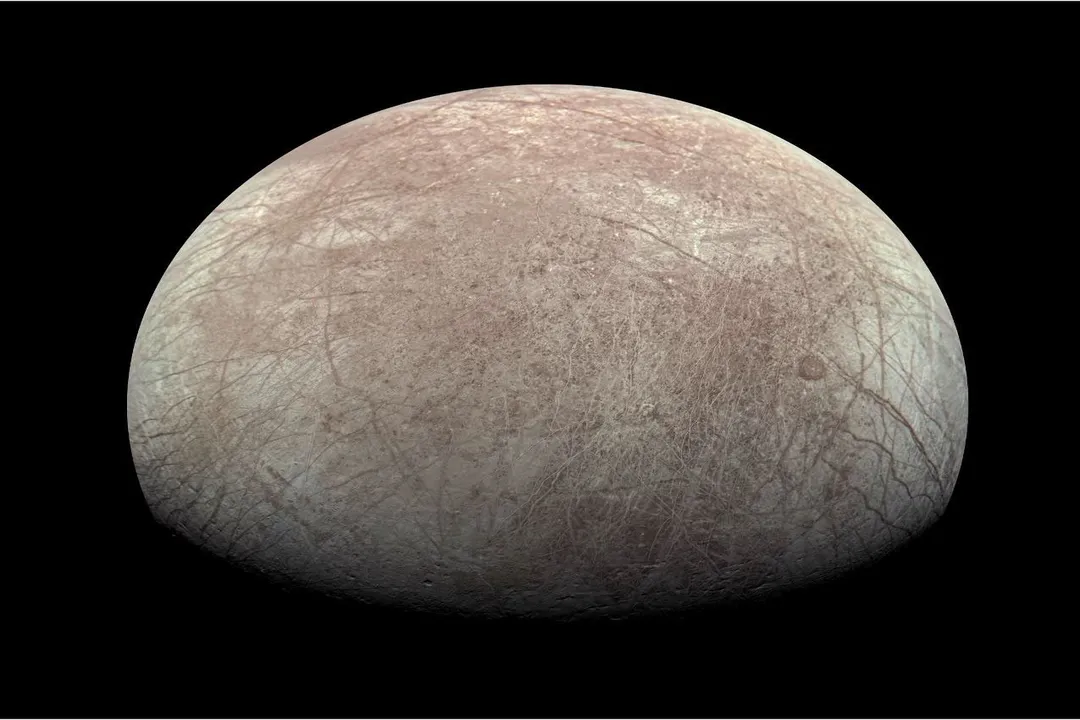
Europa stands out because it almost certainly harbors a massive subsurface ocean of salty water, making the ice crust and the ocean itself the primary resource of interest. [1] This water ice, along with trapped materials, could be cracked for breathable air, rocket propellant, or drinking water for any future outpost. [1] The resource potential isn't limited to , however; the surface features materials like salts and various sulfur compounds that have been dredged up from below. [1]
# Carbon Sources
The presence of carbon, a fundamental building block for life as we know it, is a significant find on Europa's surface. Observations from the James Webb Space Telescope (JWST) have confirmed the presence of carbon dioxide on the icy surface. [3][4] This finding suggests that carbon-bearing compounds are present and accessible on the moon's exterior, possibly originating from the underlying ocean or interactions with Jupiter’s environment. [4] Finding carbon dioxide, a relatively straightforward compound, on the surface indicates that more complex carbon-based molecules might also be present near or on the surface, making the moon an inventory of ingredients for habitability. [1]
# Sulfur Deposits
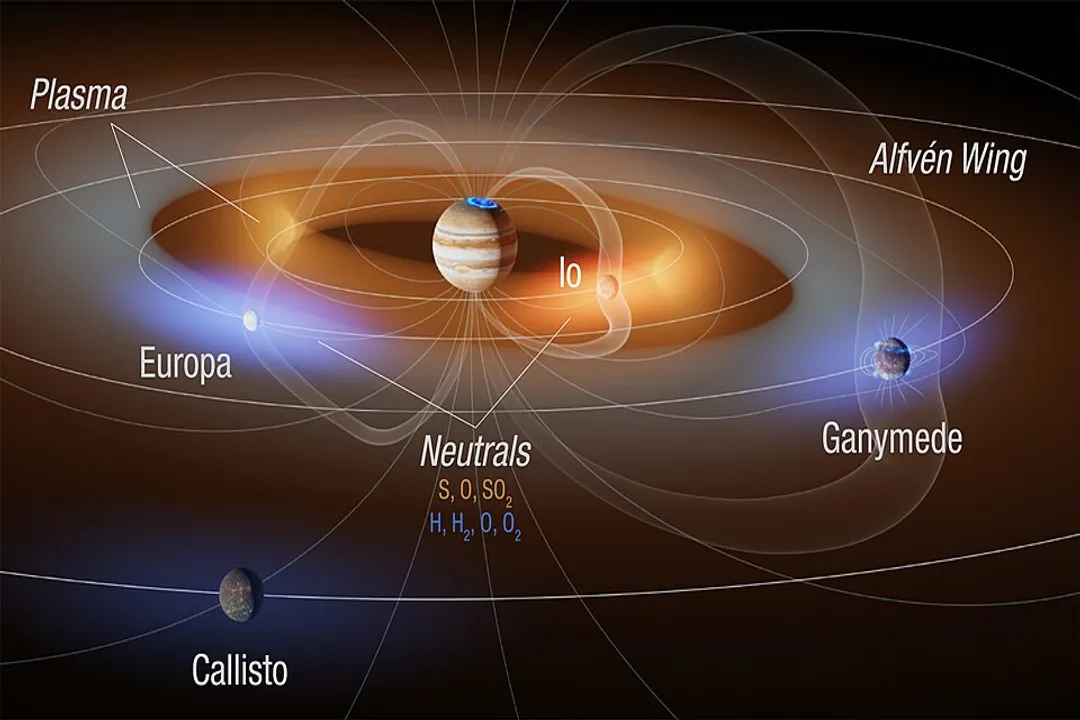
Another critical component mapped on Europa's surface is sulfur. Scientists have used data to create maps showing the distribution of sulfur residue across the moon’s face. [8] This sulfur, likely in the form of various sulfates or sulfur dioxide, is heavily concentrated in the chaotic regions, which are areas where the icy shell has been fractured, warmed, and re-frozen, allowing material from the interior to migrate upward. [8] The interaction between Europa’s surface ice and the plasma torus generated by Io’s volcanic output is a suspected mechanism for depositing some of this sulfur, essentially having Io’s eruptions "rain" material onto its neighbor. [8]
The chemistry on Europa is complex, involving not just carbon and sulfur but also the formation of oxygen. Earlier models suggested the ice surface generated a substantial amount of oxygen through radiolysis—the breakdown of water ice by radiation—which could theoretically sustain a thin atmosphere or even act as an oxidizer for life or propellant. [7] However, recent assessments based on modeling suggest that the amount of oxygen being created might be less than previously thought. [7] This revised understanding doesn't eliminate oxygen as a resource, but it dampens expectations about its sheer abundance compared to earlier, more optimistic estimates, subtly changing the calculus for in-situ resource utilization (ISRU) involving atmospheric components derived from ice sputtering. [7]
# Io Activity
Shifting focus from the relatively quiet, icy shell of Europa to the furious inferno of Io reveals a very different resource landscape. Io is the most volcanically active world in the solar system, driven by the massive tidal forces exerted by Jupiter and its other large moons. [6][5]
# Volcanic Materials
Io's surface is constantly being resurfaced by lava flows, erupting gases, and material ejected from hundreds of volcanoes. [5] The primary materials ejected and deposited across its surface are sulfur and sulfur dioxide, which form extensive deposits and plains. [5][6] In fact, Io's distinctive yellow, orange, and black colors are largely due to the different allotropes of sulfur deposited by its eruptions. [5] For a future presence on Io, sulfur itself is a significant resource. It can be used as a chemical feedstock, a potential component in industrial processes, or even as a solid propellant for rocketry, offering a high-energy material readily available on the surface. [5] Furthermore, the intense heat driving this volcanism suggests that pockets of molten material, perhaps even magma oceans beneath the crust, could be a source of high-grade thermal energy, though accessing such a resource presents extreme engineering challenges. [5]
# Metal Accessibility
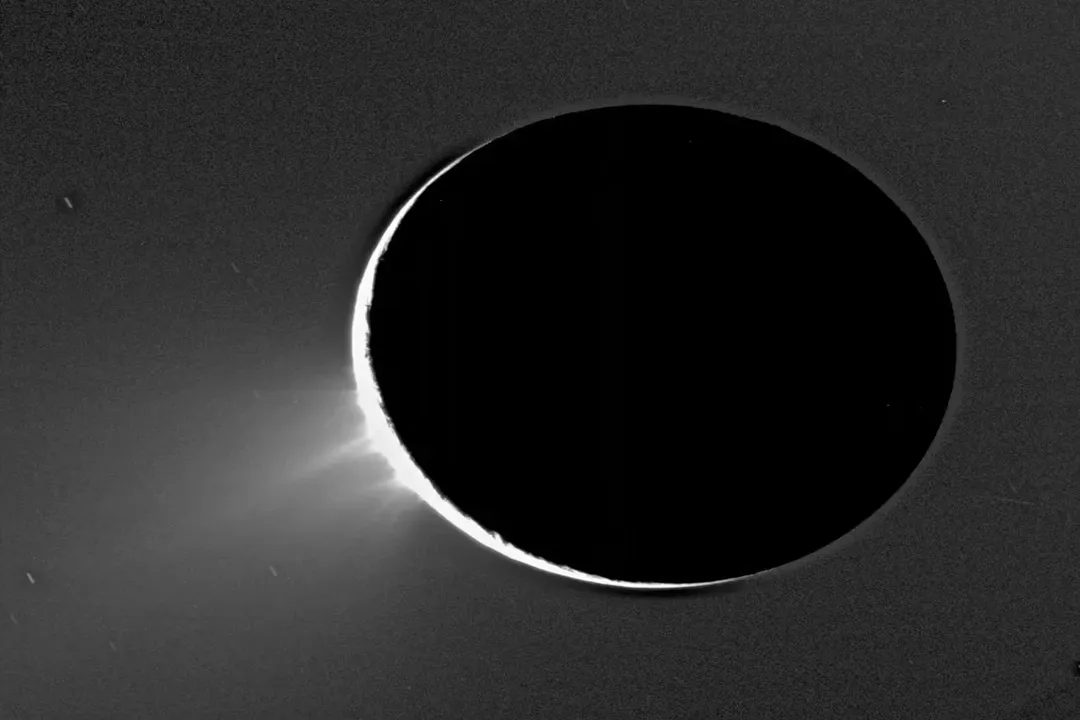
While Europa offers abundant volatiles (water, carbon, sulfur compounds) and Io offers massive deposits of sulfur and silicate rock from its mantle, the accessibility of core metals on these icy moons is a point of study for resource planners. [2] Jupiter’s primary moons are believed to be differentiated, meaning they possess distinct layers: a metallic core, a rocky mantle, and an icy crust (or a liquid water ocean beneath the crust in Europa's case). [2]
The metal, likely iron and nickel, would be concentrated in the core. On a body like Europa, the massive ocean layer sits between the surface and the core, acting as a substantial barrier to mining for metallic resources. [2] If one were aiming for metallic construction materials or shielding, one would need to penetrate the icy shell, perhaps many kilometers deep, and then breach the rocky mantle to reach the core, a feat far exceeding current capabilities. [2] In contrast, Io, being primarily rocky and volcanic with perhaps less extensive ice cover, might have its rocky mantle and potentially its core slightly more accessible if one could safely operate near active lava flows. [5][6] The distribution of resources, therefore, dictates the type of industrial development possible: volatiles for life support and energy on the surface (Europa), or bulk silicate and sulfur materials for large-scale construction or chemical production (Io). [1][5]
# Resource Comparison Table
The contrast between the two most compelling resource targets around Jupiter highlights the diversity of what's available across the Jovian system.
| Moon | Primary Resource Category | Key Identified Materials | Accessibility Challenge |
|---|---|---|---|
| Europa | Water and Volatiles | Ice, Salts, , Sulfur Compounds [1][3][8] | Thick ice shell and radiation environment [7] |
| Io | Volcanic Ejecta | Sulfur, Sulfur Dioxide, Silicates [5][6] | Extreme surface heat and constant volcanic activity [5] |
The most practical near-term resource gathering efforts would undoubtedly focus on Europa's surface ice for water and oxygen generation, given that the necessary elements—hydrogen, oxygen, and carbon—are confirmed near the surface, even if the oxygen yield needs re-evaluation. [7] Mining the deep metallic cores remains a long-term prospect, perhaps viable only centuries from now, whereas extracting surface volatiles is a hurdle that modern robotic missions are designed to investigate. [1] The energy required to melt and process the deep ice on Europa versus harvesting materials deposited by Io's plumes represents a major strategic difference in planning any future settlement. For instance, utilizing Io’s abundant sulfur might only be economical if a base were already established on Io itself, as transporting that material to Europa would negate much of its value, making location-specific ISRU a necessity. [5]
The materials found on Jupiter's moons are more than just scientific curiosities; they are the practical elements that define whether humanity can ever establish a sustained presence beyond Earth and Mars. Europa offers the ingredients for sustaining life—water and carbon—locked beneath a layer of ice irradiated by Jupiter's fierce magnetic field. [1] Io offers industrial raw materials on a scale matched nowhere else in the inner solar system, constantly being refreshed by geological processes. [6] Understanding the distribution and chemistry of these resources is the first step toward turning these distant, icy or fiery worlds into potential outposts of human activity.
Related Questions
#Citations
Why Europa: Ingredients for Life - NASA Science
How much do we know about how metal rich the moons of Jupiter are?
Webb finds carbon source on surface of Jupiter's moon Europa
Webb finds carbon source on surface of Jupiter's moon Europa - ESA
Jupiter's Moon Io—A Human's Guide? | Elements - GeoScienceWorld
Jupiter's moon Europa produces less oxygen than we thought
SwRI scientists map sulfur residue on Jupiter's icy moon Europa
Jupiter - Wikipedia