What was the significance of the discovery of moons orbiting Jupiter?
The quiet, steadfast assumption that everything in the heavens revolved around our Earth began to shatter in the first days of January 1610. While aiming his newly improved telescope at the giant planet Jupiter, Galileo Galilei noticed three faint, peculiar points of light aligned near it. Within a few nights, a fourth point appeared, and just as importantly, he observed that these points were changing position relative to Jupiter itself. This was not the first observation of what we now call the Galilean moons—smaller stellar objects had been sporadically noted near Jupiter before—but Galileo was the first to systematically track their motion and correctly deduce their nature.
# Telescope power
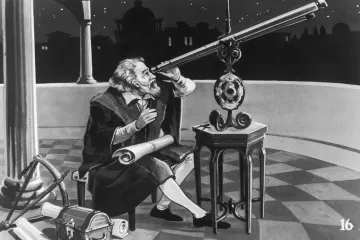
Galileo’s breakthrough was fundamentally tied to his craftsmanship and optical refinement. While the telescope itself was not his invention, his improvements allowed him to achieve magnifications sufficient to resolve Jupiter’s companions clearly. This instrument transformed astronomy from a discipline relying on naked-eye observation and geometric models into an empirical science driven by direct visual evidence. The ability to see previously invisible details in the cosmos provided an immediate, tangible demonstration of the power of this new technology. It showed that the universe was far richer and more complex than what was visible to the unaided eye, setting a new standard for astronomical investigation.
# Four wanderers

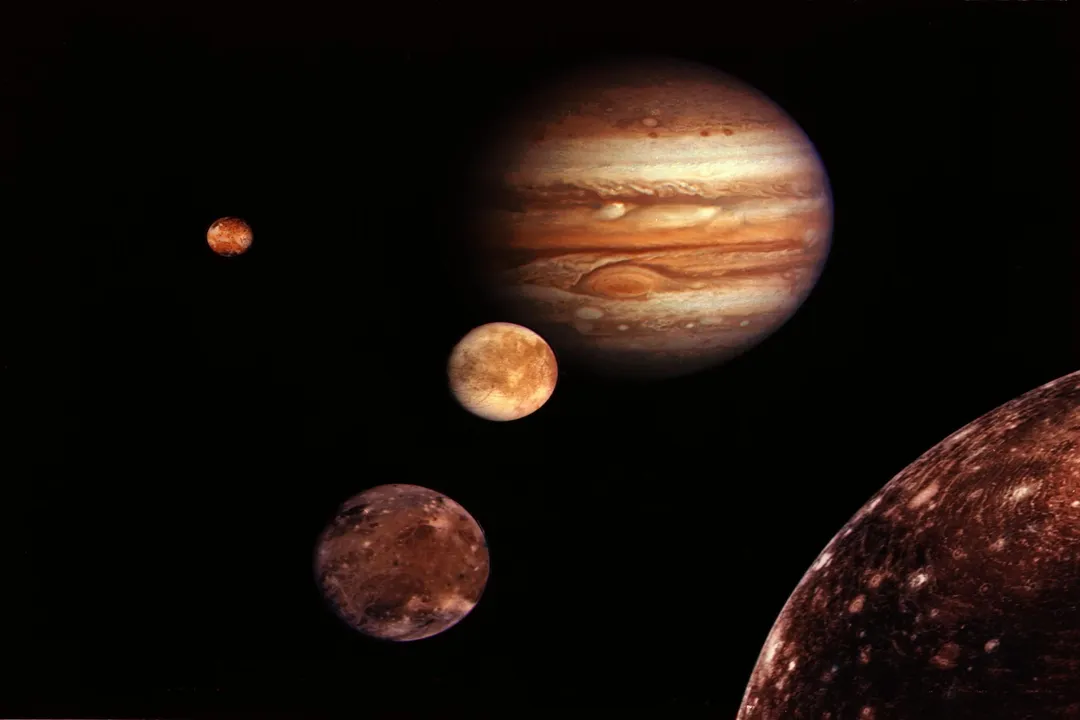
By March 1610, Galileo published his findings in Sidereus Nuncius (Starry Messenger). He initially named the four bright satellites the "Medicean Stars," dedicating them to his patron, Cosimo II de' Medici, Grand Duke of Tuscany. This naming convention highlights an important, often overlooked aspect of early modern science: the necessity of political patronage. Discovering new celestial bodies was a powerful tool for acquiring status and funding, as naming them after influential families directly tied the discovery to earthly power structures. These four largest moons—Io, Europa, Ganymede, and Callisto—are incredibly diverse worlds themselves, ranging from the volcanically active Io to the ice-covered Europa.

# Earth center challenged

The true weight of the discovery wasn't in identifying four new lights; it was in what they did. These four objects were clearly orbiting Jupiter, not Earth. This observation struck at the very heart of the reigning cosmological model, the Ptolemaic system, which held that the Earth was the stationary, unique center of all celestial motion. If Jupiter could carry its own entourage around the solar system, then not everything had to orbit our planet. The concept of a single, universal center of rotation suddenly seemed untenable.
This provided crucial visual evidence supporting the heliocentric proposal advanced decades earlier by Nicolaus Copernicus—the idea that the Sun, not the Earth, was the center of the planetary system. The Jovian system functioned as a miniature, verifiable model of a sun-centered universe, demonstrating that orbital centers other than Earth were physically possible and observable. It was a conceptual earthquake that forced thinkers to reconsider humanity’s place in the cosmos.
# Mechanical laws
The significance extended far beyond simply rearranging the furniture in the solar system; it opened the door to understanding how the universe moved. Once the existence of multiple centers of motion was accepted, the next logical step was to understand the rules governing those motions. The regularity with which Galileo tracked the four moons established a precedent for celestial mechanics—the mathematical description of the motions of bodies under the influence of gravity.
To fully appreciate the intellectual leap, consider the sheer complexity Galileo was attempting to map. The Earth-Moon system has one primary relationship to track. In contrast, the Jovian system involves the Sun, Jupiter, and four major moons, all interacting gravitationally. Mapping the precise timing of their conjunctions and separations, as Galileo did, required a level of systematic, quantitative observation that had previously been reserved for the planets orbiting the Sun according to Kepler's laws. Had you been tracking only the Earth and Moon, you would observe one set of predictable cycles. Tracking the Jovian system meant you were simultaneously observing a completely different, complex, nested set of orbital periods, proving that nature operated on consistent, measurable rules, regardless of which body held the center of a local system.
# Mapping complexity
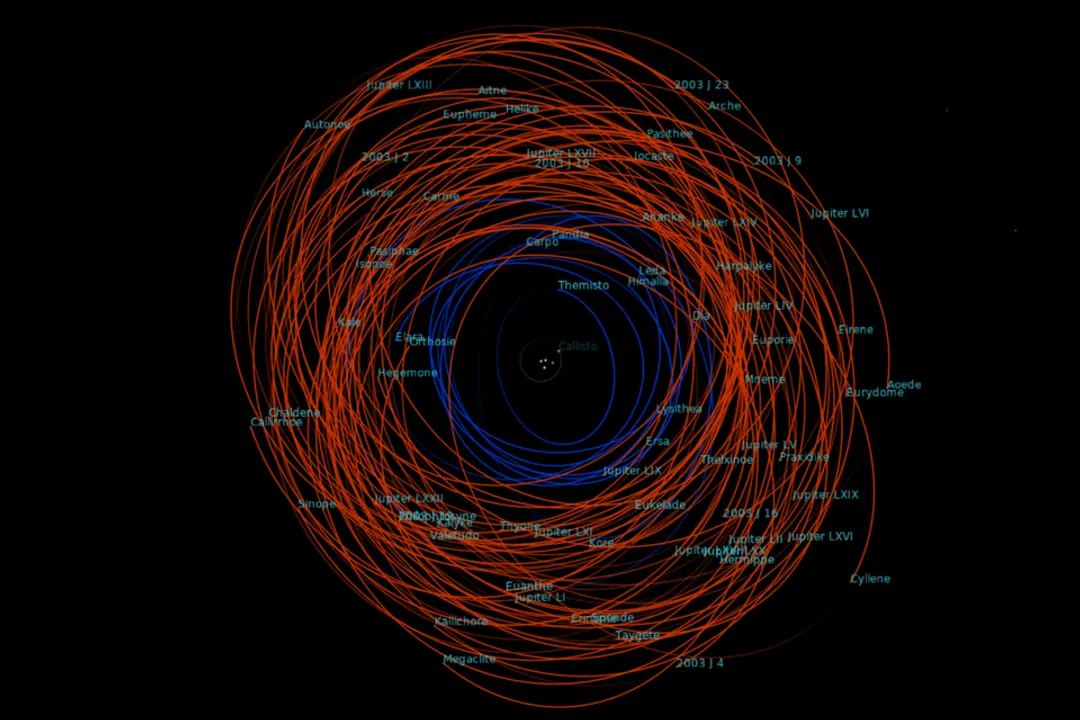
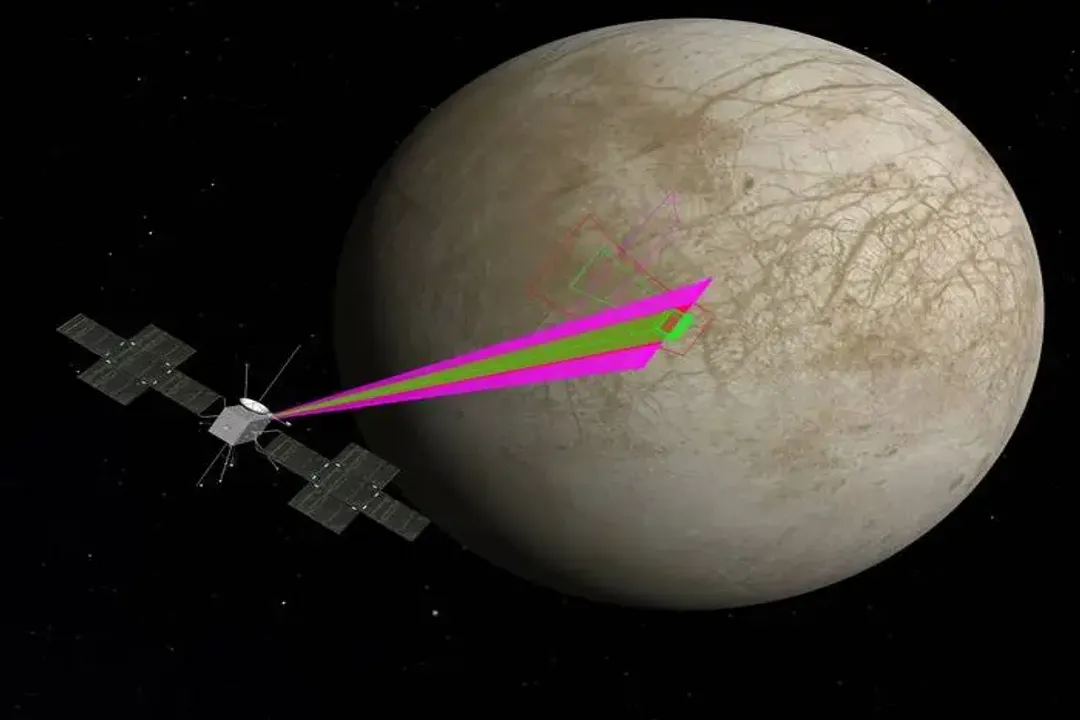
The subsequent exploration of Jupiter, culminating in missions like the Juice probe centuries later, stands directly on the foundation laid by those initial 1610 observations. The discovery validated the method—rigorous observation over time—as the ultimate arbiter of physical reality, rather than relying solely on established philosophical or religious dogma. This shift was vital for the scientific revolution that followed. Furthermore, while Galileo found four large moons, modern observation has revealed dozens, demonstrating that the formation of large planetary systems capable of capturing or forming multiple satellites is common throughout the galaxy.
The initial four moons themselves represent an incredible diversity of planetary science, suggesting that different formation pathways or post-formation evolutionary histories can occur even within a single planetary family. For example, the configuration and composition of the Galilean moons provide a natural laboratory for studying processes like tidal heating, which keeps Io volcanically active and may maintain a subsurface ocean on Europa. That such varied, geologically dynamic worlds could exist orbiting a gas giant, far from the traditional focus on the inner terrestrial planets, reshaped expectations for where life or complex geological processes might be found elsewhere in the solar system. The discovery was thus not just an astronomical footnote; it was the opening chapter in the scientific study of the entire solar system as a collection of diverse worlds.
Related Questions
#Citations
410 Years Ago: Galileo Discovers Jupiter's Moons - NASA
Galileo Discovers Jupiter's Moons - National Geographic Education
Were Jupiter's Moons Evidence for a Sun-centered Universe?
Moons of Jupiter - Wikipedia
[PDF] Moons Orbiting Jupiter - UCCS
Galileo: Discovering Jupiter's Moons | PBS LearningMedia
Galileo's Legacy: Jupiter's Moons Discovery Shaped Astronomy
If Galileo's discovery of moons orbiting Jupiter is what made ... - Reddit
A history of Jupiter exploration: the journey to Juice - ESA