What was the significance of Galileo's discovery of the moons of Jupiter?
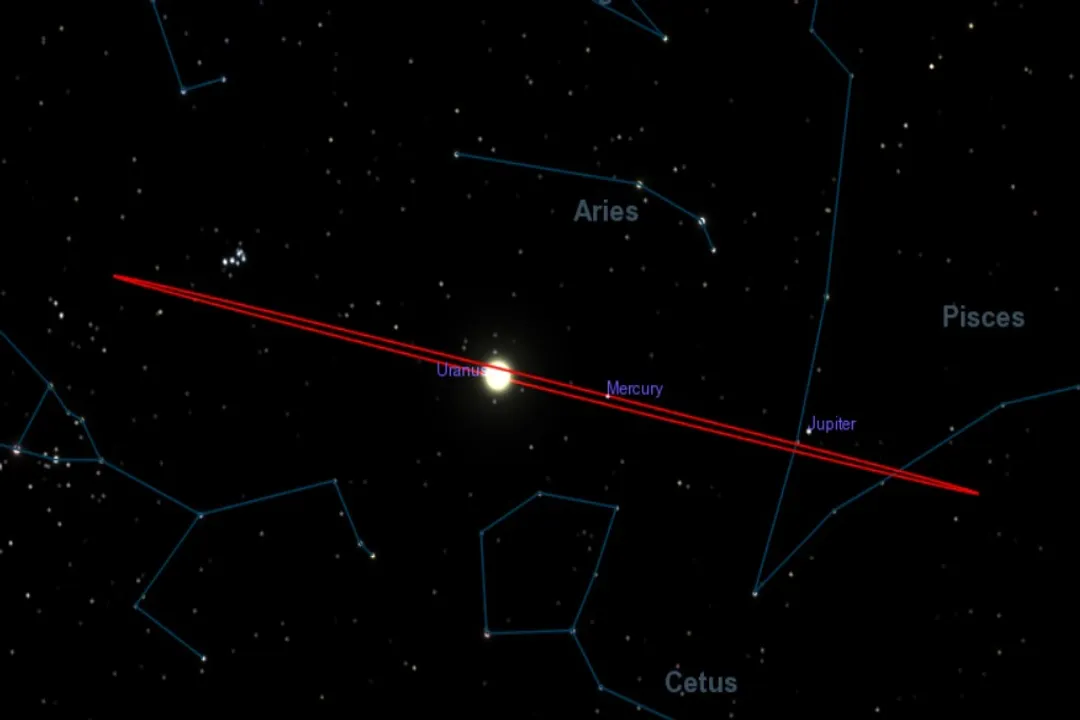
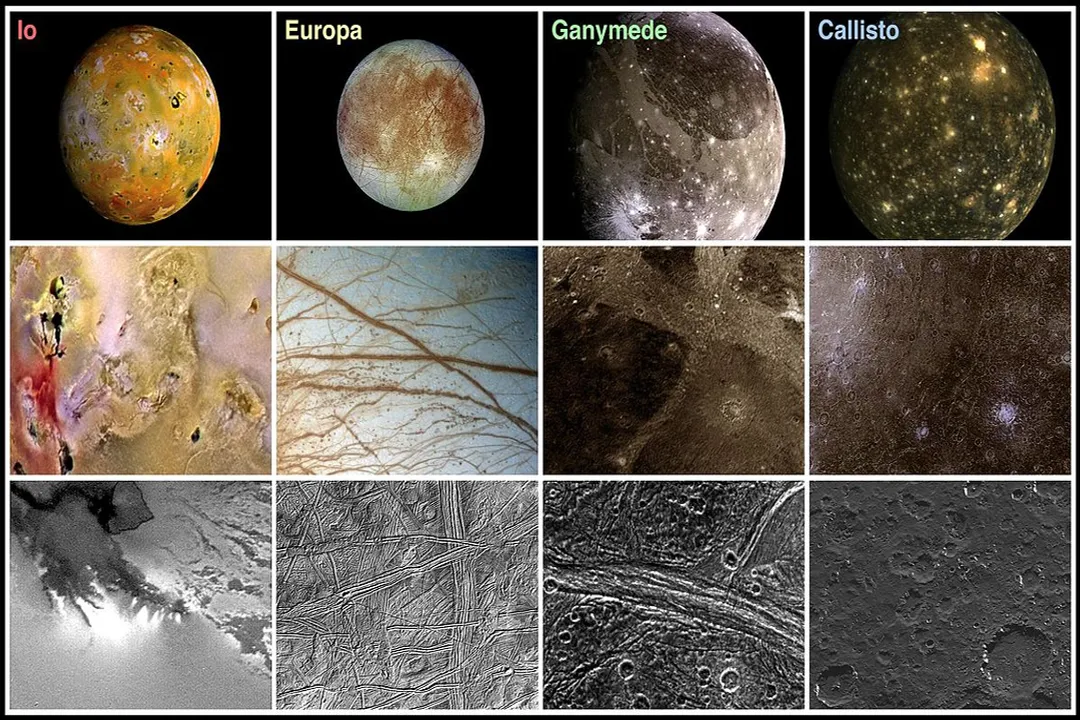
The faint pinpricks of light first glimpsed by Galileo Galilei in early January 1610 were small, but their significance was immense, instantly throwing the established view of the cosmos into question. Using his improved telescope, an instrument he turned toward the heavens when many contemporaries were still skeptical of its astronomical utility, Galileo tracked four points of light near Jupiter. He noted on successive nights that these points had shifted their positions relative to the planet, revealing a celestial dance previously unseen by human eyes. Galileo eventually named these companions the "Medicean Stars" in a nod to his patron, Cosimo II de' Medici, though they are known today as the Galilean moons: Io, Europa, Ganymede, and Callisto.
# Galileo's Seeing
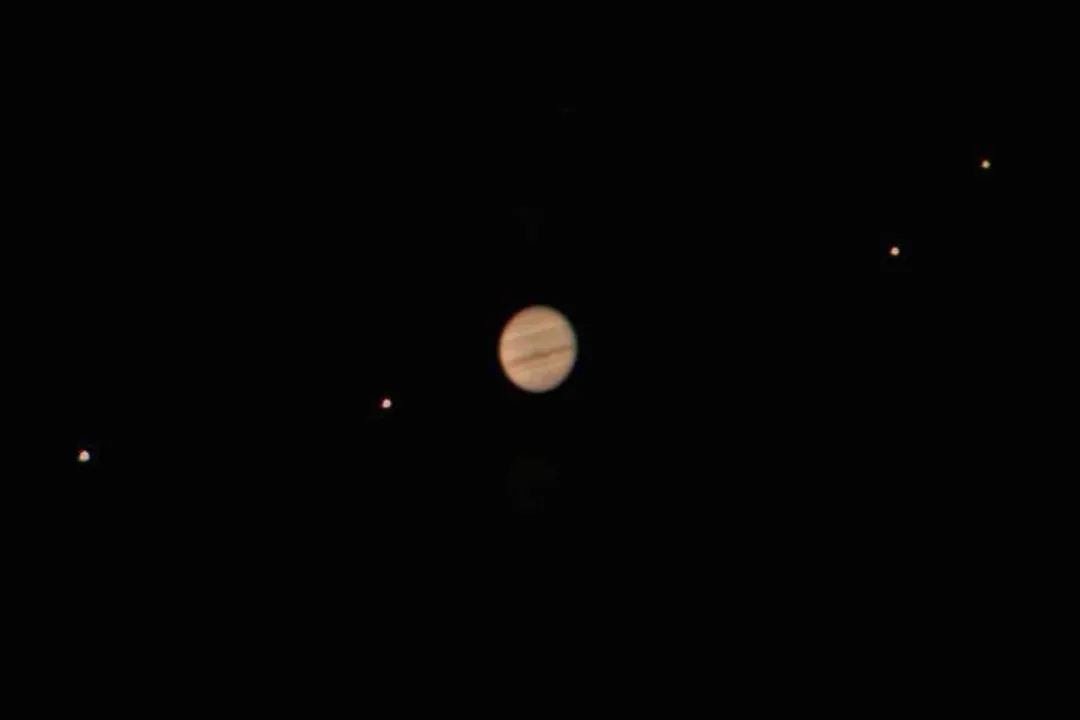
The ability to see these objects was entirely dependent on the recently adapted optical device. Jupiter itself is bright, but the four satellites are relatively faint, and they hug the massive planet closely in the sky, making them easily lost in its glare without magnification. To resolve them as distinct points and track their movement required consistent observation over several nights, which Galileo meticulously performed. The initial sighting on January 7, 1610, set in motion a chain of events that would redefine astronomy. Had Galileo relied solely on the naked eye, these moons would have remained forever hidden, indistinguishable from Jupiter's light or background stars. The sheer technical precision required to maintain focus on Jupiter while discerning these tiny, fast-moving companions speaks volumes about Galileo's observational skill, far beyond simply pointing a tube toward the sky.
# Earth Center Challenge
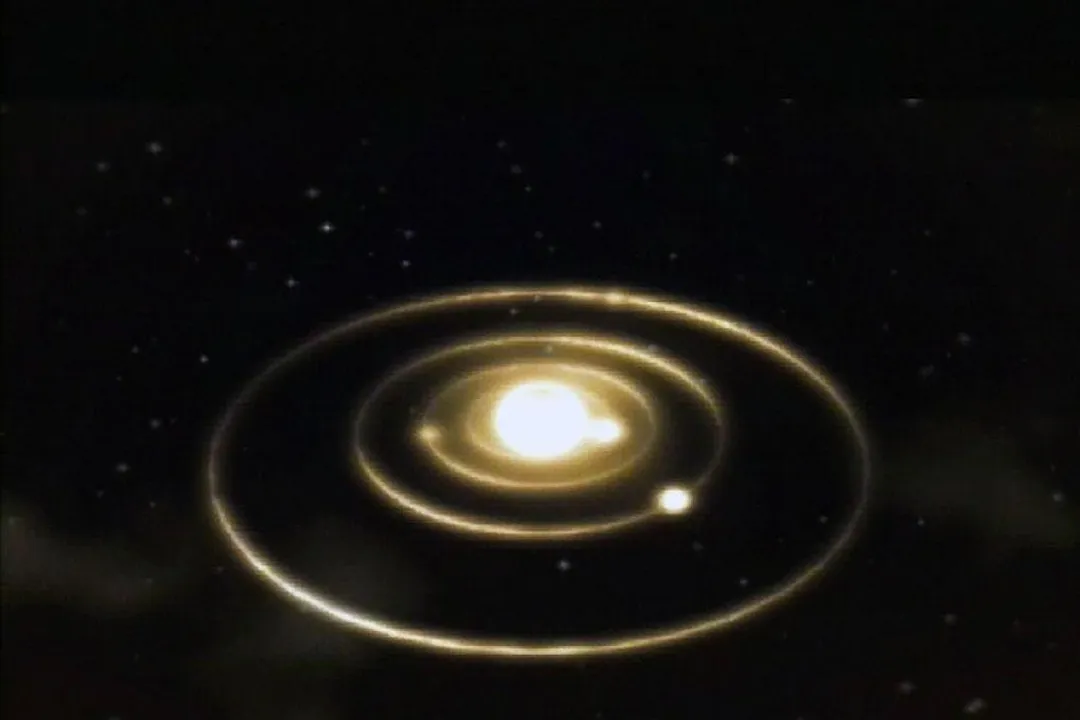
The traditional astronomical model, rooted in the teachings of Aristotle and Ptolemy, held that the Earth was the unmoving center of the universe, and every single celestial body—the Sun, the Moon, the planets, and the fixed stars—was required to orbit it. This geocentric view was deeply interwoven with philosophical and theological understanding of the time. Galileo’s discovery struck at the very foundation of this structure. Seeing four objects orbiting Jupiter demonstrated incontrovertibly that there were other centers of motion in the heavens besides the Earth. This finding meant the Ptolemaic system, as a complete and accurate description of the cosmos, was fundamentally flawed; it was, at best, incomplete. The satellites formed a miniature, observable system revolving around a planet, proving that a celestial body could exist independently of Earth’s gravitational dominion.
# New Worlds Published
Galileo quickly understood the world-altering nature of his observation and wasted no time in disseminating his findings. His account was published in 1610 in a short treatise titled Sidereus Nuncius, or Starry Messenger. This publication did more than just report data; it introduced powerful new evidence to the scientific community. The naming choice, Medicean Stars, was a strategic move to secure patronage, yet the scientific reality of the orbits quickly overshadowed the dedication. The swift publication ensured that the observations could be confirmed or refuted by other astronomers who possessed similar telescopes, subjecting the findings to immediate, if sometimes hostile, scrutiny. The existence of these four new worlds forced a fundamental re-evaluation of what it meant to be a planet and what constituted the center of a system.
# Copernican Proof
While the notion that the Sun, not the Earth, was the center of the planetary orbits (heliocentrism) had been proposed decades earlier by Nicolaus Copernicus, it lacked direct, observable proof that contradicted the established order. The moons of Jupiter provided the crucial empirical evidence that Copernican theory required. In the early 17th century, arguments for heliocentrism were often based on mathematical elegance or philosophical simplicity, arguments that struggled against the strong tradition of Aristotelian physics and direct, albeit flawed, observation. Galileo’s discovery offered something different: direct, repeatable, visual evidence that an orbiting system could exist without the Earth at its center. This transformed the debate from one of mathematical preference into one of observable fact. This transition is perhaps the most significant aspect of the discovery. We must remember that in that era, observational verification was the ultimate arbiter of scientific truth, far outweighing theoretical appeal. The moons became a tangible model of the solar system operating under Copernican principles, even if Jupiter wasn't the Sun.
# Analyzing Observational Weight
The strength of Galileo’s evidence lay in its inherent repeatability. A defender of the Ptolemaic system could argue that terrestrial phenomena were illusory, or that observed planetary movements were simply complex cycles designed to orbit the Earth. However, the motion of the four satellites relative to Jupiter was a stark, unambiguous demonstration. If one assumed the Earth was the center of everything, then the moons must orbit the Earth and Jupiter simultaneously, requiring an impossibly complex path that was not observed.
To better appreciate the scientific impact, consider a comparison of the evidence available for the two competing models prior to 1610:
| Feature | Geocentric Model (Ptolemaic) | Heliocentric Model (Copernican) |
|---|---|---|
| Foundation | Philosophical authority, visual observation (unassisted eye) | Mathematical simplicity, theoretical consistency |
| Key Flaw | Required complex epicycles to explain retrograde motion | Lacked direct empirical proof of Earth's motion |
| Galileo's 1610 Evidence | Failed to explain Jupiter's satellites | Directly modeled by the satellites' orbits around Jupiter |
This comparative weight shifted the burden of proof entirely. Before Galileo, proponents of Copernicus relied on theory; afterward, they could point to Jupiter and say, "Look, nature itself has given us a miniature example of what must be happening on a grander scale".
# Cosmic Implications
The discovery immediately began chipping away at the Aristotelian structure that viewed Earth as unique and central—the sole place where motion and change occurred, distinct from the perfect, unchanging heavens. By revealing other orbiting bodies, Galileo demonstrated that the celestial realm was far more complex, dynamic, and perhaps even governed by universal laws that applied across different parts of the cosmos. This paved the way for a unified physics, a concept that Isaac Newton would later formalize.
The political and religious ramifications were enormous, too, setting the stage for Galileo's later conflict with the Church. To accept the moons meant questioning the established interpretation of scripture that placed Earth, and by extension humanity, at the absolute center of creation. This was not just an astronomical adjustment; it was a profound philosophical and theological challenge to institutional authority. The four moons were a tangible sign that accepted wisdom, even that backed by millennia of tradition, could be overturned by careful observation and rational deduction. The discovery was more than an addition to the catalog of known objects; it was a demonstration of the power of empirical science to correct long-held beliefs about humanity's place in the universe. The cosmos had suddenly become vastly larger, more populated, and less Earth-centric than anyone had previously dared to confirm with their own eyes.
Related Questions
#Citations
Galileo Discovers Jupiter's Moons - National Geographic Education
Galileo: Discovering Jupiter's Moons | PBS LearningMedia
Galilean moons - Wikipedia
Why Did Galileo Need a Telescope to Discover the Moons of Jupiter?
[PDF] In the Footsteps of Galileo: Observing the Moons of Jupiter
Galileo Galilei's Discovery of Jupiter's Moons on January 7, 1610
415 Years Ago: Astronomer Galileo Discovers Jupiter's Moons - NASA
Were Jupiter's Moons Evidence for a Sun-centered Universe?
Galileo's Discovery Of Jupiter's Moons, And How It Changed The ...