Did Galileo discover that the planet had four moons?
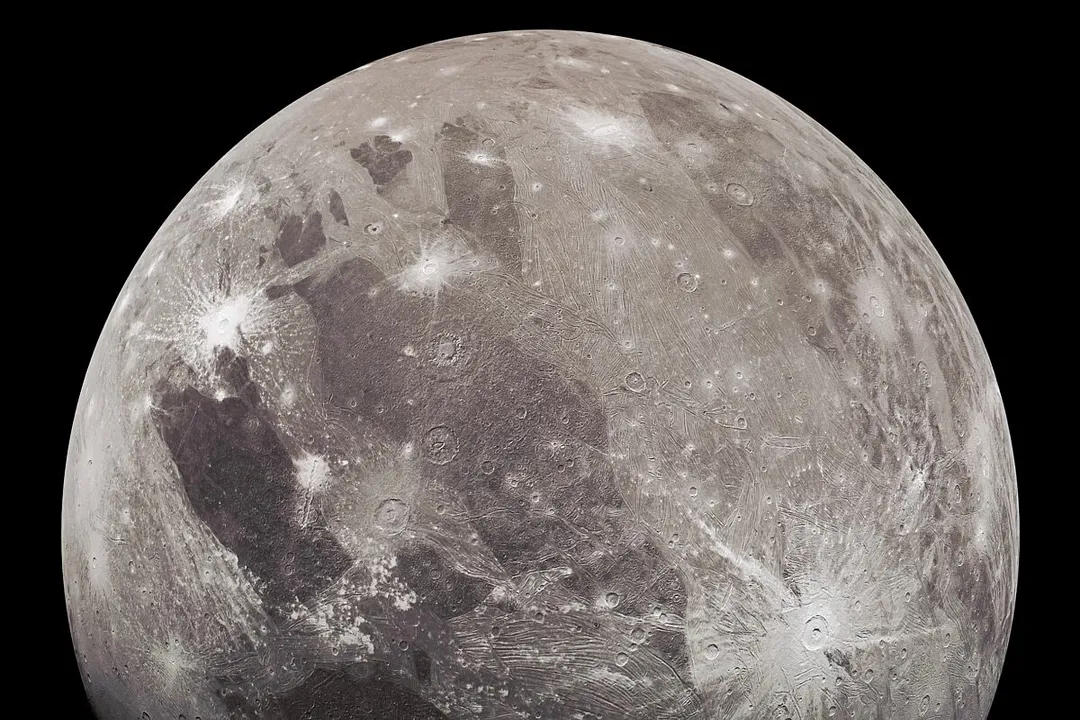
The confirmation that Galileo Galilei spotted four distinct celestial bodies orbiting the planet Jupiter fundamentally altered humanity’s view of the cosmos. While many observers before him had noted the "wandering stars," Galileo’s achievement on a crisp evening in January of 1610 was not just seeing something new, but proving that something else could be the center of its own miniature solar system. [1][3][9] This discovery, made with his revolutionary telescope, immediately called into question the long-held belief that everything in the heavens revolved solely around the Earth. [7][8]
# The New Glass
What separated Galileo’s observation from millennia of naked-eye astronomy was the optical aid he employed. [6] Before the telescope, the faintest stars were just points of light, and Jupiter appeared as a simple, bright dot. Even though other observers had occasionally glimpsed Jupiter’s largest satellites, they were usually mistaken for background stars, or perhaps faint, optical artifacts of the crude instruments of the time. [6][8] Galileo, however, had significantly improved the magnification and clarity of the spyglass technology available, turning it into a scientific instrument capable of revealing worlds. [6]
It is worth noting that the true power here was not just magnification, but resolution—the ability to separate distinct points of light. Had Galileo used a standard, low-power spyglass, those four faint companions would have blended into the glare of Jupiter itself, remaining effectively invisible to the necessary scrutiny required for scientific verification. [6] This technological necessity provides an important historical context; discovery was not just about looking, but about looking better than anyone before.
# Tracking Motion
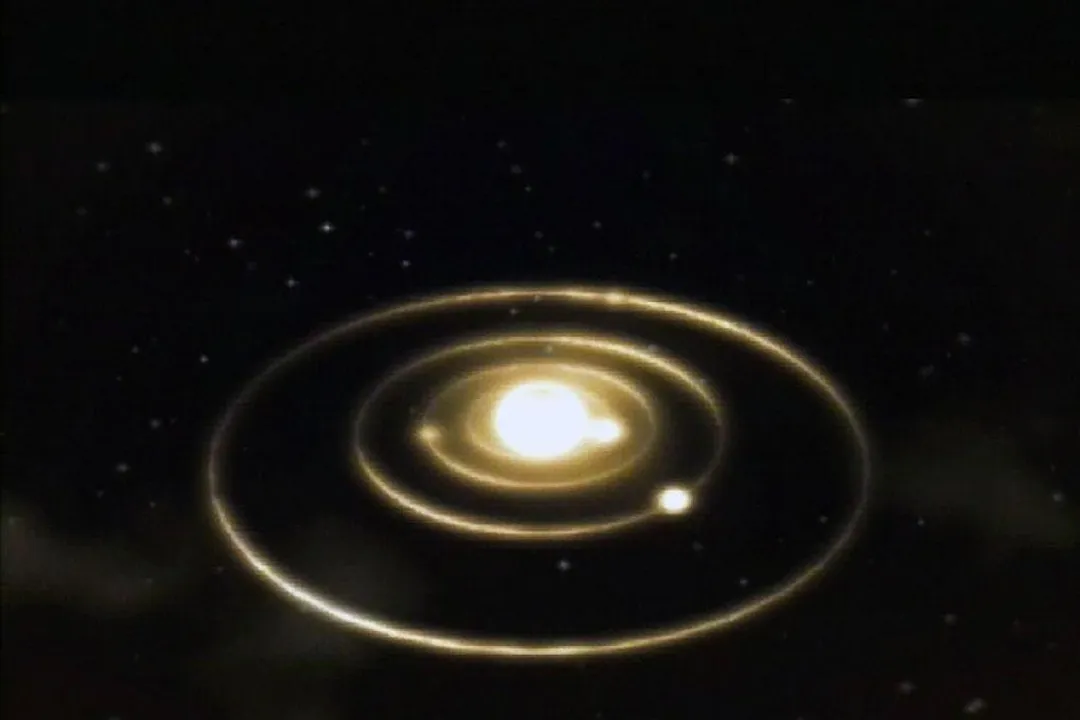
Galileo first recorded seeing three "stars" aligned with Jupiter on January 7, 1610. [3][9] Over the next few nights, he meticulously charted their positions relative to the planet. [7] By observing their apparent motion over successive nights, he could deduce that these objects were not fixed background stars, but rather satellites locked in orbit around Jupiter itself. [4] They would disappear behind or reappear from in front of Jupiter as they completed their courses. [7]
The initial observation noted three, but within a short span, a fourth was detected, bringing the count to four principal moons. [1][5] The dates of these observations are critical to establishing precedence and confirming the findings, which Galileo published in his treatise, Sidereus Nuncius (Starry Messenger), shortly thereafter. [3][8]
Consider the sheer discipline required for this charting. Unlike merely spotting a new planet that might move slightly against the background over weeks, these moons required daily, sometimes hourly, verification of their angular separation from the primary body. For instance, the innermost moon, Io, orbits Jupiter in less than two Earth days. [4] Keeping precise track of something that changes position so rapidly, using rudimentary optical instruments of the era, speaks volumes about the dedication of the observer. [7] A scientist today might use an electronic sensor to record data overnight, but Galileo relied on his hand, his eye, and his quill pen to capture the dance. [6]
# Naming the Satellites
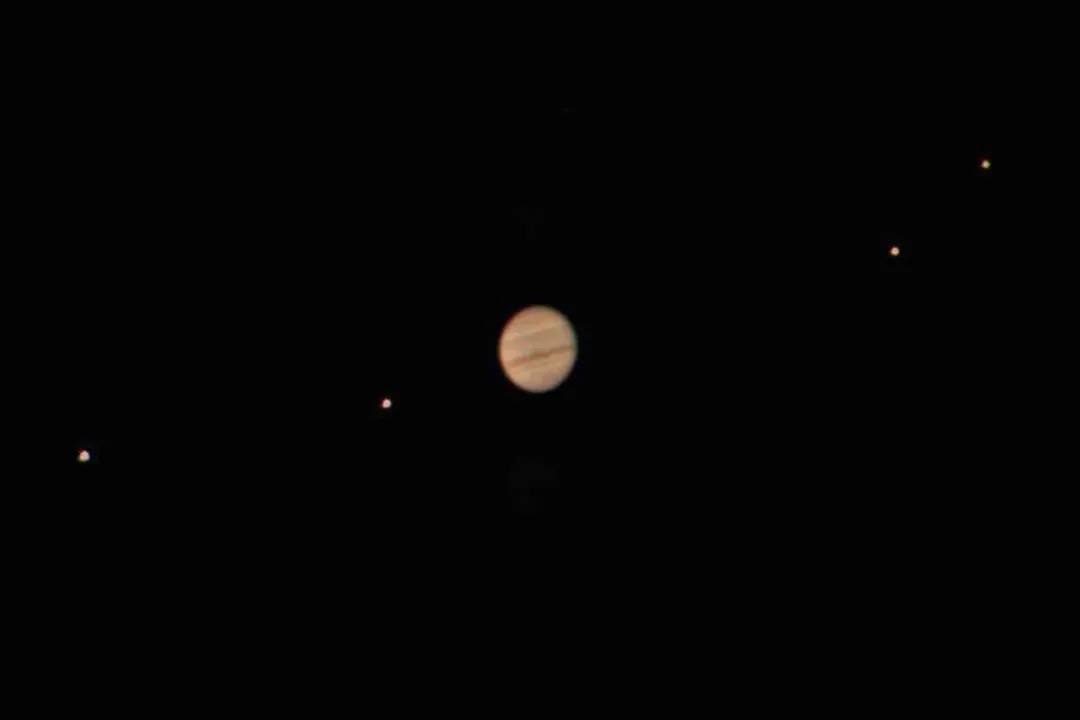
Galileo knew that staking a claim on such a monumental discovery required political acumen as much as astronomical skill. [9] He initially dubbed his findings the Stelle Medicee, or the Medicean Stars, dedicating the discovery to his patron, Cosimo II de' Medici, Grand Duke of Tuscany. [1][5] This act served to secure both his reputation and his finances, but the name did not last in the wider scientific community.
The four objects are now universally known as the Galilean moons. [1][5] These are the largest satellites of Jupiter, and they each possess unique characteristics:
| Moon | Primary Feature | Orbital Period (Approx.) |
|---|---|---|
| Io | Most volcanically active body in the Solar System [5] | 1.77 Earth days |
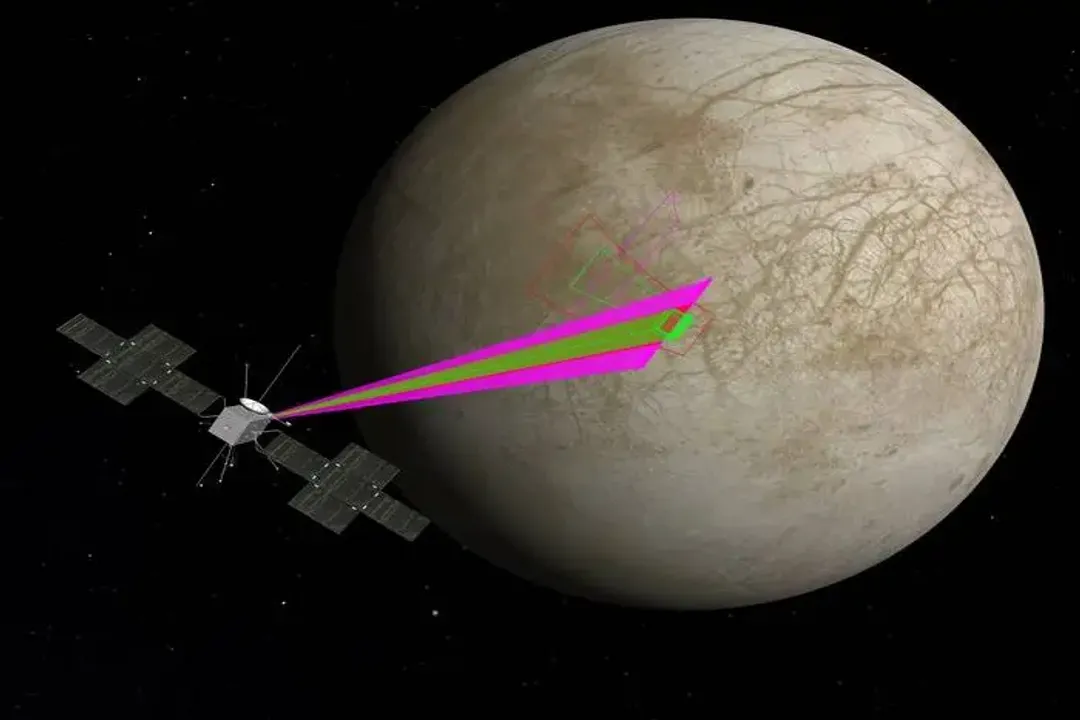
| Europa | Likely possesses a subsurface ocean [5] | 3.55 Earth days |
| Ganymede | The largest moon in the entire Solar System [5] | 7.15 Earth days |
| Callisto | Heavily cratered, ancient surface [5] | 16.69 Earth days |
Comparing the orbital speeds provides a striking illustration of Kepler’s laws in action, even if the full mathematical understanding was still developing. Io completes its circuit nearly ten times faster than Callisto completes one. [4] The sheer scale of these objects is also humbling; Ganymede, for instance, is actually larger than the planet Mercury. [5]
# Cosmic Implications
The discovery that Jupiter possessed its own retinue of orbiting bodies provided tangible, visible evidence against the strict Aristotelian/Ptolemaic cosmology prevalent at the time. [7] The old model dictated that everything must orbit the Earth. If Jupiter had moons orbiting it, then the Earth was clearly not the unique center of all celestial motion. [4] This observation provided crucial physical support for the heliocentric model proposed earlier by Copernicus, even though Galileo himself didn't necessarily advance the Copernican theory first. [7]
Galileo’s findings demonstrated that there could be multiple centers of revolution in the heavens. [4] This realization was profoundly significant, as it removed a major philosophical and physical barrier to accepting the Sun-centered view of the solar system. The physical reality he observed through his lens carried more weight than centuries of established philosophical doctrine. [1][7]
While these four are the most famous, it is important to remember they are merely the largest satellites of a giant planet that now boasts dozens of confirmed moons. [2] Jupiter’s gravitational reach captures numerous smaller, irregularly shaped bodies as well, though these others were discovered much later using advanced technology. Galileo’s accomplishment lies in identifying the major system components that behaved in a manner mirroring the Earth-Moon relationship, just centered on a different primary body. [1] His initial finding of four was complete regarding the major, easily discernible satellites, making the answer to the question a definite yes: Galileo discovered that Jupiter had four major moons. [3]
Related Questions
#Citations
Galilean moons - Wikipedia
Galileo Discovers Jupiter's Moons - National Geographic Education
On Jan. 7, 1610, Galileo discovered the four largest moons of Jupiter ...
The Dance of Jupiter's Moons - www.caltech.edu
What are Jupiter's Galilean moons? | The Planetary Society
Why Did Galileo Need a Telescope to Discover the Moons of Jupiter?
Galileo: Discovering Jupiter's Moons | PBS LearningMedia
Galileo discovers Jupiter's moons nearly 415 years ago to the day
410 Years Ago: Galileo Discovers Jupiter's Moons - NASA