What is the star planet near the Moon tonight?
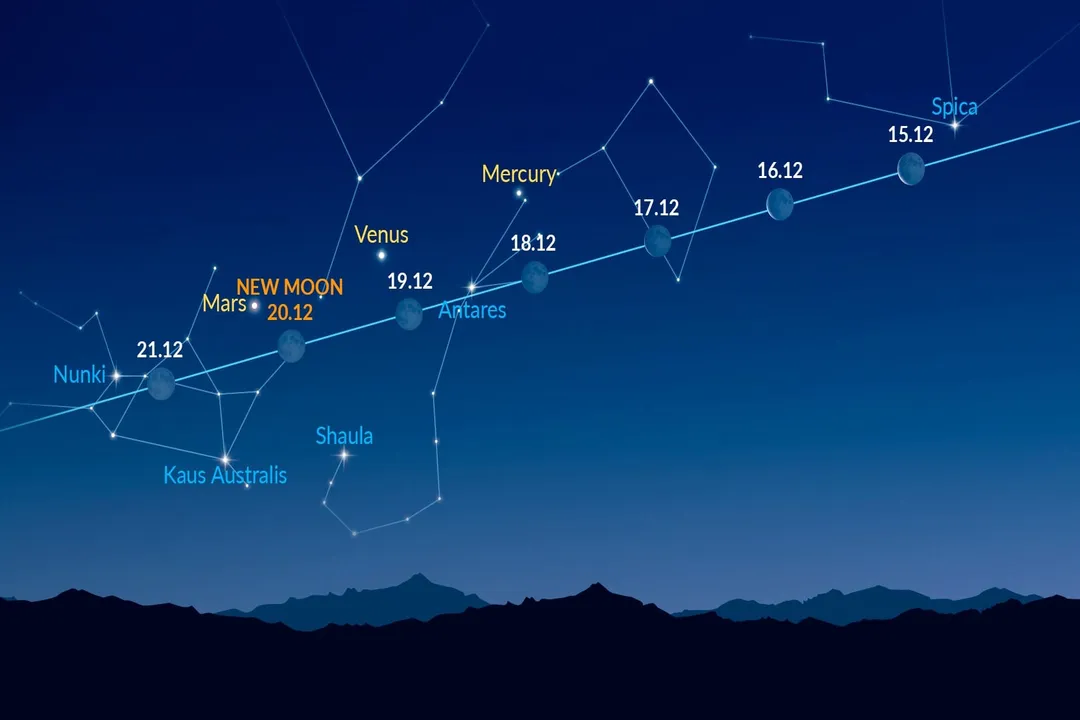
The celestial view changes day by day, meaning the answer to what bright object is sharing the sky with the Moon tonight is never the same for very long. When you spot a brilliant “star” hanging near our familiar satellite, you are likely witnessing a conjunction—a frequent and beautiful cosmic alignment where two celestial bodies appear close together from our vantage point on Earth. However, because the Moon orbits Earth roughly every $27.3$ days, passing through the same belt of constellations—the zodiac—it will encounter each of the brighter planets in turn. To know tonight's companion, we must look at the specific movements of the inner and outer solar system bodies for the present time.
For context, let us examine the sky as it appeared in the middle of December 2025, a period rich with planetary activity, including the approach of the Winter Solstice. During this time, the sky offered a mix of planets that were easily visible, those struggling against the Sun's glare, and the dramatic, yet sometimes invisible, near-meetings of the Moon with its planetary neighbors.
# The Five Neighbors
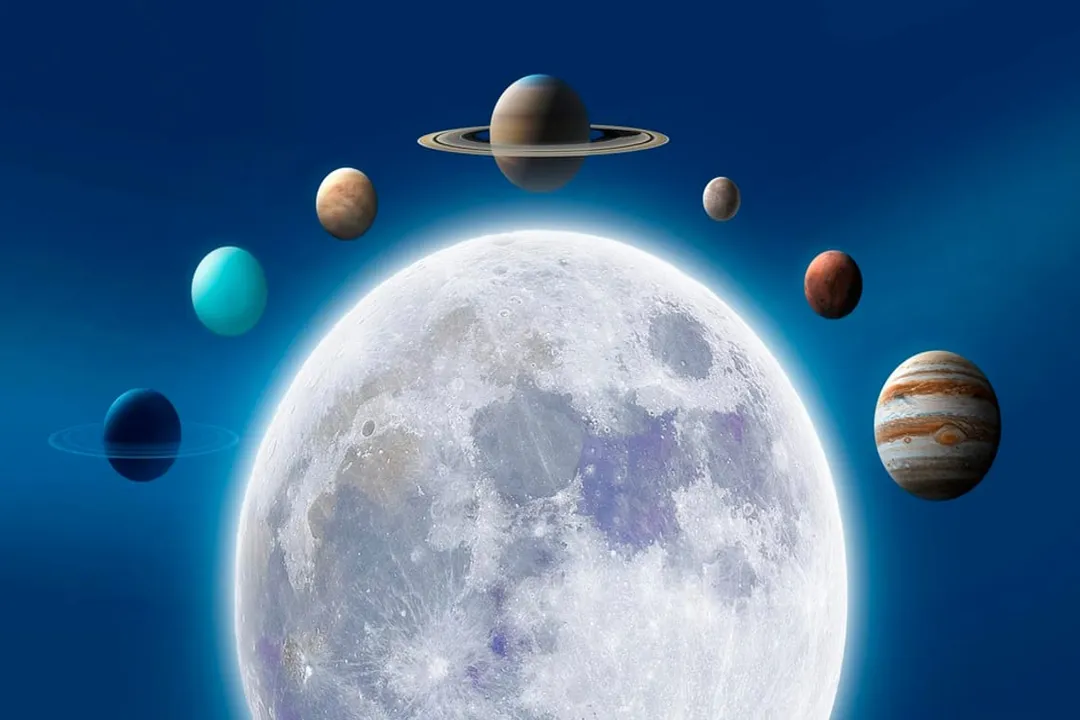
Not every bright dot is a planet, and not every planet is easy to find. Generally, amateur sky-gazers focus on the five planets easily visible without optical aid: Mercury, Venus, Mars, Jupiter, and Saturn. Uranus and Neptune require at least a good pair of binoculars or a small telescope to register as more than a faint pinpoint or distant dot.
# Brightest Performers
Jupiter is consistently a star in the sky, often shining more than twice as brightly as Sirius, the brightest true star. Throughout December 2025, Jupiter dominated the eastern evening sky, shining with a steady, cream-colored light. Saturn, the ringed jewel, presents a steady, yellowish glow and is often high in the western sky in the early evening, appearing as bright as the top magnitude stars.
In contrast, the innermost planets, Venus and Mercury, are governed by their proximity to the Sun, making their visibility highly erratic. For example, in early December 2025, Venus was traveling too closely behind the Sun from our perspective, placing it in a state of superior conjunction and making it effectively invisible. Similarly, Mars can become too faint or too close to the Sun's glare to be spotted for long stretches. This constant shift in visibility between the planets—some always visible, others only in the dawn or dusk—is what makes consulting an up-to-date guide essential for any stargazer seeking a specific celestial pairing.
# Defining Celestial Meetings
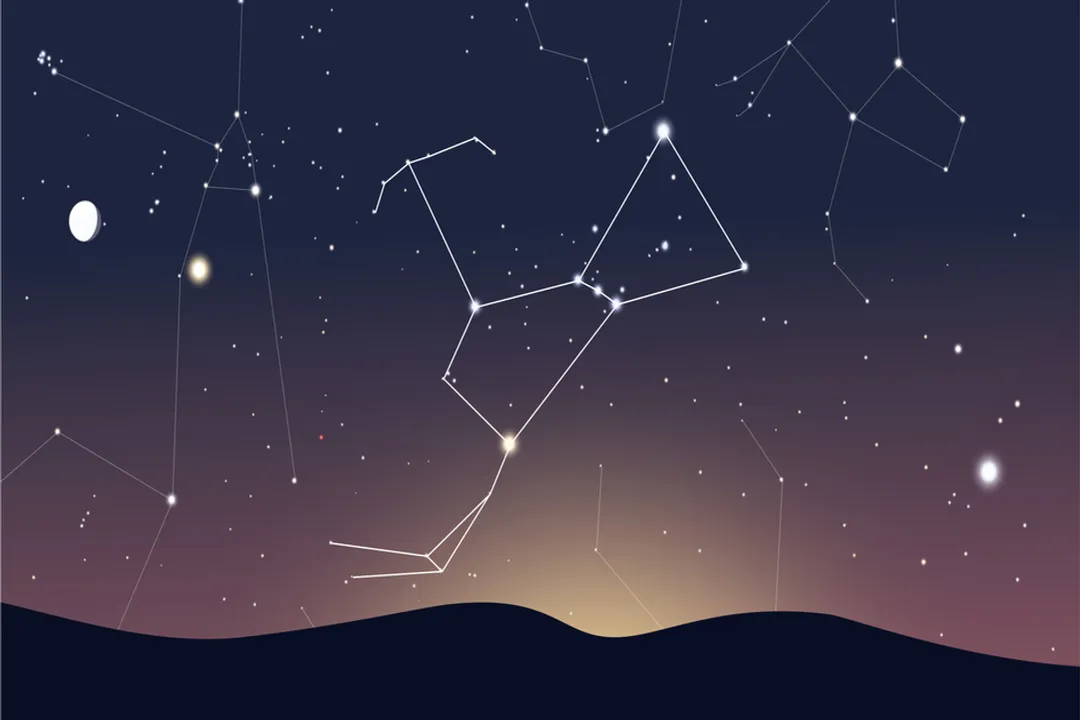
When you ask what planet is near the Moon, you are asking about a specific type of celestial event that astronomers label precisely.
# Appulse Versus Conjunction
The term for when two objects appear closest together in the sky, as seen from Earth, is appulse, or closest approach. A conjunction, which is often used interchangeably in casual conversation, has a more technical definition: it occurs when the two objects share the same apparent right ascension or ecliptic longitude. While appulse and conjunction usually happen very close in time, they are not strictly the same event. The Moon moves relatively quickly along the ecliptic—the path the Sun appears to follow—meaning these near-misses happen about once every twenty-seven days for each planet.
# Occultations
A related, yet more dramatic, event is an occultation, which happens when the Moon passes directly in front of a star or planet, temporarily hiding it from view. Observing an occultation requires pinpoint timing, as the exact moment depends heavily on your specific location on Earth, unlike a conjunction which is visible across a wide region.
# The Moon’s December Schedule
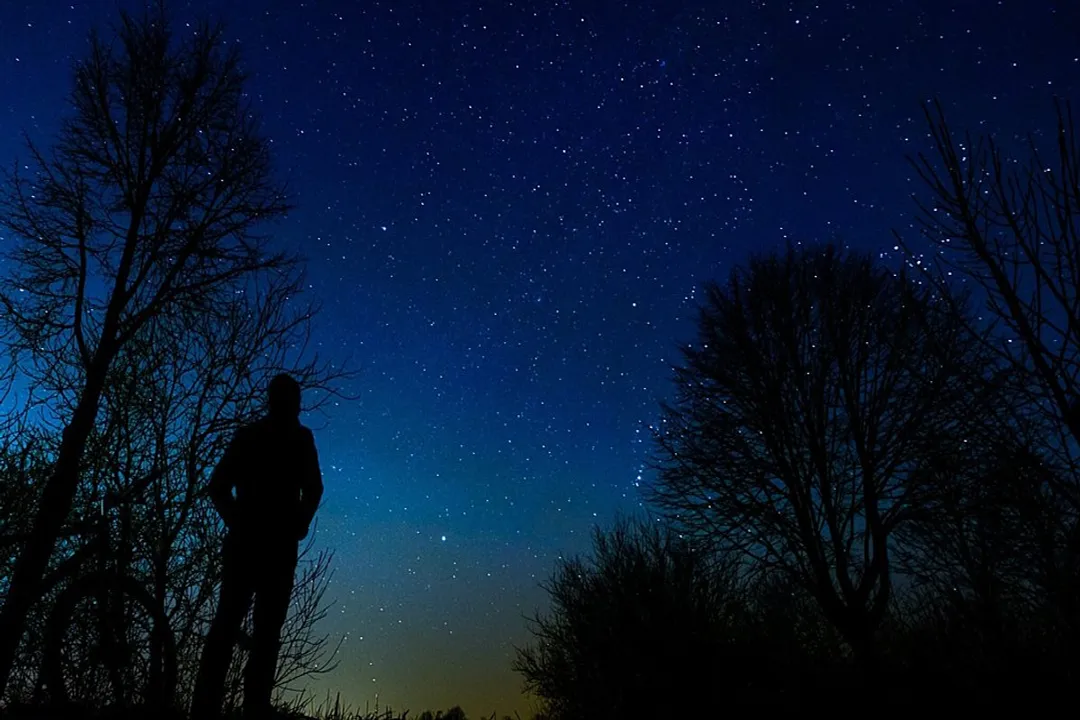
Looking at the specific schedules for mid-to-late December 2025, the Moon itself was largely absent for the first half of the month, reaching its New Moon phase on December 20. A New Moon means the illuminated face is turned away from Earth, rendering the Moon virtually unobservable around that date, even if a planet is passing right next to it.
The major conjunctions occurring in the latter half of the month highlighted the Moon's evolving phase:
- December 19: The Moon was predicted to pass near the brilliant Venus. However, because the Moon was nearly new (only 1% illuminated), this pairing would have been a case of spotting a dazzlingly bright planet shining in the morning twilight without its lunar companion being visible to the naked eye.
- December 20: A near meeting with Mars was also scheduled, but both objects were too close to the Sun to be seen, compounding the issue of the New Moon.
- December 26/27: This event was far more rewarding for the casual observer. The Moon, now waxing toward first quarter (around 41-44% illuminated), appeared near the steady glow of Saturn and the much fainter Neptune. A pair of binoculars would have made seeing Saturn and Neptune together a clear prospect. Saturn shines with a distinct golden hue, making it an easy target to distinguish from stars or Jupiter.
- December 31: The year concluded with the Moon passing by Uranus in the constellation Taurus. Since Uranus is faint (magnitude 5.6), this required a small telescope or powerful binoculars, even though the Moon was bright enough (88% illuminated) to be easily seen.
This comparison between the early and late month conjunctions illustrates a key principle: a close approach is only worthwhile if both objects are readily visible in the first place. You might miss a close approach if the Moon is too thin or too bright, or if the planet is too near the horizon or the Sun.
# Instant Identification Guide
When you look up and see a bright object near the Moon, how do you confirm it’s a planet and not a first-magnitude star like Sirius or Vega? The most immediate clues are the light quality and color.
# Twinkle Test
Stars twinkle due to the turbulence of Earth’s atmosphere refracting their tiny pinpoints of light, but planets appear as tiny disks, even to the naked eye, making their light steadier. If the light is steady and non-twinkling, you are almost certainly looking at a planet.
# Color Clues
Planets also possess characteristic hues that can aid in identification, provided the Moon's brightness isn't washing them out.
| Planet | Characteristic Color | Typical Visibility Time (General) |
|---|---|---|
| Mercury | Gray or brownish | Short windows near sunrise/sunset |
| Venus | Pale yellow, silvery | Evening or Morning Star |
| Mars | Pale pink or bright red | Varies by opposition cycle |
| Jupiter | Orange | Often the brightest "star" |
| Saturn | Gold | Steady light, visible long after sunset |
For instance, if you see a brilliant, steady orange light near the Moon, you can be quite sure you are viewing Jupiter, which outshines all but Venus. If you are in the early morning hours, a faint, grayish speck low in the southeast during December 2025 would have been the elusive Mercury.
# Observation Tactics for Better Viewing
For those looking to make a reliable sighting of the Moon’s companion, a little preparation goes a long way. Do not worry if you miss the exact time of conjunction; the objects remain close enough to be interesting for several hours before and after the peak moment.
If you plan to photograph the event, checking the weather for clear skies is paramount, and using an application that can calculate the angular distance between the Moon and the planet will help you frame the shot appropriately.
One crucial consideration for viewing the Moon near planets is the lunar phase itself. When the Moon is near its Full phase, its overwhelming glare can easily hide a nearby planet, even one as bright as Jupiter, which is usually easily noticed. Conversely, when the Moon is a thin crescent or new, it becomes a nearly invisible neighbor, allowing the planet to take center stage, as seen with the near-invisible Moon accompanying bright Venus on December 19th. This means that the most visually dramatic conjunctions often occur when the Moon is about half-lit—near the first or last quarter phases—because the Moon is bright enough to frame the scene but not so bright that it completely washes out the planetary light. For example, the December 27th meeting with Saturn, when the Moon was near first quarter, offered a much better dual spectacle than the New Moon pairings earlier in the month.
Beyond these scheduled events, remember that you can check rise and set times for any planet from your specific location using specialized calculators, which can be adjusted for any date throughout the year. Knowing the precise timing your local sunset or sunrise relates to the planet's position in the sky is key to finding those close encounters with Mercury and Venus, which orbit closest to the Sun. A simple rule of thumb: if you want to see an inner planet shortly after dark, look west; if you want to see it before dawn, look east. This directional knowledge, tied to the planet's orbital mechanics, is a fundamental skill for moving beyond just noticing a "star" near the Moon to actively tracking the solar system’s progress.
# Dynamic Celestial Map
The sky above us is a clock whose hands are perpetually in motion, driven by the independent orbits of the Earth, Moon, and other planets. What appears as a tight pairing tonight will drift apart over the following evenings as the Moon pursues its swift, monthly path around Earth. The constellations provide the backdrop, remaining largely fixed over a human lifetime, but the planets are the actors moving across this stage at different paces. Understanding which planet is near the Moon tonight is never a static question; it is an invitation to step outside and witness the mechanics of our solar system in real time, using the Moon as the guidepost to the visible wanderers.
Related Questions
#Citations
Visible planets and night sky guide for December - EarthSky
Night Sky Tonight: Visible Planets at Your Location - Time and Date
In the Sky This Month - StarDate Online
Bright “Star” Next to Moon: What Planet Is Near the Moon Tonight?
What Planets Are Visible Tonight - Farmers' Almanac
What's up in the night sky: December 2025 | The Planetary Society
Planets Visible Tonight - The Old Farmer's Almanac