What causes a bright star near the Moon?
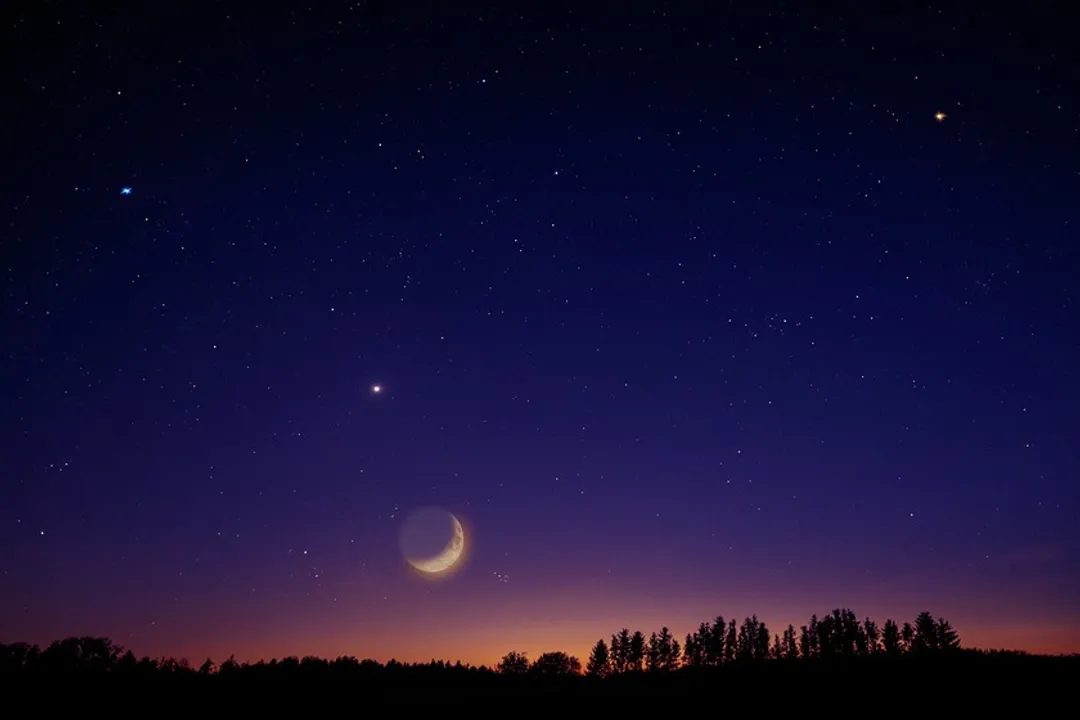
That brilliant, unwavering point of light seemingly hanging just beside the curve of the Moon is one of the most satisfying sights in the night sky. It immediately grabs attention because, unlike the Moon, which dominates with its soft, reflected glow, this companion object burns with a sharp, intense brilliance that suggests it must be a very near neighbor. While it is often casually referred to as a "star," the reality is usually far more compelling: you are almost certainly looking at a planet. [5]
# Brightest Object
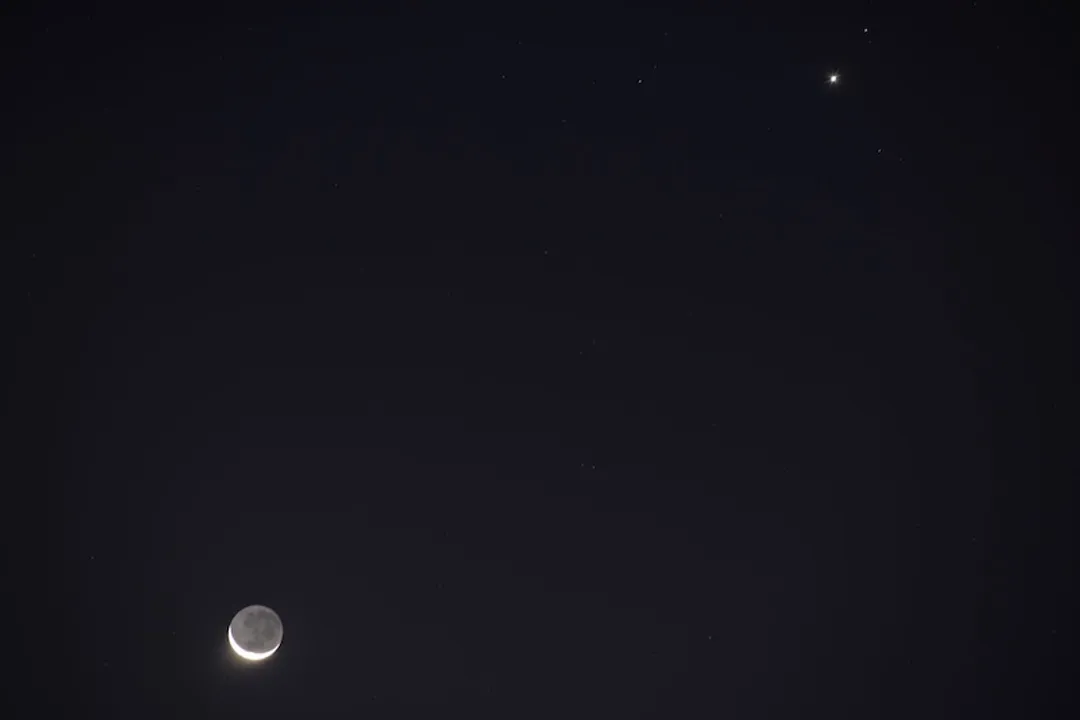
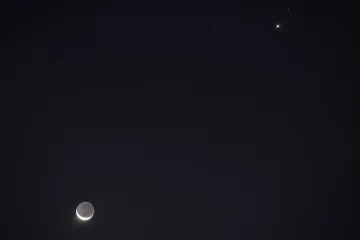
The object appearing near the Moon is overwhelmingly likely to be Venus. [2][5] Venus holds the title for the brightest celestial body visible in the night sky after our Moon. [3][6] Its incredible luminosity isn't due to sheer size—it’s smaller than Earth—but rather its atmosphere. [3] Venus is shrouded in extremely thick, bright clouds composed mostly of sulfuric acid droplets, which are exceptional reflectors of sunlight. This high albedo, or reflectivity, allows it to shine so powerfully, often appearing hundreds of times brighter than the next brightest star in the sky. [3]
When Venus is visible, it can be seen either in the western sky shortly after sunset (the "Evening Star") or in the eastern sky before sunrise (the "Morning Star"), depending on its position in its orbit relative to Earth and the Sun. [4][5] This variability in appearance is a key giveaway; a true star, being so far away, appears to maintain a fixed orientation relative to the Sun over a short observation period, whereas Venus orbits the Sun and changes its visible position dramatically. [4]
# Celestial Meetings
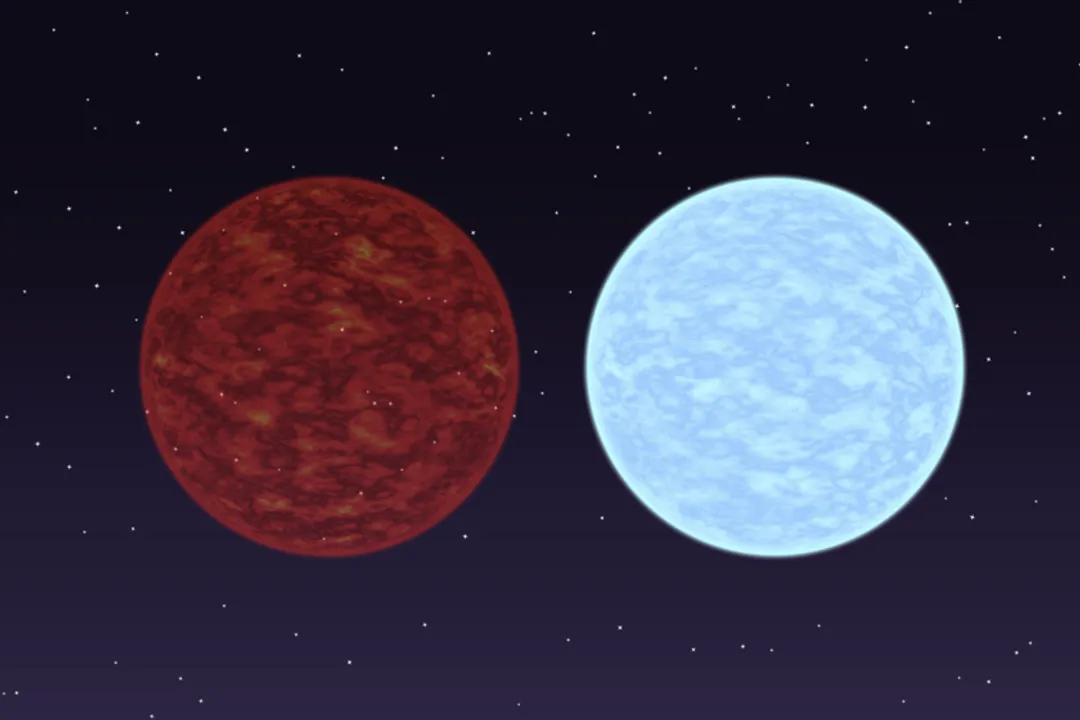
When any two bright celestial bodies, such as the Moon and a planet, appear very close to one another in the sky, astronomers refer to the event as a conjunction. [9] While Venus is the most common and brightest participant in these lunar conjunctions, other major planets can also create stunning pairings. [9] Depending on the time of year and the orbital configurations, Jupiter, Mars, or Saturn might be the bright 'star' shining next to the Moon. [9]
The commonality of these events makes them seem frequent, but it is essential to recognize the profound distance involved. When you see the Moon and Venus aligned, it is purely a matter of perspective from Earth. The Moon, our closest celestial neighbor, is only about 239,000 miles away, while Venus, even when closest, is millions of miles distant. [1] The alignment is merely an optical effect that brings them together in our line of sight. [1] To put this separation into context, if you consider the apparent angular distance between the Moon and the planet on the sky—perhaps just a few degrees—the actual separation between the two objects in three-dimensional space is immense, often measured in tens of millions of miles depending on where each object is in its orbit around the Sun. [1] This vast difference in scale is something that early sky watchers might have struggled to conceptualize, making the close pairing feel incredibly intimate and significant. [1]
# Planet Versus Star
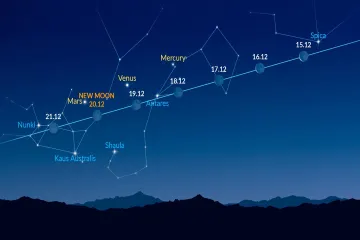
One fundamental difference between the bright object you see and a true star is how they behave visually. Stars emit their own light, which travels across unimaginable distances, causing the light rays reaching your eye to be slightly disturbed by Earth’s atmosphere. This disturbance causes the star to appear to twinkle. [5]
Planets, on the other hand, are much closer. While they reflect sunlight, their apparent size (even though they look like points without a telescope) is significantly larger than that of a distant star. [5] Because they present a small disk of light rather than a single, distant point source, the atmospheric disturbances tend to average out across the light disk. Therefore, the brilliant "star" near the Moon—if it is a planet like Venus, Jupiter, or Mars—will typically exhibit a steady, non-twinkling light. [5] If the object is steady and overwhelmingly bright compared to everything else nearby, you can be reasonably certain it is a solar system neighbor, not a distant sun. This simple visual check—observing for scintillation—is an accessible way for an amateur observer to confirm the identity of the celestial visitor. [5]
# Orbital Context
The specific planet sharing the sky with the Moon changes based on where the planet is in its year-long or multi-year cycle around the Sun. For instance, you might see Jupiter shining brightly near the Moon, but Jupiter will take about 12 Earth years to complete one orbit, so its position relative to the background stars is constantly shifting. [9] This celestial ballet means that the bright object you see this month may be entirely different next year, or it might simply have moved far away from the Moon's path for a while. [9]
When observing these conjunctions, it is also worth noting the visual quality of the light. Venus shines with a brilliant white or slightly yellowish light. [3] Mars, when it is close to Earth, will often display a distinct reddish-orange hue, making it easy to differentiate from the brighter, whiter Venus or the steady, often pale white light of Jupiter. [9] Saturn tends to be a dimmer, yellowish beacon compared to Venus, but still easily identifiable when positioned near the Moon. [9]
# The Rare Star
While planets dominate the show, it is technically possible for an intrinsically very bright star to appear near the Moon. Stars like Sirius or Canopus are exceptionally luminous, but even they would be noticeably dimmer than Venus at its peak brightness. [3] If you see a very bright object next to the Moon, and it is twinkling, it is a true star. However, the chances that a truly massive, bright star happens to cross paths closely with the Moon at the exact moment you are looking, resulting in a pairing as dramatic as one with Venus, are statistically much lower over any short period. [1][5] Generally, the dazzling, steady light associated with a Moon conjunction points to our planetary neighbors. Furthermore, if you notice an unusual phenomenon like a faint, pale halo or ring surrounding the Moon, that is an entirely separate atmospheric effect, usually caused by ice crystals high in the atmosphere, and unrelated to the bright body positioned nearby. [6]
For those interested in tracking these events, knowing the Moon’s path is helpful. The Moon travels along the ecliptic—the plane of Earth’s orbit around the Sun. Since all the major planets also orbit the Sun roughly within this same plane, they will all appear along this same celestial highway in the sky, making conjunctions with the Moon predictable, though the brightness of the planet involved will vary widely. [9] Keeping track of what's visible at a specific time of night, perhaps by consulting an astronomy app or a local sky chart for that specific date, can quickly confirm whether the object is Mars in the morning or Venus heading toward the western horizon after sunset. [5]
Related Questions
#Citations
Can anyone tell me why there is a single bright star next to moon ...
What is the star next to the Moon and why is it so bright? |
Why is Venus so bright in the night sky? - Cool Cosmos
What is the name of the star that is nearer to the moon we see every ...
What's that bright star by the moon? It's Venus! - EarthSky
What is the ring of light around the moon and which star seen near it?
The Brightest Stars Next to the Moon
A bright star, planet next to the moon. Here's what you saw ... - Yahoo
Bright “Star” Next to Moon: What Planet Is Near the Moon Tonight?