What is the bright star by Orion?
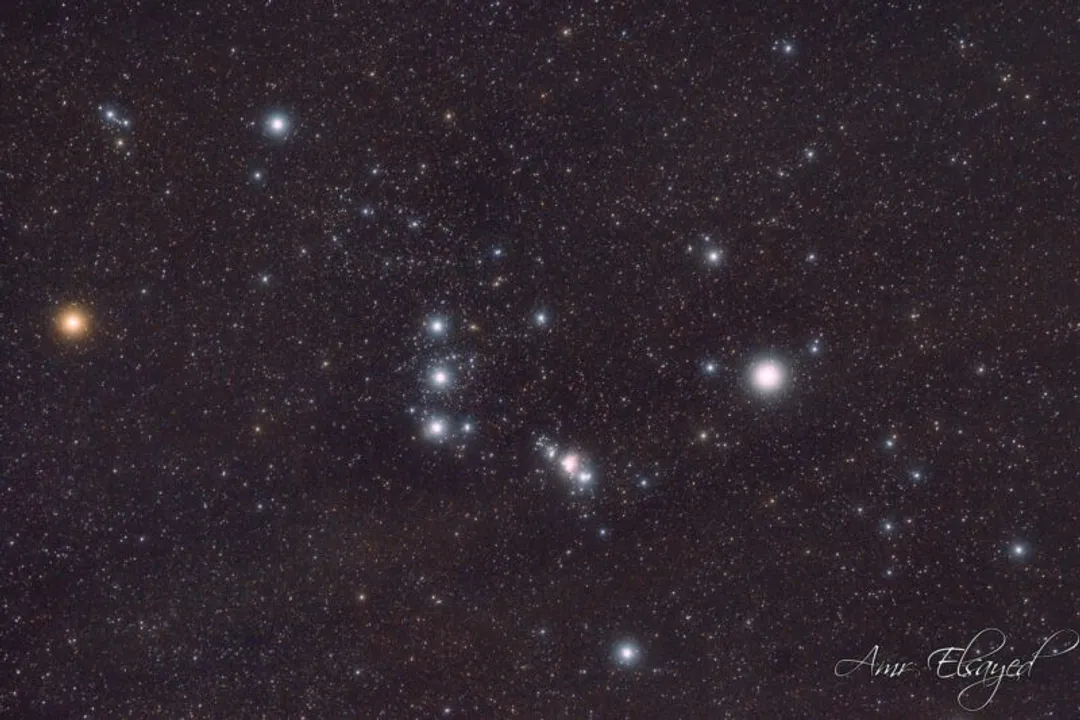
The constellation Orion stands out in the night sky, instantly recognizable even to novice stargazers, largely because of the brilliant stars that form the shape of the celestial hunter. When someone looks up and asks which star is the brightest one they see in that prominent shape, the answer points toward one of the celestial giant's feet: the magnificent star named Rigel.
# Rigel Brightness

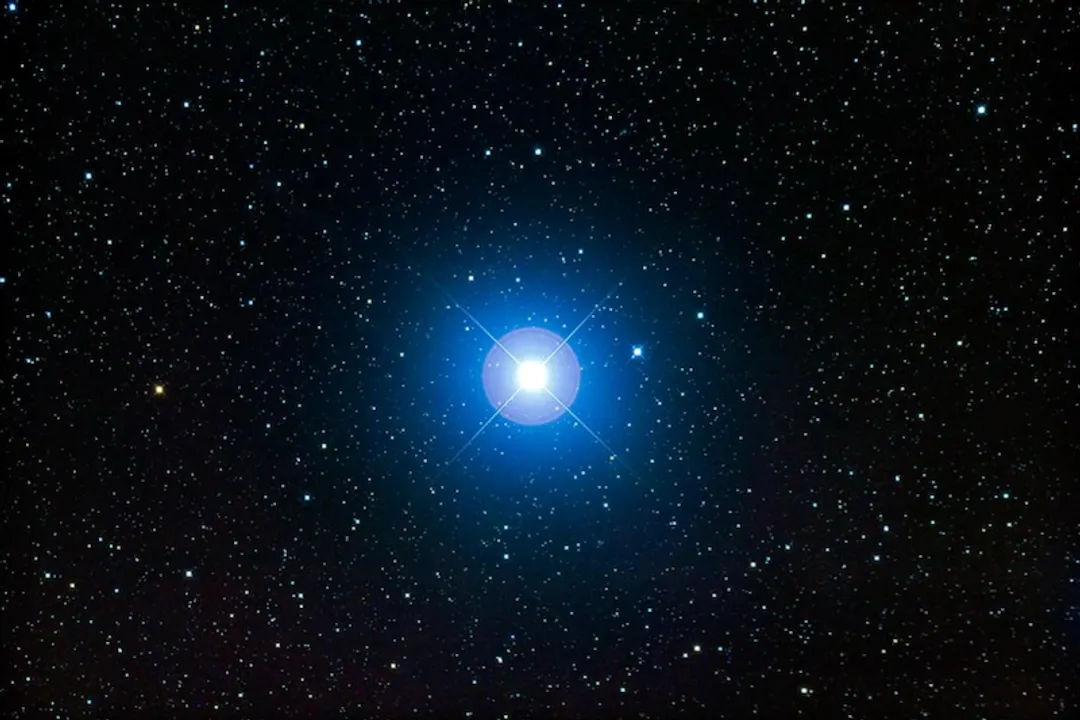
Rigel is undeniably the brightest star within the boundaries of the Orion constellation. Appearing as a brilliant blue-white beacon, it easily outshines the constellation's other major players, including the reddish star Betelgeuse. Astronomers classify Rigel with a visual magnitude of around $0.13$, placing it among the top ten brightest stars visible from Earth, typically ranking as the seventh brightest.
This stellar giant is classified as a B8 Ia supergiant. Its blue-white coloring comes from its very high surface temperature, a characteristic shared by massive, young stars. Being a supergiant means Rigel possesses immense intrinsic luminosity, shining with a staggering power thousands of times greater than our own Sun. Even though it is the brightest in its group, Rigel is significantly farther away than the other major stars in Orion, which contributes to its apparent magnitude being slightly lower than that of the brightest star visible overall, Sirius.
Thinking about stellar distances adds an interesting perspective. If Rigel were placed where Sirius is, our sky would be dramatically illuminated by its presence, dwarfing the current brightest star. Rigel’s current apparent brightness is achieved despite its vast distance, which speaks directly to its colossal actual output of light.
# Betelgeuse Contrast
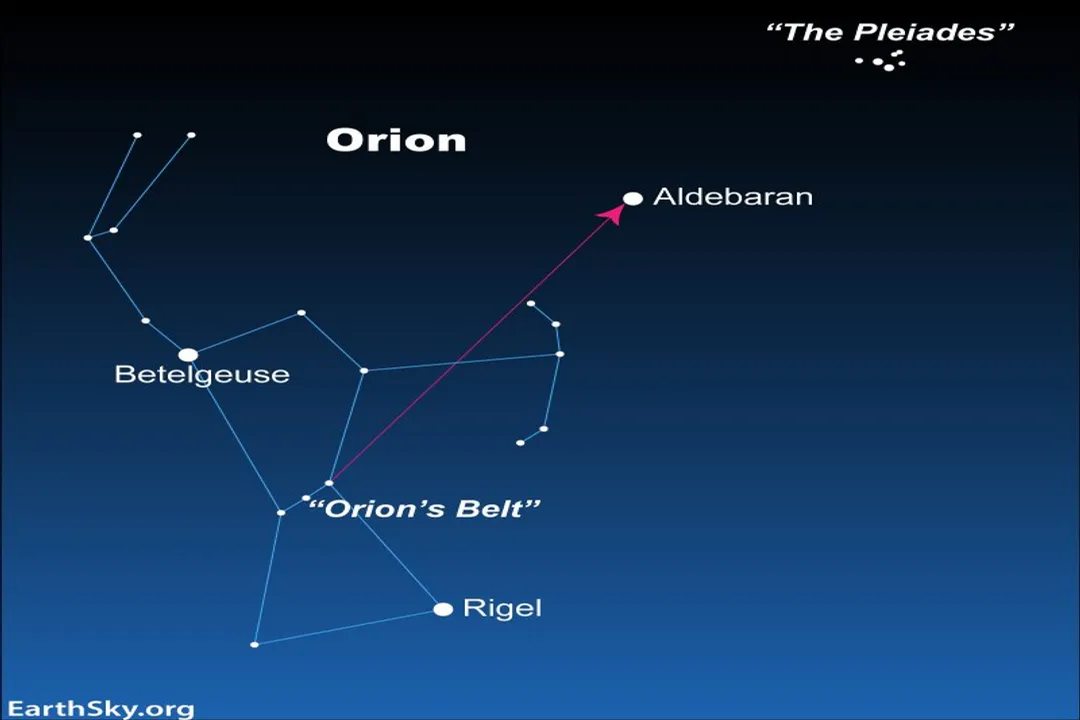
The constellation is famously framed by two blazing stars at its opposing corners: Rigel at the foot and the famous Betelgeuse at the shoulder. While Rigel dazzles with a cool blue-white light, Betelgeuse offers a distinct, warm, reddish hue. This difference in color immediately tells an observer something critical about the stars' stages of life; Betelgeuse is a red supergiant.
Red supergiants represent a later, aging phase in the evolution of massive stars, having exhausted the primary fuel in their cores and swelled to enormous sizes. Although Betelgeuse is visually dimmer than Rigel—its magnitude hovers around $0.5$ on average—it is intrinsically far larger, sometimes estimated to be much larger than Rigel in sheer physical volume. The difference in apparent brightness between the two is a beautiful illustration of how distance heavily influences what we see in the night sky.
# Belt Alignment
No discussion of Orion's brightest stars is complete without mentioning the famous Orion's Belt. This signature feature consists of three remarkably bright stars lined up in a nearly straight, short row. These three stars are known as Alnitak, Alnilam, and Mintaka.
These three stars are a stunning example of an asterism—a recognizable pattern of stars that isn't officially a constellation itself—within the larger constellation of Orion. They appear close together from our perspective on Earth, making them an excellent navigational guide. Interestingly, they are not physically close to each other in three-dimensional space; their alignment is simply a line of sight trick for us looking from a great distance.
Here is a quick summary of the key navigational stars in Orion:
| Star Name | Constellation Role | Color/Type Summary | Apparent Brightness |
|---|---|---|---|
| Rigel | Foot/Knee | Blue-White Supergiant | Brightest in Orion |
| Betelgeuse | Shoulder | Red Supergiant | Second brightest in Orion |
| Alnitak, Alnilam, Mintaka | The Belt | Hot Blue Stars | Form a distinctive line |
# Navigational Aids
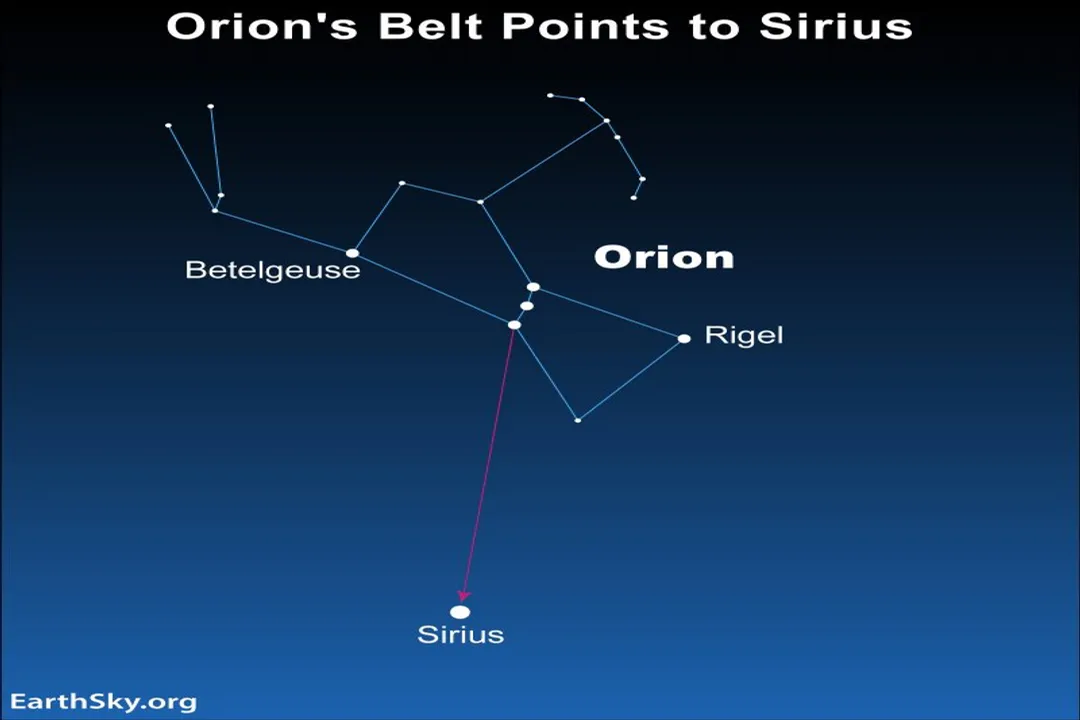
One of the most practical uses for Orion’s distinctive shape is its ability to point toward other significant celestial landmarks. The three stars that form the belt act as a celestial arrow, providing an easy reference for finding stars in neighboring constellations.
If you trace a line straight upward from the belt, following the direction toward the star Aldebaran, you will find yourself pointed toward the bright orange eye of the constellation Taurus, the Bull.
Conversely, drawing an imaginary line downward from the belt leads you on a direct path toward one of the most recognized stars in the entire sky: Sirius, the Dog Star. Sirius belongs to the constellation Canis Major and is famous for being the brightest star visible in the night sky overall. This simple geometric trick—extending the line of the belt—is a fantastic way for observers to locate Sirius even when Orion itself might be partially obscured or low on the horizon.
# Seasonal Observation
For observers in the Northern Hemisphere, Orion, with its brilliant stars like Rigel and Betelgeuse, is predominantly a winter constellation. This means that the best, highest views often occur during the coldest months, from roughly November through March. If you are searching for Rigel's striking blue-white light, planning your viewing session for the depths of winter offers the clearest perspective, as the constellation will be high overhead in the middle of the night, away from the atmospheric distortion that often affects stars near the horizon. This high placement helps minimize the twinkling effect and maximizes the clarity of the star colors, making the contrast between Rigel and Betelgeuse even more dramatic than when they hang low in the sky. Understanding the seasonal visibility helps maximize the experience of spotting these bright giants when they are at their most prominent.
# Visual Exploration
Beyond the major points, the constellation itself represents a rich area of the sky. Below the three stars of Orion’s Belt hangs the Orion Nebula, a famous cloud of gas and dust where new stars are actively forming. While the bright stars like Rigel draw the eye, looking through binoculars or a small telescope at that faint, fuzzy patch hanging from the belt reveals a nursery of stellar birth, adding depth to the view of the Hunter. Many viewers who initially sought only the brightness of Rigel end up spending the most time trying to resolve the details of the faint nebulae nearby, making the entire region a rewarding target for any stargazer.
#Videos
Bright Stars of Orion - Betelgeuse, Rigel, Bellatrix, Belt Stars
Rigel: The Brightest Star in Orion Constellation - YouTube
Related Questions
#Citations
Use Orion's Belt to find 4 bright stars in the sky - EarthSky
Bright Stars of Orion - Betelgeuse, Rigel, Bellatrix, Belt Stars
Orion (constellation) - Wikipedia
Why does Rigel (the brightest star in Orion) has a bayer designation ...
List of bright stars in Orion - TheSkyLive
The Three Bright Stars of the Hunter Orion's Belt is one of the most ...
What's The Brightest Star In The Night Sky? How To Find ... - Forbes