What is the bright star in the early morning western sky?
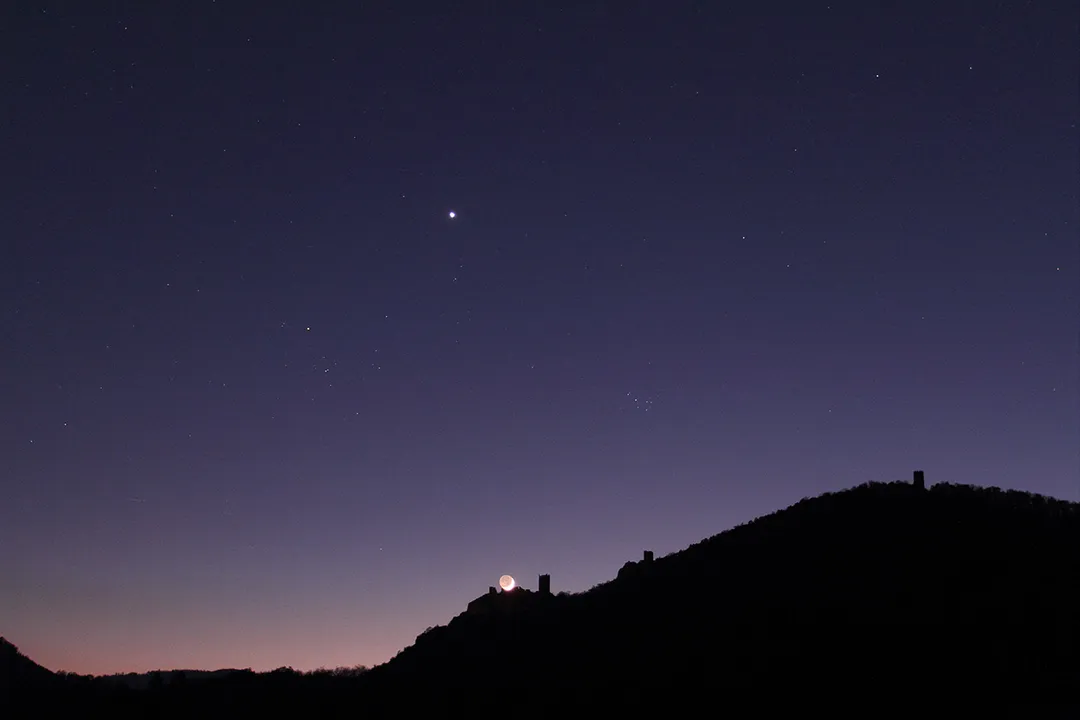
That brilliant, dazzling light seen low in the sky just before the sun rises often leads sky-watchers to assume they are looking at an exceptionally bright star. In nearly every case, the celestial body commanding that morning spotlight is actually the planet Venus. [3][4] It is easily the most conspicuous natural object in our night and morning skies, second only to the Moon itself. [8] The confusion is understandable; Venus outshines every true star by a significant margin, often appearing a striking silvery-white beacon that hangs steady against the darkening or lightening atmosphere. [8][9]
# Stellar Imposter
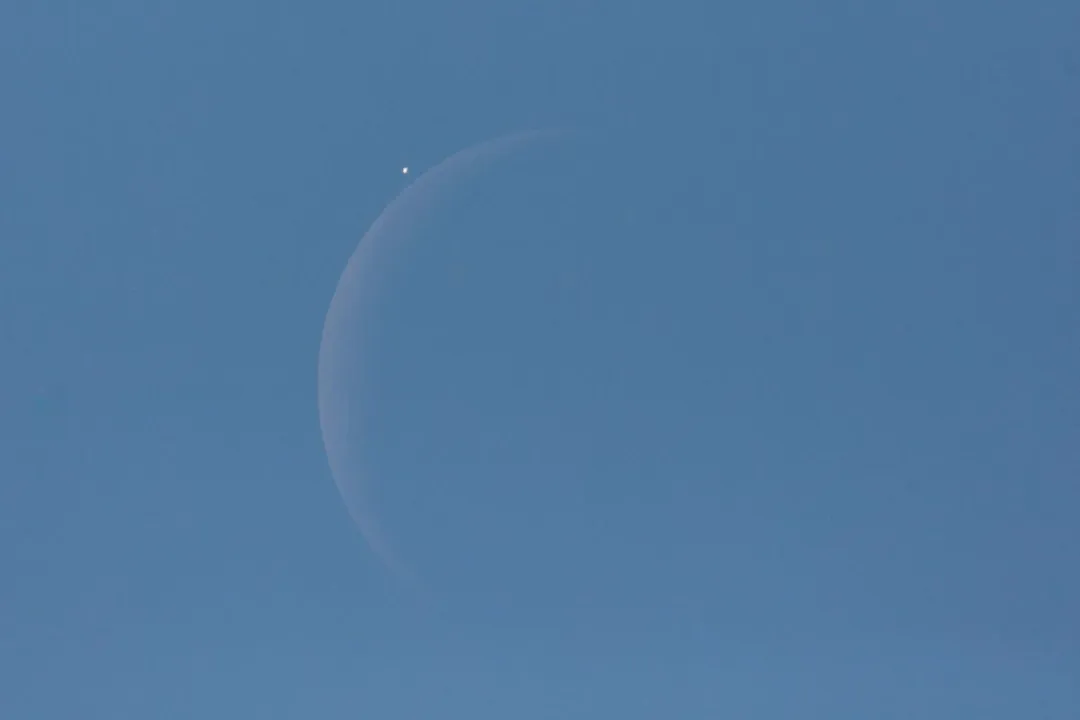
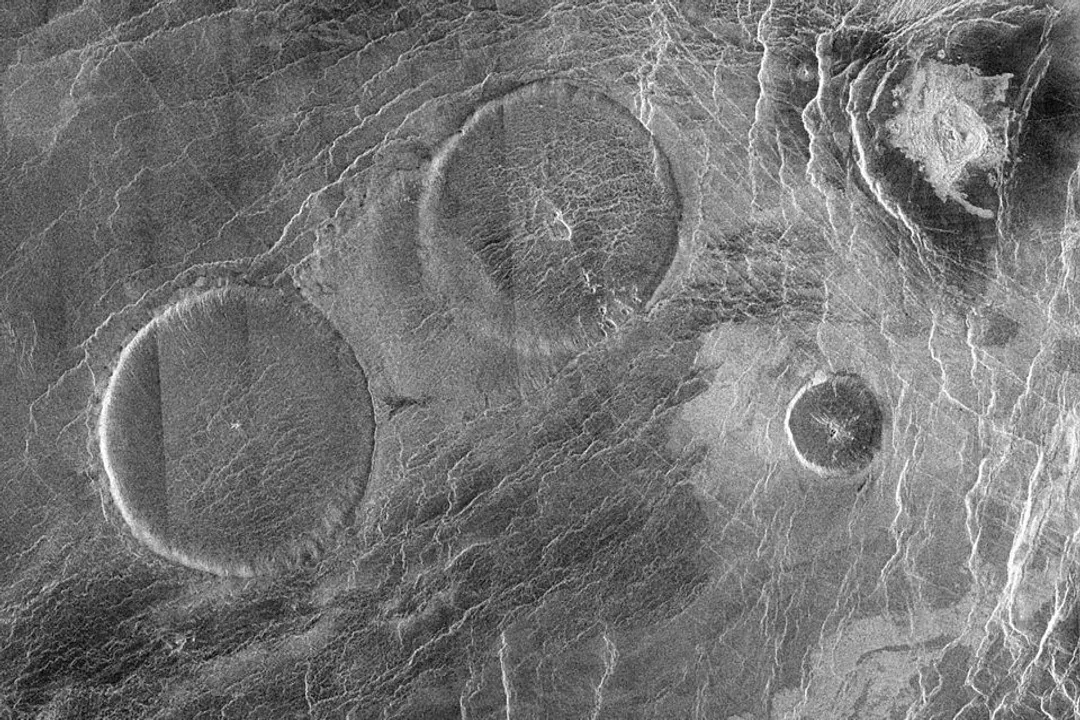
The key difference between what you are seeing and a genuine star lies in distance and composition. True stars are distant suns, massive balls of incandescent gas millions of times farther away than our own solar system's planets. [8] Venus, on the other hand, is a terrestrial planet, our nearest neighbor in orbit around the Sun, and its brightness stems from its proximity and its highly reflective clouds. [9] These clouds, composed mostly of sulfuric acid, act like a gigantic, curved mirror, bouncing back about 75% of the sunlight that strikes them. [9] This intense reflectivity is what causes its spectacular glow, making it an easy target even in the twilight hours. [8]
# Morning Visibility
Venus is famous for switching roles between the morning and evening hours, earning it the titles "Morning Star" and "Evening Star" throughout history. [7] When it appears before sunrise, it is serving as the Morning Star. [7] To see it in the early morning, observers must look towards the eastern horizon as dawn approaches. [7] The specific query about seeing this bright object in the early morning western sky points to a timing nuance. Typically, if you see Venus in the West, it is the Evening Star, visible just after sunset. [7] If you are observing before sunrise, any visible celestial object is positioned generally in the East, as the Sun rises in the East. A sighting in the West before dawn would likely mean you are looking for Venus very late in the night, or perhaps observing a planet that is setting just as the sky begins to lighten, which can cause directional confusion for casual observers depending on the time of year and location. [4]
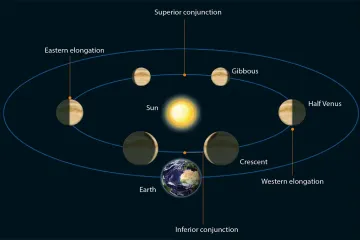
The planet's changing appearance depends entirely on its orbital position relative to Earth and the Sun. [7] When Venus is between the Earth and the Sun, we see its dark side, but it is closest to us, which can make it quite bright even when only a thin crescent is illuminated. Conversely, when it is on the far side of the Sun, we see it nearly fully illuminated but much farther away, resulting in a dimmer appearance. [7]
For instance, during an observation period in mid-December 2025, if Venus is following its typical cycle, it might be visible low in the east before dawn. If you see a bright object low in the West after sunset, you are seeing it as the Evening Star instead. [7] Understanding this cycle is crucial for prediction; if you spot it shining brilliantly in the morning, you know it is currently moving away from the Sun in the sky as seen from Earth. [7]
# Bright Planets Compared

While Venus dominates the morning sky when visible, other planets can also put on a respectable show, though none usually match Venus’s brilliance. [1] Jupiter is often the second-brightest planet, appearing as a steady, bright, yellowish-white light. [2] Mars, known for its distinct reddish hue, is often much fainter unless it is near opposition (when Earth passes between Mars and the Sun). [2] Saturn is typically a fainter, yellowish point, much less likely to be mistaken for the brightest morning beacon. [1] Mercury, being closest to the Sun, is only visible for short periods close to the horizon just before sunrise or just after sunset. [1]
If you are trying to confirm whether your bright morning object is Venus or Jupiter, remember this simple rule of thumb based on their comparative magnitudes: Venus can reach magnitudes as bright as $-4.9$, while Jupiter typically peaks around $-3.0$. [8] This difference of nearly two magnitudes means Venus shines over six times brighter than Jupiter at its brightest. [8] If your morning object seems intensely brilliant—so bright it almost hurts to look at—you are certainly observing Venus.
Considering the local environment plays a large role in visibility. If you live in a valley or near hills, your eastern horizon view might be obstructed, making Venus visible for a shorter duration or lower in the sky than someone with an unimpeded view across a flat plain. If you notice the brilliant object seems to disappear behind a distant ridge at 6:15 AM, while Jupiter remains visible until 6:45 AM, this variance is often due to the planet's differing elevation angle above the horizon at that specific moment, influenced by the observer's latitude. [3]
# Spotting Characteristics
Once you have identified the object as a planet rather than a star, you can use a few observational cues to be absolutely certain. The most reliable tell is the light itself. Stars, due to their immense distance, appear as point sources of light, and the twinkling effect we observe is caused by our atmosphere refracting that pinpoint light source as it travels through varying air densities. [3] Planets, being closer, appear as tiny disks—not points—to the naked eye. Even if you cannot resolve the disk, this proximity means their light is steadier and does not typically twinkle as much as a star's light. [3] A brilliant, unwavering glow in the early morning is almost certainly a planet. [3]
For those interested in tracking these visitors more systematically, using a dedicated sky-charting application on a smartphone or tablet can be incredibly helpful. [6] These tools use your device’s GPS and compass to show you exactly which celestial bodies are above the horizon at any given time. You can often input a specific date and time—like 6:00 AM on a particular day—and the app will overlay labels on the live view, identifying Venus, Jupiter, or any passing satellites, eliminating guesswork entirely. [6] This serves as an excellent cross-reference against the naked-eye observation that the object is not twinkling. [3]
Another interesting characteristic to note is the apparent speed of the planets relative to the background stars. While not visible in a single morning observation, if you track Venus over several weeks, you will notice it slowly shifts its position against the fixed backdrop of constellations. Stars maintain their precise pattern year after year; planets wander across the ecliptic plane, a direct consequence of their orbits within our solar system. [7] This slow, predictable drift confirms its planetary nature.
Related Questions
#Citations
Visible planets and night sky guide for December - EarthSky
The brightest planets in December's night sky: How to see them (and ...
What is the star that shines at 6am very bright. Is it a star or a planet?
What is that bright heavenly body in the morning sky?
What is the bright star/planet in the western sky? - Facebook
I've took a photo of these two things in the sky this morning ... - Reddit
Observing Venus, the Morning and Evening Star - Stelvision
Venus - Wikipedia
Why is Venus so bright? | Live Science