Why don't stars fall out of the sky?
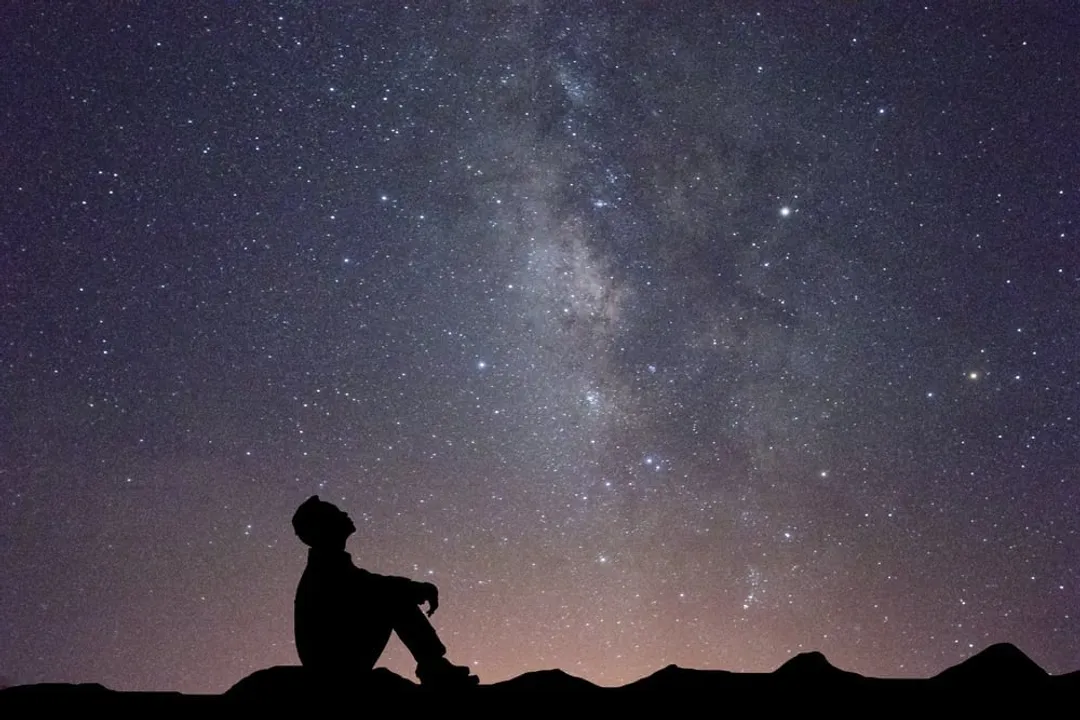
The notion that stars might suddenly detach from the heavens and drop toward Earth is a dramatic image, but it rests on a misunderstanding of cosmic mechanics and immense distance. When we look up on a clear night, the stars appear like fixed points of light, sometimes making the idea of them moving or falling seem counterintuitive. However, the universe is anything but static, and the reasons they remain in place are tied directly to gravity, velocity, and scale. [3][7]
# Cosmic Balance
The concept of objects "falling" in space is governed by the laws of motion and gravity, which apply universally, whether we are discussing a planet orbiting a star or two stars orbiting each other within a galaxy. [1] If an object is subject to the gravitational pull of another, it will fall toward it unless it possesses enough sideways motion, or tangential velocity, to continuously miss. [2]
For Earth, this means we are perpetually falling toward the Sun, but our speed is so great—about 67,000 miles per hour—that we constantly miss the Sun's center, resulting in a stable orbit. [2] This is the fundamental principle that keeps planets tethered to their stars. If the Earth suddenly slowed down significantly, gravity would win, and we would indeed spiral inward toward the Sun. This precise balancing act between gravitational attraction and orbital momentum dictates the stability of solar systems across the cosmos. [2]
When we extend this logic to the distant stars, we must consider that they are not just subject to the gravity of our Sun; they are subject to the gravity of everything else in the universe. Stars are massive objects themselves, meaning they are also engaged in complex gravitational dances with other stars in their immediate vicinity or within their galaxy. [7] The reason the Sun does not simply fall into a nearby star, or vice versa, is that the entire solar system is moving within the Milky Way galaxy, maintaining a stable, though constantly shifting, trajectory around the galactic center. [3] The idea of one star "falling" onto another is usually only a concern in extremely dense environments like globular clusters, not for the relatively sparse neighborhood surrounding our own Sun. [1]
# Distance Perception
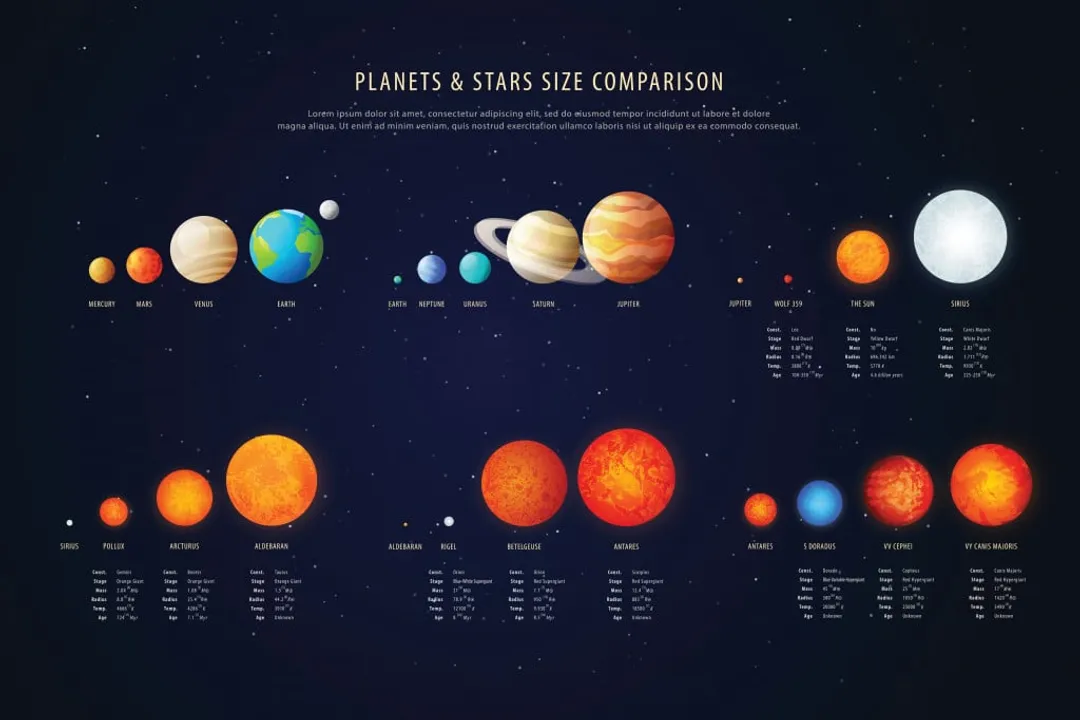
One of the primary reasons the question of falling stars arises is due to how we perceive their location. They seem stuck in fixed patterns we call constellations, leading to the assumption of immobility. [3][6]
The reality is that stars are unbelievably far away, and even the most colossal stellar movements are imperceptible to the naked eye over human timescales. [3] Stars are distant suns, similar to our own, burning fiercely due to nuclear fusion in their cores. [7] The nearest star system to us, Alpha Centauri, is over four light-years away, meaning the light we see left that star more than four years before it reached our eyes. [7]
Because of this immense separation, any slight shift in a star's position due to its actual movement through space takes an incredibly long time to register as a change in its position relative to other, farther background stars. [6] While stars are certainly not fixed in space—they orbit the galactic center just as we orbit the Sun—the relative motion between neighboring stars is only noticeable through precise astronomical measurements taken over decades or centuries. [3] For the casual observer, the pattern remains constant, leading to the visual impression of permanence. [6]
It is interesting to pause and consider the difference in frame of reference here. While we observe the night sky and note that the familiar shapes of the Big Dipper or Orion appear to stay put, this stability is entirely local to our solar system's immediate stellar vicinity. [3] The Sun itself is not stationary; it is barreling through space at an astonishing speed, estimated to be around 220 kilometers per second, as it completes its orbit around the Milky Way's center. [6] Therefore, the entire celestial panorama is in constant motion, even if the changes are too gradual for our eyes to perceive daily. [6] Our perception of "fixed" is merely an artifact of staggering distance combined with our very short lifespan relative to astronomical time. [3]
# Illusions of Descent
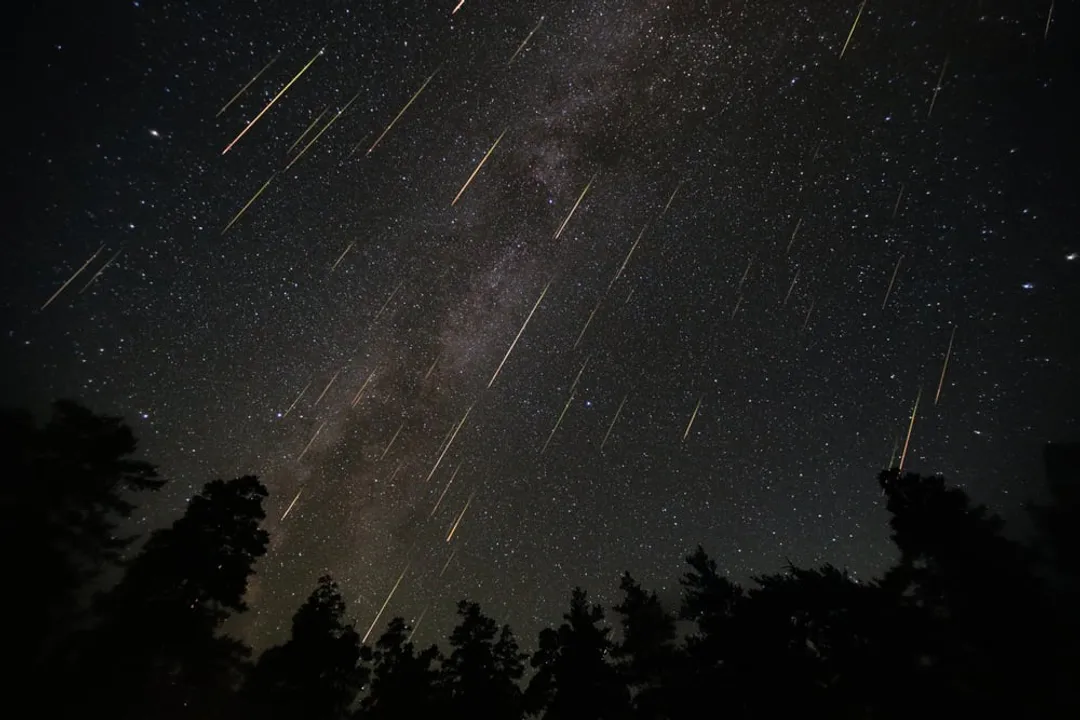
When people use the term "falling star," they are almost never referring to an actual star like Sirius or Polaris dropping out of the sky. What they are witnessing is a much smaller, localized phenomenon happening within our own atmosphere. [9]
The objects commonly called "falling stars" are actually meteors, which are tiny pieces of cosmic debris—meteoroids—that enter the Earth's atmosphere at high speed. [9][8] As these particles, often no larger than a grain of sand or a pebble, slam into the air molecules, the friction causes them to heat up intensely and vaporize, creating a bright streak of light across the sky. [9] This brief, brilliant flash is what we see, and because the object is moving rapidly downward relative to our vantage point, it appears to fall toward the horizon. [8]
A crucial distinction is size and location. A true star is a giant ball of plasma undergoing nuclear fusion, millions of times more massive than the Earth, and located light-years away. [7] A meteor, conversely, is a small, cold rock or dust particle located within our own planetary atmosphere, perhaps only 50 to 100 miles above our heads. [9] A meteor burns up entirely or fragments as it descends; it is not a star shedding mass. [8] If a real star were to "fall" close enough to be visible, the gravitational and thermal effects would result in catastrophic, world-ending events long before it appeared as a visible streak. [1]
# Trajectories Observed
The direction in which these atmospheric events appear to travel further highlights their difference from distant celestial bodies. Meteor showers, for example, are visible as streaks moving generally downward and outward from a specific point in the sky called the radiant. [8] This apparent convergence is a perspective effect, similar to how parallel railroad tracks appear to meet in the distance. The debris streams are traveling nearly parallel to each other, but because they are close to us and moving into our atmosphere, their path is perceived as falling toward the ground plane of the observer. [8] Stars, being overwhelmingly far away, do not exhibit this effect of convergence or a directional "fall" toward a local horizon. [3]
# The Nature of Starlight
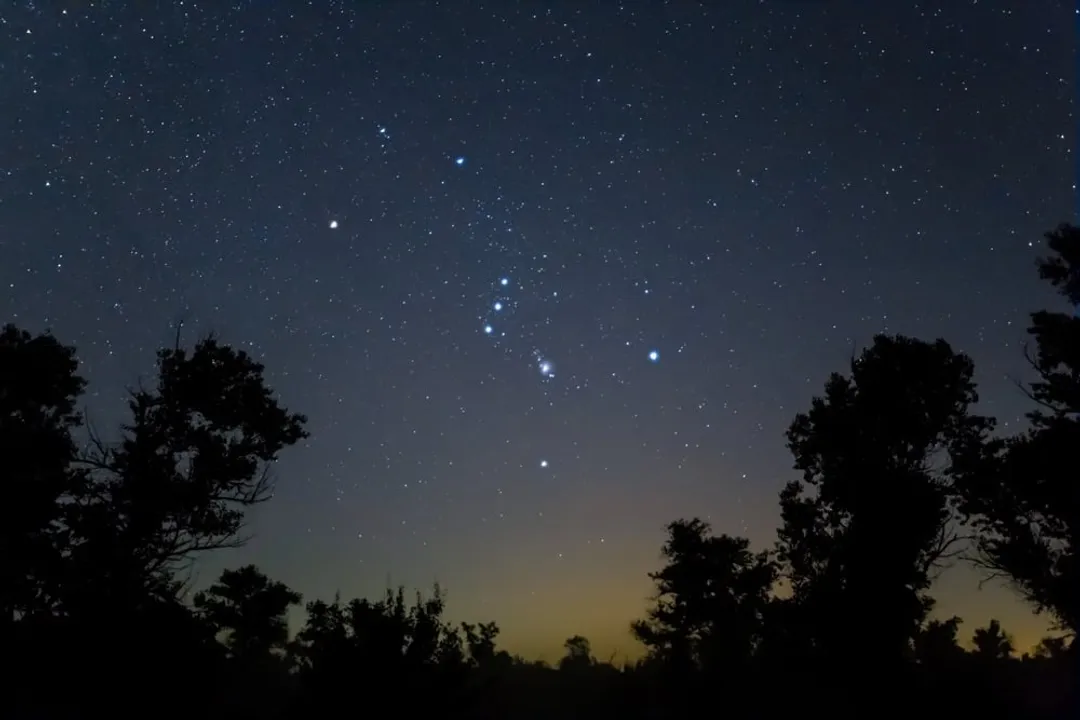
To fully appreciate why stars don't fall, it helps to remember what they are fundamentally. They are self-luminous bodies, essentially massive balls of hot gas generating energy through fusion, held together by their own gravity. [7] Our Sun is a good example, a G2V-type star that generates light and heat through hydrogen fusion into helium. [7]
When we view any star other than our Sun, we are looking at objects that are vastly larger and brighter, yet appear dim only because of the light-years separating us from them. [7] Because they are not orbiting us, but are part of the larger galactic structure, their "falling" would imply a collapse of that entire structure or an outside force strong enough to overcome the gravity of billions of other stars—a scenario well outside the known mechanics of our local stellar environment. [1][3] The forces keeping them in their positions are the same forces keeping us in ours: a precise cosmic balance of motion and attraction on a galactic scale. [2]
#Videos
Objects Fall from Space Where There Is No Gravity, Here's Why
Related Questions
#Citations
Why don't stars fall on Earth? - Quora
ELI5: Why do planets orbit the stars and not get dragged into them?
Why are all the stars fixed in space? - West Texas A&M University
Why don't planets, stars, and everything else just fall and keep ...
Objects Fall from Space Where There Is No Gravity, Here's Why
Stars - Imagine the Universe! - NASA
Why can falling stars only be seen moving down towards horizon not ...
Is A Falling Star Really A Star? - ScienceABC