Why is the sky dark at night with all these stars and galaxies?
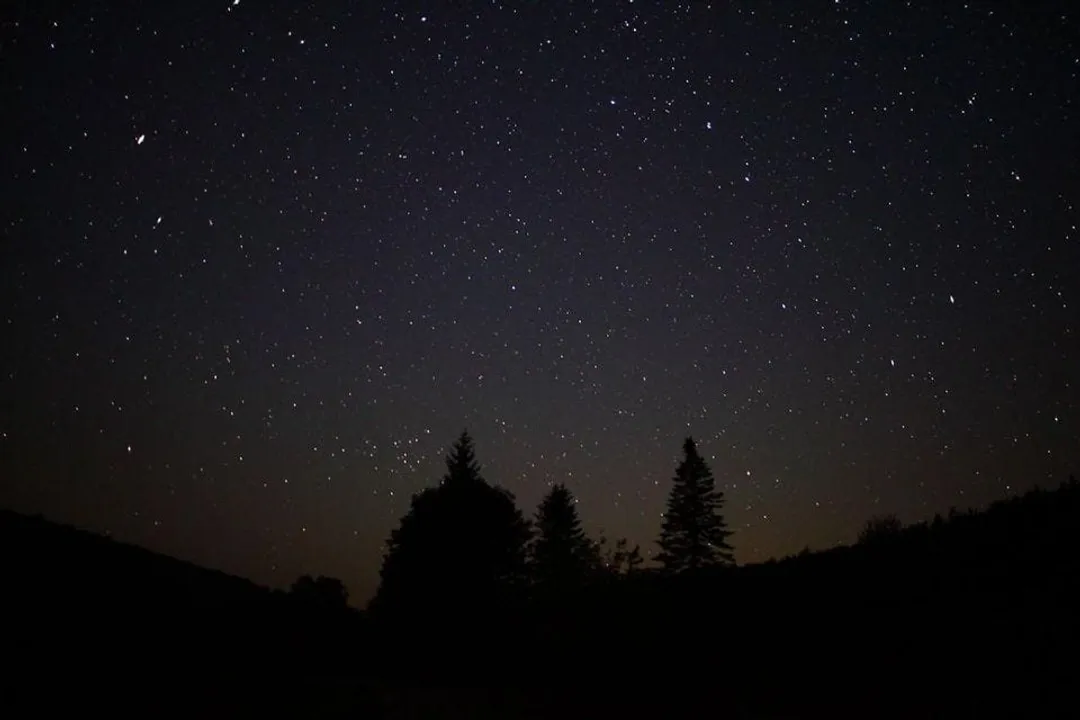
The night sky appears profoundly, almost unsettlingly, dark. Given that our galaxy alone contains hundreds of billions of stars, and there are estimated to be trillions of galaxies sprinkled across the observable cosmos, this darkness presents a major contradiction. [3][4] If the universe were endless in size and eternal in age, then every single line of sight from Earth should eventually land on the surface of some star. In such a scenario, the entire celestial sphere should blaze with uniform, overwhelming light, matching the brightness of the Sun's surface itself. [1]
# Olbers' Paradox
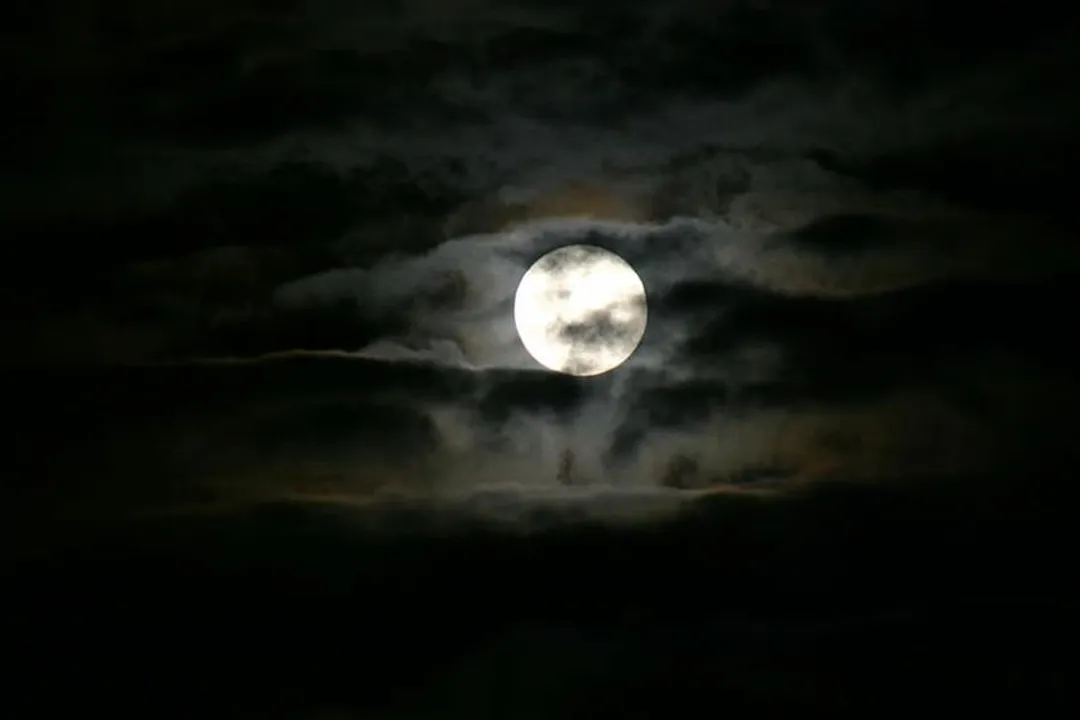
This stark conflict between expectation and observation is famously known as Olbers' Paradox, named after the German astronomer Heinrich Wilhelm Olbers, although the core concept had been discussed by others before him. [1] The paradox isn't just a minor astronomical curiosity; it touches upon the fundamental nature of space and time itself. If the geometry of the universe were simple—an infinite, static field of stars—the darkness we see would be impossible. [1][5]
For centuries, early thinkers tried to resolve this issue with explanations that ultimately fell short. One common suggestion involved interstellar dust absorbing the light from distant stars. [1] However, this solution proved temporary. Over vast stretches of time, that intervening dust would absorb so much energy that it would eventually heat up and start glowing with its own radiation, radiating energy across the spectrum just as brightly as the stars themselves. [1] The dark sky would simply be glowing dimly with the light of heated dust, not truly dark. This line of reasoning suggested that the problem wasn't about absorption but something more fundamental about the universe's structure.
# Finite Time
The true answer to the paradox lies in understanding that the universe is neither static nor infinitely old. [5] Modern cosmology, rooted in the Big Bang theory, establishes that the universe began approximately 13.8 billion years ago. [1] This finite age is the most crucial element in solving the puzzle. [3]
Since the universe has a definite age, the light from the most distant objects has simply not had enough time to reach us yet. [1] Imagine a massive, bright city stretching infinitely in every direction, but it only turned on its lights one hour ago. Even if the city is truly infinite, the light from galaxies beyond a one-hour travel distance wouldn't be visible yet. Our observable sky is defined by this time limit. [1] The light we see from distant objects represents a snapshot of the universe as it was when that light began its trip, perhaps billions of years in the past. [4]
If you consider a sphere centered on Earth with a radius equal to the distance light could have traveled in $13.8$ billion years, this sphere defines the limit of what we can currently observe. Light from anything outside this boundary is still en route to us. [1] This creates a boundary known as the cosmic horizon. [1]
# Stretching Light
Even for the light that has reached us, we must account for the continuous expansion of the universe. [5] This expansion stretches the fabric of space itself as photons travel across it. [1]
This stretching causes the wavelength of the light to increase, shifting it toward the red end of the spectrum—a phenomenon called cosmological redshift. [1][5] The farther away an object is, the faster it appears to be receding due to this expansion, and the greater the redshift applied to its light. [5] Light from the most ancient and distant sources has been stretched so severely that its wavelength now falls far outside the range visible to the human eye. [1] Visible light becomes infrared light, and infrared light becomes microwave radiation. [5]
While the universe is incredibly bright across all wavelengths, our eyes are only sensitive to a narrow band of the electromagnetic spectrum. [2] The vast majority of the energy streaming toward us from the farthest reaches of space is invisible, rendered silent to our senses by the expansion of space itself. [1][5] If we could see in infrared or microwave frequencies, the sky would look dramatically different, filled with this ancient glow—the Cosmic Microwave Background (CMB)—but even then, it wouldn't be as bright as the Sun's surface because that light is significantly diluted and redshifted compared to the light from nearby stars. [1]
# Observable Limits
The combination of the universe's finite age and its expansion defines the observable universe. [1] This boundary is not a physical wall, but a limit on information transfer across time and space. [4]
We can conceptualize the brightness contribution based on distance using the inverse-square law, which states that the apparent brightness of a light source decreases with the square of the distance (). [4] However, in an infinite, static universe, the number of stars increases proportionally with the volume (), perfectly counteracting the dimming effect of distance, leading back to the paradox. [1] The modern resolution bypasses this mathematical cancellation by introducing the time variable: we don't have infinite volume filled with light sources because we haven't had infinite time to see them. [1][5]
It is interesting to consider what the night sky might look like if the universe were far older, say $100$ billion years old, but still expanding at the current rate. In that hypothetical case, the darkness would recede slightly as more distant light reached us, but the dominant factor—redshift—would become even more powerful. Light from objects at the farthest receding boundaries would be so redshifted that they would become utterly invisible to optical telescopes, possibly even to infrared ones, rendering the darkness persistent, though the reason for that darkness would be even more extreme stretching of wavelengths. [1]
The fact that the sky is dark provides some of the strongest evidence we have for the Big Bang model. It confirms that the universe is evolving and had a beginning, rather than being an infinite, unchanging background for stars. [5]
# Comparing Faintness
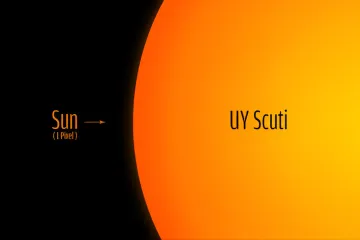
When we look up, we are seeing a mix of nearby, bright, young stars (like those in our Milky Way) and incredibly distant, ancient galaxies whose light has traveled for billions of years. [3][4] The stars in our own galaxy, for instance, are near enough that their light is relatively undiluted by time and expansion, contributing to the faint glow of the Milky Way band across the sky. [4]
The reason the light from distant galaxies doesn't completely fill the gaps between visible stars is because the light from those farther ones is heavily attenuated by redshift, pushing it into non-visible ranges, combined with the simple fact that we haven't received light from anything further away than the age of the universe permits. [1][5] If you charted the energy input from all sources—visible, infrared, radio—the total sky brightness would be relatively low because the energy of the light waves that have arrived is much lower due to stretching than the energy of the light waves that would arrive in a static universe. [2]
For general observation, it helps to remember this simple calculation: the speed of light, approximately $300,000$ kilometers per second, means that in $13.8$ billion years, light has traversed a maximum distance (ignoring expansion dynamics for a simplified measure) of about meters. [3] Any star or galaxy beyond that sphere, however bright it may be, simply hasn't had time to illuminate our present moment. [1]
# Looking Ahead
While the primary explanation involves the age and expansion of the universe, the darkness also offers a clue about our place in the cosmic structure. We live in a relatively quiet neighborhood compared to the theoretical average brightness predicted by an infinite, non-expanding universe. [1] The night sky, therefore, acts as a continuous, silent confirmation that the cosmos is dynamic, expanding, and young on a grand scale. [5] It is a shadow cast by time itself, reminding us that looking deep into space is synonymous with looking deep into the past. [4]
#Videos
Why is the Night Sky Dark? | Neil deGrasse Tyson Explains...
Related Questions
#Citations
Olbers' paradox - Wikipedia
Why is so much of the night sky dark, even when there are so many ...
Why Is The Sky Dark At Night? - Medium
Why is the sky black despite the presence of trillions of galaxies ...
Why is the sky dark at night? [duplicate] - Physics Stack Exchange
Why is the Night Sky Dark? | Neil deGrasse Tyson Explains...
What causes space and the night sky to appear dark - Britannica
SCIplanet - Why is the Sky Dark at Night?
Why is the night sky black with so many stars? - Facebook