Where are the oldest stars in the galaxy mostly found?
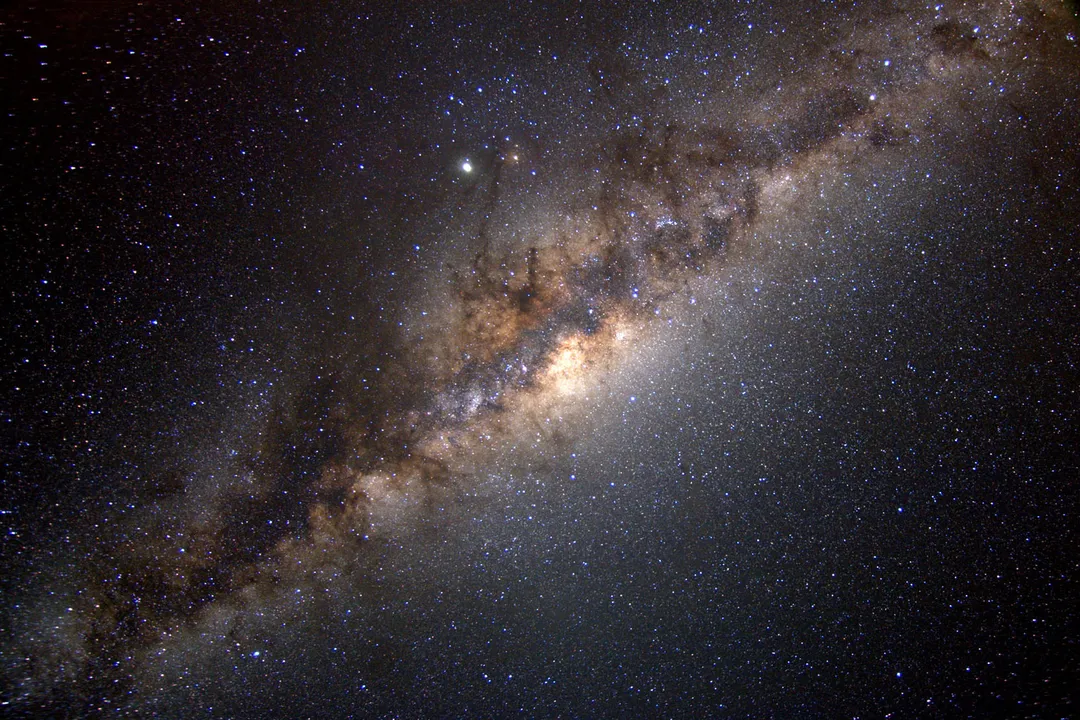
The search for the oldest light in our Milky Way galaxy leads astronomers to specific, ancient neighborhoods scattered across the vast stellar metropolis. These stellar fossils, the direct descendants of the universe's earliest material, offer a crucial window into cosmic history, revealing the conditions that existed when the galaxy itself was just beginning to take shape. While the Milky Way is a dynamic place of ongoing star formation, the most venerable stars tend to reside far from the swirling, gas-rich spiral arms where younger, hotter stars are born. [8]
# Where Stars Rest
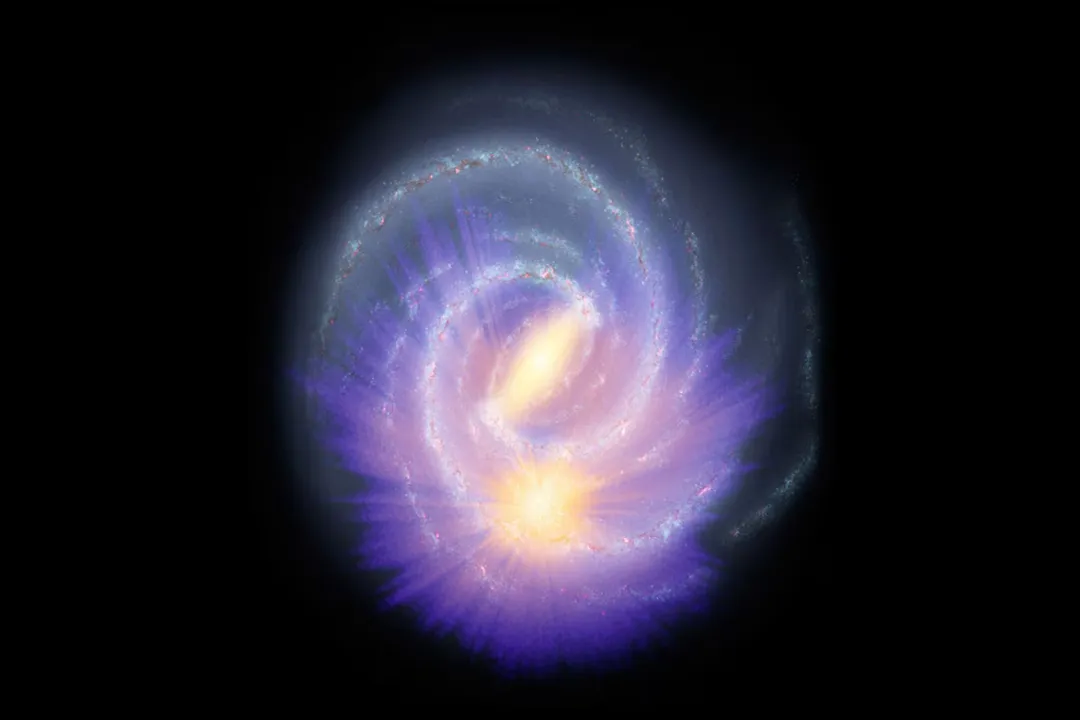
The distribution of the Milky Way’s stellar population is far from uniform when sorting by age. Generally, the oldest stars are concentrated in two main structural components: the Galactic Bulge and the Galactic Halo, with the most pristine examples often found within Globular Clusters. [3][8][10] These structures represent earlier phases of galactic formation compared to the thin disk where our Sun resides, which is younger and more metal-rich.
The Galactic Bulge, the dense, spheroidal structure at the heart of the galaxy, is home to a significant population of aging stars. [3] These stars formed relatively early in the Milky Way’s life, though perhaps slightly later than those found in the halo, as the central region continued to accumulate material and undergo intense gravitational interactions.
The Halo, on the other hand, is a much more sparsely populated, roughly spherical volume that surrounds the entire disk and bulge of the galaxy. [3] This region is considered the reservoir for some of the very first stars that formed in the Milky Way’s deep past.
# Ancient Clusters
Among the most famous locales for ancient stars are the globular clusters. [8][10] These are tightly bound, spherical collections containing hundreds of thousands, or even millions, of stars. [10] They orbit the galactic center at a distance, often tracing paths through the halo. [3] A key characteristic that marks these stars as ancient is their low metallicity—meaning they contain very few elements heavier than hydrogen and helium—because they formed before those heavier elements were forged and dispersed by successive generations of massive stars. [8]
Globular clusters are thought to have formed very early, possibly even before the main structure of the Milky Way assembled, meaning some might be relics of the galaxy's progenitor structures. [8] Because they are so densely packed, their shared origin makes them excellent laboratories for studying the earliest stellar populations simultaneously. [10]
# Halo's Reach
The Galactic Halo is where the most metal-poor and therefore, arguably, the oldest individual stars are often found, separate from the organized density of a cluster. [8] These stars represent the initial population that seeded the galaxy. Their orbits are typically highly elongated and inclined relative to the flat plane of the disk. [3] The very oldest stars in the universe are thought to have formed within the first billion years after the Big Bang, and the halo is the best place to find these surviving relics, dating back to that epoch. [8]
# Nearby Discoveries
While tradition suggests the oldest stars hide in the distant reaches of the halo or deep within globular clusters, recent, high-precision surveys have revealed an astonishing reality: some of the universe's most ancient stars are practically in our cosmic backyard. [2][7] Researchers at MIT, utilizing data from the European Space Agency’s Gaia mission, have pinpointed three stars that rank among the oldest ever identified in the entire universe. [2][4][5][7]
These three particular stars are estimated to be over 12 billion years old. [7] To put that into perspective, the universe itself is approximately 13.8 billion years old, meaning these stellar relics began shining when the cosmos was less than a billion years old. [7] What makes this finding particularly noteworthy is their location—they are relatively close to us, situated in what is sometimes referred to as the galactic backyard. [2][7] They were found orbiting near the Sun, specifically toward the constellation Cetus. [2][7]
The use of the Gaia spacecraft data was critical here. [2][4] Gaia maps the precise positions, distances, and motions of billions of stars with unprecedented accuracy. This allowed the MIT team to look past the immediate neighborhood and find these faint, chemically primitive stars whose distances could finally be pinned down accurately, separating them from other, less ancient stellar neighbors. [2][4]
It is fascinating to consider that while we expect to find such ancient stars in the most distant, sparsely populated regions of the halo, these three titans of stellar antiquity are orbiting relatively nearby. [2][7] This suggests that the immediate solar neighborhood is not entirely composed of second- or third-generation stars, but also contains a scattering of the original galactic material that has been orbiting silently for eons. [7]
# Age Mapping
To better appreciate the spatial segregation of stellar ages, one can visualize the galaxy's main components and their typical stellar content.
| Galactic Component | General Stellar Age | Typical Star Density | Metallicity Level |
|---|---|---|---|
| Thin Disk | Young to Intermediate | High | High (Metal-rich) |
| Thick Disk | Intermediate to Old | Medium | Medium |
| Bulge | Old | Very High | Medium to High |
| Halo | Very Old | Low (Sparsely populated) | Very Low (Metal-poor) |
| Globular Clusters | Extremely Old | Very High (Within the cluster) | Very Low (Metal-poor) |
| [Source synthesis based on general astronomical context implied by sources like ^3 and ^8] |
The general trend points toward the outer regions (Halo) and the central core (Bulge) holding the oldest populations, whereas the main plane of the galaxy, where the spiral arms are, is dominated by younger stars. [3] If a star has very few heavy elements, its location likely traces a path back to the galaxy’s earliest formation stages. [8]
One interesting implication arising from the proximity of these newly discovered 12-billion-year-old stars is how it challenges simple models of stellar migration. We often think of the halo as a static collection of primordial objects, but the fact that stars with such ancient origins are found relatively close to us, within a few thousand light-years, suggests a more complex gravitational history. These stars have clearly maintained stable, or at least non-disruptive, orbits close to the Sun's location over billions of years, or perhaps they were part of a structure that merged with the Milky Way long ago and settled into the local environment. [2][7] Their presence implies that the local galactic backyard is a mixture of ancient fossils and relatively younger neighbors, rather than a uniform population formed only recently from recycled gas in the disk. [2]
Furthermore, while globular clusters are famously old, the sheer number of stars in the central bulge means that most of the galaxy's total mass of ancient stars might actually reside there simply due to the density, even if the oldest individual stars are statistically more likely to be found in the halo. [3] This distinction between 'oldest population' (age) and 'greatest quantity of old stars' (mass/density) is important for understanding galactic chemical evolution. If the bulge formed rapidly and early, it would contain a huge reservoir of metal-poor stars that haven't been as dynamically stripped or dispersed as those that wandered off into the halo. [3]
# Methodology for Finding Antiquity
Pinpointing a star’s age isn't as straightforward as measuring its distance. Astronomers rely on studying the star’s chemical composition, often referred to as its metallicity. [8] Since the first generation of stars contained almost no heavy elements, a star with extremely low metallicity is a strong candidate for being one of the galaxy’s originals. [8]
The process involves:
- Spectroscopic Analysis: Breaking down the star’s light to determine the abundance of various elements. [8]
- Positional Data: Using missions like Gaia to precisely map the star's location and orbital path. [2][4]
- Age Modeling: Comparing the metallicity and kinematics (motion) against models of galactic formation to estimate an age. [8]
In the case of the three recently discovered ancient stars, the researchers were able to look far beyond just basic brightness and color to establish their extreme age through detailed spectroscopic follow-up after Gaia provided the initial candidates. [2][7] This combination of wide-field survey data and deep, targeted follow-up is how astronomers are rewriting the map of the galaxy's oldest inhabitants. [4]
The locations—halo, bulge, and clusters—all share the common thread of being dynamically older environments, meaning they experienced star formation during the galaxy’s infancy or were assembled from pristine clumps of matter that collapsed before the main disk settled into its current form. [3][10] The search continues, driven by new instruments capable of looking deeper and with higher precision into these dark, ancient corners of our galactic home. [6]
Related Questions
#Citations
Where are the oldest stars in the galaxy mostly found? A. In ... - Brainly
MIT researchers discover the universe's oldest stars in our own ...
Flexi answers - Which part of the Milky Way contains the oldest stars?
Found: Oldest known stars in our galaxy - National Geographic
MIT team discover three of the oldest stars in the universe
Discovery of the Universe's Oldest Stars in the Milky Way Galaxy
Three of the universe's oldest stars have just been identified - WGBH
These Ancient Stars May Be the Oldest Ever Seen in the Milky Way
Some of the oldest stars were found in our galaxy
Question about globular clusters having some of the oldest stars in ...