What is a galaxy made up of gas, dust, and stars?
Galaxies are vast, gravitationally bound systems composed of stars, stellar remnants, interstellar gas, dust, and an important, though invisible, component called dark matter. [2][7] At its most fundamental, the answer to what a galaxy is made of lies in this mixture of luminous objects and the raw materials from which they formed and will continue to form. [1] Think of it as a gigantic, self-contained city where the bright lights are the stars, and the nebulous regions of gas and dust are the construction sites and the surrounding atmosphere—all held together by an invisible gravitational scaffolding. [5]
These cosmic island universes vary dramatically in size, ranging from dwarf galaxies containing a few million stars to massive systems boasting trillions. [7] Our own home, the Milky Way, is a substantial example, containing somewhere between 100 billion and 400 billion stars, alongside copious amounts of gas and dust distributed throughout its structure. [6][8] To truly grasp the nature of a galaxy, we must examine these components individually and then consider how their interplay defines the galaxy’s overall appearance and life cycle.
# Stars Gathering
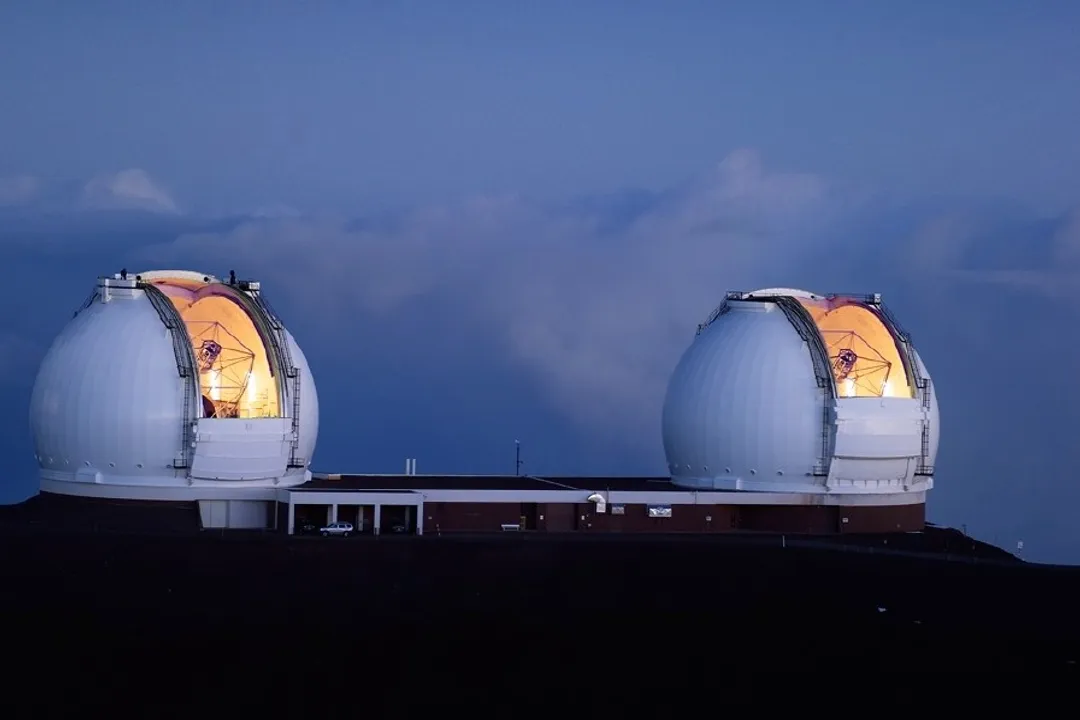
The most immediate and recognizable feature of any galaxy is its collection of stars. [1] These are massive, luminous spheres of plasma, held together by their own gravity, which generate energy through nuclear fusion in their cores. [3] Stars are the primary source of light that allows us to observe galaxies across the immense distances of space. [7]
Stars are not uniform; they exist in various stages of life, leading to a wide spectrum of colors and sizes. [4] The brightest and hottest stars appear blue or white, while cooler, older stars often glow red. [4] The Sun, our own star, is classified as a G-type main-sequence star, relatively average in size and temperature compared to the behemoths and the faint dwarfs found elsewhere. [5] Within a galaxy, stars are organized into patterns—sometimes clustered tightly, sometimes spread thinly across vast halos. [6] The combined gravitational influence of all these stellar masses contributes significantly to the overall structure, dictating how the entire system rotates and evolves. [2]
# Gas Dust
While stars provide the light, the gas and dust components are perhaps more crucial for the future of the galaxy, as they represent the recycled material from past stellar generations and the birthplace of new ones. [1][3] This material existing between the stars within a galaxy is collectively known as the Interstellar Medium (ISM). [3][5]
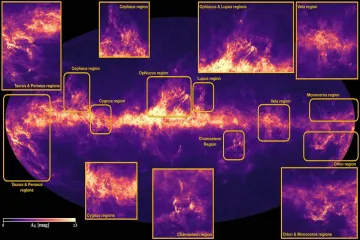
The ISM is not empty space; it is a highly complex environment, though its density is extraordinarily low compared to anything we experience on Earth. [3]
# Gas Content
The gaseous component of the ISM is overwhelmingly dominated by the two lightest elements: hydrogen and helium. [3][5] This gas exists in several states:
- Hot, Ionized Gas: Extremely hot gas, often found outside the main disk, which glows faintly in X-rays.
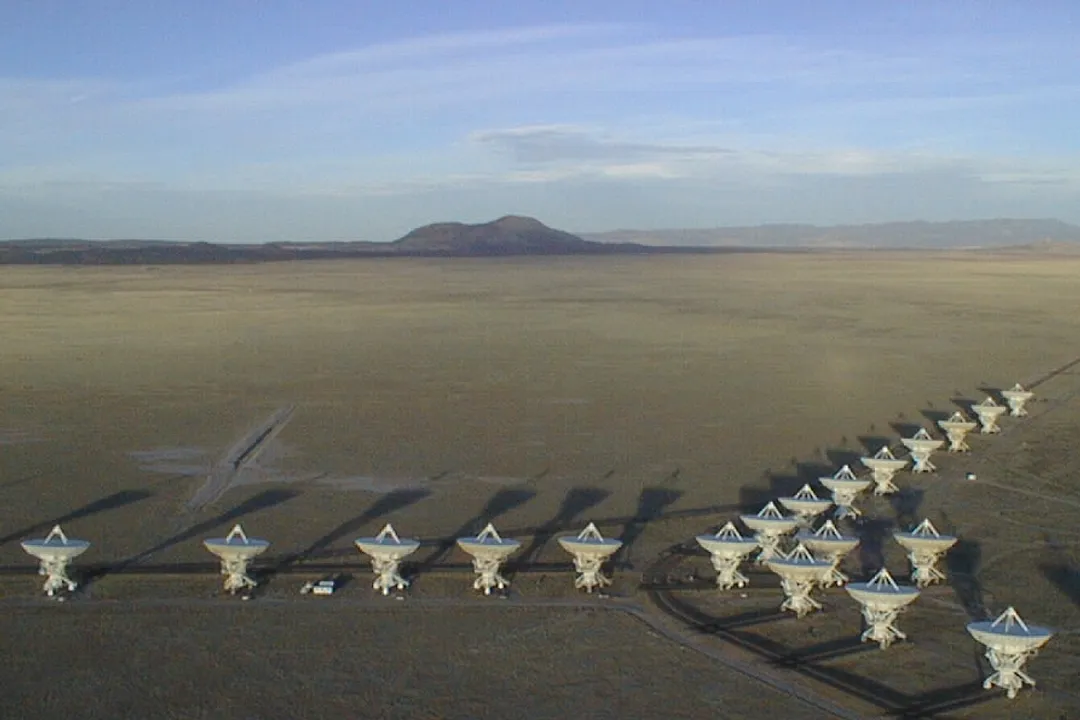
- Warm, Neutral Gas: This is widespread throughout the galaxy and can be mapped using radio telescopes.
- Cold, Molecular Clouds: These are the densest and coolest regions, often appearing as dark patches against brighter background light. [1][3] These molecular clouds are the literal nurseries where gravity begins to pull together clumps of gas and dust, eventually collapsing to ignite nuclear fusion and form new stars. [3][7]
# Dust Component
Interstellar dust is the second major part of the ISM. These particles are microscopic—much smaller than grains of sand—but they are chemically significant. [3] They are primarily composed of heavier elements forged inside older, dying stars, such as silicates and carbon compounds. [3]
The dust serves two main functions in galactic observation. First, it absorbs and scatters visible light, meaning dense dust lanes can completely obscure the view of stars lying behind them. [1][3] This obscuration is often why the central plane of a spiral galaxy appears as a dark, dusty lane when viewed edge-on. Second, this dust re-radiates the absorbed energy at longer, infrared wavelengths, which is why observatories like the James Webb Space Telescope are exceptionally well-suited for peering through dusty stellar nurseries to witness the birth process. [3]
When we consider the total mass budget of a typical galaxy, it is insightful to note that while the stars dominate the visible light spectrum, the collective mass of the gas and dust, combined with dark matter, often far outweighs the mass contributed by the visible stars. [2]
# Shapes Forms
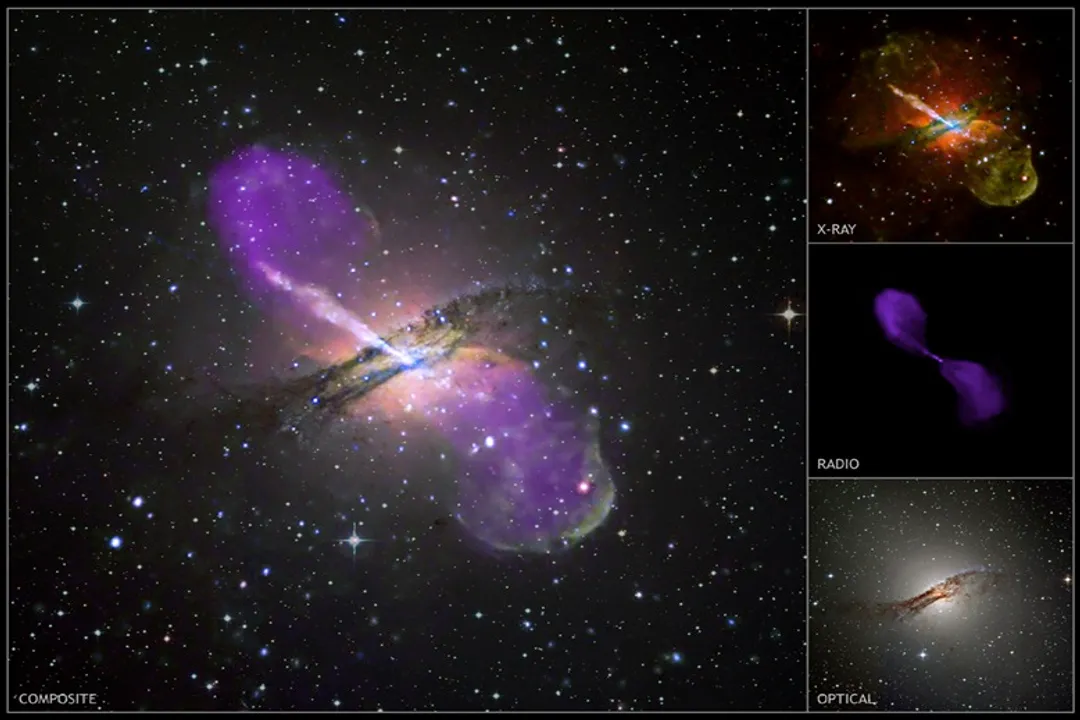
Galaxies are not just featureless blobs; they possess distinct shapes, or morphologies, which are largely determined by their rotation, internal dynamics, and formation history. [7] Astronomers generally classify them into three main categories: spiral, elliptical, and irregular. [1][7]
# Spiral Galaxies
Spiral galaxies, like our Milky Way, are characterized by a flattened, rotating disk containing spiral arms filled with gas, dust, and younger, hotter stars. [1][7] They also typically possess a central bulge made up of older stars and a surrounding, more spherical halo. [6] The arms are density waves—regions where gas compresses, triggering intense bursts of star formation—meaning the gas and dust are highly concentrated along these features. [7]
# Elliptical Galaxies
Ellipticals are smooth, featureless blobs, ranging from nearly perfectly spherical to highly elongated ovals. [7] Unlike spirals, they have very little cold gas and dust and exhibit very little ongoing star formation. [1] Their stars tend to be older and redder, leading to the common astronomical description of them being "red and dead". [7] Their structure is dominated by random stellar motions rather than ordered rotation. [2]
# Irregular Galaxies
These galaxies lack a distinct, regular shape, often appearing chaotic. [1] This irregularity usually results from gravitational interactions, such as collisions or close encounters with other galaxies. [7] These galaxies are often rich in gas and dust and are frequently sites of vigorous, disorganized star formation. [1]
# Dynamics Cycles
The components of a galaxy—stars, gas, and dust—are constantly in motion, governed entirely by gravity. [5] Stars orbit the galactic center, much like planets orbit the Sun, though their paths are more complex, especially in the chaotic central bulge or the flattened disk. [6]
The life cycle of galactic material is a continuous, cyclical process. Old stars die, often exploding as supernovae, which enriches the ISM by ejecting heavier elements (the building blocks of dust and rocky planets) back into the interstellar space. [3] This enriched gas and dust then mixes with existing ISM material. When conditions are right—the cloud is dense enough and cold enough—gravity wins out over internal pressure, and the material collapses to form a new generation of stars. [1][7]
This recycling efficiency differs significantly between galaxy types. A spiral galaxy’s ongoing star formation indicates an active cycle where gas and dust are routinely converted into new stars. [7] An elliptical galaxy, having used up or expelled most of its cold gas early in its life, has a much slower or virtually non-existent cycle today. [1] Observing the ratio of cold gas (raw material) to the number of young blue stars (recent product) in different galaxy shapes provides a surprisingly accurate measure of how far along that recycling process a specific system is. For instance, a galaxy appearing visually bright but containing almost no 21-cm radio emission (a signature of neutral hydrogen gas) is likely an older system that has largely exhausted its fuel reserves.
# Local Example
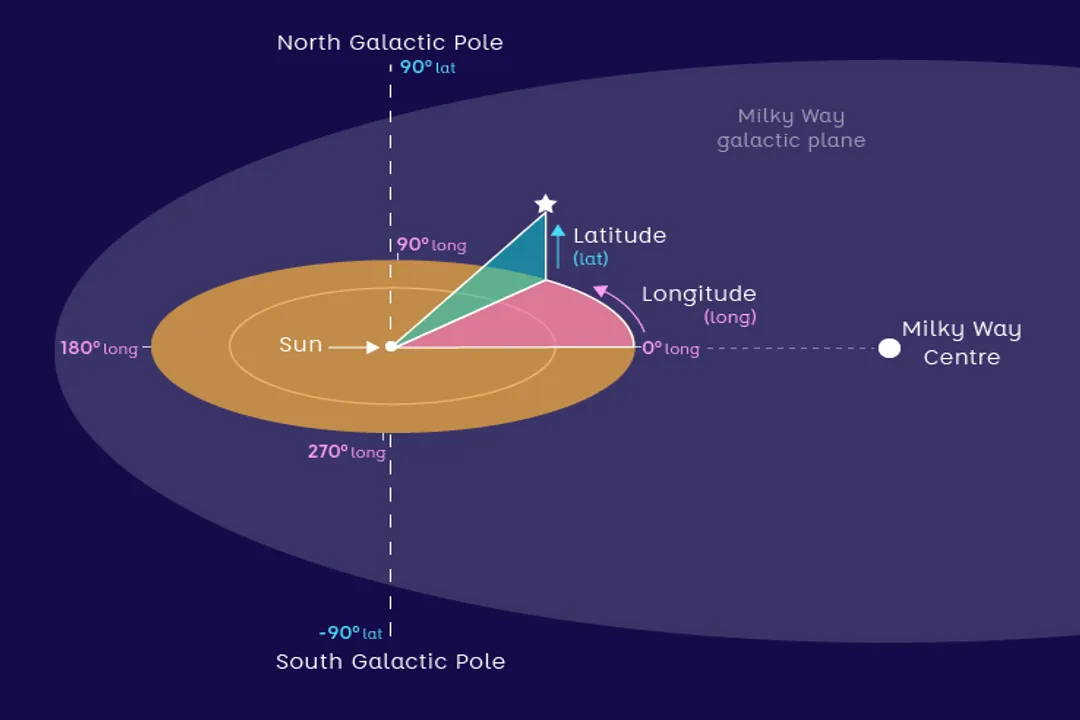
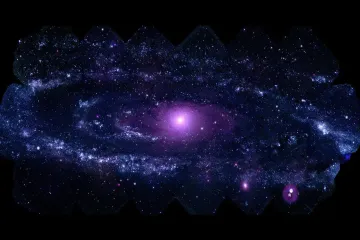
To ground these concepts, we can focus on the Milky Way Galaxy. [5][6] It is classified as a barred spiral galaxy. [6] Our solar system resides in one of the spiral arms, about two-thirds of the way out from the galactic center. [5] The Milky Way has a central bulge, a vast disk where most of the gas, dust, and active star formation occur, and a large, diffuse halo of older stars and globular clusters surrounding the main body. [8]
The observable components—the stars, the glowing emission nebulae (ionized gas), and the dark molecular clouds—all reside primarily within that disk. [6] Estimates suggest the disk spans roughly 100,000 light-years across. [5] The material rotates, though not as a solid body; stars farther out take longer to complete an orbit than those closer in, leading to the characteristic spiral shape that winds up over billions of years. [6]
When we look toward the center of the Milky Way, we cannot see directly through the densest clouds of gas and dust using visible light; that central region is heavily obscured. [6] However, infrared observations pierce this veil, revealing the concentrated stellar population of the bulge and the supermassive black hole, Sagittarius A*, that anchors the system. [6]
In summary, a galaxy is far more than just the stars we see twinkling in the night sky. It is an ecosystem—a dynamic blend of the finished product (stars) and the essential feedstock (gas and dust), all bound by the profound pull of gravity, continually transforming one state into the other across timescales far exceeding human comprehension. [2][7]
Related Questions
#Citations
What Is a Galaxy? | NASA Space Place – NASA Science for Kids
Galaxy - Wikipedia
Galaxy | ESA/Webb
Galaxy Basics - NASA Science
The Milky Way Galaxy - Las Cumbres Observatory
Learn about our galaxy - UCLA Galactic Center Group
2.2 Galaxies and Stars – Physical Geography and Natural Disasters
The Milky Way Galaxy | Center for Astrophysics
Galaxies—facts and information | National Geographic