Is a spiral galaxy gas or dust?
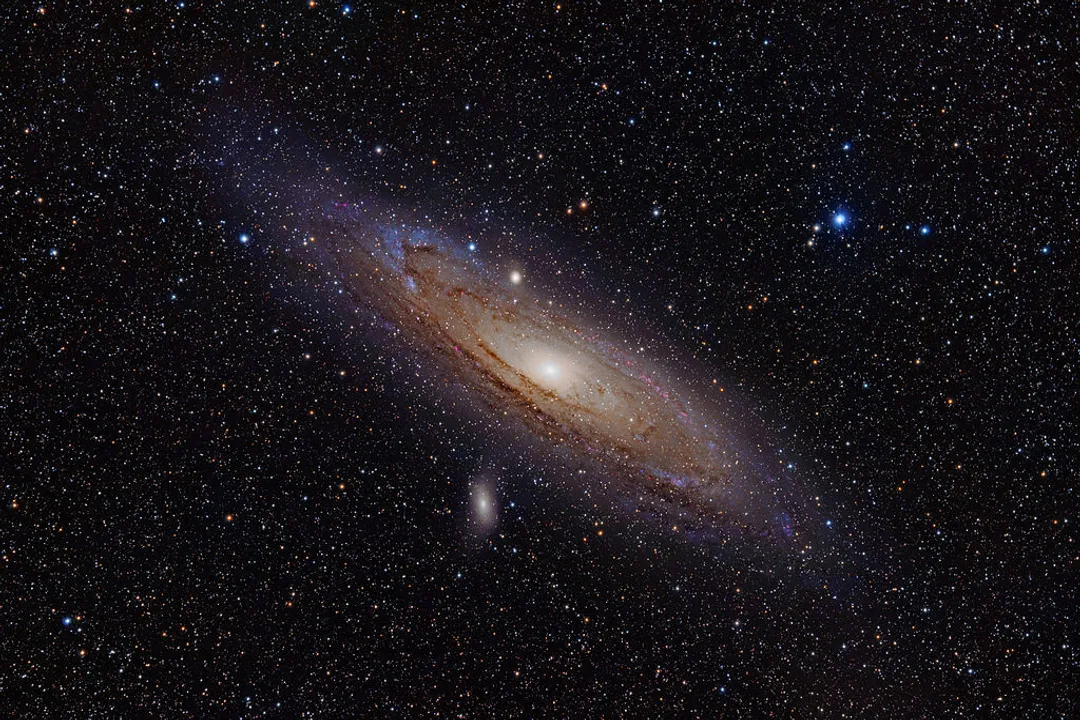
A spiral galaxy is fundamentally a mixture of celestial components, not a simple choice between being only gas or only dust. The correct understanding is that these massive stellar systems contain vast quantities of stars, yes, but also significant reserves of interstellar gas and microscopic dust particles, all organized into distinct structures. [1][2] To truly grasp the nature of a spiral galaxy, one must look at how these ingredients—the luminous stars, the diffuse gas, and the light-blocking dust—are distributed throughout its recognizable flattened shape. [9]
# Galactic Makeup
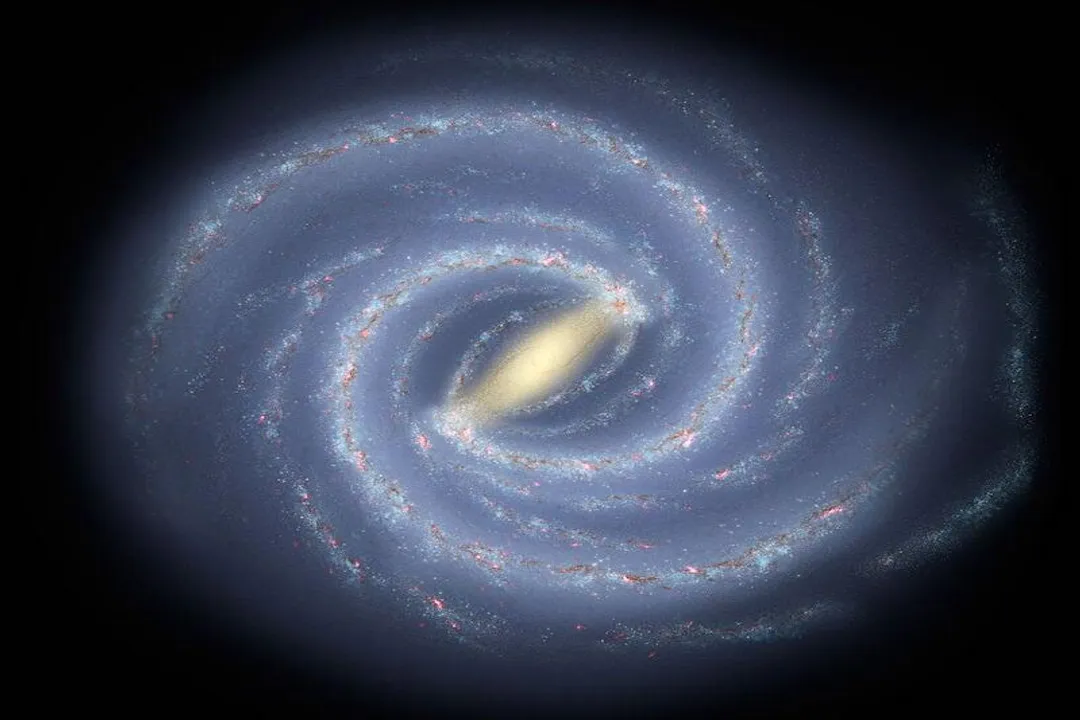
The primary components making up a spiral galaxy are its stars, the interstellar medium (ISM) which includes gas and dust, and dark matter which provides the gravitational scaffolding. [1] When astronomers classify a galaxy as spiral, they are immediately pointing to a specific morphology characterized by a central bulge and a rotating, flattened disk. [9] It is within this disk that the majority of the gas and dust resides, contrasting sharply with the more evolved, older stars typically found in the central bulge. [6][9]
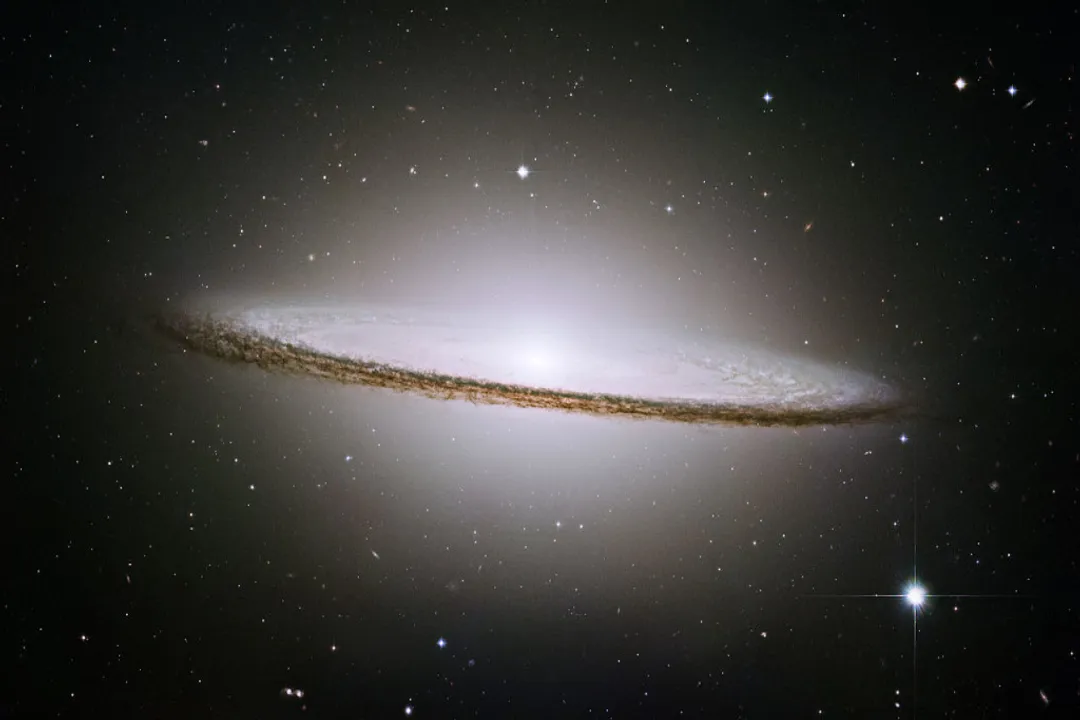
While gas, primarily hydrogen and helium, makes up the bulk of the mass of the interstellar medium, dust plays an outsized role in the visual appearance and immediate physical processes occurring within the galaxy. [3] If you look at a high-resolution image of a spiral galaxy, the bright, winding lanes you see are often not the stars themselves, but regions where dust is obscuring the light from the stars behind it. [7] This immediately tells us that both are integral, but they interact with light differently.
# Disk Distribution
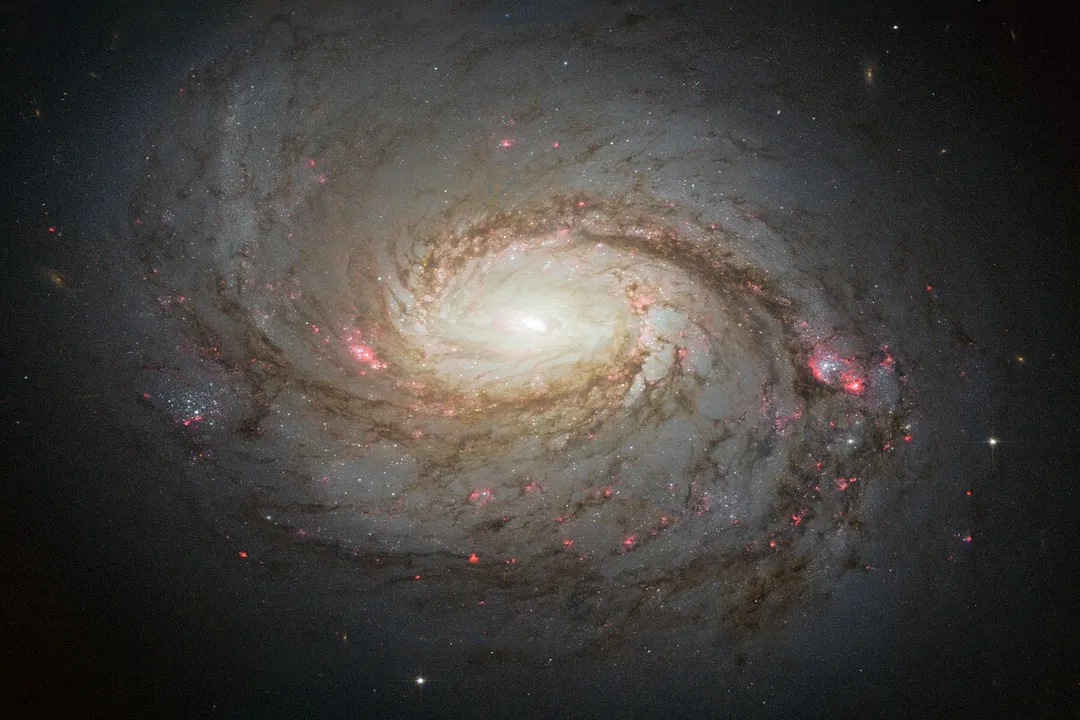
The defining characteristic of a spiral galaxy is its disk, which rotates. This disk is the primary reservoir for the raw materials needed for future stellar generations. [9] The gas and dust are not spread uniformly; instead, they trace out the beautiful, sweeping spiral patterns that give the galaxy its name. [6] This concentration in the arms is not coincidental; it is a direct result of the dynamic processes—density waves—that compress this material as the spiral structure rotates through the galaxy's plane. [3]
Think of the spiral arms as cosmic traffic jams for the interstellar medium. When clouds of cold molecular gas and dust encounter these density waves, they get squeezed together. This increase in density triggers the gravitational collapse necessary for star formation. [3] Therefore, the spiral arms are visually bright because they are actively building new, hot, blue stars, but visually dark in certain patches because they are currently full of dense, opaque dust clouds. [8] This dynamic interplay means that wherever you find a high concentration of star-forming gas, you will almost certainly find high concentrations of dust acting as its shield and marker. [7]
# Dust Lanes
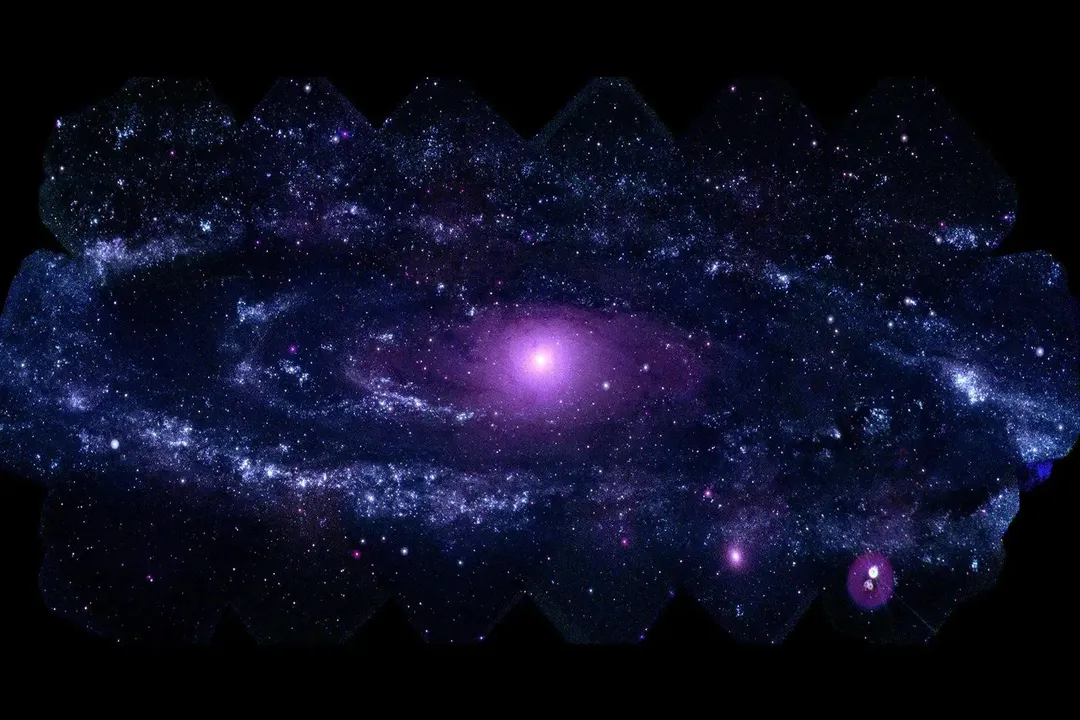
The visibility of dust is a key feature when distinguishing spiral galaxies from other types, such as ellipticals, which tend to have very little cold gas and dust left to form new stars. [4] The dust in spiral arms is typically seen as dark silhouettes against the brighter background of the disk or the central bulge. [7] These dark lanes are often composed of silicates and carbonaceous materials, tiny particles that are extremely effective at scattering and absorbing visible light. [1]
It is fascinating to consider that while the entire galactic disk contains gas, the dust is what makes the structure so architecturally obvious in optical wavelengths. If we could magically remove all the dust, the arms might still be defined by the location of the newest, bluest stars, but the sharp, intricate leading and trailing edges that give the galaxy its texture would vanish. [7] This highlights a crucial difference: The sheer volume of diffuse hydrogen gas spreads across a much larger, fainter area of the disk, whereas the dust is clumped into denser, more obscuring patches that define the visible structure. The gas provides the fuel; the dust provides the shadows that map the fuel pathways at visible wavelengths. [3][6]
# Gas Dynamics
The gas component of a spiral galaxy is far more massive in terms of pure hydrogen and helium than the dust component, often making up a significant percentage of the galaxy's baryonic mass outside of the stars. [1] This gas exists in various states, from the extremely cold, dense molecular clouds where stars are born, to warmer, more diffuse atomic gas clouds. [3] Observing this gas often requires instruments sensitive to radio waves, which pass right through the opaque dust clouds that block visible light. [8]
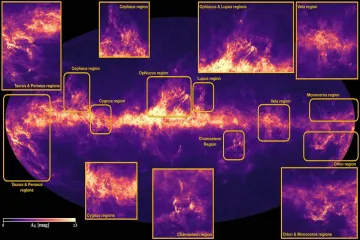
If we look at the Milky Way, for example, radio astronomy reveals that the hydrogen gas extends far beyond the visible stellar disk, tracing the galaxy's spiral pattern outward. [1] This observational technique, looking at the characteristic spectral line of neutral hydrogen (the 21-cm line), allows astronomers to map the gas distribution where the dust would simply render the region invisible to optical telescopes. This allows us to create maps that contrast sharply with photographic images; an optical image emphasizes dust extinction, while a radio map emphasizes the raw fuel supply. [3]
An interesting point to consider when comparing gas to dust is their relative longevity and size. Dust grains are micron-sized (or smaller) and are subject to sputtering and destruction over cosmic timescales, meaning they must be constantly replenished by supernovae explosions of older stars. Gas, being atomic or molecular, is far more persistent and requires only cooling and gravitational collapse to reform into new stars and, eventually, new dust grains. [1]
# Age and Composition
The presence of substantial gas and dust is a strong indicator that a spiral galaxy is still actively evolving and capable of producing new stars. [9] This ties directly into the concept of galactic evolution. Some of the most distant galaxies ever observed, which we see as they were billions of years ago, already exhibit a distinct spiral structure. [5] The fact that these ancient systems possessed the necessary reserves of gas and dust to organize themselves into spirals so early suggests that the physical processes governing the settling of matter into a rotating disk and the initiation of spiral arms are fundamental to galaxy formation itself. [5]
For a spiral galaxy to maintain its appearance—the bright blue arms and the dark lanes—it requires a continuous cycle: stars form from gas/dust, live their lives, and return enriched material (including new dust) back into the interstellar medium via stellar winds or supernova remnants. [1] If this cycle were to stop, the gas would eventually be locked up in stellar remnants (white dwarfs, neutron stars, black holes), and the dust would be gradually eroded, leaving a galaxy that looks more like a featureless elliptical system over vast stretches of time. [4]
# Comparing Galactic Ingredients
To make the distinction between the roles of gas and dust clearer, consider this breakdown of how they contribute to what we observe:
| Component | Primary Location | Key Visual Impact | Primary State |
|---|---|---|---|
| Gas (H/He) | Throughout the disk, concentrated in arms | Radio emission; indirect evidence in star formation rate | Primarily diffuse atomic/molecular clouds |
| Dust | Clumped within spiral arms and disks | Absorption/blocking of visible light (dark lanes) | Micron-sized solid particles |
| Young Stars | Tracing the spiral arms | Bright blue light, defining the arm's glow | Plasma |
When observing a spiral galaxy in visible light, we are essentially looking at the result of the gas/dust interaction: the gas collapses to form stars, and the dust creates the dark patterns around those stars. [4] The visibility of the gas as gas (e.g., emission nebulae) is often just as dependent on the energy input from the nearby young stars—which formed from that gas—as the dust is on blocking the light of older stars. [3]
This leads to a key observation that often confuses casual viewers: a galaxy image is rarely a single snapshot of composition but rather a layered representation of physical processes. What a modern digital camera captures as "red" or "pink" in a nebula isn't just dust; it's often ionized hydrogen gas energized by powerful ultraviolet light from massive O and B type stars that recently formed from the cooler molecular gas that is also laced with dust. The dust scatters the blue light from those same stars, while the gas glows red when ionized. [6]
# Looking Closer at the Structure
The physics governing the distribution suggests that gas density waves are the primary driver for arm creation, but dust lanes are the most immediate signposts of that density change. [3] A very dense patch of cold molecular gas will inevitably contain dust because dust forms in the outflow of aging stars and clumps alongside the gas. Conversely, very diffuse, hot, ionized gas that might be present far above or below the main plane of the disk will contain very little, if any, dust, as the heat tends to blow it apart or prevent its aggregation. [1]
Furthermore, the relative abundance isn't constant across all spirals. Barred spirals, for instance, show material being channeled from the ends of the central bar directly into the inner parts of the spiral arms, leading to very intense, concentrated star formation regions—which means very high local concentrations of both gas and dust—in those feeder regions. [2]
When we look at an image of a galaxy like M51, the Whirlpool Galaxy, the structure we admire is the result of gas and dust moving together through the gravitational potential wells of the density waves. [8] The structure is a consequence of the material that forms the visible parts of the disk. Therefore, to ask if a spiral galaxy is gas or dust is like asking if a forest is made of wood or bark; both are essential, but they play vastly different roles in the structure's overall appearance and function. [9] The gas fuels the fire, and the dust provides the smoke and shadow.
To summarize the relationship: Gas is the massive, diffuse fuel reservoir, essential for maintaining the cycle of life and death in the galaxy, while dust is the clumpy, light-obscuring tracer that makes the gas concentrations visible to our optical telescopes. Understanding spiral galaxies requires appreciating both the vast, invisible reservoirs of atomic gas mapped by radio telescopes and the sharp, dark dust lanes mapped by visible light obscuration. [1][7]
Related Questions
#Citations
Spiral galaxy - Wikipedia
Spiral Galaxy | COSMOS
Galaxies – Spirals - NMSU Astronomy
Galaxy Types - NASA Science
Spiral Galaxy Seen Near the Beginning of Time - Universe Today
Spinning Spirals | Ask An Earth And Space Scientist
Dust lanes in Spiral Galaxy NGC 4414
Spiral Galaxies
Types of Galaxies | Physical Geography - Lumen Learning