How fast do spiral galaxies spin?
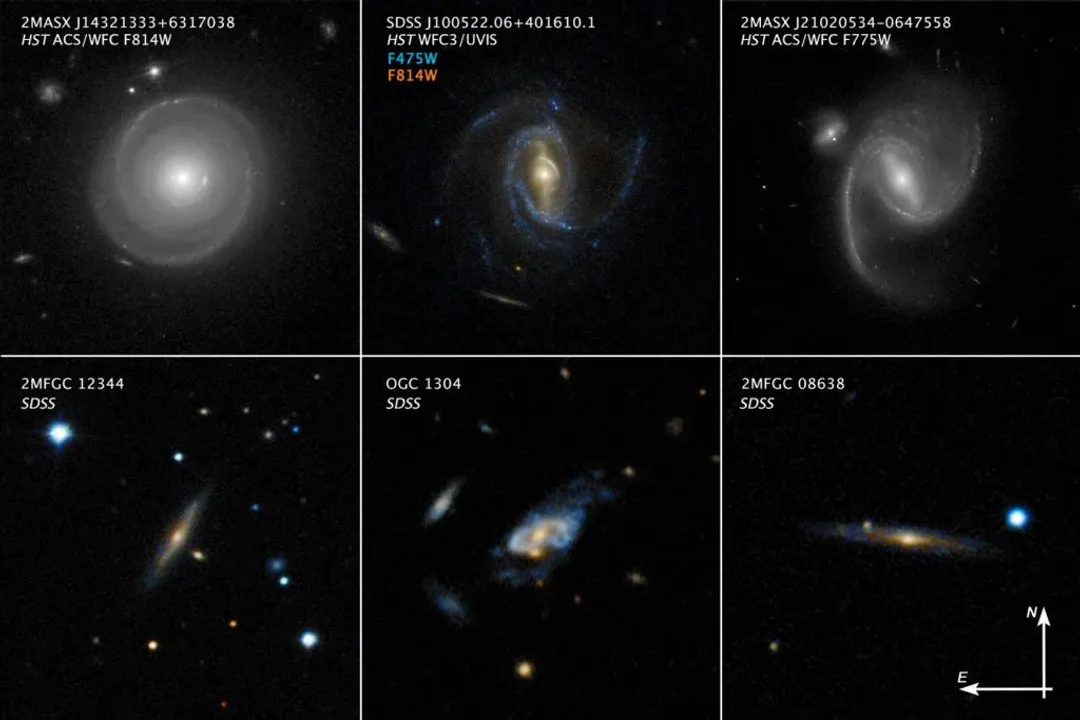
The sheer scale of spiral galaxies means that their component stars and gas clouds are moving at astonishing velocities, even if the orbital period seems long to us. When we look up, it's easy to think of the cosmos as static or moving slowly, but the rotation within disk galaxies is a constant, high-speed ballet. Understanding how fast they spin requires looking beyond the visible light and considering the structure that dictates their movement. [6][9]
# Rotation Measurement

Astronomers determine the speed of stars within a galaxy by observing how the light they emit is shifted—a process called the Doppler effect. Stars moving away from us show a redshift, while those moving toward us show a blueshift. By measuring these shifts across the disk, scientists can construct a galaxy rotation curve. [5] This curve plots the orbital velocity of matter against its distance from the galactic center.
What this measurement consistently reveals is surprising. Based only on the light we see—the stars, gas, and dust—we would expect the rotational speed to decrease significantly as you move further out from the dense center, much like the outer planets in our own solar system orbit much slower than the inner ones. However, the rotation curves for spiral galaxies often remain surprisingly flat far out into the halo region where visible matter is scarce. [5]
# Galactic Velocity
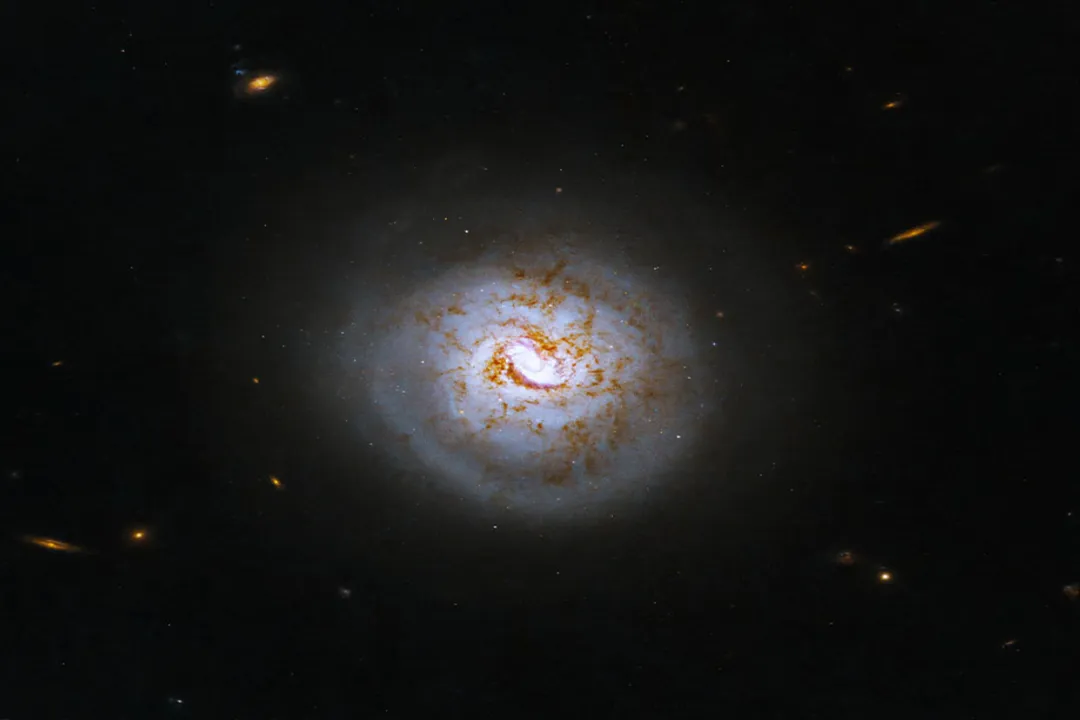
The speeds involved are immense when measured in terrestrial terms. While the Milky Way rotates, completing one full turn roughly every 230 million years, the actual tangential velocity of material near its edge is substantial. [4] When we compare our galaxy to its larger cousins, the difference becomes pronounced. Observations have shown that the most massive galaxies spin more than twice as fast as the Milky Way. [7] This suggests that mass is the primary driver of rotational velocity; the bigger the galaxy, the faster its outer arms are being flung around.
If we take the observation that all disk galaxies rotate once every billion years as a generalized, albeit simplified, finding for the majority of these systems, [4] the sheer speed becomes more tangible. Consider a galaxy whose visible disk spans 100,000 light-years. For a star on the outer edge of such a structure to complete a circuit in a billion years means it must be traveling at thousands of kilometers per second. The fact that an orbit around the galactic core takes billions of years, compared to the hundreds of millions of years for our own modest spiral, highlights the vast energetic differences between galaxy classes, even when their structural shapes are similar. [4]

# Super Spirals
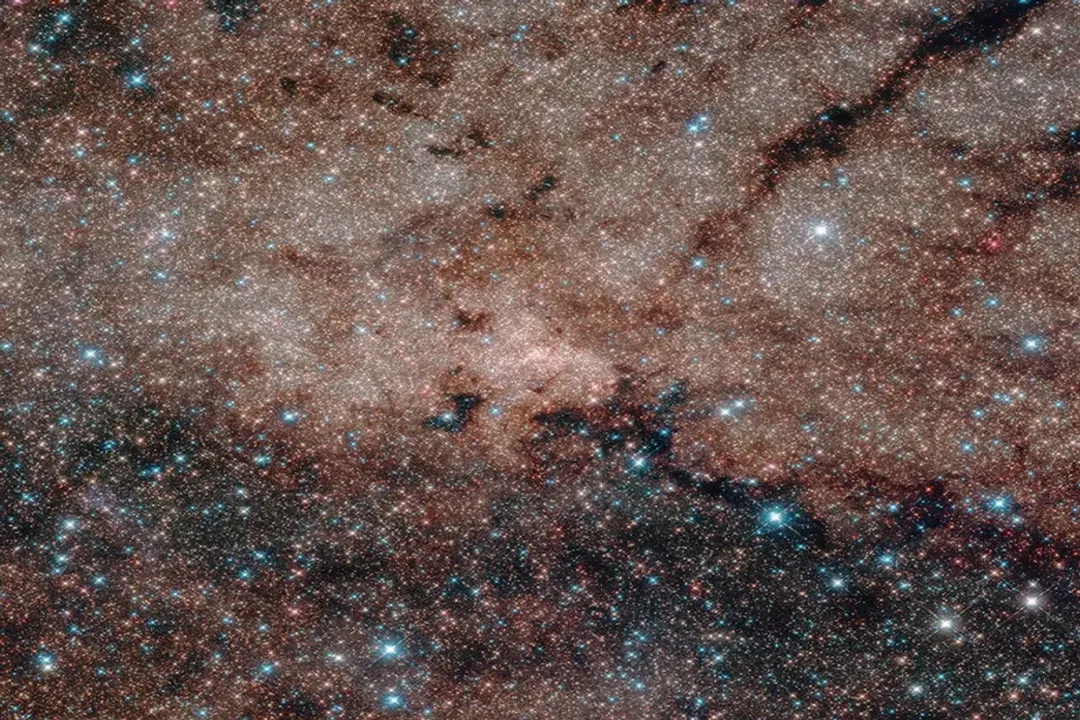
Some galaxies push the boundaries of expected rotational speeds even further, earning them the designation of super-spirals. [2] These specific galaxies exhibit rotation that is unexpectedly rapid. They are not merely twice as fast as the Milky Way; their velocities challenge conventional models based solely on visible mass distribution. [2]
When these high-velocity spirals were observed, it created a major astronomical puzzle. If the stars and gas are moving that quickly, the visible matter cannot possibly provide enough gravitational glue to keep them bound in their orbits; the galaxy should simply fly apart.
# Dark Matter Influence
The resolution to the flat rotation curve problem, and the explanation for the high speeds of super-spirals, lies in the universe’s most elusive component: dark matter. [3] Dark matter does not emit, absorb, or reflect light, but it possesses mass and therefore exerts gravity.
It is the massive, invisible halo of dark matter surrounding the galaxy that provides the necessary gravitational pull to keep the fast-moving outer stars anchored. The rotation curve remains flat because the density of this unseen dark matter halo decreases outward at a rate that perfectly compensates for the thinning visible stellar disk, keeping the speed constant at high radii. [5][3] For the super-spirals, this indicates they host proportionally much more dark matter relative to their visible stellar mass compared to less rapidly spinning galaxies. [2][3]
An illustrative table comparing the rotational dynamics might look something like this, illustrating the inferred mass dominance:
Galaxy Type Typical Rotation Speed (Outer Edge) Primary Gravitational Contributor Milky Way-type Moderate (~220 km/s) Visible Matter + Dark Matter Halo Massive Spiral > 440 km/s Significant Dark Matter Dominance Super-Spiral Extremely High (Exceeding expectations) Overwhelming Dark Matter Gravitational Well
# Spin Uniformity
Beyond the speed of rotation, there is a fundamental consistency in how spiral galaxies spin. Research into the rotational axes of a vast number of galaxies has revealed a striking uniformity in space. The vast majority of disk galaxies rotate in the same direction. [8]
This universal alignment is a subtle but profound piece of evidence about the conditions of the early universe. Galactic formation is thought to involve the gravitational collapse and subsequent spinning up of massive primordial gas clouds. If these clouds were randomly oriented, we would expect a random assortment of spin directions in the resulting galaxies. The fact that we observe a preferred direction—a large-scale coherence across billions of light-years—suggests that the initial angular momentum imprinted on the fabric of the early cosmos was not entirely random. It implies that whatever initial turbulence or expansion gradient existed following the Big Bang resulted in a widely shared, preferred torque applied across the structures that would eventually become galaxies. [8] This isn't about two galaxies circling each other, but about the intrinsic spin of the spiral arms themselves relative to a fixed cosmic background. It points toward a subtle, large-scale structure in the universe’s initial state that dictated the spin direction for most spiral systems that formed within it.
#Videos
The Fastest Spinning Galaxy | Space is Weird - YouTube
Related Questions
#Citations
Super Spirals Spin Super Fast | STScI
Super Spirals Spin Faster Than Expected, Astronomers Say | Sci.News
Dark matter makes these 'super spiral' galaxies spin surprisingly fast
All disk galaxies rotate once every billion years, no matter their size ...
Galaxy rotation curve - Wikipedia
The Fastest Spinning Galaxy | Space is Weird - YouTube
The Most Massive Galaxies Spin More Than Twice as Fast as the ...
The vast majority of the galaxies rotate in the same direction
Do galaxies spin - ScopeTrader