How is a spiral galaxy classified?
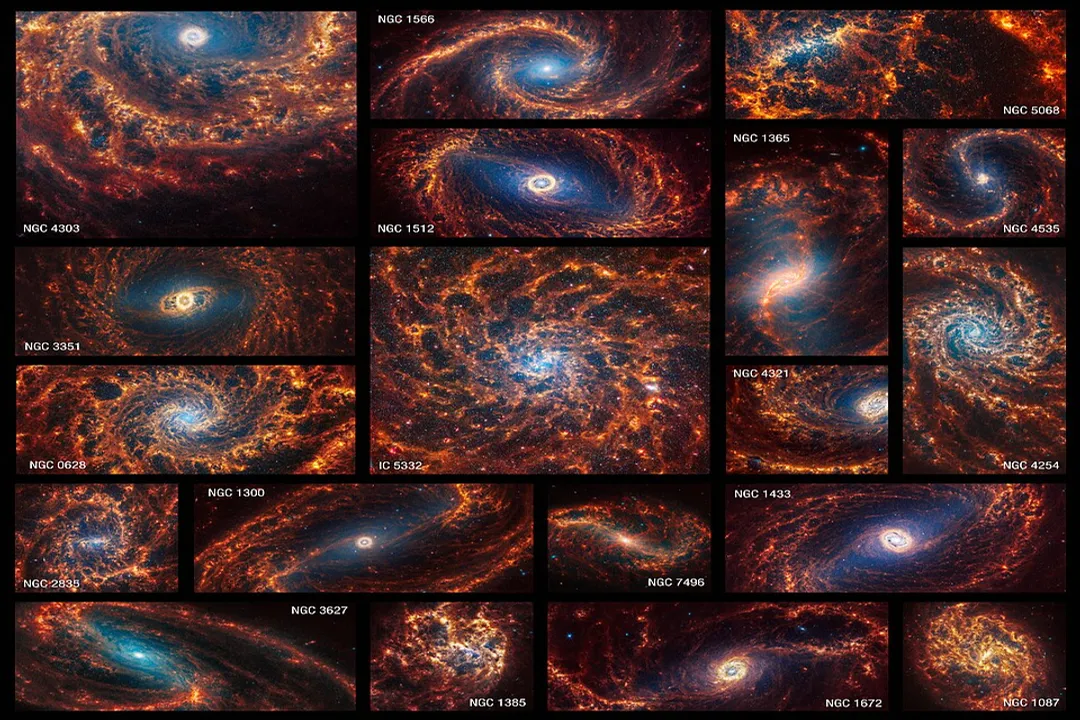
The process of sorting the cosmos into neat categories is fundamental to astronomy, and few objects demand more nuanced classification than the majestic spiral galaxy. These rotating stellar systems, characterized by their flattened disks and sweeping arms, aren't all cut from the same cloth. Instead, astronomers rely on a specific visual scheme—the Hubble Classification Scheme—to differentiate the subtle variations in their structure, arm tightness, and central concentration. [6][9]
# Basic Anatomy
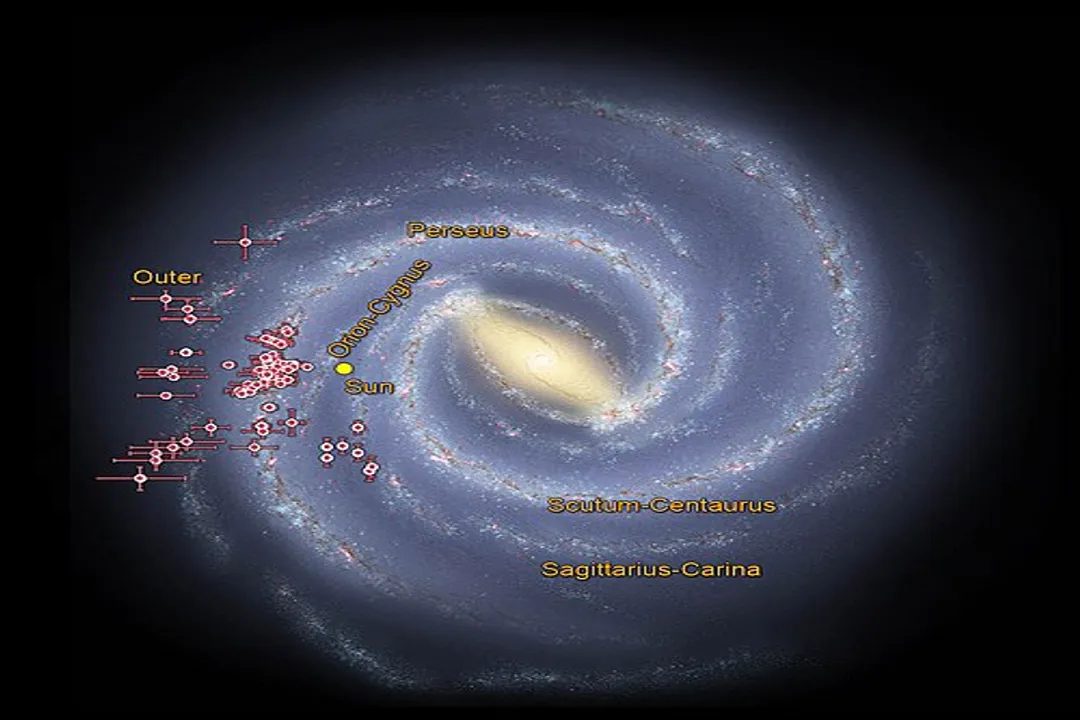
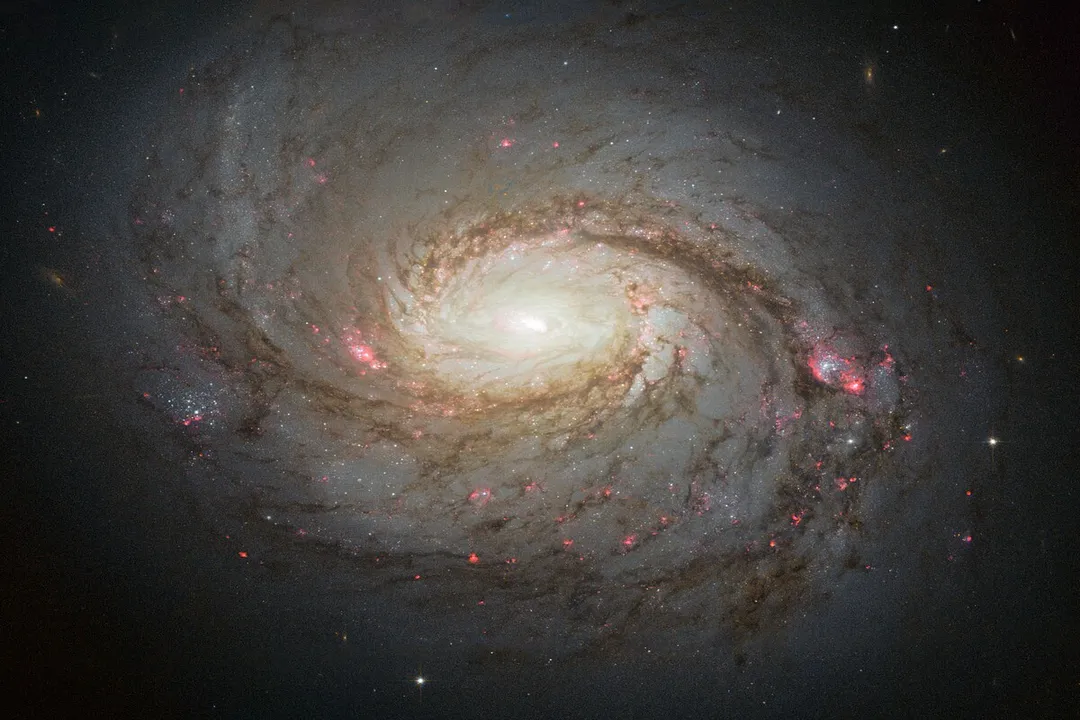
Before diving into the letters and numbers that define these galaxies, it helps to understand what makes a spiral a spiral. A typical spiral galaxy possesses three main components: a central bulge, a surrounding flat disk, and the characteristic spiral arms. [1][5][3] The bulge, located at the center, is generally a spheroidal distribution of older stars, somewhat resembling a small elliptical galaxy embedded within the disk. [5][4] The disk is where the majority of the galaxy's gas, dust, and young, blue stars reside, and it is within this thin plane that the spiral arms are etched out. [1][5] These arms are regions of higher density where star formation is actively taking place, causing them to glow brightly. [5]
# Hubble Fork
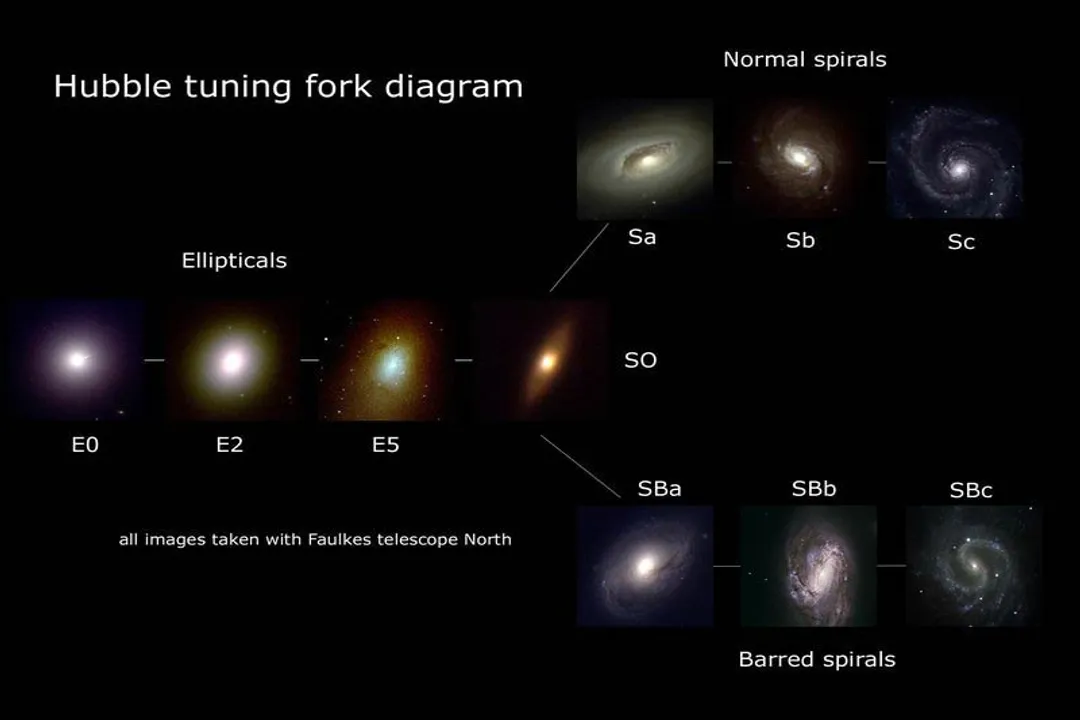
The universally accepted method for categorizing spirals, ellipticals, and their relatives traces back to Edwin Hubble’s groundbreaking work in the late $1920$s. [9][1] Hubble arranged galaxies along a diagram shaped like a tuning fork, placing the smooth ellipticals at the handle and having the sequence branch out into two prongs representing the spirals and barred spirals. [6][9][8] This arrangement isn't strictly based on evolution, but rather on observable morphology—what we see when we look at them. [1] For spirals, the key differentiators used in this scheme involve two main features: the relative size of the central bulge versus the disk, and the prominence and winding pattern of the spiral arms. [4][9] The classification uses a letter designation: for standard spirals and for barred spirals, followed by a lowercase letter (, , or ) indicating the degree of arm winding and bulge prominence. [6][9]
# Unbarred Types
The unbarred spirals, denoted by the letter , show a clear progression as the subtype letter increases from to . [6]
At the tightest end of the spectrum is the Sa galaxy. [1][9] These systems feature a prominent, large central bulge that dominates the light profile of the galaxy. [4] Consequently, the spiral arms originating from this core are wound very tightly, often appearing indistinct or clumped together. [6][9] The ratio of the bulge's diameter to the disk's diameter is relatively high in Sa types. [4]
Moving toward the middle ground, we find the Sb galaxies. [9] These represent a more balanced structure. The central bulge is smaller relative to the entire disk than in Sa galaxies, and the spiral arms are wound less tightly, becoming more clearly defined. [4][6] They offer a visual compromise between a dominant core and noticeable arms.
The third primary category for unbarred spirals is Sc. [9] These galaxies are characterized by a relatively small central bulge, which is often barely noticeable against the brightness of the disk. [4] The spiral arms are loosely wound, often appearing more fragmented, knotty, or "flocculent" in appearance, and they extend far out from the center. [1][6] When observing a set of galaxies classified only by type (S), the progression illustrates a shift from bulge-dominated to disk-dominated systems. [4]
It is insightful to consider that this morphological progression often correlates with age; galaxies with larger bulges and tighter arms (like Sa) tend to have a higher proportion of older, redder stars compared to the highly active, blue-tinged star-forming regions concentrated in the loose arms of Sc galaxies. [1]
# Barred Structure
Many spiral galaxies do not have arms beginning directly from the nucleus; instead, they possess a straight, bar-shaped structure composed of stars that crosses the center. [5] These barred spirals are designated with an prefix. [1] The classification within the barred group follows the exact same progression as their unbarred counterparts, based on the tightness of the arms and the relative size of the bulge. [6][9]
Thus, an SBa galaxy has a large bulge and tightly wound arms, while an SBc galaxy has a small bulge and loose, clearly defined arms. [9] Astronomers estimate that a significant fraction of spiral galaxies, perhaps as many as two-thirds, possess these central bars. [5] The presence of a bar suggests a dynamically different system than a non-barred spiral, as the bar can influence the movement of gas and stars, often channeling material inward toward the galaxy's core. [5] Distinguishing between an and an , or an and an , often depends heavily on the clarity and resolution of the observation, as a bar may not always be immediately obvious, especially when viewed at an angle. [8]
# Subtleties Added
The Hubble sequence is a general guide, but the universe rarely conforms perfectly to three primary letters. Astronomers recognize transitional types and other special morphological features. [1][6]
# Lenticular Galaxies
Sitting at the juncture between the ellipticals (E) and the spirals (S) on Hubble's diagram is the Lenticular galaxy, designated S0. [6][9] These are often seen as a bridge class. [9] Lenticulars possess a prominent central bulge and a flat, rotating disk, much like a spiral galaxy. [9] However, the crucial difference is that S0 galaxies lack any discernible spiral arm structure. [9] They contain little cold gas and dust, suggesting they have largely ceased major star formation, which aligns with their position near the ellipticals, which are predominantly old star systems. [9]
# Arm Texture
Beyond the tightness of the winding (), the texture of the arms themselves offers another classification layer. [1] Galaxies are often described as "Grand Design" if their spiral arms are smooth, well-defined, and extend nearly all the way from the center to the edge of the disk. [1] In contrast, "Flocculent" spirals have arms that appear patchy, ragged, or composed of many small segments, suggesting less organized or more intermittent bursts of star formation. [1]
# Ring Structures
A particularly striking, though less common, structure is the Ring Galaxy. [1] These objects, like the famous Sombrero Galaxy (M104), which is sometimes classified as Sa/Sb or even an Sa with a very prominent dust lane, [1] feature a distinct outer ring of young, bright stars surrounding a central core. [1] While M104 is often cited as an example of a spiral with strong dust features, other galaxies are true ring structures, sometimes formed by a smaller galaxy passing directly through the center of a larger disk galaxy. [1] These systems are sometimes denoted with an r suffix (e.g., ) to denote the presence of the ring. [1]
# Classification In Practice
For practical astronomical classification, whether by professional survey or dedicated amateur observation, the process usually involves comparing the target galaxy against established standards, often using reference atlases or classification sheets. [8] A key observational step involves determining the relative dominance of the central component. [4]
When attempting to place a galaxy, one must estimate two main ratios:
- The diameter of the central bulge relative to the total diameter of the disk.
- The tightness of the spiral pattern (how many times the arm winds around the core).
If one were to create a simplified decision tree, it might look something like this:
| Step | Observation | Resulting Group |
|---|---|---|
| 1 | Does it have a clear disk structure? | If No Elliptical (E) |
| 2 | Does the disk show defined spiral arms? | If No Lenticular (S0) |
| 3 | Does the galaxy possess a central bar feature? | If No Unbarred Spiral (S) |
| 4 | If Yes to Bar Barred Spiral (SB) | |
| 5 | Assess Bulge Size / Arm Winding | Use (large bulge, tight arms), (medium), or (small bulge, loose arms) |
The inherent subjectivity in visually estimating these parameters means that two experienced astronomers might assign slightly different sub-classifications (e.g., one calling a system and the other or ). [8] This is why large surveys often use consensus or averaging across multiple independent classifications to solidify the final designation. [4] The entire Hubble sequence, with its extensions for barred systems and rings, provides a powerful, if somewhat qualitative, map of galactic morphology based purely on the visible arrangement of stars and dust. [9]



Related Questions
#Citations
Spiral galaxy - Wikipedia
Galaxy Types - NASA Science
Galaxy Classification - Las Cumbres Observatory
Spiral Galaxy - ESA/Hubble
Spiral Galaxy | COSMOS
galaxy types: stage, family, and variety
Galaxy Classification - | The Schools' Observatory
[PDF] Hubble's Classification Scheme - McDonald Observatory
Hubble's Galaxy Classification | Research Starters - EBSCO