Does a spiral galaxy have gas and dust?
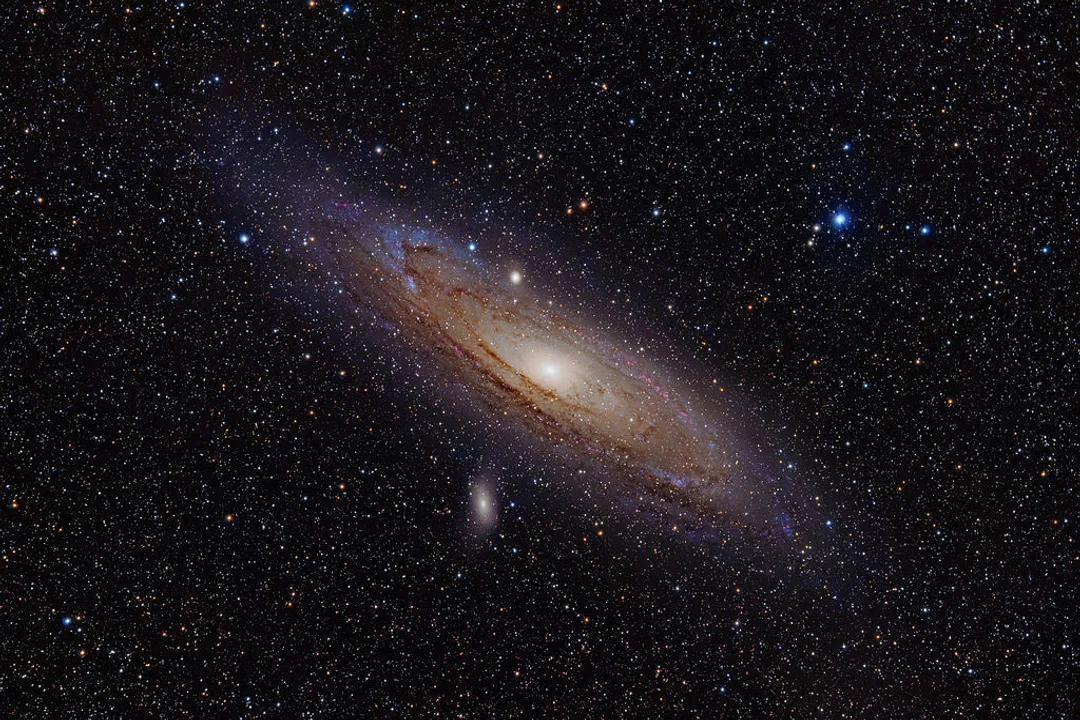
Spiral galaxies are anything but empty space populated only by gleaming stars; they are vast, churning ecosystems defined as much by their invisible components as by the luminous pinwheels we observe. The answer to whether these grand structures contain gas and dust is a resounding yes, and these materials are, in fact, essential to what makes a spiral galaxy spiral in the first place. [1][4] They represent the reservoir of fuel from which new generations of stars are continually being born, shaping the galaxy's structure and defining its evolution over cosmic timescales. [6][9]
# ISM Basics
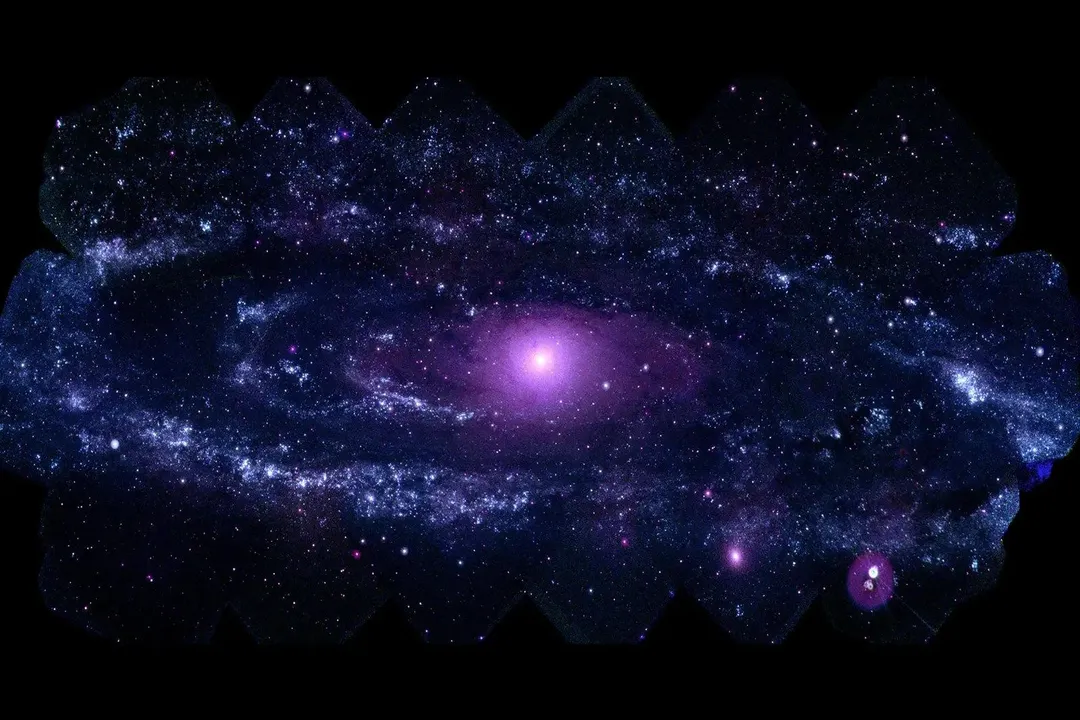
The interstellar medium (ISM) is the collective term for the matter that exists in the space between the star systems within a galaxy. [4] For spiral galaxies, this medium is rich in both gas and dust. [6] The gaseous component is overwhelmingly composed of the lightest elements, primarily hydrogen and helium, with only trace amounts of heavier elements mixed in. [4] This gas doesn't exist uniformly; it is clumped into massive clouds, sometimes called molecular clouds or nebulae, interspersed with a much thinner, diffuse background gas that permeates the galactic volume. [4]
These gas clouds are the cradles of stellar birth. Gravity acts upon the densest regions of this cold, molecular gas, causing it to collapse inward. This gravitational contraction eventually ignites nuclear fusion in the core, marking the birth of a new star. [4][6] Without this supply of raw, cold gas, the active process of making new, blue, hot stars—the very stars that trace out the spiral arms—would cease. [1]
# Cosmic Grit
If gas is the dominant mass component of the ISM, dust is its microscopic, yet profoundly influential, counterpart. [6] Cosmic dust particles are tiny solid specks, typically ranging in size from being barely larger than large molecules up to about 0.1 micrometers in diameter. [6] To put that scale into perspective, if the entire disk of our own Milky Way were shrunk down to the size of a standard dinner plate, these dust grains would be finer than common flour, yet they possess the mass and surface area to significantly interact with light. [1][6]
The composition of this grit is varied, containing refractory materials that condense easily, such as silicates (rock-like materials) and carbonaceous compounds. [4][6] While dust constitutes only a tiny fraction—often less than one percent—of the total mass of the ISM, its effect on observation and physics is disproportionate to its quantity. [6]
# Distribution Patterns
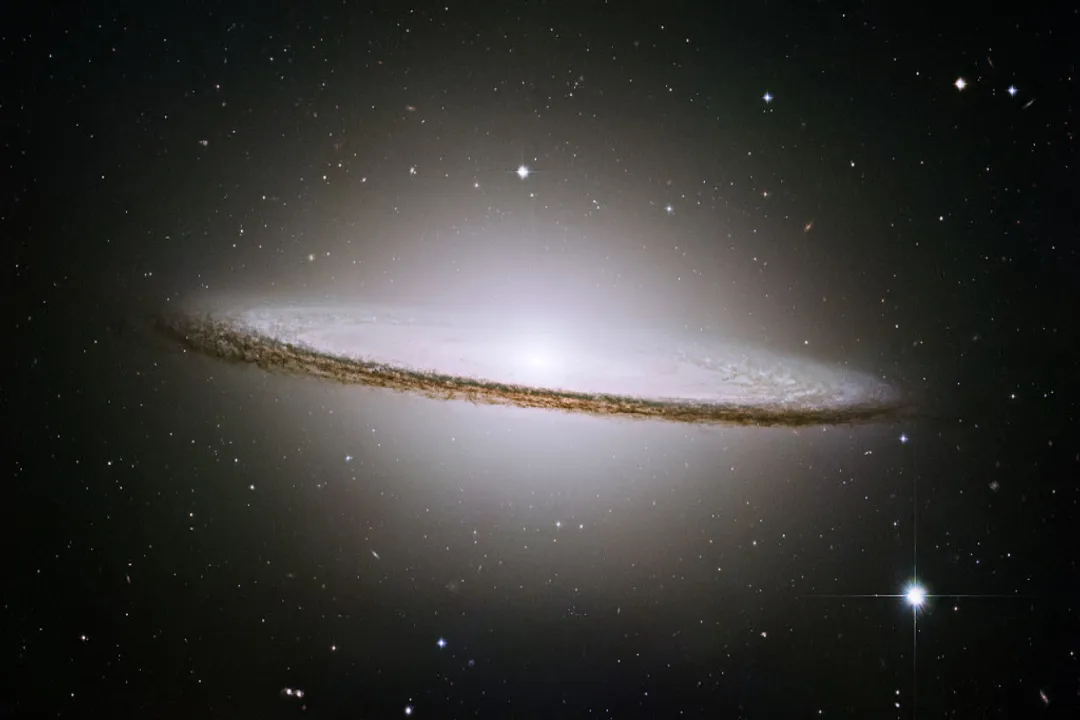
The distribution of gas and dust is not random; it mirrors the galaxy's structure, particularly the defining spiral arms. [1][4] In a typical spiral galaxy like the Milky Way, the gas and dust are overwhelmingly concentrated in the relatively thin galactic disk. [1] The dense regions of gas and dust are clearly mapped along the spiral arms because this is where the material piles up due to density waves moving through the disk. [4] These arms are the active stellar nurseries, meaning they are bright with newborn, massive stars that have recently formed from the available gas and dust. [1]
Conversely, the central bulge of a spiral galaxy is generally an older stellar population, which has already consumed most of its initial gas and dust reserves for star formation long ago. [1] The halo, the spherical distribution of stars and globular clusters surrounding the disk, is almost entirely devoid of significant amounts of cold gas or dust, as the materials tend to settle into the spinning plane of the disk over time. [1]
It is interesting to consider the relationship between star formation rate and material density. In regions between the spiral arms, the material density is lower, leading to less current star formation, which means the existing gas and dust have more time to spread out or be slowly consumed by older, smaller stars. [4] The very pattern of the spiral arms, therefore, can be viewed as a direct, visual consequence of how quickly this raw material—gas and dust—is being processed into stellar light within the density waves passing through the disk. [9]
# Light Interaction
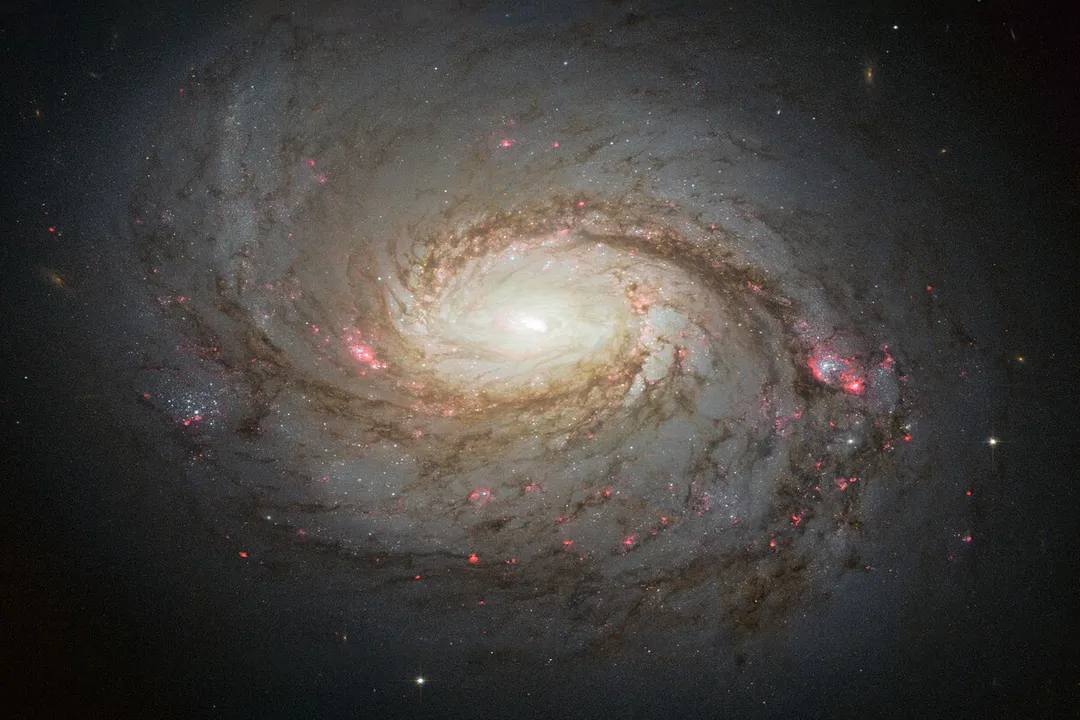
The presence of dust fundamentally changes how we perceive spiral galaxies using visible light. [6] Dust efficiently absorbs and scatters the light emitted by stars located behind it. [6] This effect is known as extinction or reddening. When we look toward the plane of a spiral galaxy, we often see dark lanes or patches silhouetted against the brighter background of the galactic center or the rest of the disk. [6] These dark features are not gaps in the stars themselves, but rather thick concentrations of opaque dust lying in the foreground. [6]
This interaction presents a challenge for astronomers studying the galaxy's true structure and stellar populations. If an astronomer only observed in the visible light spectrum, they might underestimate the total stellar content in the galaxy's core or miscalculate the age of the stellar population because the blue, hot, young stars (which produce the most visible light) are often obscured, while the light from older, redder stars penetrates the dust more easily. [6]
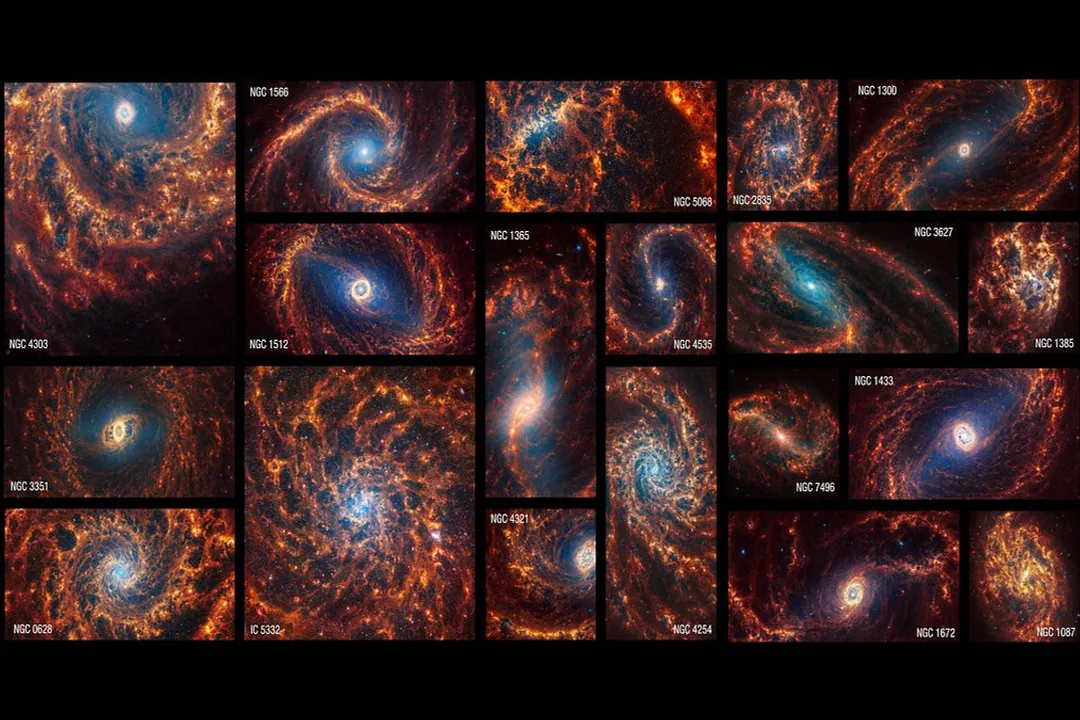
To counteract this, modern astronomy relies heavily on different wavelengths. Dust grains, while blocking visible light, reradiate the absorbed energy at longer wavelengths, primarily in the infrared spectrum. [6] Observatories like the James Webb Space Telescope (JWST) are specifically designed to peer through these dusty veils in the infrared, revealing the hidden star-forming regions and the younger stellar populations that are completely invisible to optical telescopes. [9] The contrast between what a visible-light telescope shows—dark lanes cutting across the light—and what an infrared telescope reveals—bright, active star nurseries glowing within those very lanes—provides powerful evidence for the sheer volume of gas and dust present. [9]
# The Cycle of Galactic Life
The story of gas and dust in a spiral galaxy is a continuous, cyclical process integral to its long-term existence. [9] The cycle begins with the cold molecular gas and dust forming stars. [4][6] Once these stars mature, they eventually die. Low-mass stars return some of their processed material back into the ISM through gentle stellar winds. [9] More dramatically, massive stars end their lives in supernova explosions, which enrich the ISM with heavier elements—the building blocks for future dust grains and rocky planets—and blast the surrounding gas into complex, expanding shells. [9]
This means that the gas and dust we see today in the spiral arms is not the pristine material the galaxy formed with; it is recycled material, chemically enriched by previous generations of stars. [9] This constant churn ensures that a spiral galaxy remains dynamically active and capable of forming new stellar populations over billions of years, provided it has not yet exhausted its total supply of reservoired matter.
The efficiency of this reprocessing directly impacts the galaxy's appearance over time. A galaxy that converts its gas into stars very quickly will appear brighter and bluer in its arms but will fade faster once the fuel runs out, becoming more like a lenticular or perhaps even an elliptical galaxy over eons. [1] The presence of substantial, ongoing reservoirs of cold gas and dust is the hallmark of a galaxy that is still vigorously creating its next generation of inhabitants.
# Visualizing the Scale
To further appreciate the role of these materials, consider the sheer volume they occupy relative to the stars. In the vicinity of the Sun within the Milky Way's disk, the average density of matter is quite low. [4] While stars are spread out, the interstellar space between them is not perfectly empty. [4] Even in the relatively sparse regions outside the dense molecular clouds, the space contains a very low density of gas atoms, perhaps only a few atoms per cubic centimeter, alongside the dust grains. [4]
When astronomers map the distribution of neutral hydrogen gas, they can create a three-dimensional picture of the spiral structure independent of starlight. This gas map often traces the spiral arms with remarkable clarity, confirming that the visible pattern is fundamentally dictated by the distribution of the fuel source, not just the light sources themselves. [4] The light we see is a snapshot of where stars formed; the gas and dust reveal the potential for future star formation across the entire disk.
In summary, spiral galaxies are fundamentally structured by the presence of gas and dust. This matter provides the mass for the ISM, dictates the location of active star birth along the density waves of the arms, and plays a critical role in obscuring and re-emitting light across the electromagnetic spectrum. [1][6] Far from being mere background filler, the gas and dust are the dynamic, essential ingredients sustaining the luminous, rotating structure we admire. [9]
Related Questions
#Citations
Spiral galaxy - Wikipedia
Galaxy Types - NASA Science
Spinning Spirals | Ask An Earth And Space Scientist
Galaxies – Spirals - NMSU Astronomy
Types of Galaxies | Physical Geography - Lumen Learning
Dust lanes in Spiral Galaxy NGC 4414
A loose spiral galaxy - ESA/Hubble
What is a spiral galaxy? - Cool Cosmos - Caltech
JWST reveals spiral galaxies' life cycles, from dust to stars - Medium