Which type of galaxy contains mostly older stars?
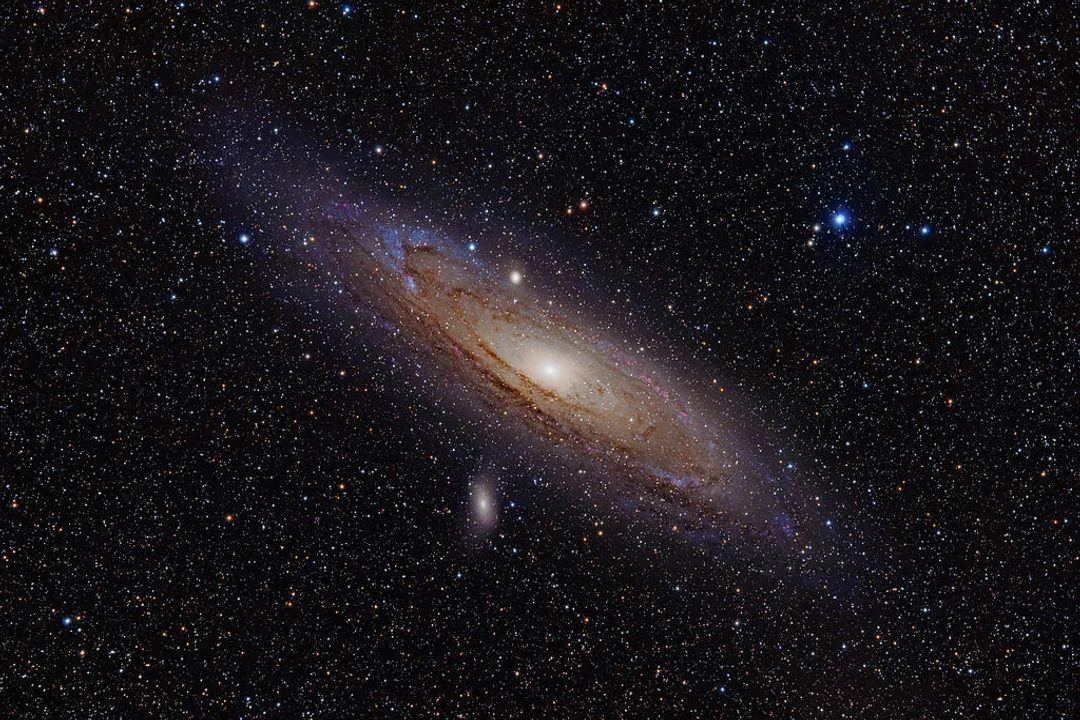
When we gaze into the cosmos, the sheer variety of galaxies can seem overwhelming, but astronomers simplify this vastness by classifying them based on their visible structure, or morphology. This structure, however, is more than just a visual curiosity; it is a direct indicator of a galaxy’s history, particularly its timeline for star formation. The type of galaxy that overwhelmingly houses the most ancient stellar populations is the elliptical galaxy. [1][2][10] These systems are often thought of as the universe's retirement communities for stars, having long since exhausted the raw materials needed to bake new ones.
# Galaxy Shapes
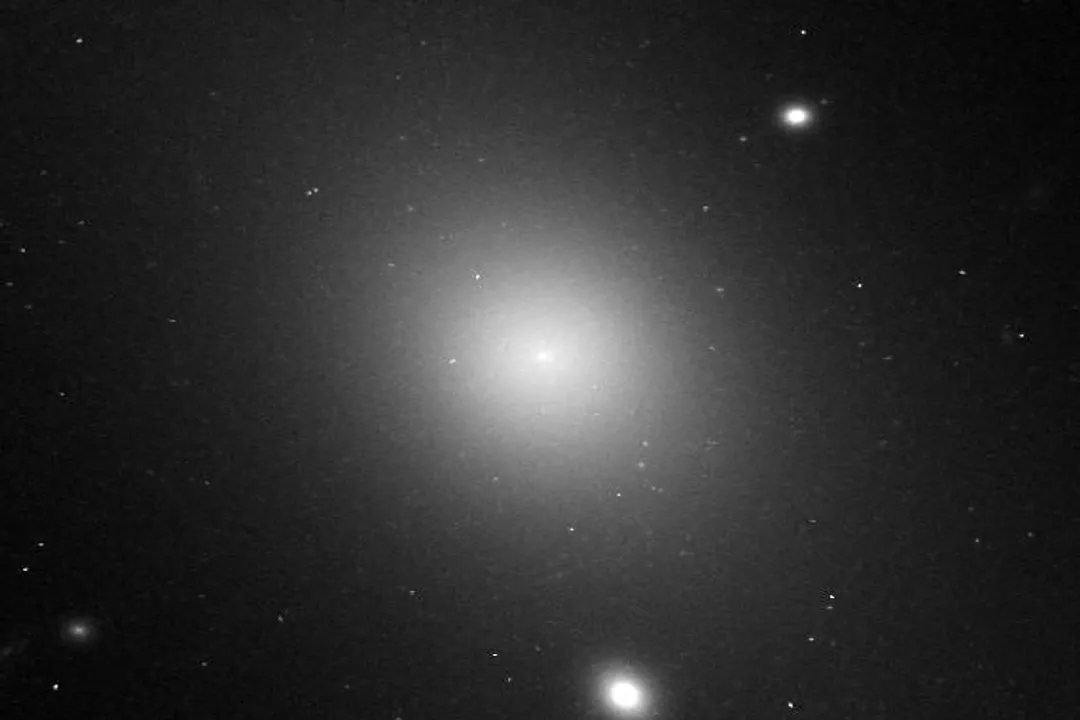
Galaxies generally fall into three main categories: spiral, elliptical, and irregular. [3][6] Spiral galaxies, like our own Milky Way, possess distinct arms, a central bulge, and a disk structure. [3][6] These arms are the cosmic nurseries, rich in the cold gas and dust required for the continuous process of star birth. [3][7] In contrast, elliptical galaxies lack these features; they are smooth, ranging in appearance from nearly perfectly spherical to quite elongated, which is why they are classified along a scale from E0 (most spherical) to E7 (most elongated). [1][10] Irregular galaxies simply do not fit neatly into the other two categories and often show signs of active, chaotic star formation due to gravitational disturbances or mergers. [3][6]
# Old Star Dominance
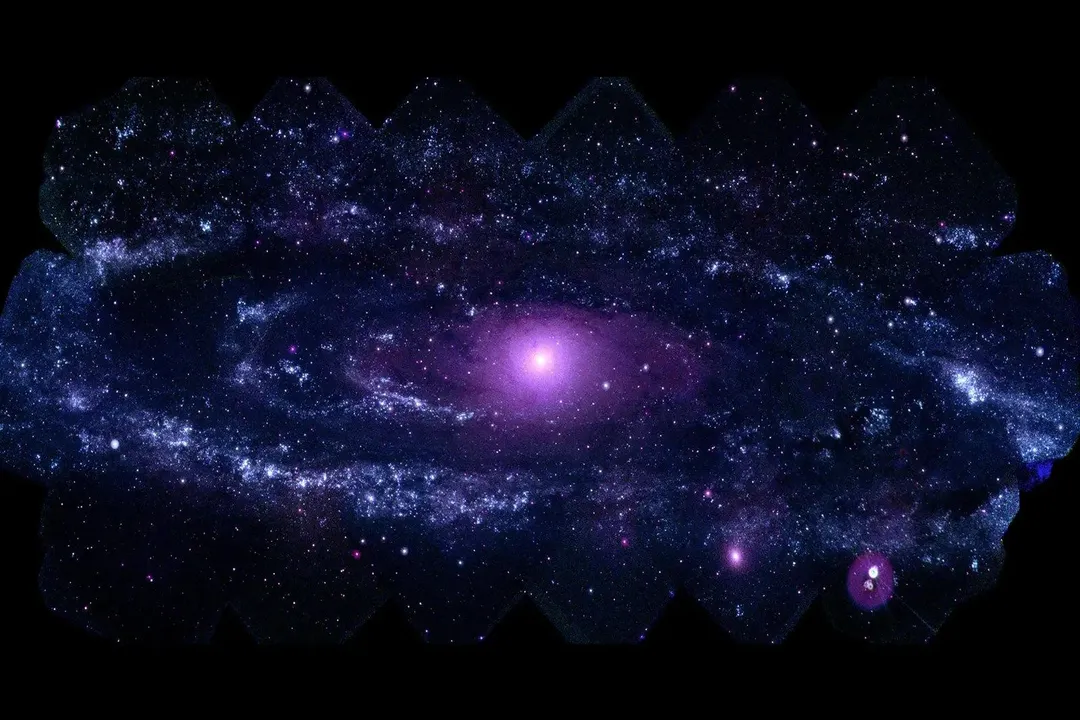
The defining characteristic separating elliptical galaxies from spirals is the near-total cessation of significant star formation within them. [1][10] Stars evolve over billions of years, and the most massive, hottest blue stars burn out quickly, leaving behind the longer-lived, dimmer, redder stars, like red giants and dwarfs. [2] Because ellipticals are typically dominated by these less massive, cooler stars, they possess a distinct reddish or yellowish tint when observed through telescopes. [2][10] This pervasive color signals that the stellar census is skewed heavily toward stars that formed very long ago. [2]
The mechanism behind this age difference is usually the availability, or lack thereof, of interstellar medium—the cold gas and dust needed to collapse into protostars. [1] Elliptical galaxies have generally consumed or lost most of their cold gas supply. [1][10] This depletion can happen through various intense, galaxy-wide events, often involving mergers with other galaxies. [1] When two spiral galaxies collide and merge, the violent gravitational interactions often trigger a rapid, massive burst of star formation—sometimes called a "starburst"—that quickly consumes the remaining gas, after which the resulting elliptical galaxy settles into a long period of quiescence where only old stars remain. [10] A massive elliptical galaxy, therefore, represents a snapshot of the universe from a time when star formation was more widespread and vigorous across the cosmos, a population that has been aging collectively for eons. [1]

# Contrasting Stellar Lifecycles
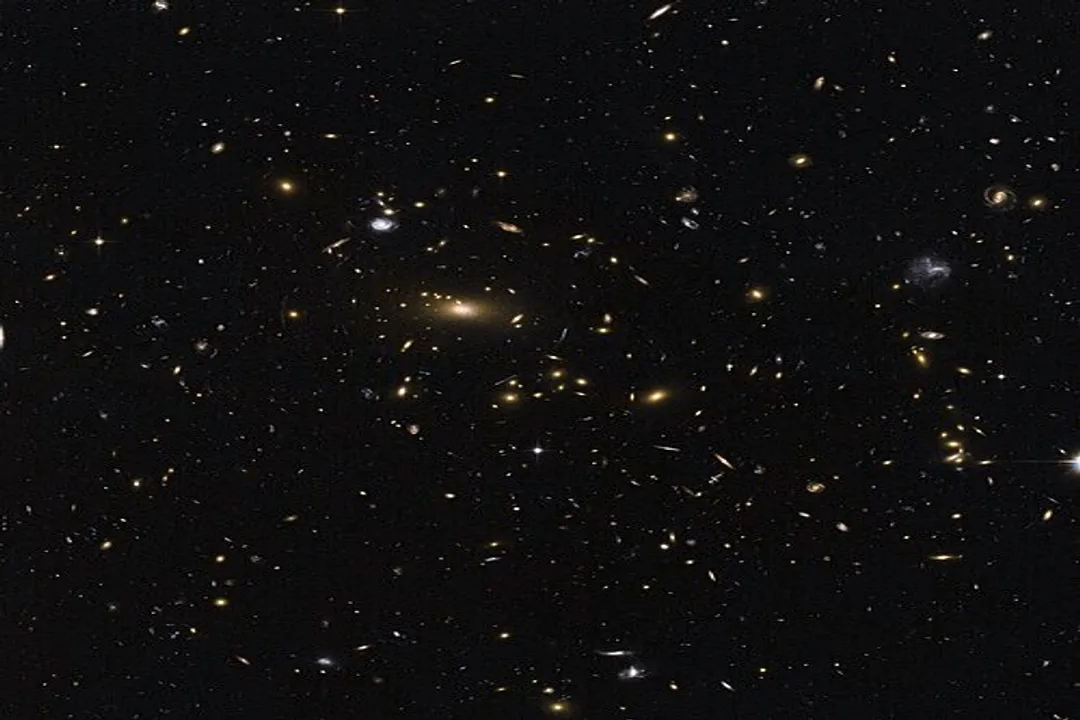
To truly appreciate the age profile of an elliptical, it helps to compare it directly with a spiral galaxy. A spiral galaxy maintains a dynamic equilibrium. [6] While the central bulge might contain older stellar populations, similar to a small elliptical core, the spiral arms are actively creating new generations of stars. [3] These new stars, being massive and young, are bright blue and hot, effectively diluting the overall average age of the galaxy's light. [3] Think of a spiral galaxy as a bustling city constantly undergoing renovation, tearing down old structures and immediately putting up new ones.
In contrast, a massive elliptical galaxy functions more like a well-preserved historical monument where the doors have been locked for a very long time. Once the gas is gone, the only stars being added to the count are the few that might form from residual pockets of gas, a process that is statistically minor compared to the stars that are already dying off. [10] This ongoing, slow death of old stars without sufficient replenishment means the average age of the stars continues to increase over cosmic time. [1] If we consider the light travel time, a massive elliptical galaxy viewed across the universe is showing us a population that has been aging almost uniformly for nearly the entire history of the universe since its major formation event, perhaps billions of years ago. [1]
# Size and Stellar Population
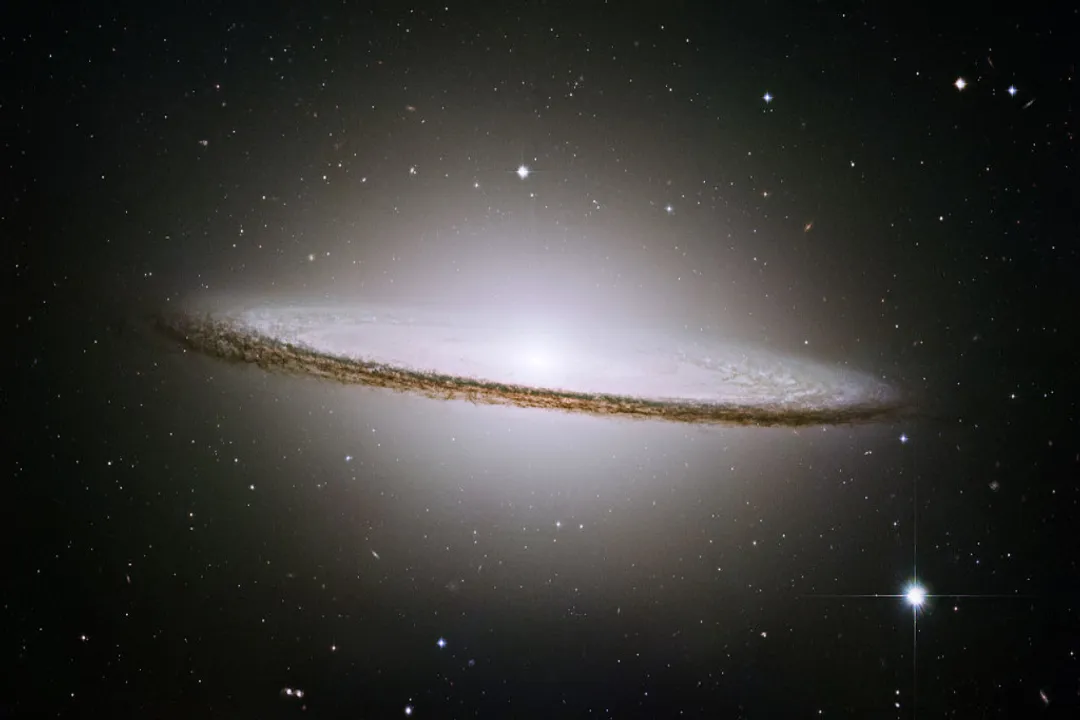
The size of an elliptical galaxy plays a significant role in its star formation history. The largest ellipticals, often found at the centers of galaxy clusters, are believed to have grown by repeatedly absorbing smaller galaxies. [1] This history of continuous accretion and merging explains their massive size and their extreme gas depletion, leading to an almost entirely old stellar population. [1] Smaller ellipticals, sometimes called dwarf ellipticals, might have similar compositions, but their formation paths are less certain, though they too are generally characterized by quiescent star formation. [1]
Here is a quick comparison based on the dominant stellar population history:
| Galaxy Type | Dominant Feature | Star Formation Rate | Dominant Stellar Age |
|---|---|---|---|
| Elliptical | Smooth, featureless | Very Low to None | Old, Red Stars [2][10] |
| Spiral | Disk and Arms | Ongoing | Mix, but dominated by younger stars in arms [3][7] |
| Irregular | Chaotic, no defined shape | Often High | Mixed, often actively forming stars [3][6] |
Observing a galaxy’s color provides a tangible way to estimate its dominant stellar age, even without complex spectrographic analysis. If you are looking at deep-sky objects through a small backyard telescope, you might notice that many fainter, somewhat shapeless blobs—likely distant ellipticals—have a subtle, uniform yellowish hue. That muted color tells you the galaxy has been "running on fumes" in terms of star birth for a long time, as the bright, blue, short-lived massive stars have all gone supernova, leaving the longer-lived, less luminous members to define its visual appearance. [2]
# Mechanisms of Star Quenching
The process that quenches star formation—effectively turning a star-forming galaxy into an old, passive elliptical—is a major topic in astrophysics. While mergers are one driver, other factors can contribute to gas removal in large systems. This removal can happen through powerful galactic winds driven by supernovae or by the central supermassive black hole actively expelling surrounding gas through high-energy jets, processes collectively known as "feedback". [1] In large elliptical galaxies, the gravity is so immense that once gas falls into the core, it can be rapidly heated by these processes, preventing it from cooling down enough to collapse and form stars. This energetic, high-temperature state effectively sterilizes the galaxy of future stellar birth, locking it into an old-star dominated state. [1]
If you are interested in tracking down these ancient stellar banks, understanding the environment is helpful. Elliptical galaxies are far more common in the dense cores of galaxy clusters, where interactions and gas stripping are more frequent compared to the less crowded fields where spiral galaxies tend to reside. [1] Thus, the local cosmic neighborhood is often a strong predictor of the stellar age distribution you will find within a given galaxy structure.
# What About Dwarf Galaxies?
While elliptical galaxies are the clear winners in terms of large, old stellar collections, it is worth noting the role of dwarf galaxies. Dwarf elliptical galaxies (dEs) are common, though they are much less massive than their giant counterparts. [1] Like the larger ellipticals, dwarf ellipticals typically show low rates of star formation and are dominated by older stars. [1] They represent a quieter, less dramatic end-state in galaxy evolution compared to the massive mergers that create giant ellipticals. For instance, many of the smallest, faint companions orbiting the Milky Way, while sometimes classified as irregular or spheroid, exhibit characteristics indicative of very little recent star formation, meaning their star systems are also ancient.
In summary, the structural simplicity of the elliptical galaxy is a result of a violent or long history of gas exhaustion. It is this final, quiescent state—the lack of the blue light emitted by new stars—that flags the elliptical galaxy as the cosmic repository for the universe’s oldest stellar inhabitants. [2][10]
Related Questions
#Citations
Elliptical galaxy - Wikipedia
Elliptical Galaxy | ESA/Hubble
Galaxy Types - NASA Science
Glossary term: Elliptical Galaxy - IAU Office of Astronomy for Education
Galaxies Flashcards - Quizlet
Types of Galaxies | Physical Geography - Lumen Learning
Star Walk - Facebook
Types of Galaxies | NASA Space Place – NASA Science for Kids
Elliptical Galaxy | All dimensions Wiki - Fandom
Which type of galaxy typically contains older stars and less ... - Brainly