Which type of galaxy is likely to form the fewest stars?
When we look up at the night sky, the sheer number of stars we see hints at the universe's incredible productivity—a constant, cosmic manufacturing process. Yet, not all galaxies are created equal in their ability to churn out new stellar generations. Determining which galaxy type forms the fewest stars leads us directly to the class known as elliptical galaxies. These ancient stellar systems stand in stark contrast to their more dynamic spiral and irregular cousins, having largely finished their major building phases long ago.
# Galaxy Types Overview
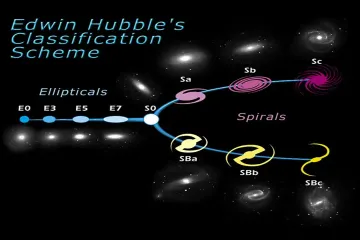
To understand why ellipticals fall behind in stellar production, it helps to quickly sketch out the main players in the galactic zoo. Astronomers generally divide galaxies into three primary morphological categories: spiral, elliptical, and irregular.
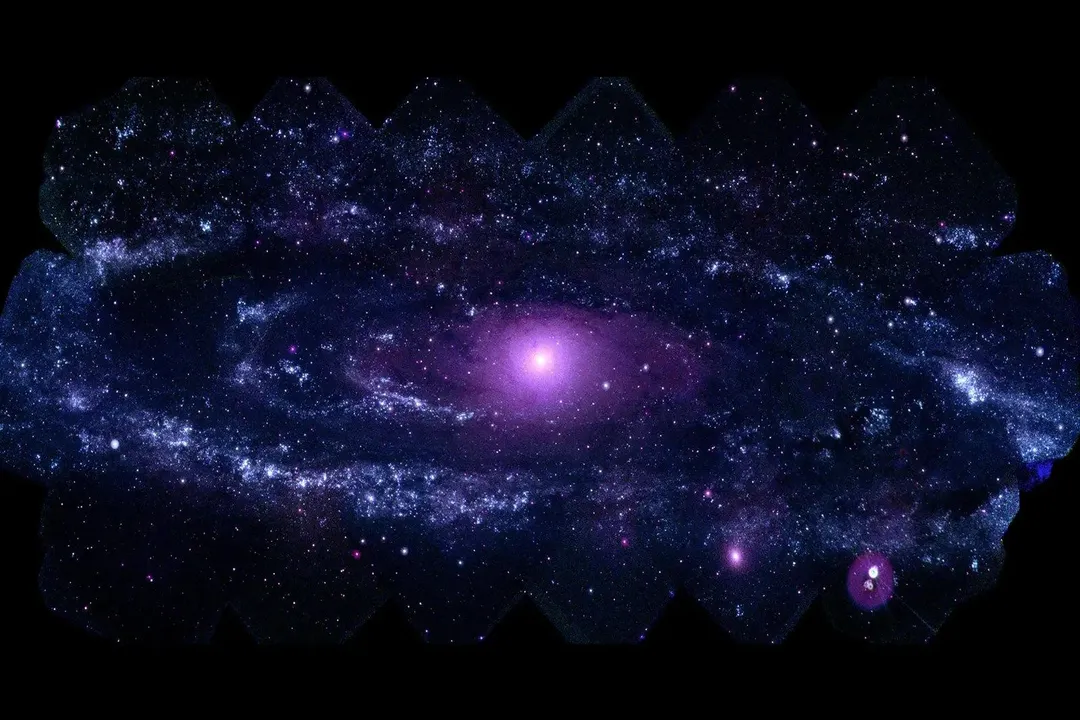
Spiral galaxies, like our own Milky Way and the nearby Andromeda, possess a distinct structure featuring a central bulge, a flat rotating disk, and prominent spiral arms. It is within these arms, where clouds of interstellar gas and dust are compressed, that star formation activity remains quite high. They are, in essence, the active nurseries of the cosmos.
Irregular galaxies, as their name suggests, lack a defined, regular shape. Often, these are the results of gravitational interactions or collisions between other galaxies. Because they frequently contain abundant cold gas and dust, irregular galaxies are often characterized by intense, even vigorous, bursts of star formation.
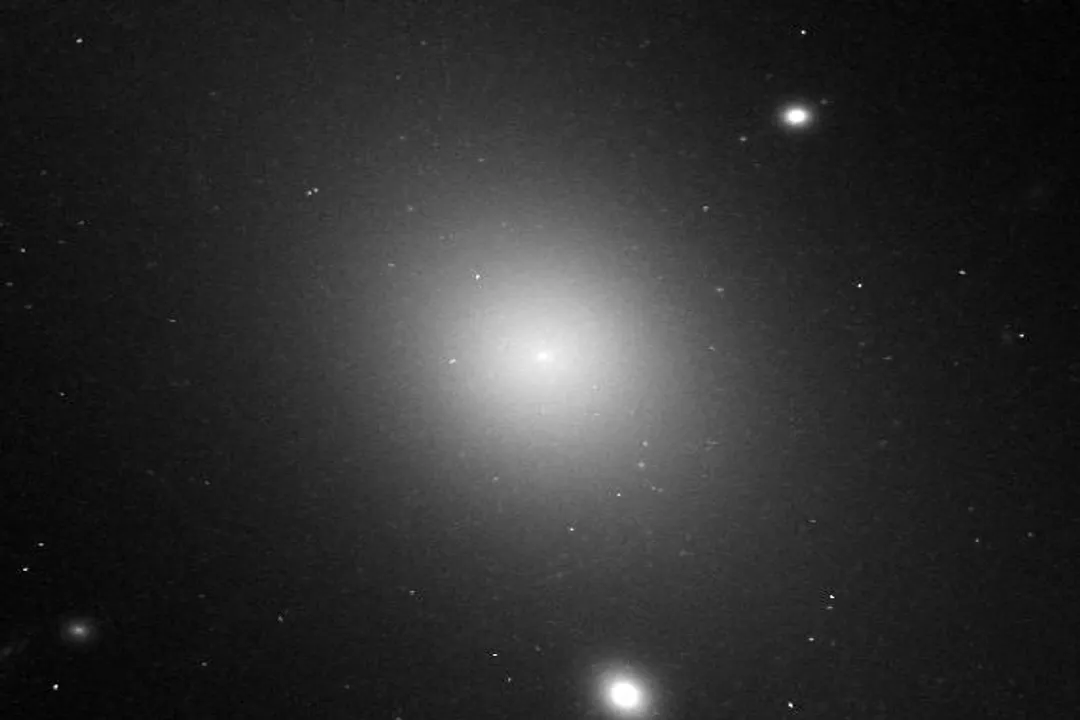
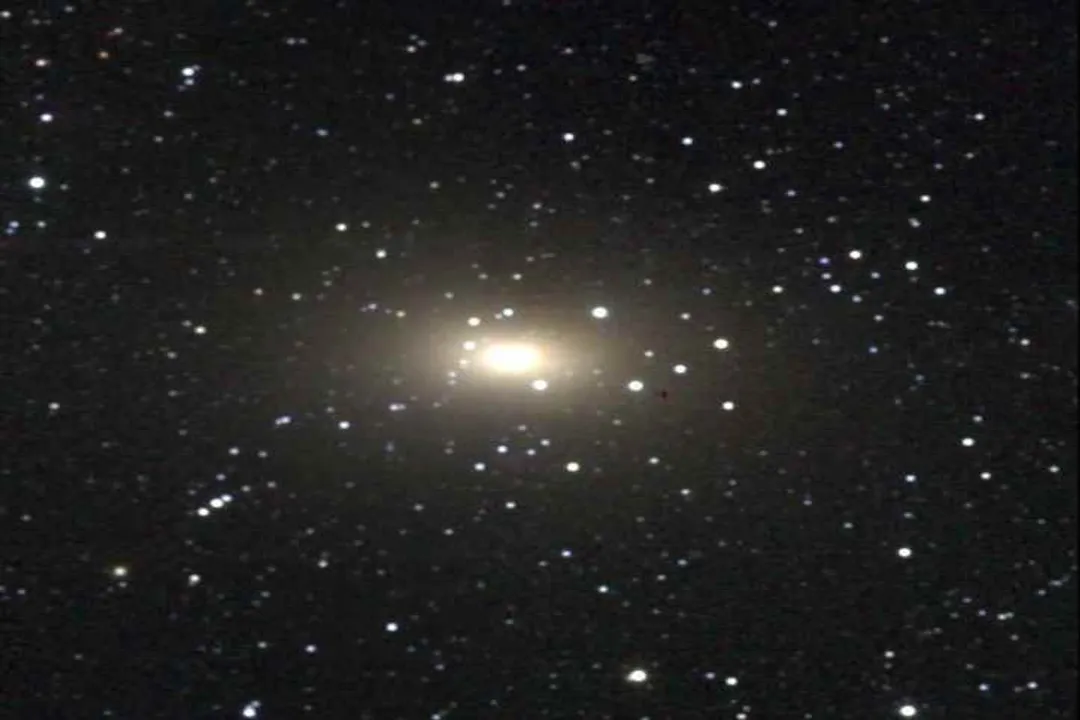
Elliptical galaxies, in contrast, are defined by their smooth, featureless, ellipsoidal appearance. They can range dramatically in size, from massive giant ellipticals, which are often found at the centers of galaxy clusters, down to much smaller dwarf ellipticals. The physical characteristics of these systems are what dictate their low stellar output.
# The Starved State
The fundamental requirement for forming a new star is the presence of substantial reservoirs of cold, dense molecular gas and dust—the raw materials. Elliptical galaxies are conspicuously lacking these necessary ingredients. They have already consumed or otherwise lost the vast majority of their interstellar medium, the gas and dust clouds that feed star birth.
What remains in an elliptical galaxy is predominantly a population of older, lower-mass stars that burn through their fuel slowly. This stellar population often appears distinctly red when observed across long timescales, unlike the blueish hues associated with hot, young stars being born in spiral arms. The overall impression is one of stability and age, rather than creation.
When assessing the rate of star formation, ellipticals are often described as "quiescent" or "dead". While an occasional, very low-level rate of star formation might occur under exceptional circumstances, their average rate is far lower than the other types. For practical purposes, compared to the ongoing production lines in spirals and irregulars, the star factories in ellipticals have effectively been shut down.
# Formation Pathways
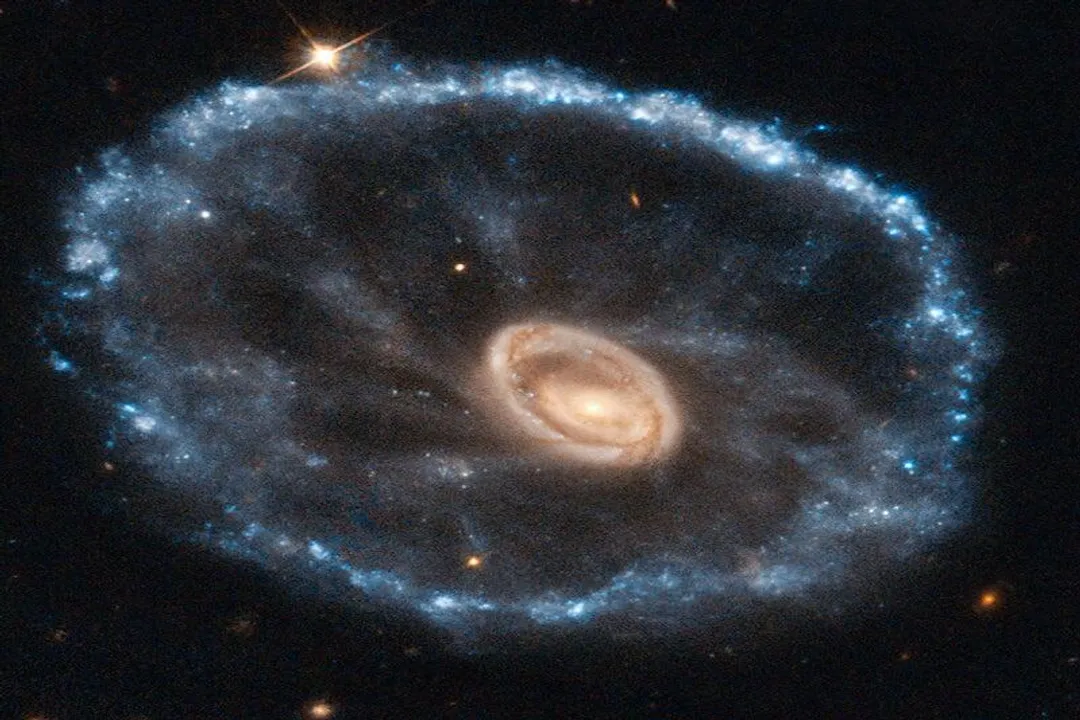
Understanding how ellipticals form helps explain why they stopped making stars. The consensus points toward major merger events as the primary mechanism for creating the largest ellipticals.
When two or more spiral galaxies collide and merge, the violent gravitational dance disrupts the delicate, ordered rotation of the progenitor disks. This merger process is chaotic:
- Gas Consumption: The collision compresses the vast interstellar gas clouds present in the merging spirals, triggering an immense, rapid burst of star formation—a "starburst" phase. This quickly consumes the readily available fuel supply.
- Disruption: The organized structure necessary for sustained, gradual star formation (like spiral arms) is completely destroyed, leaving behind a more random, ellipsoidal shape.
- Ejection/Heating: Powerful feedback mechanisms, sometimes involving active galactic nuclei (supermassive black holes feeding), can heat up or eject any remaining gas, making it too hot or too diffuse to collapse into new stars.
The result of this dramatic merger is a galaxy that has used up its star-forming fuel in one massive frenzy, leaving behind a structure dominated by old stars—the defining feature of a quiescent elliptical.
# Stellar Longevity and Galaxy Mass
We can frame the concept of "fewest stars formed" not just by the current rate, but by the history of production relative to their size. An elliptical galaxy, especially a giant one containing hundreds of billions of stars, has formed an enormous number of stars overall, but its current rate is what makes it the answer to this specific query. This suggests a contrast between total accumulated stellar mass and current stellar productivity.
Consider an imagined comparison between two galaxies of roughly equal total mass: one a large, mature spiral, and the other a massive elliptical. The spiral might still have 10% of its gas budget available for slow, steady star formation over the next few billion years. The elliptical, having undergone its merger-driven starburst perhaps five billion years ago, might only be forming stars at a fraction of that rate, perhaps only a few percent of its total stellar mass over the same future timeframe. In this comparison, the elliptical is demonstrably the one forming the fewest new stars now.
This observation leads to a subtle point about stellar lifecycle management in the universe. Spiral galaxies appear to manage their fuel supply for relatively sustained star formation, whereas elliptical formation is characterized by a rapid, intense sprint followed by a long period of near-stasis. The spiral structure, with its density waves creating spiral arms, acts as a self-regulating factory that slowly processes its raw materials, while the elliptical represents the end-product of a catastrophic fuel dump.
# Morphological Clues to Star Birth Rates
To better visualize the differences in star formation activity, one can categorize the galaxy types based on their expected gas content and star formation vigor:
| Galaxy Type | Characteristic Structure | Typical Star Formation Activity | Primary Fuel Status |
|---|---|---|---|
| Spiral | Disk and Arms | Active, sustained | Moderate gas/dust reserves |
| Irregular | No defined shape | Often vigorous/bursting | High gas/dust reserves |
| Elliptical | Smooth, ellipsoidal | Negligible to very low | Severely depleted gas/dust |
This table clearly isolates the elliptical galaxy as the one that is currently star-formation starved due to its depleted fuel status.
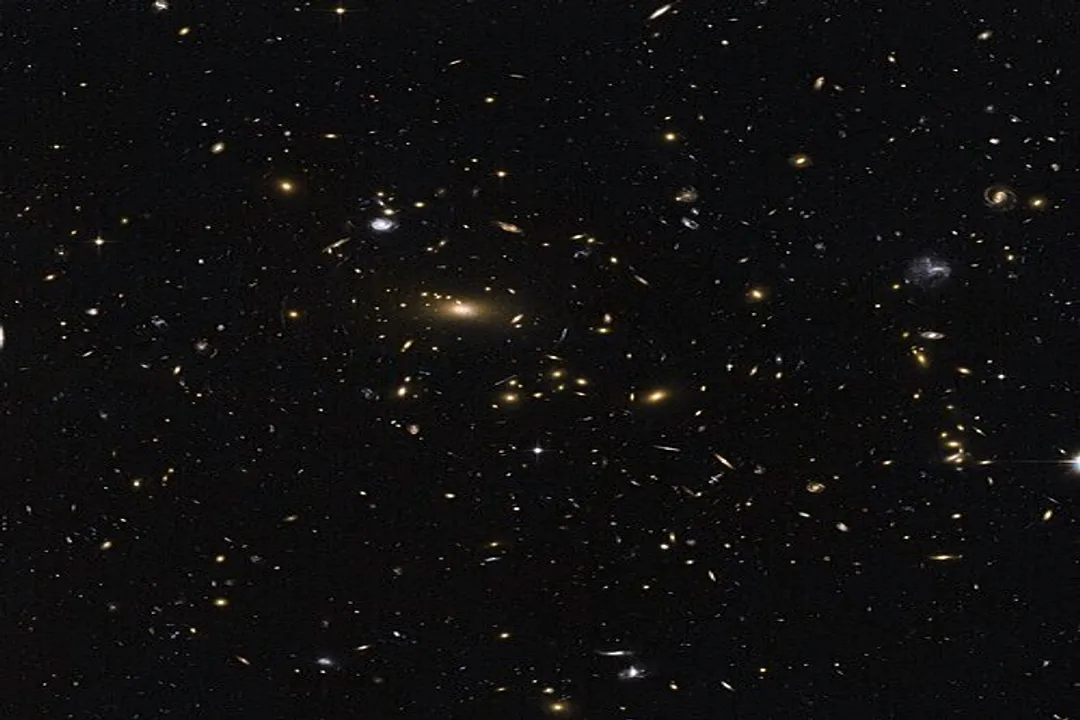
Furthermore, the sheer number of galaxies observed suggests a population distribution, where ellipticals dominate in the dense cores of galaxy clusters. This location may play a role in their quiescence; surrounding hot gas in a cluster environment can strip or heat the gas in member galaxies (a process called ram-pressure stripping), further inhibiting their ability to cool down and form stars, reinforcing the already depleted state of the elliptical morphology.
# Stellar Density and Structure
The internal structure itself discourages new star formation in ellipticals. Spiral galaxies maintain a relatively ordered, rotating disk. This rotation keeps the gas and dust spread out in a thin plane, allowing for gradual, organized collapse into star-forming regions. Elliptical galaxies, having undergone violent mergers, possess a velocity dispersion that is largely random, rather than ordered rotation. This disordered internal motion means that any remaining small pockets of gas are less likely to settle into the dense, stable clouds needed to overcome internal pressure and initiate gravitational collapse into stars. The structure itself militates against the necessary conditions for stellar collapse.
Dwarf ellipticals, the smallest class, also exhibit very little current star formation. While they are too small to have undergone massive mergers like their giant counterparts, they are thought to have either had their gas stripped early on or simply started with less material overall, consigning them to a low-productivity status from the beginning.
In summary, the classification of elliptical galaxy directly correlates with the lowest current rate of star formation because their structure and history—shaped by catastrophic mergers that rapidly consumed or expelled their fuel—leave them devoid of the cold, molecular clouds essential for birthing new stars. They are cosmic relics whose light primarily comes from stars that began shining billions of years in the past.
Related Questions
#Citations
Elliptical galaxy - Wikipedia
Elliptical Galaxy | ESA/Hubble
Which galaxy type is the least likely to create new stars? Why? A. An ...
Galaxy Types - NASA Science
Elliptical Galaxy | All dimensions Wiki - Fandom
The Milky Way Might Never Become An Elliptical Galaxy - Medium
The distant elliptical galaxies from early universe refuse to form stars
Bullying Black Holes Force Galaxies to Stay Red and Dead
Irregular Galaxies | Ask An Earth And Space Scientist