What are the three components to form a galaxy?

Galaxies are monumental stellar islands floating in the vast cosmic ocean, each containing billions of stars bound together by gravity. When we seek to understand what forms a galaxy, we can approach the answer in terms of material building blocks or, perhaps more revealingly for an observer, in terms of large-scale, distinct structural components. While the fundamental ingredients are stars, gas, dust, and the mysterious dark matter, these constituents organize themselves into three primary, massive regions that define the galaxy's appearance and dynamics: the Disk, the Bulge, and the extended Halo. Examining these three structural pillars allows astronomers to map the history and current activity of these immense systems, whether they are grand spirals like our own Milky Way or more quiescent elliptical varieties.
# Galactic Disk
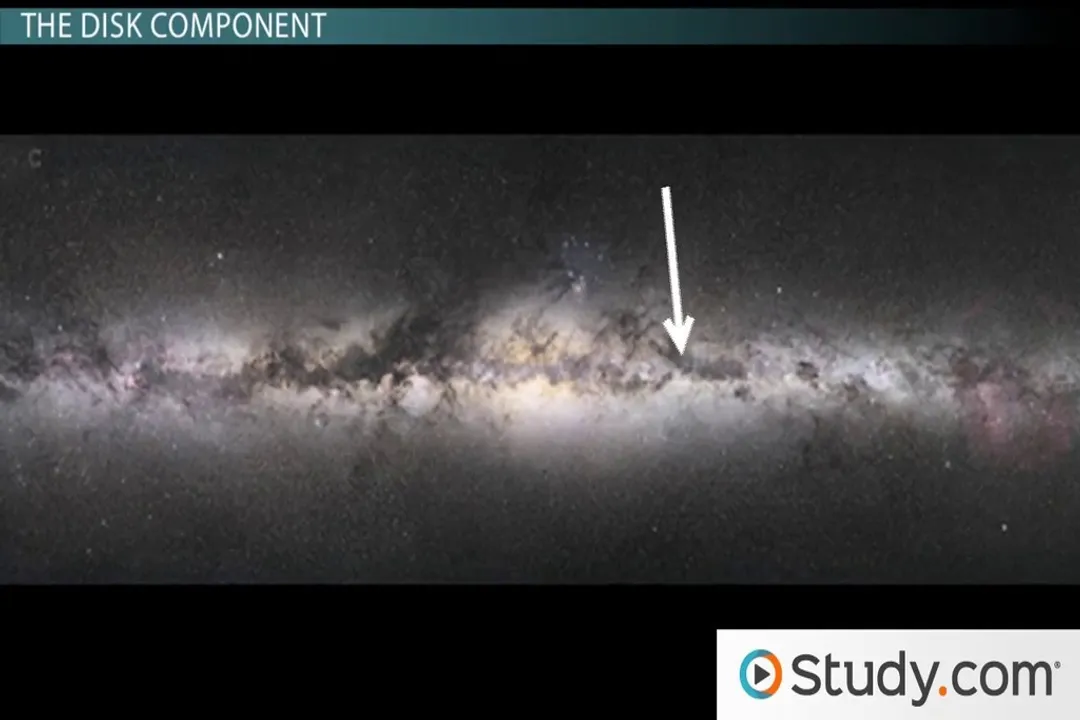
The disk is often the most recognizable feature, especially in spiral galaxies. It is a relatively thin, rotating structure characterized by ongoing star formation and the presence of significant amounts of interstellar gas and dust. This component is dynamic; the gas clouds within it are dense enough to collapse under their own gravity, giving rise to new generations of stars. The youngest, hottest stars—blue supergiants—are prominently located here, tracing out the elegant spiral arms that give many galaxies their distinctive shape.
Within the disk, stars do not orbit randomly; they follow relatively circular paths around the galactic center, much like planets orbiting a star, though the speed of these orbits is determined by the total mass enclosed within that radius, including both visible matter and dark matter. The age distribution in the disk is crucial: the oldest disk stars are generally found further out, while the youngest reside closer to the plane where the gas supply is most abundant. It is fascinating to consider that the thickness of this disk is not uniform across all galaxies; for instance, comparing a tightly wound spiral like M101 to a more flocculent system reveals different star formation efficiencies and gas retention histories, resulting in disks of wildly varying scale heights.
The material composition of the disk is rich in what astronomers call "cold gas" and dust, which obscure the light from stars lying behind them, creating dark lanes visible against the brighter stellar background. This reservoir of material is the engine for the galaxy's future growth. If a galaxy stops replenishing its gas supply, either through consumption into stars or expulsion due to galactic winds or mergers, the disk will eventually cease active star birth, aging into a system dominated by older, redder stars. The Milky Way's disk is generally thought to be a mix, with an older, thicker component and a younger, thinner component actively forming stars today.
# Central Bulge

Moving inward from the graceful sweep of the disk, we encounter the central bulge, a more spheroidal or sometimes bar-shaped component densely packed with stars. The bulge is generally older than the disk stars; it is typically populated by metal-rich, older, lower-mass stars, often appearing yellower or redder than the stellar population in the disk. Because it is composed primarily of older stars and has little cool gas or dust remaining, active star formation within the classical bulge is usually minimal or entirely absent.
The motion of stars within the bulge is markedly different from the orderly rotation seen in the disk. Stars in the bulge exhibit more random, chaotic orbits, moving both toward and away from the center, a characteristic that suggests a more violent or rapid formation history compared to the calm accretion that builds disks. This difference in stellar motion is a key observational tool for distinguishing the bulge from the disk component.
At the very heart of the bulge, particularly in large spirals and some ellipticals, resides a supermassive black hole. This invisible giant plays an undeniable, though often quiescent, role in the galaxy's history, influencing the orbits of the innermost stars and potentially governing the evolution of the bulge itself through past activity such as quasar phases. When we look at the entire galaxy, the bulge acts as the central anchor, gravitationally dominating the inner regions where the density of visible matter peaks. It serves as a record keeper, holding the signature of the galaxy's earliest, most intense periods of growth, possibly through early mergers or rapid gas infall, events that contrast sharply with the more gradual assembly of the disk.
# Dark Matter Halo
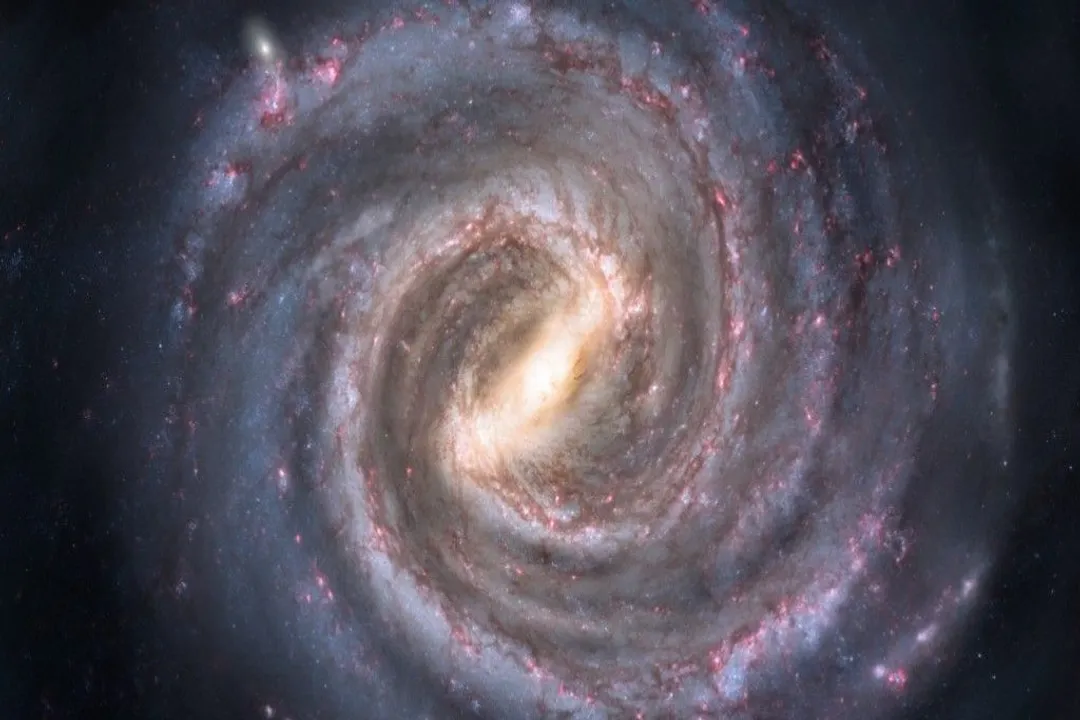
Perhaps the most pervasive and scientifically significant of the three components is the Dark Matter Halo. This component is not defined by the light it emits, as it is composed almost entirely of dark matter—a substance that does not interact with the electromagnetic force, meaning it neither emits nor absorbs light. Despite its invisibility, the halo is thought to contain the vast majority of a galaxy's total mass, often accounting for 80% to 90% or more of the system's total gravitational influence.
The halo envelops the disk and the bulge, extending far beyond the visible stellar boundaries of the galaxy. Its shape is generally modeled as roughly spherical or ellipsoidal, rather than the flat plane of the disk or the somewhat squashed sphere of the bulge. The existence and extent of the halo are inferred entirely through its gravitational effects, most notably by observing the rotation curves of stars in the outer disk. If only the visible matter (stars, gas) dictated the orbital speeds, those speeds would decrease significantly as one moves outward from the center; however, observations consistently show that orbital velocities remain high, or even rise slightly, far out into the periphery, requiring a massive, unseen gravitational component—the halo—to keep those distant stars from flying away.
The halo is also generally considered to be populated by very old, diffuse stars known as halo stars or globular clusters, which orbit the galaxy in highly elongated, random paths. These stars are the oldest components of the galaxy, often dating back to the very beginning of galaxy formation, and they provide crucial clues about the early universe. Structurally, the halo represents the scaffolding upon which the visible galaxy condensed. Galaxy formation models suggest that the dark matter halo formed first, collapsing under gravity from primordial density fluctuations in the early universe, and it was this deep gravitational well that then attracted and held the baryonic matter—the gas, dust, and eventually stars—that settled into the disk and bulge structures we observe today.
To put the scale into perspective, if we were to consider the Milky Way, the visible disk might span about 100,000 light-years across, but the dark matter halo is estimated to extend several times that distance, perhaps reaching out to 500,000 light-years or more, providing the essential gravitational cradle for the entire structure.
# Compositional Constituents
While the Disk, Bulge, and Halo describe where things are, understanding what things are offers a different, equally valid breakdown of a galaxy's formation. These are the primary materials present in cosmic proportions: stars, gas and dust, and dark matter.
Stars are the luminous beacons, the fusion reactors that define a galaxy's visible light. They range from massive, short-lived blue giants to small, long-lived red dwarfs, and they dominate the light output of the bulge and the main body of the disk. The total mass locked up in stars dictates the galaxy's overall luminosity.
Gas and dust, often collectively termed the interstellar medium (ISM), are the raw materials for star birth. This material is spread throughout the disk, concentrated in nebulae, and is essential for replenishing the stellar population. The relative amounts of cold gas versus warm/hot gas can indicate how recently a galaxy has merged with another or how active its central supermassive black hole has been, as energetic outflows can heat or expel this fuel source. If we were to create a simple mass census for a typical spiral galaxy, the distribution might look something like this:
| Component | Approximate Mass Fraction (Visible Galaxy) | Primary Location |
|---|---|---|
| Stars | 50% - 60% | Disk and Bulge |
| Gas & Dust (Baryonic) | 10% - 20% | Disk Plane |
| Dark Matter (Non-Baryonic) | 70% - 90% (Total Mass) | Halo |
Note: These fractions represent estimations for the visible structure and total mass budget, illustrating the dominance of dark matter when considering the entire halo system.
The final, and most enigmatic, constituent is dark matter. As discussed in the halo section, it is the dominant mass component, dictating the large-scale gravitational structure. Understanding the nature of this particle is one of the greatest unsolved mysteries in modern physics.
# Formation Context
The interplay between these structures is a product of the galaxy's evolution, which often involves hierarchical merging—smaller clumps of matter combining over cosmic time. The earliest structures to aggregate were the dark matter halos, which pulled in gas. As gas settled toward the center of the dark matter well, angular momentum caused it to flatten into the disk, while more centrally concentrated or rapidly assembled gas and stars formed the bulge.
It is possible to view the Bulge and Halo as the "old-growth" components, representing the initial collapse and early, often violent, assembly phases. The Disk, by contrast, represents the "ongoing construction zone," a region of cooler, organized gas flow where the processes of star formation continue in a relatively settled manner.
If you examine a galaxy that has undergone a major merger—for example, two spiral galaxies colliding—you often see the disk structures violently disrupted. The resulting system tends to be dominated by a large, spheroidal structure, suggesting that the collision scrambled the organized orbits of the disk stars into the random motions characteristic of a bulge or an elliptical galaxy. This process shows that the formation of the final structure is contingent on the merger history, effectively re-writing the proportions of the three components. A galaxy that forms in isolation and accretes gas slowly might develop a large, pristine disk and a small bulge, whereas a galaxy that has undergone several major mergers will likely have a substantial bulge or appear entirely elliptical, meaning its disk component has been largely destroyed or absorbed into a more massive, non-rotating core.
A helpful way to visualize this historical connection is to think of the components as layers of an archaeological dig: the Halo represents the deepest, oldest layer of undisturbed debris; the Bulge is the next layer, formed during the chaotic, intense period of initial construction; and the Disk is the most recent surface layer, still actively being built upon by the ongoing flow of fresh interstellar medium. The relative sizes of these three zones—the mass fraction dedicated to the dark halo versus the visible bulge versus the star-forming disk—tell astronomers the story of how much turbulence and how much quiet growth the galaxy has experienced throughout its life.
#Videos
What Elements Are Required to Form a Galaxy? - YouTube
Related Questions
#Citations
The Components of a Galaxy - Imagine the Universe!
Galaxies and the Universe Flashcards | Quizlet
Components of the Galaxy
Galaxy formation and evolution - Wikipedia
How galaxies form: Theories, variants and growth - Space
Galaxy Structure, Components & Types - Lesson - Study.com
Milky Way Galaxy
23.3 The Large-Scale Structure of Our Galaxy
What Elements Are Required to Form a Galaxy? - YouTube