What are the three parts of the galaxy?
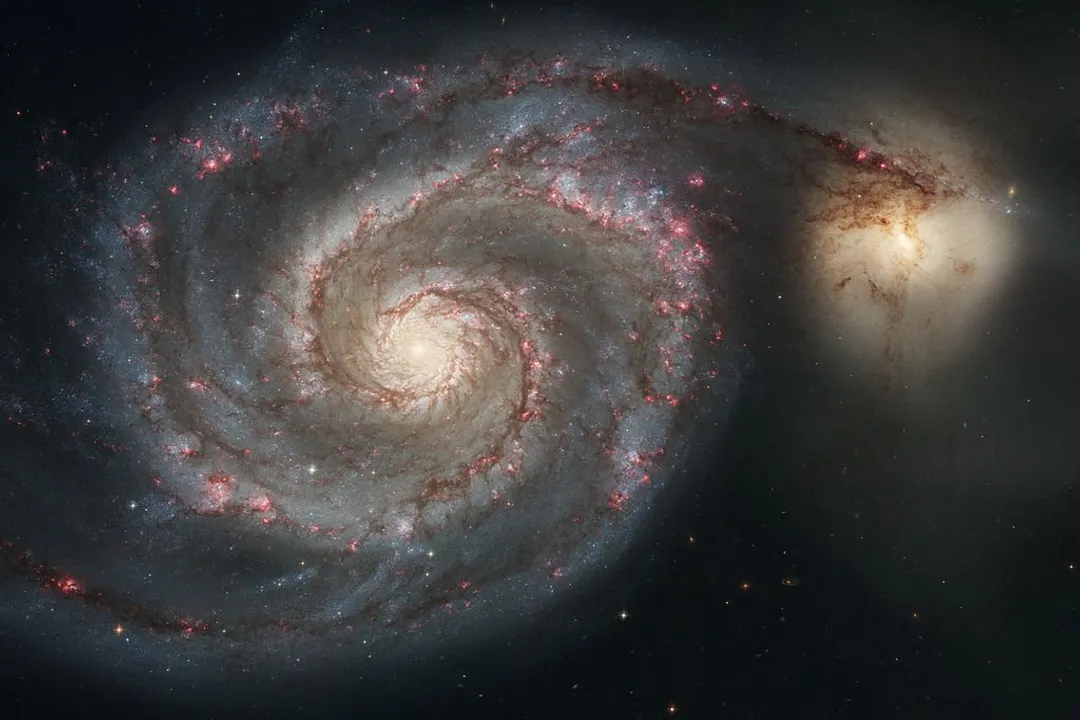
A galaxy represents a colossal, gravitationally bound system containing stars, stellar remnants, interstellar gas, dust, and a significant, often invisible, component known as dark matter. While the sheer variety of galaxies—from spirals like our own Milky Way to ellipticals and irregular shapes—is staggering, most organized systems share a fundamental, three-part architectural blueprint that dictates how their stellar populations interact and evolve. Understanding these three primary zones—the central bulge, the expansive disk, and the surrounding halo—provides the necessary keys to unlock the mysteries of galactic dynamics and history.
# Core Bulge
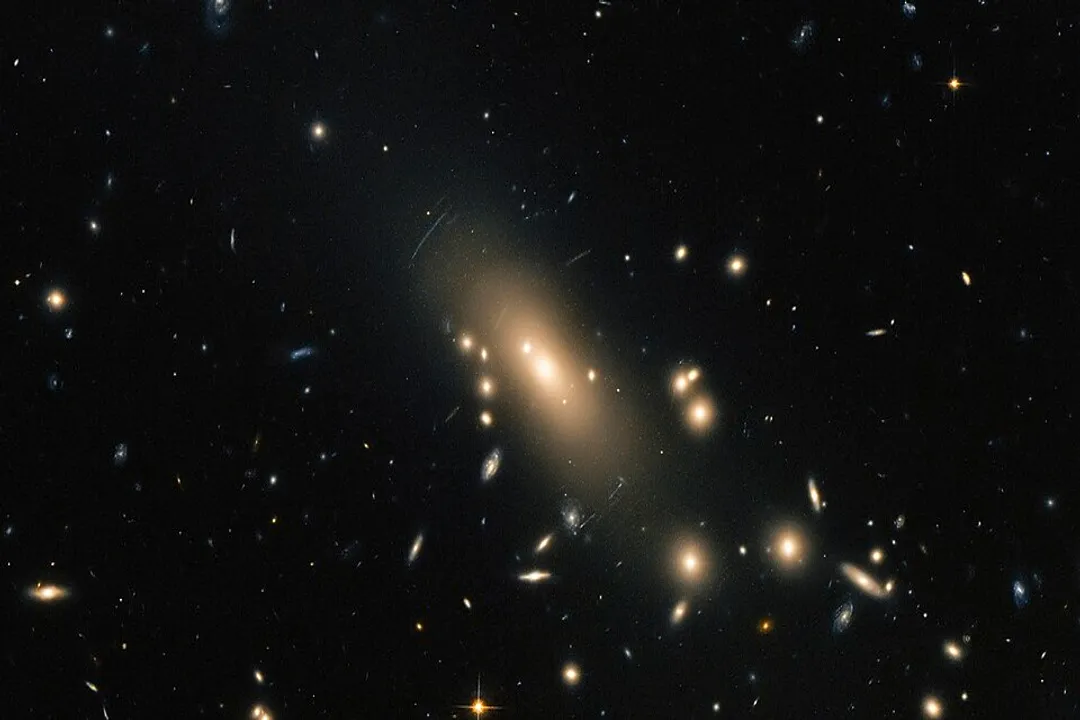
At the very heart of many galaxies, particularly spiral types, sits the bulge. This region is characterized by its dense concentration of stars, often assuming a somewhat spherical or sometimes peanut-like shape that transitions into the main body of the galaxy. If you could zoom in on the bulge of a typical spiral galaxy, you would find a significantly higher density of stars packed into a relatively small volume compared to the outer regions.
The stellar inhabitants of the bulge are generally quite ancient. These stars tend to be older, metal-poor, and redder than the younger stars found elsewhere in the galaxy. Think of the bulge as the galaxy's historical archive; it formed early in the galaxy’s life, resulting in a swift, efficient burst of star formation that used up the initial supply of gas and dust relatively quickly. Because the stars are older and move in more random, less organized orbits, the bulge tends to behave more like a smoothly distributed spheroid. In the Milky Way, the central bulge obscures our direct view of the very core, which is believed to harbor a supermassive black hole, although the bulge itself is defined by the vast population of stars surrounding that center.
# Galactic Disk

Moving outward from the dense central bulge, we encounter the galactic disk. This is arguably the most dynamic and visible part of a spiral galaxy, appearing as a relatively flat, rotating structure. The disk is not uniform; it is where the action happens in terms of current star creation. It is rich in the raw materials needed for star formation—interstellar gas and dust—which are mixed in with billions of stars.
Within the disk, the structural feature that often captures the most attention is the presence of spiral arms. These arms are not rigid structures holding stars in place, but rather density waves—regions where gas and dust are temporarily compressed, triggering intense bursts of star formation. Because of this ongoing process, the disk contains a mix of stellar ages, but it is dominated by younger, hotter, bluer stars that trace these spiral patterns.
The stars and gas clouds in the disk orbit the galactic center in a relatively orderly fashion, maintaining their planar alignment. This organized movement contrasts sharply with the more chaotic, random motions within the bulge. When examining the components found here, it’s worth noting that gas and dust constitute a far larger fraction of the disk’s mass than they do in the bulge. This difference in material availability leads directly to a fascinating divergence in stellar populations. The disk, thanks to its continual recycling of matter, hosts the younger, metal-rich Population I stars, whereas the older, metal-poor Population II stars are more often relegated to the bulge and halo regions. This continuous cycle of gas compression and star birth is the engine that keeps the disk appearing bright and blue over cosmic timescales.
For an analogy, consider a metropolitan area: the bulge is the ancient, tightly packed downtown core, established quickly with older, dense architecture, while the disk is the sprawling, modern suburbs where new construction is constantly underway along established transport corridors (the spiral arms).

# Stellar Halo

Enveloping both the bulge and the disk is the vast, faint, roughly spherical region known as the stellar halo. This component extends far beyond the visible edges of the main stellar body of the galaxy. The halo is the least dense of the three major parts in terms of visible matter, but it plays an enormous role in the galaxy's overall mass and structure.
The stars populating the halo are typically among the oldest objects in the entire galaxy. These stars have highly elongated, often retrograde orbits, meaning they don't stay confined to the plane of the disk but plunge in and out of the galactic center from all angles. They are often found clustered in great spherical groupings called globular clusters, which orbit the galactic center within the halo.
What makes the halo particularly intriguing is its relationship with dark matter. While the visible stars and gas are what we can see, modern cosmology indicates that the majority of a galaxy’s mass, perhaps up to 90 percent, resides in the dark matter halo that forms the largest structural component. This invisible scaffolding dictates the gravitational behavior of the entire system, including how fast the outer stars in the disk are rotating.
It is important to compare the structure’s components to understand the galaxy’s overall composition. If we were to list the primary visible constituents by mass (ignoring dark matter for a moment), the disk often holds the majority of the current star formation and gas, but the bulge represents an immense concentration of older stars. However, when factoring in the invisible mass, the halo component becomes overwhelmingly dominant. This mass distribution difference between the visible (luminous) components and the total mass profile is key to galactic studies. For instance, a galaxy like an elliptical, which lacks a prominent disk, essentially looks like a bloated, massive bulge surrounded by an extended, diffuse halo, suggesting an early, violent formation history with little recent organized accretion of gas.
# Structural Variations
While the Disk-Bulge-Halo model works beautifully for explaining spiral galaxies like the Milky Way, not every galaxy adheres strictly to this trifecta. Elliptical galaxies, for example, are largely featureless spheroids or ellipsoids. In these systems, the distinction between a central bulge and a true disk becomes blurred or non-existent; they are, in essence, giant, extended bulges. They generally contain very little cool gas or dust, meaning star formation essentially ceased long ago. Irregular galaxies, on the other hand, lack any defined, regular shape, suggesting a more chaotic past, perhaps due to gravitational interactions or mergers, leaving behind a jumble of stars, gas, and dust without the clear separation into three distinct components.
The relationship between the bulge and the disk size often correlates with a galaxy’s evolutionary fate. A galaxy that has undergone recent, substantial mergers might have its disk structure disrupted, resulting in a system that looks more like an elliptical galaxy—a large bulge dominating a much smaller, perhaps fragmented, disk. Conversely, a galaxy with a very small, nascent bulge compared to a vast, well-defined disk is actively building its central structure and is likely still rich in the fuel needed for future stellar generations. Thus, studying the relative proportions of the bulge, disk, and halo mass isn't just cataloging parts; it's reading the life story of the galaxy itself, tracing its youth in the ancient halo, its maturity in the bulge, and its present activity within the spinning disk.
Related Questions
#Citations
The Components of a Galaxy - Imagine the Universe!
Galaxy - Wikipedia
What Is a Galaxy? (article) - Khan Academy
Galaxies and the Universe Flashcards | Quizlet
The anatomy of the Milky Way Galaxy - WonderDome Planetarium
Galaxy - Elliptical, Spiral, Irregular | Britannica
Hubble's Galaxies - NASA Science
Galaxies - Astronomy in Hawaii
Video: Galaxy Structure, Components & Types - Study.com