What does a dead galaxy look like?
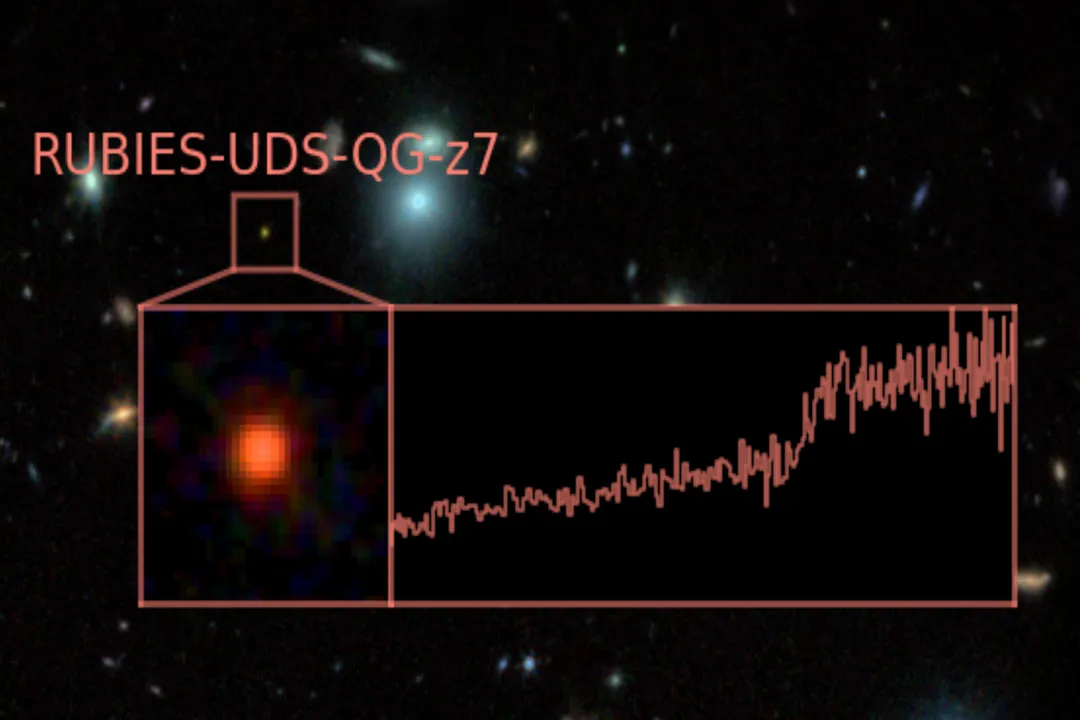
The cessation of star formation within a massive collection of stars fundamentally alters its appearance, moving it from a vibrant, blue-hued celestial object to something much quieter and distinctly redder. When astronomers refer to a galaxy as "dead," they mean it has quenched—it has effectively run out of the necessary cold gas and dust required to ignite new stellar nurseries. [1][4] Observing such a system reveals the aftermath of stellar evolution, a snapshot of a galaxy whose brightest days of dazzling, energetic new stars are long past. [9]
# Quenched Status
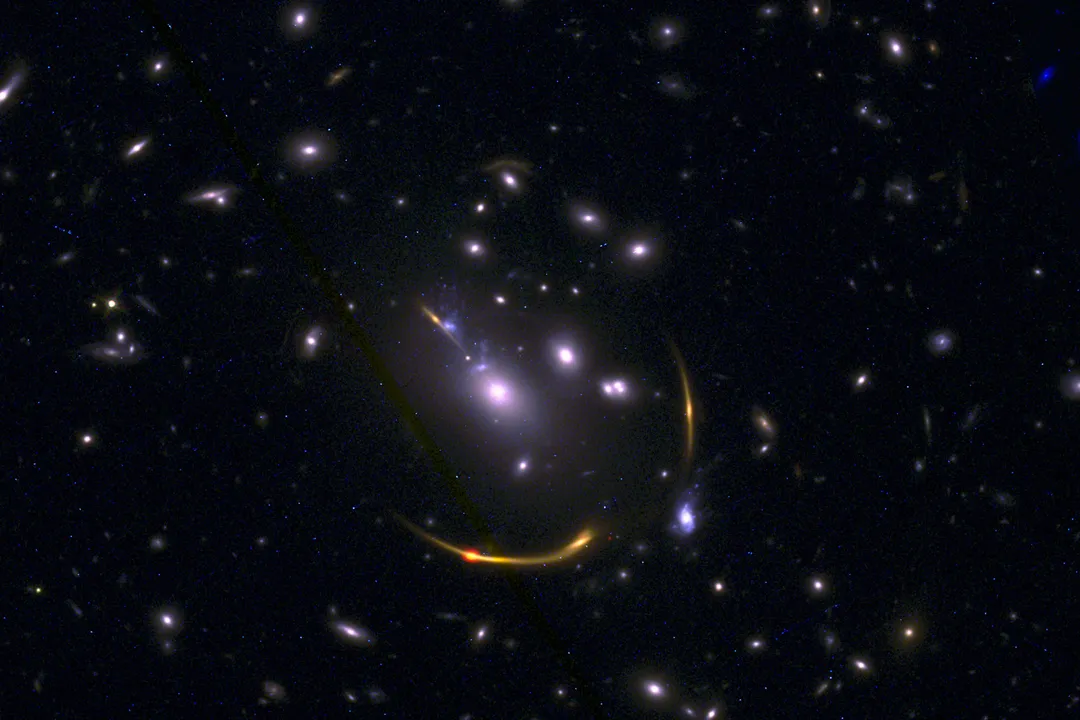
A living galaxy is defined by its ongoing ability to synthesize new stars, a process fueled by reservoirs of cold molecular gas. [1] When this supply dwindles or is violently stripped away, the production line shuts down, marking the transition to a "dead" state. [1] This quenching is not necessarily instantaneous across the entire galaxy, but it represents the dominant phase of its evolution ending. [4] The term itself suggests a finality, though the underlying astrophysics is about the depletion of the raw materials for stellar birth. [1]
We can track this state by looking at the color. Young, massive stars burn extremely hot, emitting light predominantly in the blue and ultraviolet spectrum. A galaxy rich in these stars appears bright blue. [1] As the star formation ceases, the existing massive stars quickly exhaust their fuel and die, leaving behind only the longer-lived, cooler, reddish stars. Consequently, a dead galaxy appears distinctly red when viewed through telescopes. [1][9] This simple color change acts as a primary indicator for astronomers mapping the universe's history.
# Visual Signs
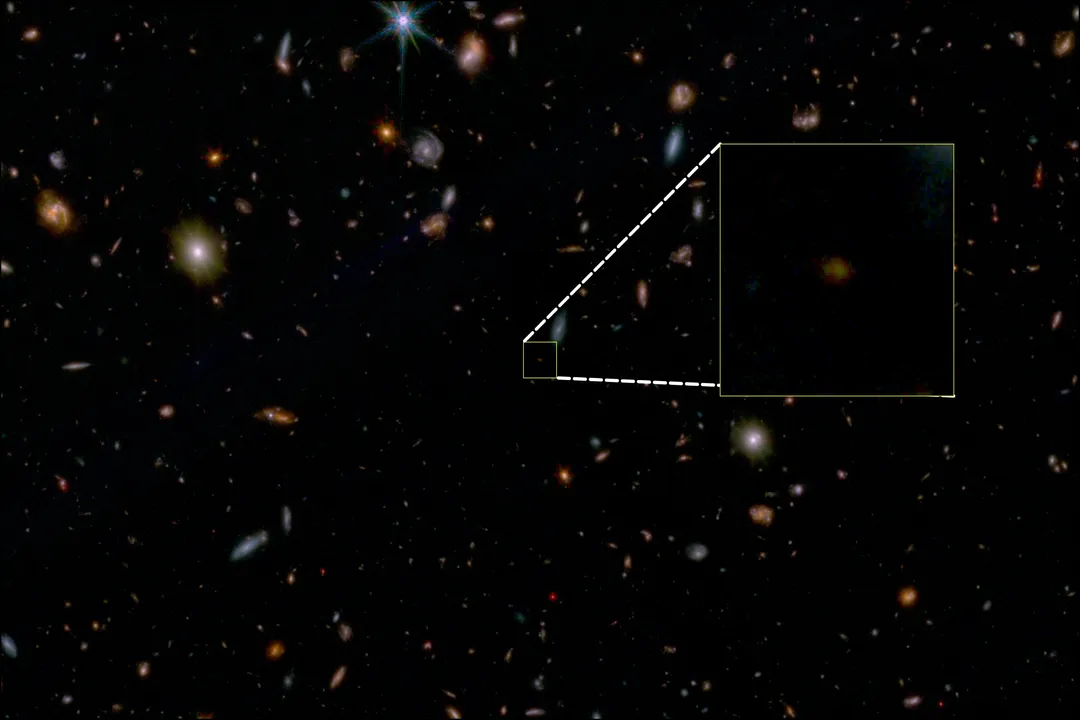
Visually, the "look" of a dead galaxy depends heavily on its history and the method of observation, but the underlying redness is constant. [1][9] For a long time, the typical image of a dead galaxy was a smooth, featureless elliptical shape, resulting from ancient mergers that rapidly consumed or ejected gas. [3] However, observations continue to challenge this simple picture.
The Hubble Space Telescope captured images of a massive dead disk galaxy, which is significant because disks usually imply ongoing rotation and a more ordered structure, often associated with active gas reserves. [3] Finding such a large, dead spiral retaining its flat, disk-like shape implies that the process that killed its star formation did not necessarily erase its rotational structure entirely. This offers a fascinating contrast: the physics of star formation has stopped, but the morphology—the shape inherited from its dynamic past—can stubbornly persist. [3] Imagine a city where all construction suddenly halts; the buildings remain standing, but the cranes disappear and no new suburbs are laid out.
# Early Death Puzzles
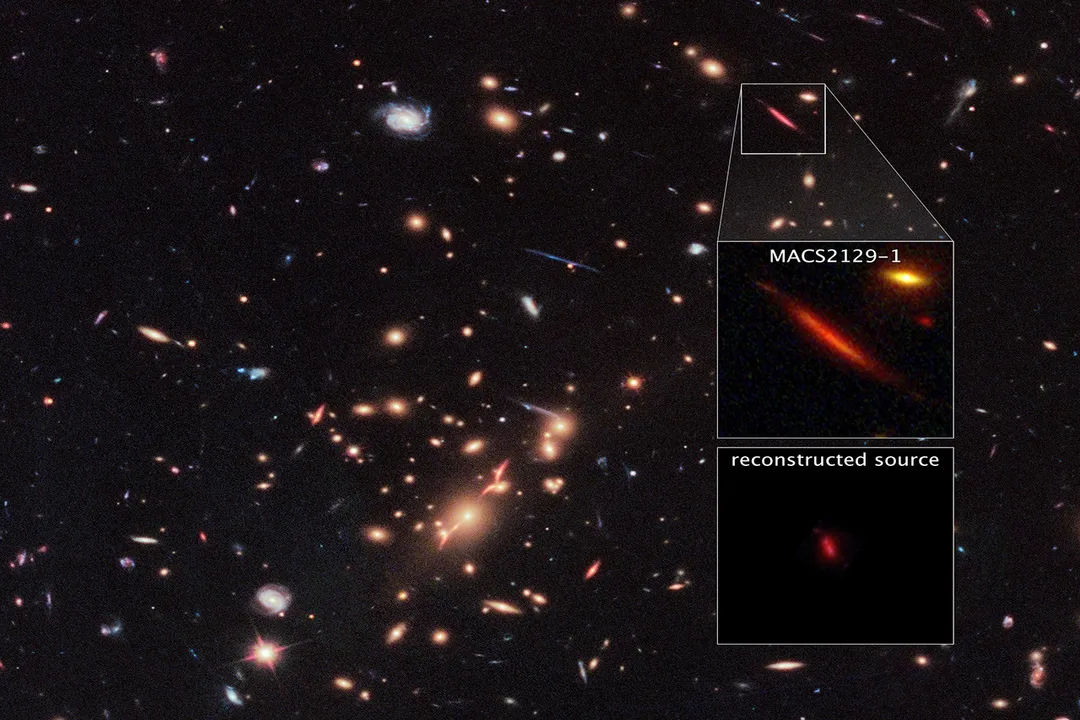
Perhaps the most visually startling aspect of dead galaxies isn't their current color, but when they achieved this state. Discoveries made by the James Webb Space Telescope (JWST) have pushed the timeline of quenching surprisingly far back into cosmic history. [4] Astronomers have identified galaxies that had already died when the universe was barely a few hundred million years old. [5][7]
One record-breaking example was found to be dead just 700 million years after the Big Bang. [5][7] This forces a significant recalibration of galaxy evolution models. [9] For a galaxy to live fast and die young—to use up all its star-making fuel so quickly—the physical mechanisms driving this process must have been exceptionally aggressive in the early cosmos. [4] In the slower-evolving universe we see today, quenching often appears to be a gradual process influenced by interactions with the surrounding cosmic web or slow internal consumption. [1] The existence of these ancient, dead systems suggests that the early universe possessed environmental factors or internal dynamics capable of stripping or consuming gas reservoirs at a much faster rate than previously modeled. [4] If we think of a galaxy's fuel tank, these early systems had either a much smaller tank to begin with or a massive leak that appeared almost immediately after the engine started running.
# Fuel Mystery
The core question remains: where did the fuel go? A galaxy runs out of stars when it runs out of cold gas. [1] This fuel can be depleted in a few key ways: it can be used up creating stars, it can be blown out by energetic feedback from supernovae or active black holes, or it can be stripped away by interactions with its environment, such as ram pressure from hotter surrounding gas. [1]
The puzzles surrounding the ancient dead galaxies suggest that one or more of these mechanisms operated with astonishing efficiency. Consider the sheer scale: to maintain a massive structure, you need substantial fuel. For a galaxy to become massive and then completely cease star formation within the first billion years of the universe’s existence implies either a runaway star formation burst that burned through all the gas rapidly, or a highly effective environmental scavenger that swept the gas clean. [4] If we were to create a simple timeline of galaxy maturity, the current data shows that some galaxies are hitting the "end of life" marker far earlier than expected, meaning the physics governing gas accretion and retention needs revision for the infant universe. [9]
# Galaxy Diversity
While the "red and dead" label provides a useful broad classification, not all quenched galaxies are identical, leading scientists to investigate the "unexplored flavors" of these systems. [8] The fact that both massive disk galaxies and older, potentially more elliptical systems can be found in a dead state suggests that how a galaxy dies might be as diverse as when it dies. [3][8]
We can conceptually categorize the potential outcomes based on the quenching trigger:
| Quenching Mechanism | Expected Morphological Effect | Visual Appearance |
|---|---|---|
| Violent Merger | Elliptical, smooth | Homogeneously red |
| Environmental Stripping (Ram Pressure) | Could retain disk structure initially | Red, potentially with dust lanes |
| Internal Exhaustion | Can maintain original disk/spiral shape | Red, but with structure visible |
| [8] |
The subtle differences in shape, size, and proximity to other galaxies in these dead populations help astronomers map out the specific paths that led to star formation failure. A dead galaxy that died due to an internal runaway process might look chemically different from one that was slowly starved by a dense cluster environment, even if both appear red today. [8] Therefore, the appearance of a dead galaxy is not just about its color, but also the ghostly remnants of its former structure, which act as clues to its final moments.
#Videos
NASA finds dead spiral galaxy - YouTube
JWST Finds a Bizarre Galaxy In Early Universe That Appears Dead
Related Questions
#Citations
'Dead' Galaxies Mysteriously Ran Out of Fuel to Make Stars in Early ...
NASA finds dead spiral galaxy - YouTube
Hubble Captures Massive Dead Disk Galaxy that Challenges ...
Record-breaking 'dead' galaxy discovered by JWST lived fast and ...
Astronomers spot oldest 'dead' galaxy yet observed - Phys.org
Astronomers spot oldest 'dead' galaxy yet observed
The Unexplored Flavors of Dead Galaxies : Department of Astronomy
Discovery Of A Young, Dead Galaxy Creates A Huge Puzzle For ...