Do dead galaxies exist?
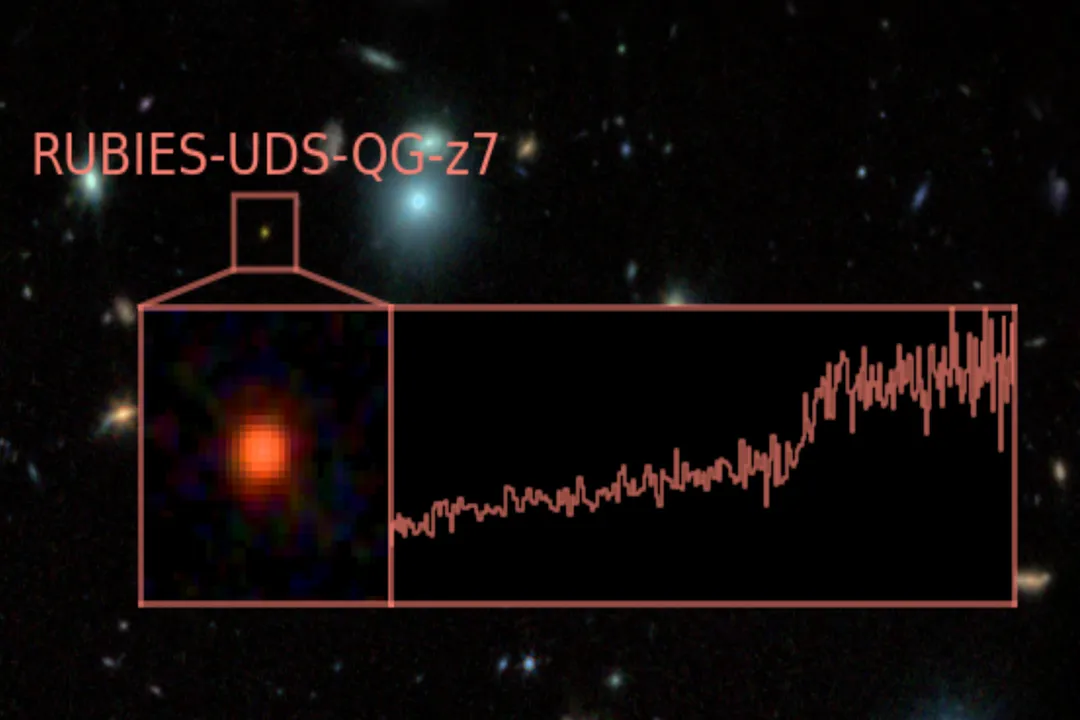
The universe is filled with colossal structures we call galaxies, and for a long time, the picture of their life cycle seemed fairly straightforward: they are born from clouds of gas, vigorously form stars, and slowly fade as their fuel runs low. However, modern observations, particularly those made possible by new instruments like the James Webb Space Telescope (JWST), have introduced a surprising complication to this narrative: the existence of galaxies that have abruptly decided to retire from star-making much earlier than anticipated. [5][7] These are the "dead galaxies"—celestial cities that have mysteriously halted their primary activity of creating new suns. [3][9]
# Defining Dead
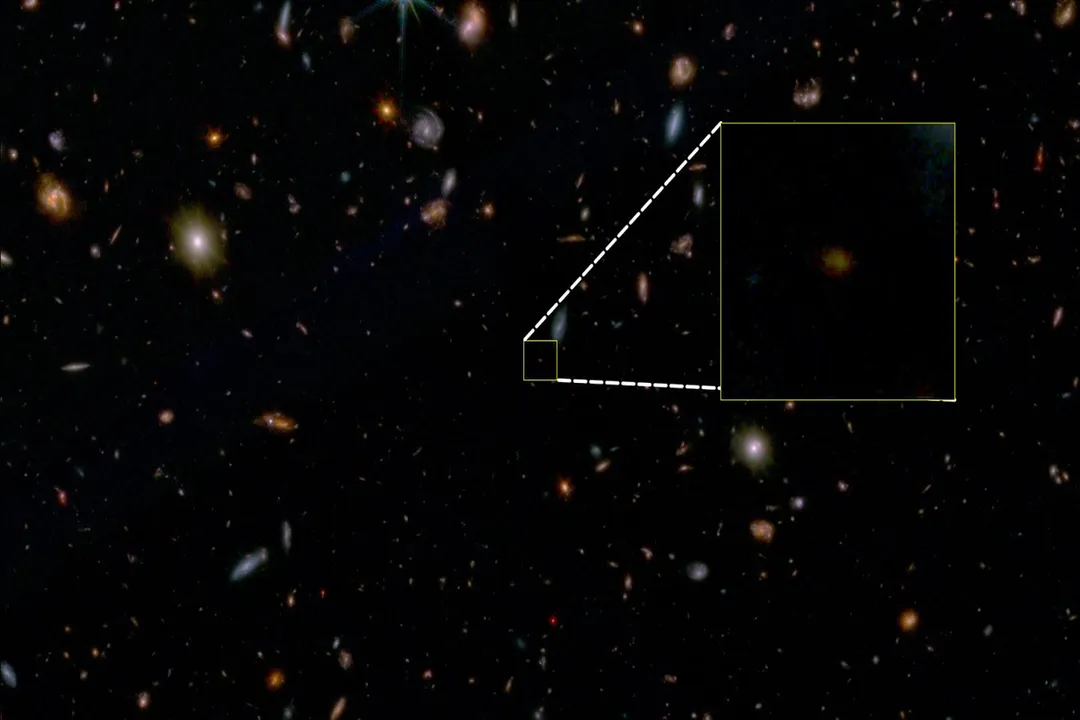
When astronomers label a galaxy as "dead," they aren't suggesting the galaxy itself has vanished or stopped existing. Instead, the term refers specifically to the cessation of star formation. [9] A living galaxy is a bustling stellar nursery, constantly turning vast clouds of hydrogen and helium gas into new stars. These new stars, especially the massive, hot ones, burn with a brilliant blue light. [2] A dead galaxy, conversely, has effectively run out of the raw material, or the necessary conditions, to ignite new stars. [7][9]
The most common way astronomers detect this state is through color. Since the most massive, shortest-lived stars are the first to die out, a galaxy that stops forming stars will rapidly lose its blue hue. Over time, it becomes dominated by the light of older, cooler, redder stars, leading to the common description of these objects as "red and dead". [2] This observational shift from blue to red acts as a spectral tombstone, marking the end of the galaxy's most productive phase. [6]
# Early Graveyards
The most perplexing aspect of these dead galaxies isn't their existence, but when they stopped working. Cosmological models traditionally predicted that star formation would continue in massive galaxies for a much longer stretch of cosmic history, perhaps billions of years after the Big Bang. [2][5] The expectation was that the gas needed for stellar birth would persist longer in these large systems. [7]
Yet, observations have revealed massive galaxies that were already fully formed and completely dormant when the universe was relatively young. [5] The JWST has been instrumental in uncovering these ancient relics. Astronomers have identified what might be the oldest dead galaxy yet observed, indicating that some of these systems performed their entire life cycle—growth, fuel consumption, and shutdown—at an astonishing speed in the very early universe. [5][6] This discovery means that some of the universe’s largest structures "lived fast and died young". [6] If we consider our own Milky Way, which is still actively forming stars today, these early shutdowns represent a startling evolutionary divergence that occurred when the cosmos was only a fraction of its current age. [3]
To put this timing into perspective, if the universe were the equivalent of a 14-billion-year-old human, we would expect the major 'adult' life events of galaxies to still be underway. Finding a galaxy that has already completed its stellar life cycle only a billion or two years into the universe's timeline is like finding a fully grown, retired grandparent when the universal "childhood" should still be dominant. [5]
# The Fuel Dilemma
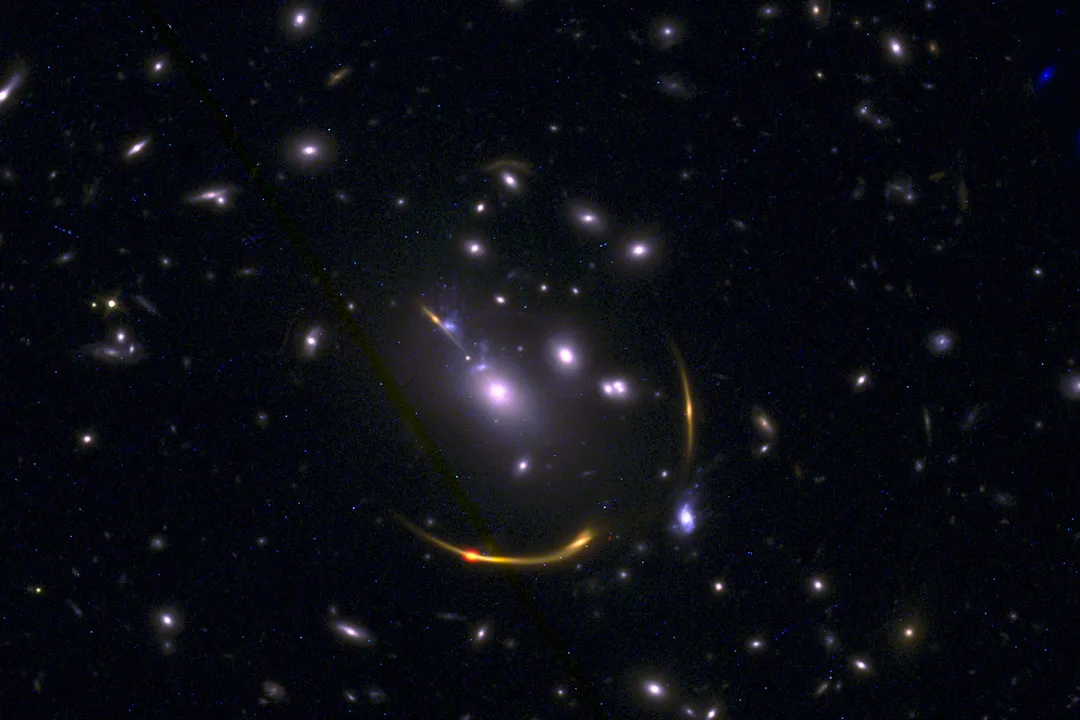
The fundamental mystery surrounding these objects centers on the sudden interruption of their fuel supply. Star formation requires cold, dense gas—primarily hydrogen—which acts as the seed for new stars. [9] If a galaxy is dead, it has either used up all its available gas or has somehow been prevented from pulling in new reserves from the intergalactic medium. [7]
What could cause such a dramatic stoppage? One possibility revolves around the efficiency of gas consumption. Perhaps these early, massive galaxies were too good at forming stars, burning through their enormous initial gas reservoirs at an unprecedented rate. [6] A galaxy that is significantly more massive than our own would naturally require more fuel, but if its consumption rate was disproportionately high, it could exhaust itself quickly. [7]
Another scenario involves processes that actively expel or heat the remaining gas, making it too hot or too diffuse to collapse into new stars. This expulsion could be driven by powerful outflows powered by a central supermassive black hole—an active galactic nucleus (AGN)—which, when highly active, can blast gas out of the galaxy's disk with incredible force. [9] If the gas reservoir is violently ejected or heated to a temperature where it cannot cool down and condense, star formation stalls immediately. [9] The difference between an actively star-forming galaxy and a dead one often boils down to the thermodynamic state of its gas content.
# Redness and Evolution
The visual identifier, the "redness" of these galaxies, is directly tied to the physics of stellar life cycles. A galaxy's color is a composite of the light emitted by all its stars. When a galaxy is actively forming stars, it produces many young, massive, luminous O and B type stars. These stars have short lifespans—millions of years, compared to the Sun's 10-billion-year tenure—but their intense radiation makes the galaxy shine vividly blue. [2]
When star formation ceases, no new blue stars are born. The existing blue stars quickly die off, leaving behind only the longer-lived, dimmer, redder stars like K and M dwarfs, and the remnants of massive stars like white dwarfs and neutron stars. The resulting light signature is overwhelmingly red. [2] The observation that these galaxies are already red suggests that the quenching process—the shutting down of star formation—was not a gradual decline but a relatively rapid event in the cosmic timeline. [6]
Consider this: the light we see from a galaxy formed three billion years after the Big Bang has traveled for over 11 billion years to reach us today. [5] This means we are seeing that galaxy as it was then. The fact that such objects were already massive and already dead that long ago implies that the physical mechanisms responsible for galaxy quenching must have been incredibly efficient and active very early on. For instance, if a galaxy's gas was blown out by a black hole 12 billion years ago, we observe the result of that ancient blowout today, long before other galaxies had even begun to slow down. [9]
# Comparing Evolutionary Paths
The existence of these "red and dead" systems forces a necessary revision of how we view galaxy assembly. We must now account for two primary evolutionary paths in the early universe: those galaxies that continued to accrue gas and slowly build up their stellar mass over time (like our local spirals), and those that formed their stars rapidly in a massive, intense burst and then shut down almost immediately. [6]
This suggests that the environment plays a critical role, though the precise details remain under investigation. Were these early dead galaxies located in particularly dense clusters where interactions or environmental stripping efficiently removed their cold gas? Or were they isolated, massive systems whose internal black holes simply overpowered their gas supply?
If we were to create a simplified "Galaxy Life Status Table" based on these findings, it highlights the divergence:
| Galaxy Status | Star Formation Rate | Dominant Stellar Color | Typical Cosmic Age Observed | Implied Mechanism |
|---|---|---|---|---|
| Active | High/Ongoing | Blue | Broad range, including early universe | Steady gas accretion/consumption |
| Red and Dead | Near Zero | Red | Surprisingly early universe | Rapid fuel exhaustion or expulsion |
It is intriguing to note that the same mechanisms that might have caused these early galaxies to die young could also explain why some larger galaxies today show signs of slowing down—it’s just that the process took much longer for local systems to reach that point. [9] The early universe seems to have been a much more extreme environment, capable of accelerating processes that take eons in the modern cosmos.
# Unanswered Questions
While we have evidence of what happened—galaxies stopped forming stars—the why remains a central topic of astrophysical debate. Understanding the precise physical trigger that turns off star formation in these massive, early systems is key to validating our fundamental models of cosmology and structure formation. [9] Did the black hole feedback mechanism win outright in the early, chaotic universe? Or was the initial gas supply simply too concentrated and rapidly consumed? The data gathered by instruments like JWST continues to provide snapshots of this ancient stellar graveyard, slowly filling in the gaps in our understanding of the universe's first massive cities. [3][6] The universe, it seems, was less patient with some of its earliest creations than we previously assumed.
Related Questions
#Citations
Dead disk - Wikipedia
r/space on Reddit: Galaxies die earlier than expected - red and dead ...
Hubble Finds Early, Massive Galaxies Running on Empty
The oldest 'dead' galaxy ever observed - YouTube
Astronomers spot oldest 'dead' galaxy yet observed
Record-breaking 'dead' galaxy discovered by JWST lived fast and ...
'Dead' Galaxies Mysteriously Ran Out of Fuel to Make Stars in Early ...
Webb space telescope spots oldest 'dead' galaxy - CNN
Why Dead Galaxies 'Rest in Peace,' Never to Form Stars Again