Why do supernova remnants look like rings rather than spheres?
The brilliant, expanding clouds of gas and dust left behind after a massive star dies—known as supernova remnants—rarely present themselves as the perfect, uniform spheres we might sketch in a textbook. Instead, many, such as the famous Supernova 1987A (SN 1987A), are visually dominated by strikingly bright rings or arcs. This apparent discrepancy between the expected symmetrical blast and the observed ring shape arises from a complex interplay between the material the star shed before its death and the geometry of how the resulting shockwave interacts with its immediate environment, compounded by the perspective from which we view the event across light-years of space. [1][3][4]
# Shockwave Geometry

When a star exhausts its nuclear fuel and collapses, the resulting explosion drives an enormous shockwave outward at incredible speeds, potentially reaching thousands of kilometers per second. [7] Intuitively, this explosion should propagate outward in all directions equally, creating an expanding bubble—a sphere of superheated plasma and debris. However, the physical reality of a stellar explosion is far more nuanced than a simple, perfectly uniform detonation in empty space. [7]
The crucial factor in determining the remnant's appearance is not solely the initial explosion, but what the explosion slams into. If the progenitor star had shed its outer layers uniformly into a perfectly spherical cloud of gas, the resulting shockwave would expand into a near-perfect spherical shell. The problem is that stars, especially those capable of supernova, rarely do this. They often experience periods of intense mass loss before the final catastrophe, ejecting material episodically or asymmetrically. [4][9]
For an observer on Earth, the appearance of the remnant is heavily dependent on the density profile of the surrounding medium. Where the pre-existing material is densest, the shockwave excites the gas most intensely, causing it to glow brighter. If the star had shed its outer layers into a thick band or a torus (a doughnut shape) while still on the main sequence or red giant phase, the resulting supernova shockwave, upon colliding with this denser material, will light up that toroidal structure most prominently. [1][4] We are essentially watching the light signature of the shockwave illuminating the structure that the star built in the years or millennia leading up to its demise.
# Pre-ejected Torus
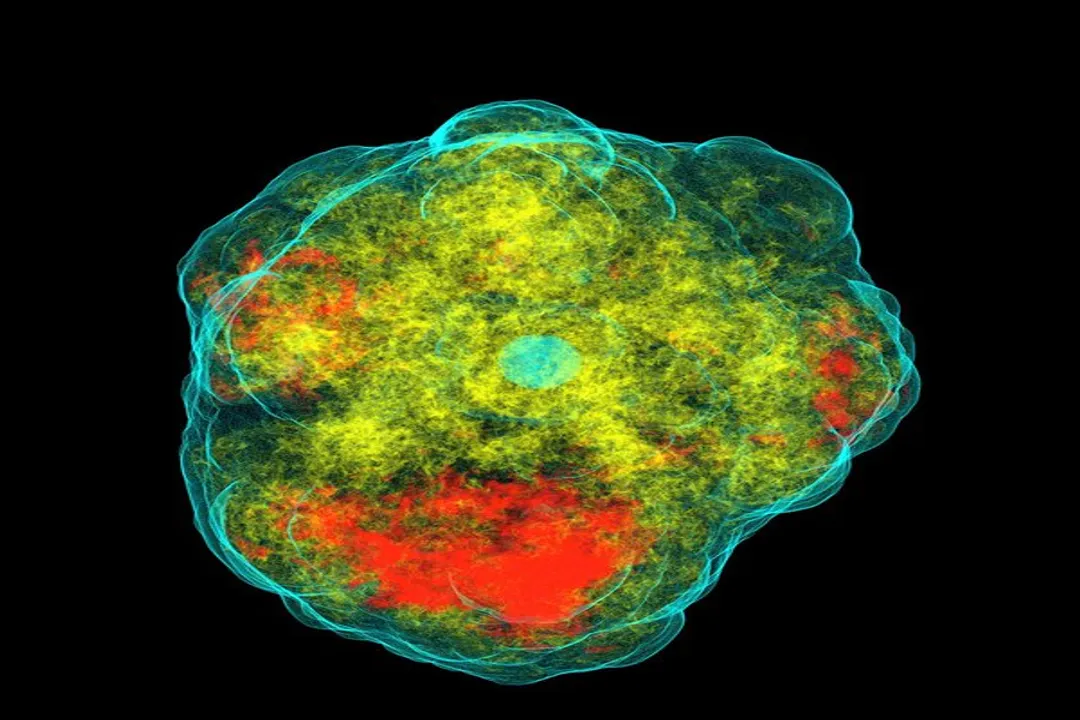
The appearance of a ring structure is most clearly understood by examining the progenitor of SN 1987A, a blue supergiant star known as Sanduleka Star. [1] This star did not explode in isolation; it had a complex history of ejecting mass. [1] Observations revealed that the material surrounding SN 1987A was arranged in a dense, equatorial ring of gas orbiting the star before the explosion. [1][3] This ring was likely formed from stellar winds blowing off the star during its previous evolutionary phases. [3]
When the supernova shockwave finally reached this pre-existing material, it compressed and heated it dramatically, causing the gas to glow brightly in visible light and other wavelengths. [1][4] Because the ring structure—the torus—is dense along its equator and much more diffuse along its poles, the shockwave illuminating this material creates a very distinct visual feature: a bright ring against a much fainter background of the less dense surrounding material. [1] The "ring" we see is therefore an intersection of the expanding, spherical shockwave with a pre-existing, non-spherical structure in the surrounding space. [3]
Imagine an expanding, spherical bubble of air (the shockwave) moving through a region where someone has laid down a hula hoop made of brightly colored, highly reflective paint (the pre-ejected torus). As the bubble hits the hula hoop, the impact area lights up intensely in a circle. The rest of the bubble might be mostly invisible because it is expanding into empty or less reflective space. The light we detect is an optical effect based on where the expanding energy meets dense material. [4] This contrasts sharply with the idea that the explosion itself carved out a spherical hole; rather, the explosion revealed a pre-existing, non-uniform structure.
# Viewing Angle Effects
Another essential component of why we perceive a ring, even if the pre-ejected material was a somewhat flattened disk, is the viewing geometry. [1] If a dense, dusty torus surrounds a star, and the observer is looking edge-on to that torus, the resulting image will appear as a thin ring or circle. [1] If we were viewing the same structure perfectly pole-on, it might look like a solid disk.
For SN 1987A, the structure is believed to be a thick ring or a partial torus. [3] Our view from Earth happens to be almost exactly aligned with the plane of that material, leading to the dramatic ring appearance. [1] If the ring structure were tilted at a significant angle relative to our line of sight, we would see an ellipse rather than a perfect circle, or perhaps just two bright arcs if the structure were highly incomplete. [1] This angular dependence means that even relatively simple, doughnut-shaped environments can produce seemingly complex or incomplete visual structures depending on the Earth's vantage point. This is a fundamental principle in interpreting any 3D structure observed across vast cosmic distances; what we see is a projection of reality onto a 2D plane from one specific angle. [9]
# Non-Spherical Births
While the pre-ejected material often explains the ring phenomenon, it is also true that the explosion mechanism itself can introduce asymmetries, preventing a truly spherical remnant even in uniform space. [7] Stellar core collapse is a violent, chaotic process. The asymmetry can arise from several factors:
- Rotation: Rapidly rotating stars can undergo explosions that favor certain directions of material ejection. [7]
- Magnetic Fields: Strong magnetic fields threading the star can channel the outflow, leading to bipolar structures or jets rather than a simple sphere. [7]
- Stellar Structure: The progenitor star itself might not be perfectly uniform; for instance, if a star was lopsided due to binary interactions or internal convection before collapse, the resulting blast wave would naturally be lopsided. [9] This can create remnants that are more like distorted bubbles or shells rather than perfect spheres. [7][9]
When these inherent asymmetries combine with the pre-existing, uneven circumstellar material, the resulting remnant can take on incredibly complex morphologies, where a bright ring might just be the most visible feature along the central plane of symmetry, superimposed on a much messier, less-defined expanding envelope. [7][9] Observing such remnants, like the one from SN 1987A, provides astronomers with crucial data to model the physics occurring deep within a star just moments before it detonates—a level of detail impossible to witness directly. Analyzing the intricate structure allows experts to test theories about neutrino physics and core instability during collapse. [9]
# Intergalactic Context
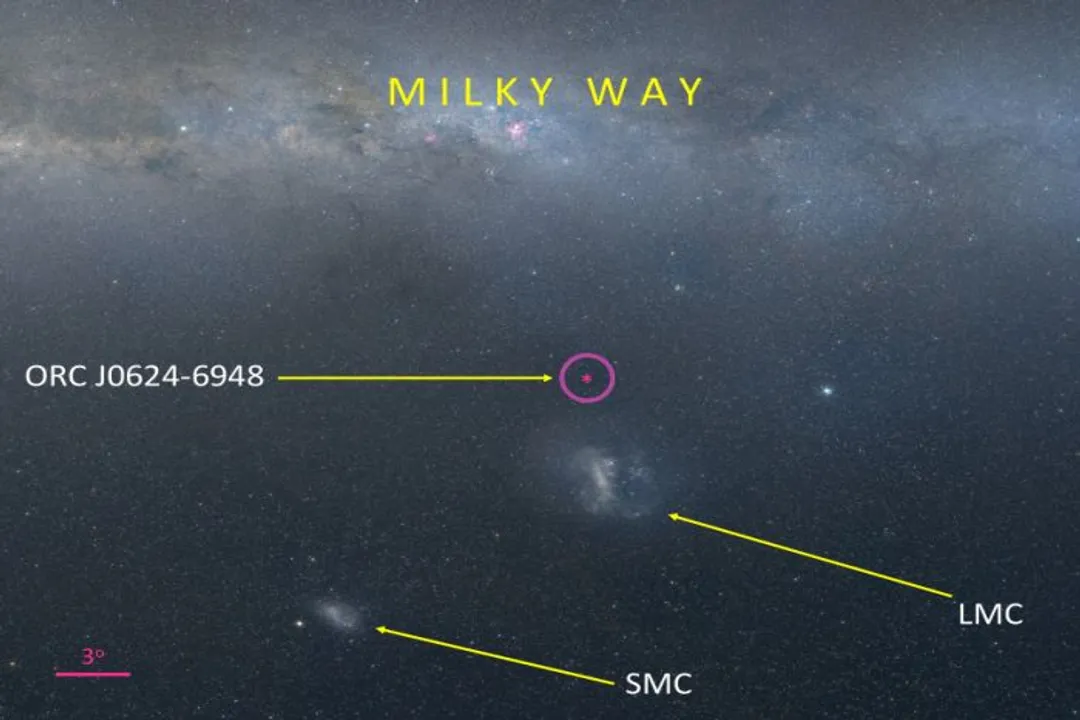
The visual appearance can be further complicated when the event occurs outside the dense, cluttered environment of a galaxy's main disk. There have been observations suggesting a supernova remnant that might be the first known intergalactic supernova. [5] In such a scenario, the star exploded far from any established galactic gas clouds. While the explosion would still be shaped by the immediate pre-ejected material, the resulting shockwave would expand into a much less dense interstellar medium (ISM) over cosmic time. [5]
If the initial explosion was somewhat asymmetrical, as discussed above, the remnant might evolve into a more elongated or chaotic shape because it lacks a dense, symmetrical shell to interact with and define its brightness. [5][7] However, if the ring-like feature is observed in an isolated event, it strongly suggests that the star itself carried the "ring" with it from its past life, having ejected a dense torus before being flung into intergalactic space. [5] This highlights that whether a remnant looks like a ring, a shell, or an amorphous blob is less about the explosion's ideal geometry and more about the local environment it encounters upon release. [4]
# Decoding the Structure
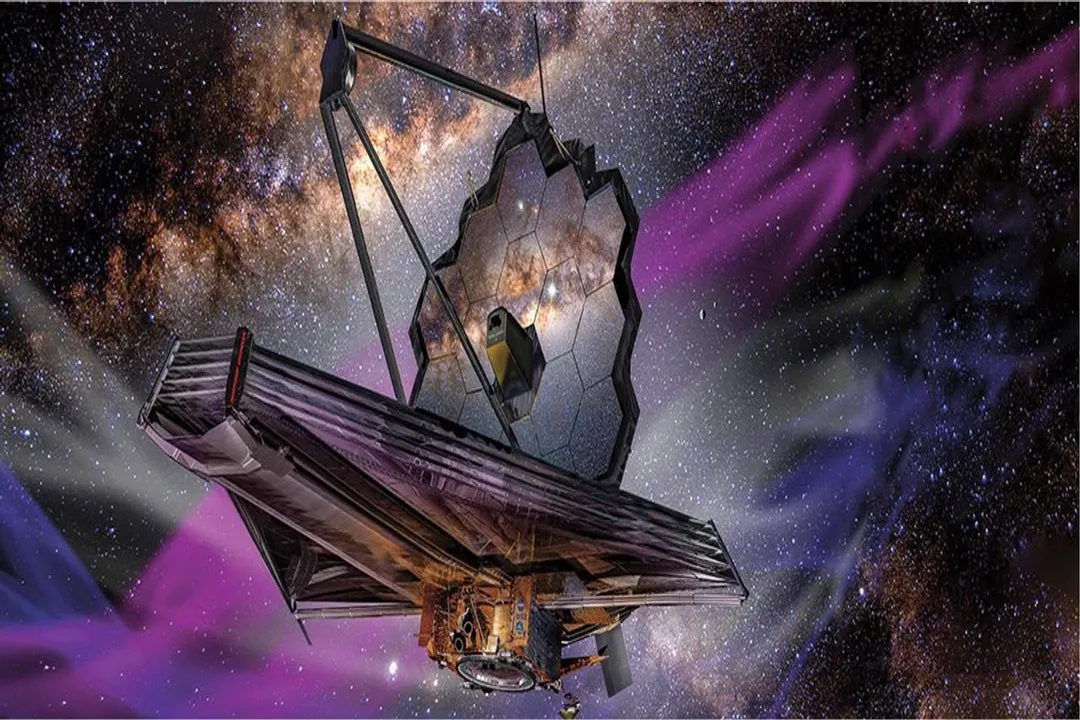
For astronomers studying these phenomena, peeling back the layers of projection, pre-ejected material, and explosion physics is a detailed puzzle. Tools like the James Webb Space Telescope (JWST) provide infrared vision that penetrates the dust obscuring many remnants, allowing us to map the three-dimensional structure with greater fidelity. [2] By observing the remnant at different wavelengths, scientists can differentiate between:
- The shock front itself (the visible edge of the explosion).
- The pre-ejected material being heated and energized by the shock.
- The forward blast wave expanding into the undisturbed ISM.
The precise measurement of the velocity and brightness variations across the apparent ring allows for mapping the density variations in the circumstellar medium. [1] For example, if the ring appears to have "knots," those knots correspond to denser clumps of gas shed by the star, which are currently being overtaken by the shockwave. A useful diagnostic is tracking the time delay; because the pre-ejected material exists in a fixed location relative to the stellar center, and the shockwave is moving outward, the shockwave will cross this material at different times, creating a sequence of brightening events that map the material's geometry over several years—a process beautifully captured in time-lapse sequences of SN 1987A. [6]
If you consider the physics of an accelerating shockwave impacting a complex, non-uniform medium, it becomes clear that the simplest expectation (a sphere) is rarely the observed result. The universe seems to favor complexity. A helpful analogy involves an echo in a canyon: a single clap (the explosion) will produce echoes (the light) that bounce off different canyon walls (the surrounding gas clouds) at different times and volumes, creating a perceived complex soundscape from a single input. Similarly, the supernova remnant's visual appearance is the sum total of where the blast wave has successfully slammed into dense obstacles along its path. [4] The ring is just the most obvious, brightest intersection point on that cosmic map.
# Future Structure Evolution
What happens next to these ring structures? As the shockwave moves outward, it eventually sweeps up and mixes with the general interstellar medium, which is much less dense than the immediate, wind-blown circumstellar material. [4] Once the shock has passed completely through the dense torus region—a process that can take decades or even centuries, depending on the initial density—the ring feature will likely fade. The remnant will then transition into a larger, more diffuse structure characteristic of older supernova remnants, where the shape is dictated more by the large-scale magnetic fields and turbulence of the galaxy rather than the immediate environment of the star just prior to its death. [7]
The longevity of the ring depends entirely on the mass loss history of the progenitor star. A star that ejected a dense, narrow ring will see a bright, defined ring structure for a relatively short period before the shock moves into thinner material. A star that generated a very thick, extended shell of material might keep a visible, bright shell feature for much longer, though it might not look like a sharp ring anymore. [4] The mystery of the ring shape, therefore, serves as a fantastic, if temporary, tracer for the stellar evolution physics that preceded the catastrophic end.
Related Questions
#Citations
Why does supernova 1987A look like a ring? - Astronomy Magazine
What determines supernova ring formation and visibility? - Facebook
Why did the Supernova SN 1987a make a ring instead of ... - Quora
Supernova Rings - FYFD
Mysterious Ring in Space Could Be The First Known Intergalactic ...
Time-lapse of Supernova 1987A and its ring : r/spaceporn - Reddit
Supernovae shockwaves aren't spherical - Universe Today
Lopsided Star Explosion Holds the Key to Other Supernova Mysteries